
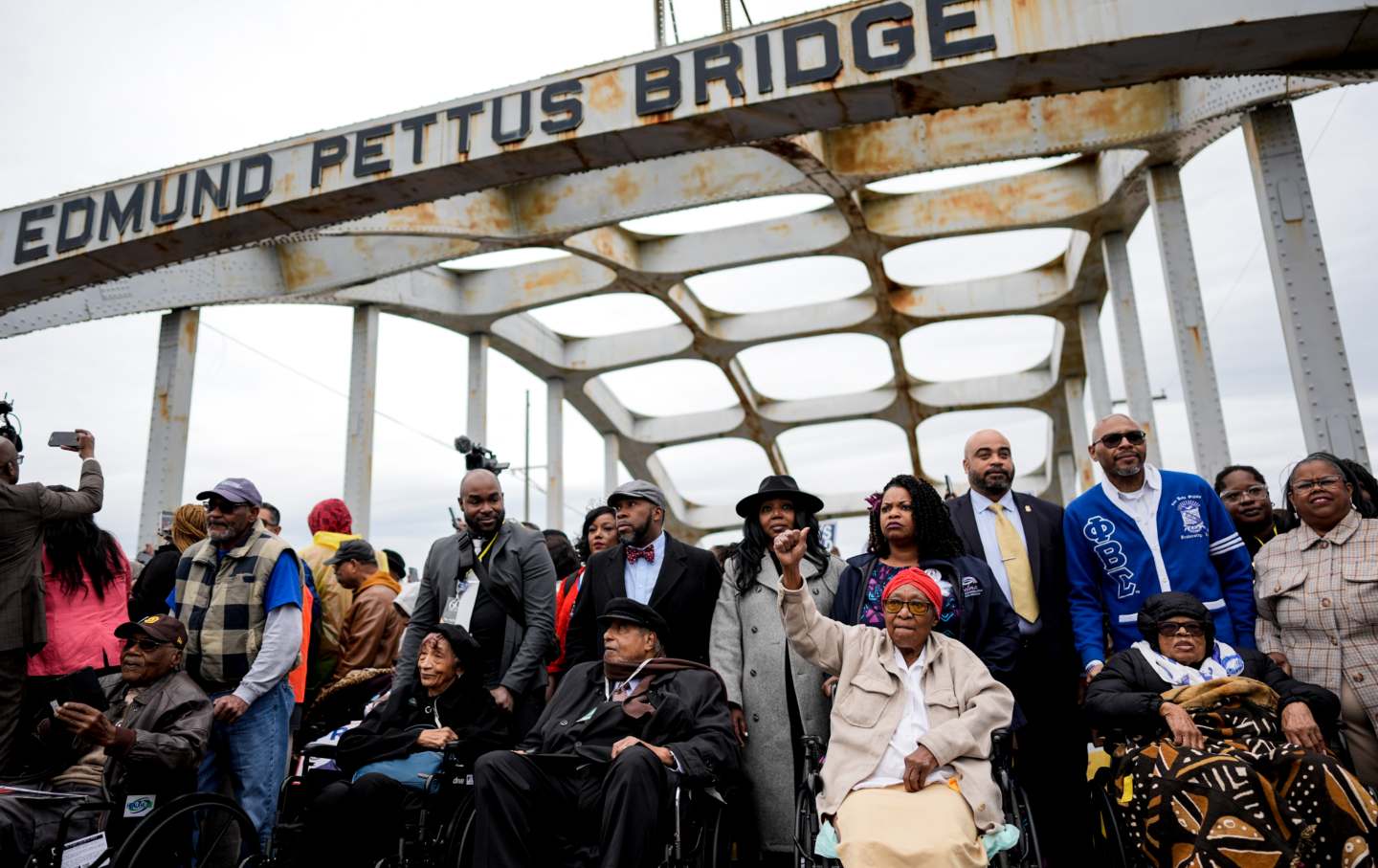
Last month, I joined the annual march across the Edmund Pettus Bridge in Selma, Alabama—the place where, 61 years earlier, on Bloody Sunday, John Lewis and other giants of the civil rights movement endured the crush of batons and the burn of tear gas in defense of their right to vote.
Later, as I stood in the pulpit of Selma’s Brown Chapel, I shared the weight of my ancestors’ sacred struggle. Those Americans fought for their fair share of our democracy, and specifically, their fair share of the resources and rights democracy affords to those who are justly represented in government. In return, they faced violence, racism, and countless other indignities.
Yesterday’s Supreme Court decision in Louisiana v. Callais dishonored the legacy of those proud Americans, and the hard-won rights they secured, by eroding our ability to challenge discrimination at the voting booth. The court’s slow but steady dismantling of both the Civil Rights Act and now the Voting Rights Act disenfranchises millions of Americans and undermines the key achievements of the civil rights movement.
But make no mistake: This institutional injustice will not deter our efforts to ensure that every American has the representation and resources they deserve. Despite the hardships the heroes of the civil rights movement encountered, they marched on. So must we. We cannot afford not to.
I carry the mantle of their sacrifice on behalf of New Yorkers, and I fight every day to preserve the fairness and integrity of our elections. I do so not to promote some vague ideal of American democracy but because I know from experience that voting is the central mechanism by which Americans can address the affordability and quality-of-life issues they experience every day.
I first ran for office because my neighbors in Brooklyn felt like they had been left out of the sunshine of opportunity. They were looking for someone to fight for them, to ensure that their interests were part of the conversation. Now, I go to work every day to be that person for New Yorkers from Brooklyn to Buffalo, from Binghamton to Bridgehampton.
They are why I continue our ancestors’ fight for our democracy—because I know firsthand that our government cannot meet the needs of every New Yorker, or American, if only some of our communities are represented in the halls of power.
Every single day, my office works hard to give voters the tools they need to fully participate in our state’s elections. We provide accessible, multilingual guidance on registration, as well as on absentee, early, and mail-in voting. We run an Election Protection Hotline during every primary and general election, so that New Yorkers have a direct way to tell us if there are risks to the integrity of our system. My office holds bad actors accountable, prosecuting schemers that target Black voters and stopping coordinated efforts designed to suppress turnout. And as new threats emerge, we respond—for instance, by issuing the nation’s first guidance to protect against AI-generated election disinformation.
In the last year, the federal administration has attempted to exert total control over how we vote, while trying to block access to the public funding American families need to survive. Time and again, we’ve stopped them.
Suppressing the right to vote is not novel. Nor is it shortsighted. Talking heads shout about voter fraud, even as it remains exceedingly rare. They push unconstitutional legislation like the SAVE America Act to hoard their own power, while the John R. Lewis Voting Rights Advancement Act sits unread by leaders on Capitol Hill.
Meanwhile, Americans endure competing crises that our federal government has no plan to address. How are the people in this administration providing for the single mother who can barely feed her babies? How do they serve our veterans, who, after federal funding cuts, struggle to access the healthcare that their sacrifice entitles them to? How do they uplift young people coming of age in an impossible job market? Do they worry, as I do, about the late-night kitchen-table accounting between working parents, struggling to make ends meet in a brutal economy, while this administration cuts sweetheart tax deals with billionaires?
Popular
“swipe left below to view more authors”Swipe →Some commentators and pundits have decided that voters do not care about the abstract “fight for democracy.” They tell us that we should abandon efforts to rally around this ideal because it is far removed from Americans’ daily experience. Often, they cite the president’s victory in 2024 as an affirmation of these claims.
I respectfully disagree. It might be true that many in our country tune out politicians in Washington as they glorify the majesty of the same electoral system that brought them to power. But, so far, our leaders have failed to connect the defense of democracy to the fruits it can bear for communities across the country.
That’s what we do in New York. We make clear that to be able to vote for leaders who center working people is to be able to afford quality healthcare, to save money for college tuition, to keep food on the table, to keep our communities safe, and to create well-paying union jobs. We prove through our policy that voting directly translates to investment in communities.
As the midterm elections near and chaos around the world simmers, it is my hope that all of us take up the banner those brave Selma marchers waved 61 years ago. They marched to secure equal participation in our democracy, and with it, their fair share of the resources and representation that our democracy has always promised. Now it’s our turn to make sure we deliver.
Become a Sustaining Donor This September
Between the reemergence of right-wing red-baiting and Donald Trump’s use of the chilling National Security Presidential Memorandum–7 to criminalize left political organizing, we’re seeing McCarthyism reborn before our eyes.
This assault on democracy cannot be ignored or wished away. Resisting it requires bravery in the face of threats and repression, a steadfast commitment to the truth, and the unwavering belief that we can—and will—overcome this darkness.
We must have an independent media that sets the record straight, unearths corruption and abuses of power, and advances a politics of justice and dignity for all if we’re to win this fight.
That’s why I’m writing to you today. This September, The Nation needs to add 100 monthly donors to sustain our progressive journalism. Your contribution makes the next investigative report, the next truth-speaking column, and the next pathbreaking essay all possible.
I hope you’ll support our work with a recurring donation today. If you donate $10 or more a month, we’ll send you a brand new “Hands Off the Free Press!” sticker to recognise your commitment to our cause. Please, donate today.
Onward,
Katrina vanden Heuvel
Editor and Publisher, The Nation
More from The Nation
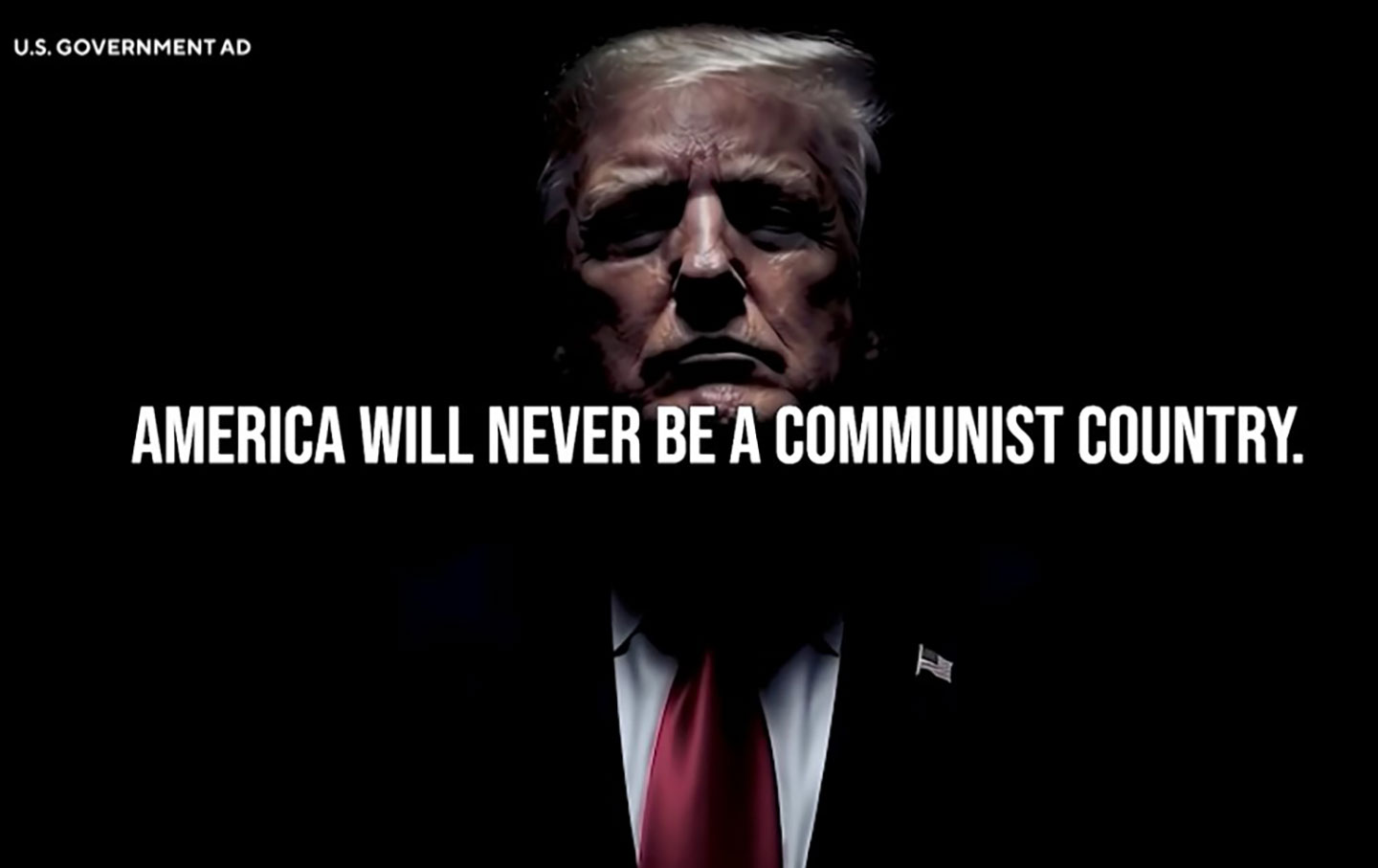
Trump Is Using Your Taxpayer Money to Pay for Illegal Election Propaganda Trump Is Using Your Taxpayer Money to Pay for Illegal Election Propaganda
But as brazen and authoritarian as these ad spots are, they seem likely to backfire.

Clavicular’s Charges Are One Thing. Rape Culture Is Another. Clavicular’s Charges Are One Thing. Rape Culture Is Another.
Braden Peters consistently acts as though the autonomy of women is a maladaptive trait, and dogmatically dismisses any claim to female equality as an outlying aberration.
Kimberly Guilfoyle Is a Master of Mafia Diplomacy Kimberly Guilfoyle Is a Master of Mafia Diplomacy
The US Ambassador to Greece is making suspicious deals for her buddies.
Missing Guardrails for AI Missing Guardrails for AI
Trump ignores the threat of extinction.

