
The WNBA Draft and the Political Imperative of Minding Your Own Business
With the first pick of the WNBA draft, the Dallas Wings picked Azzi Fudd. It sparked a sexist, homophobic conversation online.
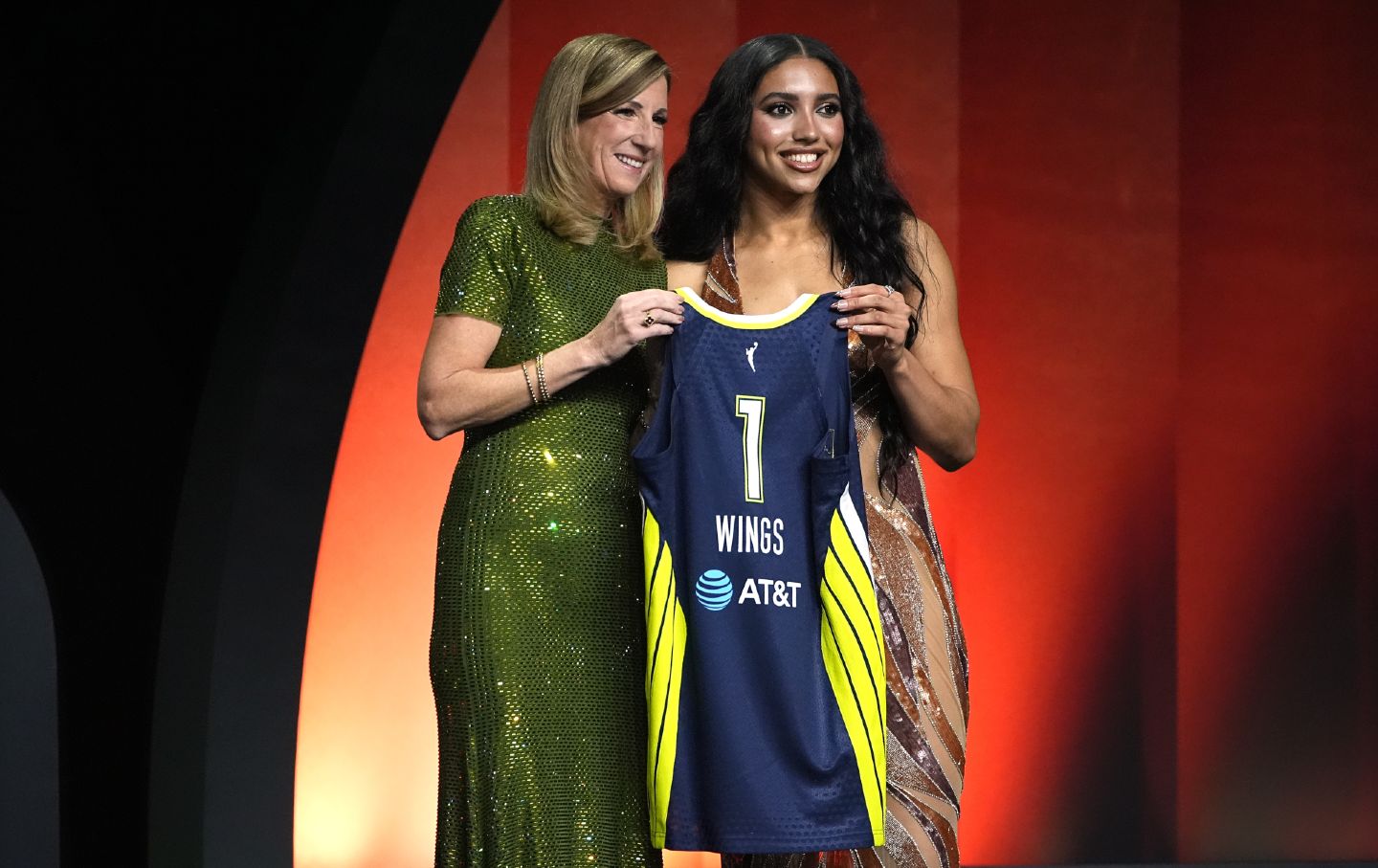
Azzi Fudd of the University of Connecticut, right, poses with WNBA commissioner Cathy Engelbert after the Dallas Wings selected Fudd with the 1st pick of the 2026 WNBA Draft on April 13, 2026, in New York City.
(Angelina Katsanis / Getty Images)The place of women in the sports world has come a long way since whalebone corsets would puncture the lungs of teenage tennis players, but we are nowhere near where we need to be. We saw this last week when a sexist, homophobic frenzy emerged following the WNBA draft.
With the first pick, the Dallas Wings selected the University of Connecticut’s all-American guard Azzi Fudd, reuniting her with an old UConn teammate, last year’s rookie of the year, Paige Bueckers. The Wings have created what could be an all-world backcourt, and yet the media is less interested in the future of the team than the news that Bueckers and Fudd may be an item. ESPN has described their relationship as overshadowing the Wings’ choice of Fudd and wonder how it could impact the Wings’ future prospects. (Fudd and Bueckers confirmed that they were dating last year, but have not spoken on the record about it since.)
We live in a society, rooted in sexism and homophobia, that has an insatiable appetite for gossip and voyeurism, so of course people are interested in their personal lives. Previously in the WNBA, player couplings, while hardly new, were rarely discussed. But the Fudd-Bueckers relationship is dragging this reality, willingly or not, into the light.
At her introductory press conference, a reporter pressed Fudd about the relationship by asking whether Bueckers and she had sought out advice from other WNBA players who had been in relationships with people on their same team. Before being given a chance to answer, a Wings public-relations staffer interrupted, saying, “Understand why you have to ask that question. We’re going to respectfully decline from commenting on our players’ personal lives.”
Perhaps Fudd and Bueckers asked for this kind of intervention from the Wings, and maybe their desire is to keep their private lives private, but it would have been good to see Fudd say that and not have to be saved by someone from the PR team. They should be able to speak for themselves, and then the media should respect their privacy and move on.
As for the threatened incels who never gave a damn about women’s hoops until learning of Bueckers and Fudd, they should stick to what they know—like practicing pickup lines in the safety of their basement, while scrolling 4chan and trying to find the Strait of Hormuz on a map.
As Maya Goldberg-Safir, who chronicles women’s hoops for her publication Rough Notes, told me, “I’m assuming that for decades now, professional women’s basketball players have already been playing with their girlfriends and their exes. Whether or not Paige and Azzi want to focus on the status of their relationship publicly is entirely up to them, and whatever their status is, trust that a WNBA locker room can handle it.”
The Bueckers-Fudd online obsession is also a reminder of something outside the lines of the WNBA: Women’s organized sports in the United States has never been allowed to just be about sports. It is always—sometimes inspiringly, sometimes, exhaustingly—“a microcosm of society,” as Billie Jean King has said often. Would that athletic prowess, excitement, and derring-do could just come to us à la carte. Instead, and we see this time and again over the last 150 years, it’s only when sexism and homophobia are challenged off the field that you see inroads toward autonomy and respect on the field of play.
King also often speaks about her era, reminding us that some progress has been made. “In the ’70s, we had to make it acceptable for people to accept girls and women as athletes,” she said. “We had to make it OK for them to be active. Those were much scarier times for females in sports.”
This reality is not something that King could have imagined when she was on the front lines fighting for Title IX legislation in 1972. (She started playing tennis competitively as a working-class kid precisely because she said that she did not see a future in anything else except for golf, which was just “too slow.”)
Golf, for many young girls, is either too slow or inaccessible—it’s still a country-club sport. But any conversation about the progress of team sports for girls and women should address how conditions were better for trans women, as well as intersex and nonbinary people, a decade ago. The new policies of exclusion and persecution are not a product of “following the science,” as International Olympic Committee Chief Kristi Coventry says, but entirely due to a larger right-wing backlash. Our trans teammates are being left behind. (It must be noted here that unlike, say, fellow tennis legend Martina Navratilova, Billie Jean King has stood in solidarity with trans athletes.)
Today we can marvel at Bueckers and Fudd as individual players and also rejoice in their reunion as teammates. But we also should defend their ability to have the relationships they choose to have, with it only being the public’s business if they choose to make it the public’s business. We also need to build—and rebuild—movements that fuse together the fights against racism, sexism, homophobia, and, yes, transphobia. That’s how freedom will be won, on and off the court.
Correction: A previous version of this story misstated the name of the Dallas Wings.
More from The Nation

Trump Has Made it Legal to Destroy Endangered Species’ Habitats Trump Has Made it Legal to Destroy Endangered Species’ Habitats
By redefining the meaning of “harm” in the Endangered Species Act, the administration is giving big corporations a gift they have long demanded.
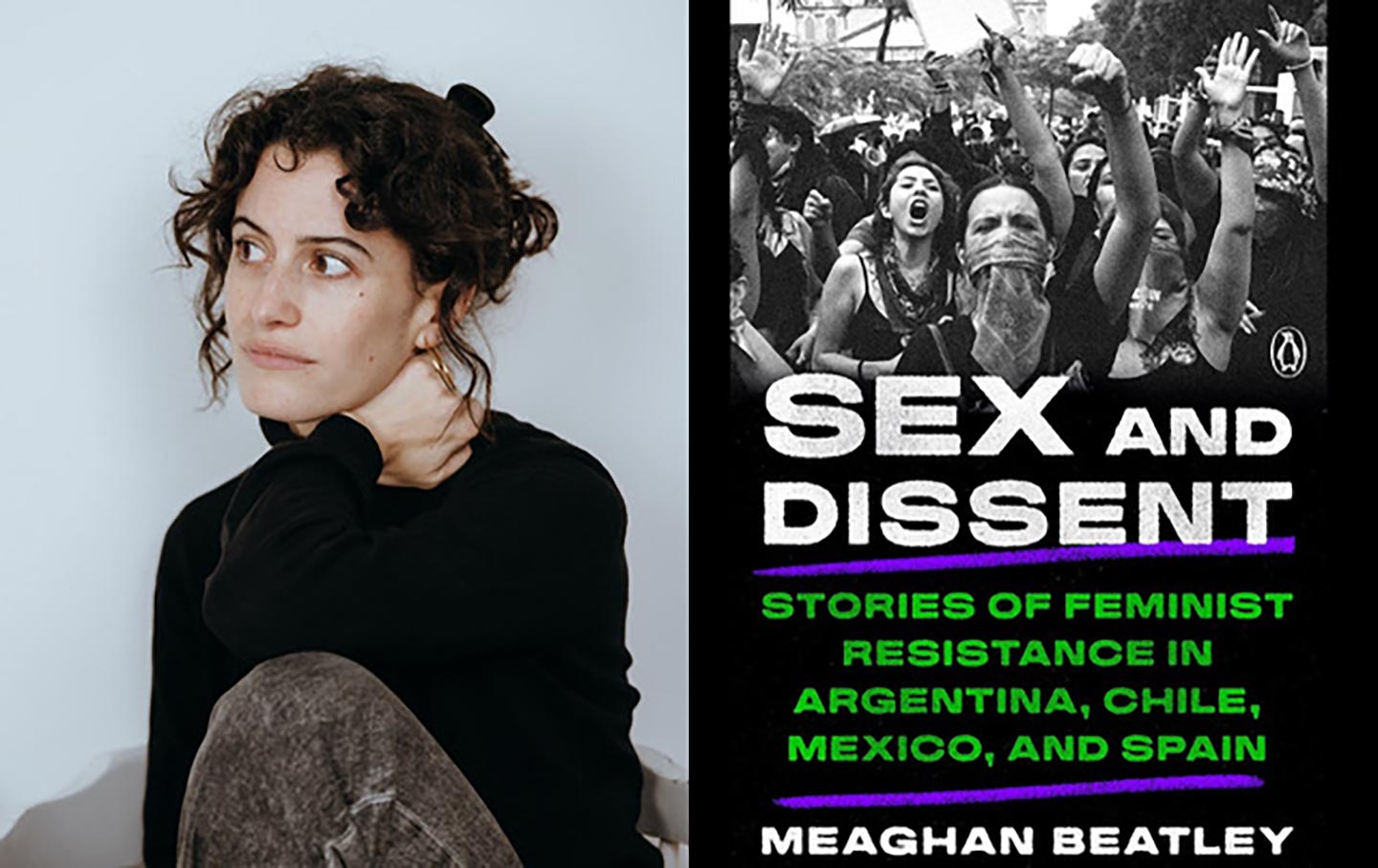
Journalist Meaghan Beatley on Latin America’s Feminist Resistance Journalist Meaghan Beatley on Latin America’s Feminist Resistance
A conversation with the author of Sex and Dissent about what American feminists can learn from the Green Wave movement.

As Cornell’s Rape Case Draws National Attention, Students Want Accountability As Cornell’s Rape Case Draws National Attention, Students Want Accountability
A new lawsuit alleging that a former student was drugged and gang-raped by Chi Phi fraternity members is sparking outrage in the Cornell community.
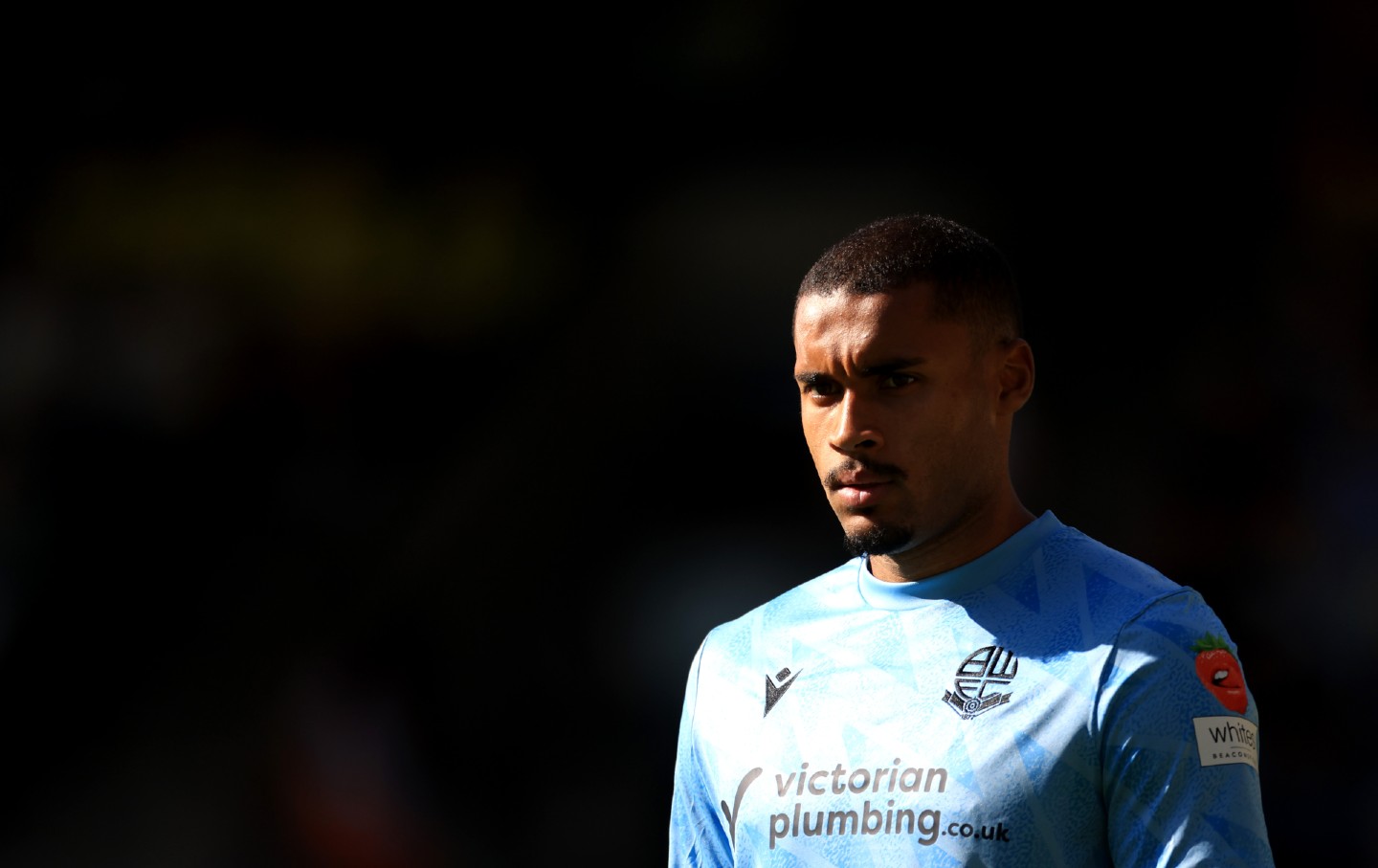
Irish Goalkeeper Gavin Bazunu’s Refusal to Play Against Israel Puts Him on the Right Side of History Irish Goalkeeper Gavin Bazunu’s Refusal to Play Against Israel Puts Him on the Right Side of History
Bazunu’s decision raises the perennial question: Why is a country that is currently committing a genocide allowed to compete in the first place?
The Promises and Compromises of the University of California The Promises and Compromises of the University of California
I grew up in a neighborhood manufactured by the University of California, Irvine. It felt like a utopia for academics—until the university forsook its mission of serving the publi...

