
The Nap Room Didn’t Love Me Back
I left academia for a tech job that offered me the promise of stability. What happens when corporate employers become our most reliable caregivers?
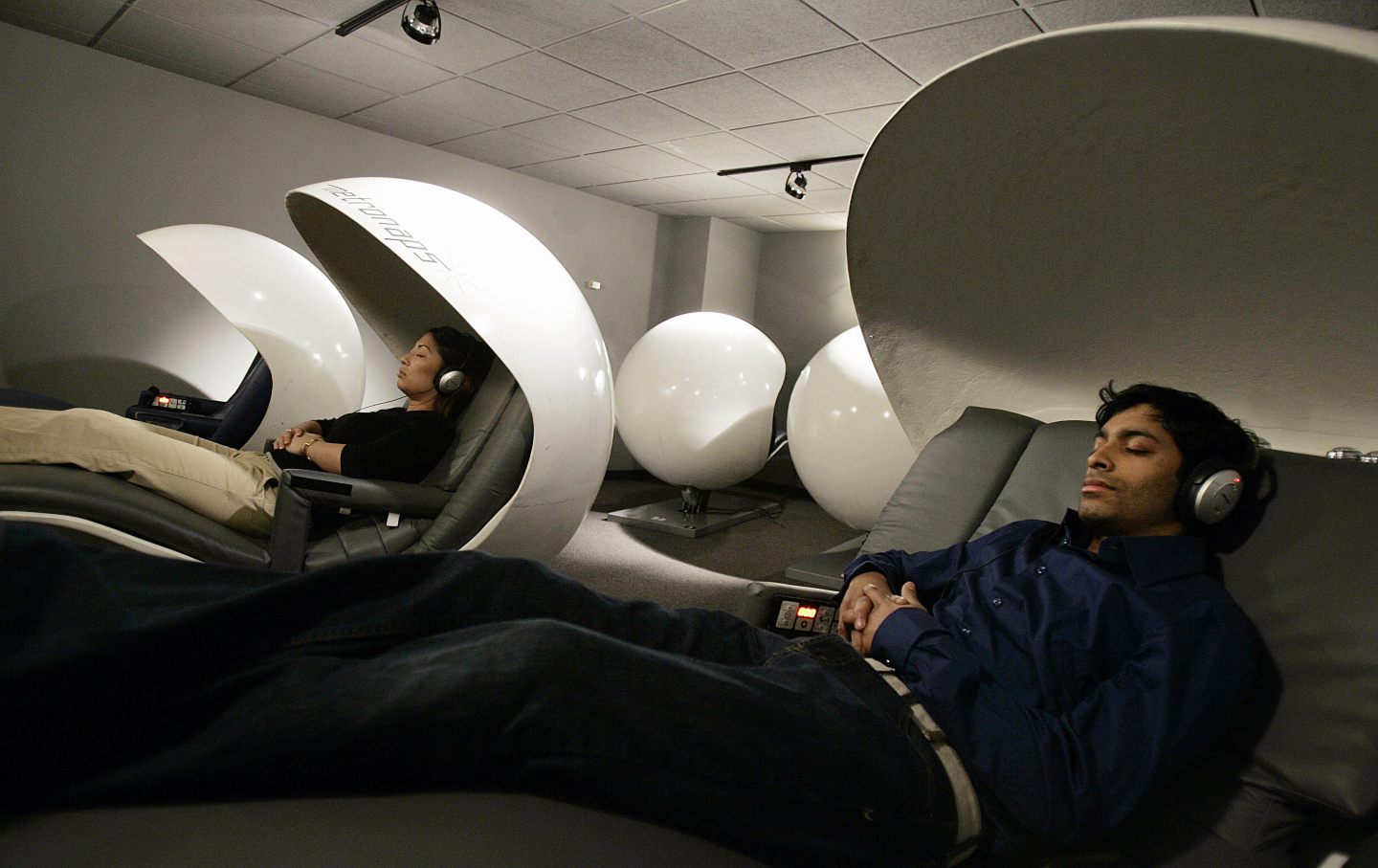
Employees demostrate sleeping “pods” in a corporate office.
(Stan Honda / Getty Images)The nap room already had a reputation by the time I arrived at the company. Officially, it was meant for resetting, with a salt lamp in the corner, tissues on hand, a deep couch upholstered in a calming shade of greige. Rumor had it that some of the software engineers used it for something else entirely. The warning came wrapped in half-jokes and tight smiles. I wouldn’t go in there, they told me.
But bodily fluids no longer startled me. My clothes were already compromised by spit-up. I had a baby at home, and my sleep came in fragments that never added up to real rest. So I brought my own pillowcase. I lay down in the nap room. And I slept.
In the same month that I defended my dissertation, I also had a baby. Academia, already precarious, suddenly revealed itself as geometrically impossible. The history lectureships on offer meant four courses a semester for adjunct pay that would not cover rent, let alone childcare. The humanities postdocs came without maternity leave in corners of the country where my partner could not find work. I kept trying to do the math—salary, hours, infant, body—but each time the equation failed. There was simply no space for a newborn and his mother in the narrow corridor stretching out before me, calling itself a career path.
So I did what I’d been trained never to do. I left academia for a job in the San Francisco tech world. It was 2019, and tech’s self-image as a humane system-builder was beginning to crack even as the venture capital still flowed. The office where I landed looked like a parody of corporate self-care: catered lunches, ergonomically adjustable furniture, a wellness stipend, a lactation room, kombucha on tap. And then there was the nap room, where I blocked off “focus time” each afternoon and slept like the dead. The only disruption came on Fridays, when the room was reserved for back massages and filled with incense and the low hum of a didgeridoo. I beat the engineers to the sign-up sheet every time.
Coming from academia, what startled me was not the perks but the premise that a workplace could be organized around the assumption of human need. For the first time in my life, my job came with paid leave and the expectation that my body would sometimes need to stop, recover, and eventually age with provisions in place. Human Resources spoke to me not as someone who should feel lucky to be there but as an adult whose health mattered.
What the nap room offered was a place where exhaustion could be acknowledged without explanation, because it had already been translated into the grammar of productivity. At the time, it felt like a safety net I couldn’t find anywhere else. In truth, it was a soft landing available only to people with money and the right kind of job title.
The structure steadied me, but the work itself felt unmoored. My job was writing “microcopy,” the tiny sentences that appear when you log in, click “submit,” enter a credit card number, or make an error on an e-commerce website. I spent my days smoothing the path toward buying expensive products online. Whether anyone needed these products was simply not part of the conversation. Meaning was sidestepped in favor of professionalism and reduced to words like collaboration, simplicity, and trust, printed on walls and repeated in quarterly reviews. The question was not whether the work mattered but whether it moved without friction.
In another season of life, this might have unsettled me more. But having just escaped a system that treated precarity as the cost of doing meaningful work, I no longer trusted purpose to compensate for instability. I needed enough space and structure for my body and mind to recover. The paycheck secured our rent and our childcare. But it was the nap room, the bagel Fridays, the small visible gestures of corporate care that reached my nervous system and suggested that there was enough slack in the system that the exchange might actually hold.
As I settled into that stability, a harder truth came into view. The care sustaining me flowed through an institution whose purpose I could not fully defend and whose commitment to keep me was never guaranteed.
In other words, the nap room felt exceptional, but the fact that my stability ran through my employer was not. In the United States, care is not secured as a right of citizenship. Health insurance and income continuity during illness or caregiving are largely routed through employment. In prosperous years, companies supplement the state with “progressive” offerings such as paid volunteer time, fertility benefits, or student loan reimbursement. In lean years, those perks disappear. What reads as generosity is a volatile welfare system tethered to quarterly earnings.
In this system, losing an at-will job can mean losing not just income but care already in motion: an IVF cycle halted midstream, a gender transition interrupted, a trusted specialist suddenly out of reach. Support that arrives as a perk rather than a right does not circulate equally. It pools in salaried roles and thins out in contingent ones.
Those of us cushioned by catered meals, custom gifts, and stock options move through a world buffered by institutional abundance. Under the same logo, contract and hourly workers clean offices or staff call centers with minimal leave and little protection. Perks do not flatten hierarchy; they deepen it. Comfort for some of us rests on a labor structure in which others remain cheaper, more contingent, and easier to replace.
Over time, I began to notice a force stronger than collegiality taking hold: corporate dependency deepening into attachment. We do not stop attaching when we grow up. Under strain, we cling to what reliably steadies us. The nap room did not love me, but it absorbed my postpartum collapse without humiliation. My company became the place I turned to when I was depleted, the structure I trusted to steady me. For a time, it felt less like an employer than a site of refuge.
In salaried white-collar corporate roles, where healthcare and leave are bundled into employment, the workplace can begin to feel uncannily like a dependable attachment. It appears steady, responsive, visibly caring. And yet at-will employment cannot offer real security. When basic security depends on remaining valuable to an employer, attachment shifts toward performance and vigilance becomes rational. The question is no longer only “Am I valued?” but “Am I still indispensable?”
When that shift happens, the instability feels personal rather than structural. Emerging research on adult attachment and work suggests something unsettling: in economically precarious contexts, employees with more avoidant attachment styles may report higher career satisfaction. Sustained detachment, however, is difficult when care feels essential and personal.
HR translated my needs into eligibility without resentment. The benefits arrived through an HR specialist I knew by name. She set up time with me, sent reminders, remembered due dates, and checked in before I had to ask. My maternity leave worked because she walked me through subsidized programs line by line: this form first, then this site, and I’ll remind you to resubmit on this date. Childcare assistance operated the same way, through a dependent-care account that allowed pre-tax dollars to be set aside. I relied on that guidance again and again.
The system itself remained opaque. I could not have explained how the support was structured or why access to something so central to family survival was routed through certain employers. That obscurity mattered. Because access depended on interpretation and timing, administration began to feel like recognition. Gratitude crept in where clarity about rights might have been. The person who guided me through it sat across from me; the public program did not. The leave and the childcare subsidies were partly underwritten by public policy, but they did not feel that way. The institution that delivered them absorbed the gratitude. Reliance deepened into attachment—not just to the paycheck but also the institution that made publicly structured care feel like it belonged to me.
But institutional attachment was only part of the story. The kindness exchanged between colleagues was real and meaningful. It did not come from the nap room or the HR portal. It came from people who were not drowning. Because wages were solid and basic needs were buffered, most of us were not operating in survival mode, and that insulation made reciprocity possible. The workplace did not demand constant availability or cultivate cutthroat competition, and colleagues covered meetings when my mother had a medical emergency and sent meals when I gave birth again. Those gestures mattered. They were part of what held me there. We recognized one another as adults making the same bargain, trading skill and time for stability. This was not the “do what you love” fantasy of an earlier millennial moment. It was a quieter pact sustained by mutual recognition.
From the outside, white-collar work is often described as morally empty, as in anthropologist David Graeber’s widely read essay turned book Bullshit Jobs. That may be true. But emptiness alone does not explain why people who could leave choose to stay. What binds them is not the task itself but the soft infrastructure wrapped around the paycheck. It is work visas and health insurance and paid leave. It is also the reassurance that someone will help you navigate the public and private maze.
The texture of this arrangement is not moral injury so much as anxiety. Attachment to something that cannot attach back produces vigilance. So much of adult stability is routed through a single employer that it begins to feel rational to invest fully there. The rituals, the recognition, the steady pay, the company merch, the visible surplus all encourage that investment. And yet everyone knows the agreement is contingent and layoffs are routine. Reorganizations arrive without warning, and automation threatens to redraw the boundaries of who counts as indispensable. The comfort is real, but so is the knowledge that it can be withdrawn.
Idid not have language for this uneasiness until much later, but it announced itself anyway through a recurring dream. In it, I come to the office. My manager greets me warmly and gives me a task: write personalized letters to colleagues who are about to be laid off explaining what is happening in a way that feels humane.
I sit down and write. Only afterward does my manager mention, almost casually, that I was let go weeks earlier, during a reorganization announced somewhere in Slack. I didn’t know. Shame moves through my body. I notice a mess on the floor and begin to clean it up, apologizing as I work, desperate not to be seen as difficult.
Popular
“swipe left below to view more authors”Swipe →The dream revealed how fully I had internalized the system that made people legible and manageable. When recognition disappeared, I did not experience it as structural. I experienced it as my fault. That is what structural insecurity feels like from the inside–not like politics, but like shame. Then the world caught up with the dream, and what I had mistaken for personal vulnerability revealed itself as systemic design.
I already had a newborn and a toddler home from preschool when my mother developed rapid-onset dementia. The pandemic was raging and shelter-in-place had become the ruling logic. Remote work was introduced as crisis management and only later recast as a benefit, even as other perks quietly disappeared. The shift was not designed around my needs, yet for a time it made my life barely workable.
In practice, it meant an infant on the floor beside my laptop, a Slack notification arriving while I was on hold with a neurologist, a meeting conducted from the same room where my mother was forgetting my name. The workday did not shrink. It settled onto the same body already carrying everything else. Work from home relocated care once outsourced to schools, offices, and public space into homes and unpaid hours, layering it directly onto the formal workday.
Once my family’s stability depended on my availability at home, returning to the old terms was no longer imaginable. When talk about returning to the office began, I recognized the pattern immediately. The role still existed. My qualifications had not changed. But the life the job required no longer fit the life I was living, and the mismatch was treated as my preference rather than a structural constraint. Across industries, mothers are confronting the same collision, called back to offices and schedules that assume no competing claims between nine and five.
When I finally quit, it was not in protest. It was triage. I did not leave because the work lost meaning. For me, it never had any. I left because the conditions that had once made the exchange possible no longer held.
Ifound myself asleep in the nap room during a brief window of corporate excess. After years inside institutions that treated scarcity as proof of seriousness, the safety net provided by my job felt like air. I do not regret the stability I found there, but the benefits were never mine to rely on. The nap room was not a public provision. Our country does not guarantee paid parental leave, paid family or medical leave, universal childcare, or healthcare as a right. Some states offer programs and some employers provide generous packages. But when care is parceled out state by state and job by job, security becomes something you earn through attachment to the right institution and risk losing the moment that attachment frays.
That arrangement still structures my family’s life. My partner still works in tech. His job provides our family’s insurance. I may have left the building, but not the system.
Now the cycle has turned again. Layoffs ripple through the tech industry. The era of visible surplus has thinned. The language of care remains, but its margins have narrowed. Corporate care in America is not generosity; it is infrastructure by default. For many, it has become the primary way basic stability is accessed—not because corporations are suited to this role, but because the institutions that once carried it have been hollowed out. Mourning a job in such a landscape is never only about work. It is about losing the doctor, the therapist, the daycare, and the fragile assurance that someone, somewhere, knows how the system works.
The danger is not only that this care can disappear. It is that it begins to look like the only place to lie down.
Become a Sustaining Donor This September
Between the reemergence of right-wing red-baiting and Donald Trump’s use of the chilling National Security Presidential Memorandum–7 to criminalize left political organizing, we’re seeing McCarthyism reborn before our eyes.
This assault on democracy cannot be ignored or wished away. Resisting it requires bravery in the face of threats and repression, a steadfast commitment to the truth, and the unwavering belief that we can—and will—overcome this darkness.
We must have an independent media that sets the record straight, unearths corruption and abuses of power, and advances a politics of justice and dignity for all if we’re to win this fight.
That’s why I’m writing to you today. This September, The Nation needs to add 100 monthly donors to sustain our progressive journalism. Your contribution makes the next investigative report, the next truth-speaking column, and the next pathbreaking essay all possible.
I hope you’ll support our work with a recurring donation today. If you donate $10 or more a month, we’ll send you a brand new “Hands Off the Free Press!” sticker to recognise your commitment to our cause. Please, donate today.
Onward,
Katrina vanden Heuvel
Editor and Publisher, The Nation
More from The Nation


Trump Has Made it Legal to Destroy Endangered Species’ Habitats Trump Has Made it Legal to Destroy Endangered Species’ Habitats
By redefining the meaning of “harm” in the Endangered Species Act, the administration is giving big corporations a gift they have long demanded.
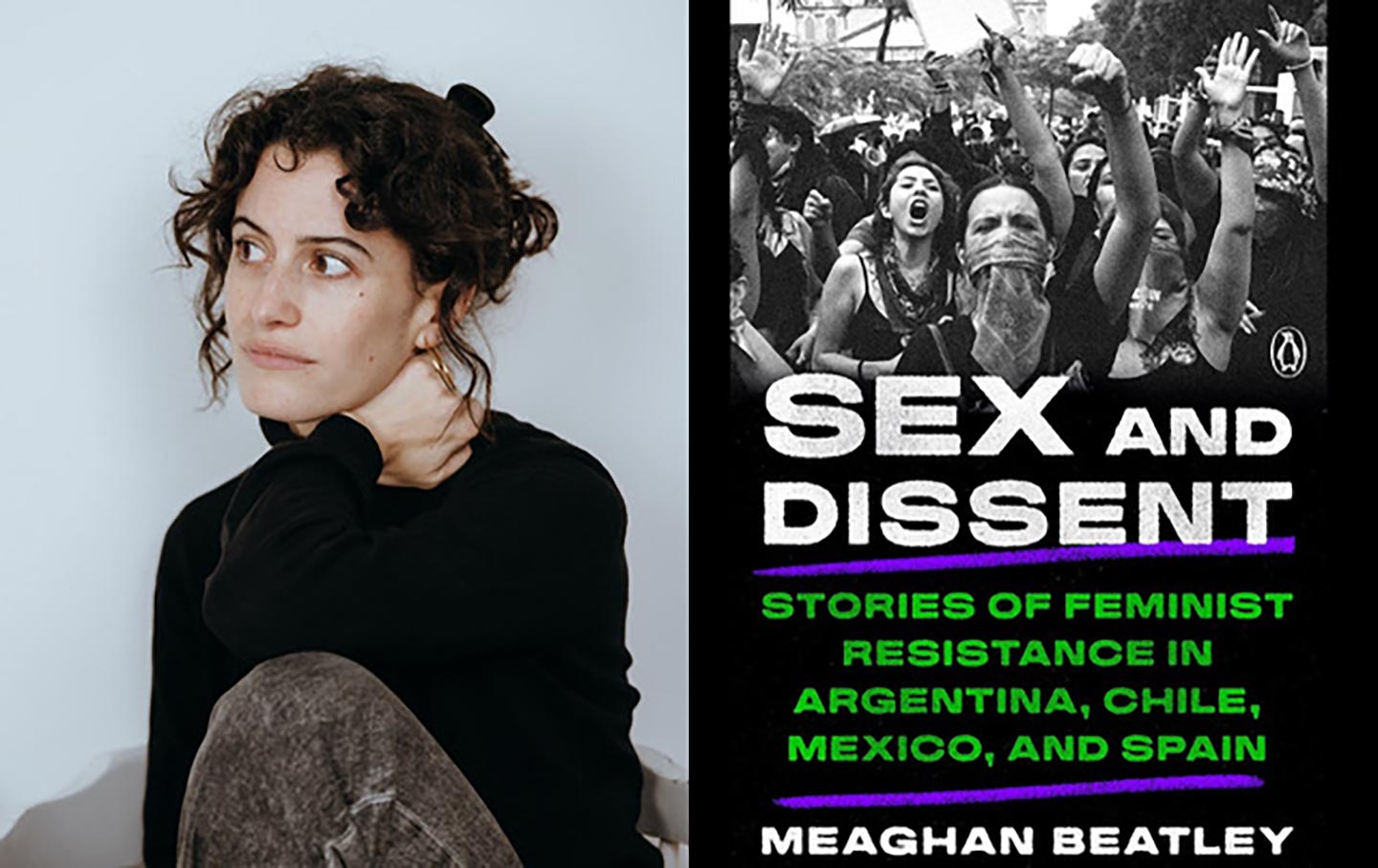
Journalist Meaghan Beatley on Latin America’s Feminist Resistance Journalist Meaghan Beatley on Latin America’s Feminist Resistance
A conversation with the author of Sex and Dissent about what American feminists can learn from the Green Wave movement.

As Cornell’s Rape Case Draws National Attention, Students Want Accountability. As Cornell’s Rape Case Draws National Attention, Students Want Accountability.
A new lawsuit alleging that a former student was drugged and gang-raped by Chi Phi fraternity members is sparking outrage in the Cornell community.

Irish Goalkeeper Gavin Bazunu’s Refusal to Play Against Israel Puts Him on the Right Side of History Irish Goalkeeper Gavin Bazunu’s Refusal to Play Against Israel Puts Him on the Right Side of History
Bazunu’s decision raises the perennial question: Why is a country that is currently committing a genocide allowed to compete in the first place?
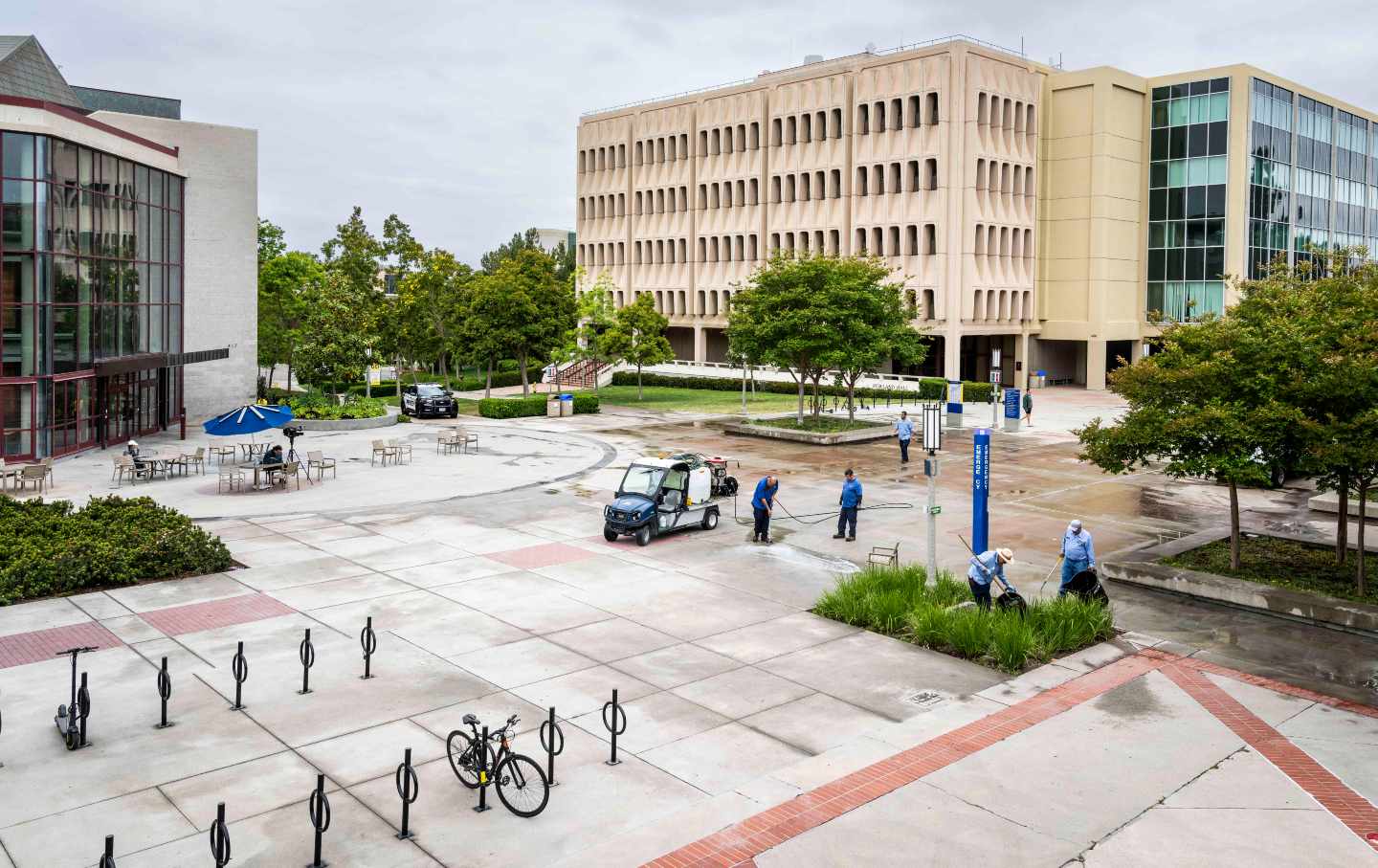
The Promises and Compromises of the University of California The Promises and Compromises of the University of California
I grew up in a neighborhood manufactured by the University of California, Irvine. It felt like a utopia for academics—until the university forsook its mission of serving the publi...

