
Cuba Rallies Residents, Prepares for War
As Washington escalates regime-change pressure after the Venezuela raid, Cuba braces for confrontation amid economic collapse, oil shortages, and mass mobilization.
Cuba’s top officials are putting on their military uniforms to supervise defense exercises and have fanned out across the country urging local leaders to cut red tape, adopt a new mentality, and shake off their lethargy, as the Trump administration escalates regime-change efforts against the island nation after violently abducting strategic ally Venezuelan President Nicolás Maduro and first lady Celia Flores on January 3.
On Thursday, President Trump issued a menacing executive order alleging that Cuba represents an imminent danger to national security and the region. Titled “Confronting the Cuban Regime,” the order threatens to slap tariffs on any country that exports oil to the socialist nation. It comes as shock waves from events in Venezuela reverberate throughout a land already exhausted from a grueling economic crisis that has left residents navigating collapsing infrastructure and services, runaway inflation, and shortages of basic goods.
Since December, when the United States announced a new national security doctrine based on dominating the Western Hemisphere and then, in early January, attacked Venezuela, the Trump administration has repeatedly threatened that Cuba is next.
With the smoke still lingering over Venezuela from the violent assault that left 32 Cuban military and intelligence personnel dead and others wounded, Trump announced that there would be no more Venezuelan oil or money for Cuba and warned its leaders to make a deal “before it’s too late.”
The rhetoric and threats have continued, with talk of a failed state and what can be done to push it over.
“Cuba will be failing pretty soon. Cuba is really a nation that’s very close to failing,” Trump told reporters this week.
Secretary of State Marco Rubio said at a Senate hearing Wednesday that US law all but calls for regime change.
“Will you make a public commitment today to rule out US regime change in Cuba?” Senator Brian Schatz of Hawaii asked Rubio.
“No. We would love to see that regime change,” he responded.
On Thursday, Florida-based Cuban American politicians and activists called on the Trump administration to cut all flights and remittances to Cuba and take action against Mexico for sending fuel there.
The Importance of Oil
Import-dependent Cuba’s current crisis is due largely to a lack of foreign currency, the target of new harsh sanctions imposed during Trump’s previous term—largely maintained by the Biden administration—aimed at further denying Cuba cash to import vital goods such as fuel, food, medicine, and production and agricultural inputs. US sanctions have also targeted international finance and investment, tourism, remittances, and other revenue streams.
Cuban Economy Minister Joaquín Alonso reported in December that the economy fell 5 percent through September, on top of an 11 percent decline reported from 2019 through 2024, when agriculture, livestock farming, and mining were reported down 53.4 percent over the same period, and manufacturing 23 percent.
According to experts and various media reports, Cuba consumed around 100,000 barrels per day of oil last year—65 percent of its basic needs. The Caribbean island produced a bit less than 40 percent of the fuel, with the remainder imported from Venezuela (30 percent), Mexico (20 percent), Russia, and other countries. Experts unanimously forecast that the loss of Venezuelan oil alone will be catastrophic if it is not replaced.
Already, the peso has fallen 20 percent against the dollar this month. Daily blackouts in Havana now stretch to 12 hours or more per day, usually broken up into two or more tranches. Without electricity, water pumps stop and communications sputter. Lines for gas are growing, along with waits at blacked-out banks and offices. Fatigue and tension are palpable.
Dread and Anger
Everyone in the Cuban capital seems resigned to terrible times to come. While residents often criticize their government, they are also aware that the Trump administration is now mainly responsible for what happens next.
“What can you do? Something has to give,” said Ester, a homemaker.
Electrician Fredy, who lived in the United States for a number of years but returned in 2017, said he had been watching events unfolding in Minneapolis.
“Jesus, if they do that to their own people, what will they do to us?” he said.
A 33-year-old resident in one of the poorer barrios in Havana said that when the lights go out at night, everyone goes outdoors to socialize and help each other.
“The other night there were some people who were happy they got that guy in Caracas and hope they come here next,” she said, asking not to be identified.
Cuba’s leaders do not appear to be blinking. They have repeatedly stated that the government has always been open to talks with the United States, “but only as equals, with mutual respect,” as President Miguel Díaz-Canel recently put it.
“We denounce to the world this brutal act of aggression against Cuba and its people, who for more than 65 years have been subjected to the longest and cruelest economic blockade ever imposed on an entire nation, and who are now threatened to be subjected to extreme living conditions,” Cuban Foreign Minister Bruno Rodríguez responded on social media Thursday, soon after Trump signed his declaration.
Less than a week after the January 3 attack on Venezuela, which also left around 100 Venezuelans dead, the National Defense Council ordered preparations for war. As the month came to a close, Soviet-era tanks were rolling out of mountain tunnels, anti-aircraft missile batteries emerged from forest hideaways, university students engaged in live-fire target practice, and middle-aged citizens learned how to plant mines.
Popular
“swipe left below to view more authors”Swipe →President Díaz-Canel said the exercises took on added significance “at this time…as a result of the hegemonic offensive being waged by the United States government.” The president—who is also first secretary of the Communist Party and heads the Defense Council—was seen on nightly news footage telling a group of university students, as scenes of the exercises rolled in the background, that “this level of training is very important to us, because we truly need to be prepared.”
The Government Rallies Followers
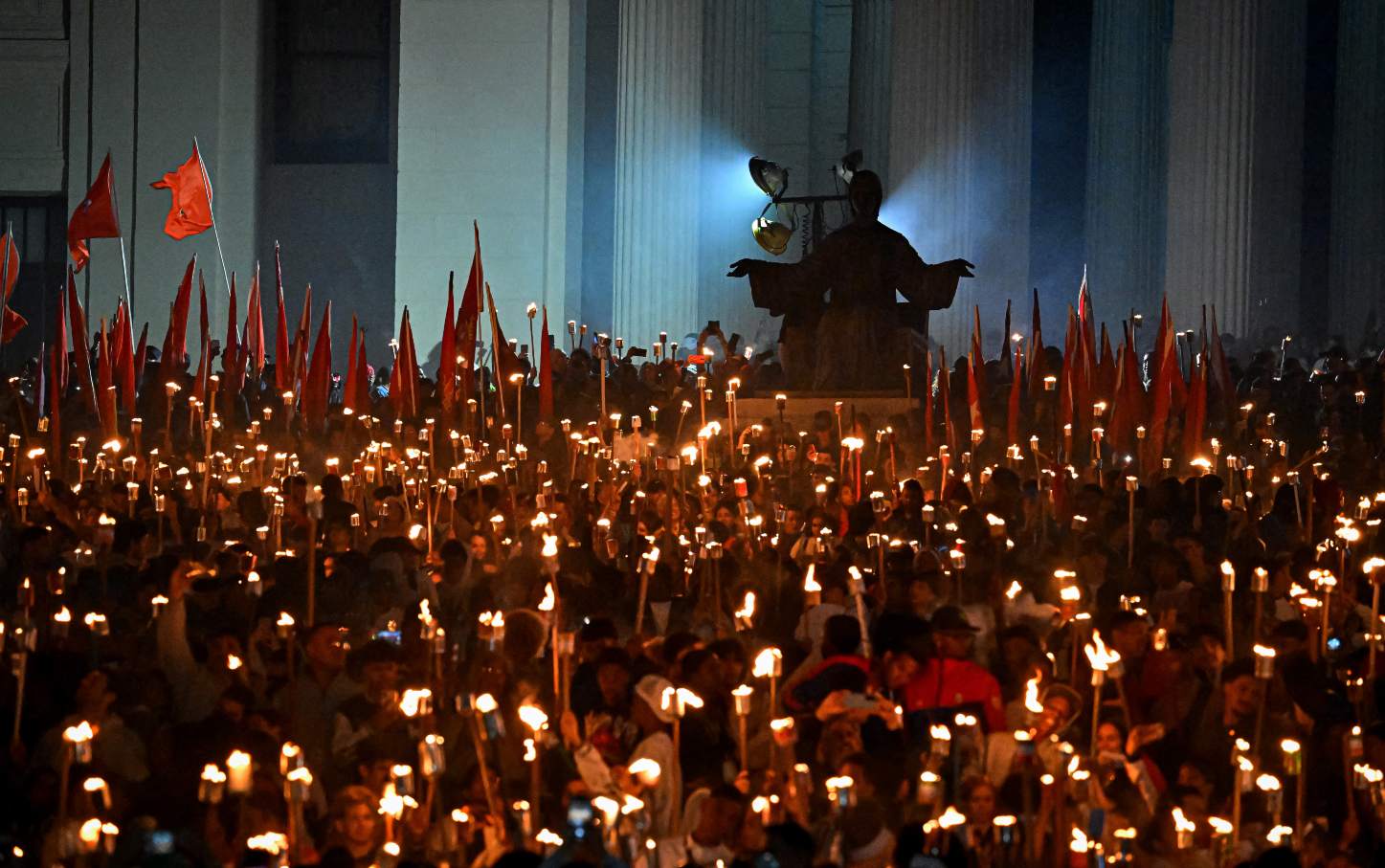
Events in Venezuela and threats from Washington and Miami appear to have struck a nationalist nerve in Cuba. As the remains of the fallen were returned from Venezuela and received as heroes amid three days of official mourning, more than 200,000 people marched past the US Embassy along Havana’s seaside drive, carrying placards supporting Maduro and chanting anti-imperialist slogans.
Díaz-Canel spent much of January heading emergency provincial meetings of the Communist Party focused on energizing cadres and members “to work with the conviction that we will defend, to the very end, the Homeland, the Revolution, and Socialism,” according to official media. Reports said that, alongside defense, priorities included food production, stability of the national electrical grid, and developing new exports. Similar meetings with provincial and municipal government leaders were held separately, led by Prime Minister Manuel Marrero.
The US strategy appears to assume that with enough punishment, Cubans will rise up, the government will repress them, and the United States will then intervene under the banner of anti-Communism and freeing residents from tyranny.
Cuba’s strategy of the “war of the whole people” assumes the United States would quickly take Havana and then face weeks or months of resistance and casualties throughout the rest of the country. The plan is modeled after Vietnam’s strategy and tactics during its war with the United States and assumes that popular support in the face of foreign aggression will generate international solidarity. For more than 30 years, the UN General Assembly has overwhelmingly called for the lifting of US sanctions on Cuba.
Perhaps with those annual votes in mind, Foreign Minister Rodríguez charged in his response to Trump’s executive order that it “relies on a long list of lies that aim to present Cuba as a threat it is not.”
“Every day there is new evidence that the only threat to peace, security, and stability in the region—and the only malicious influence—is that exerted by the US government against the nations and peoples of our America,” Rodríguez declared, “whom it tries to subjugate to its dictates, strip of their resources, undermine their sovereignty, and deprive of their independence.”
More from The Nation
Israel’s Extremist Election Israel’s Extremist Election
The run-up to the vote on Tuesday is exposing the façade of Israeli democracy—and the fealty of the country's so-called opposition when it comes to matters of Jewish supremacy.
“NAZA” and Israel’s History of Automated Warfare “NAZA” and Israel’s History of Automated Warfare
As violent technologies like spyware, predictive targeting algorithms, and 2,000-pound warheads become ordinary instruments of military rule, once-abhorred practices become routin...
Brazil’s Workers’ Party Is Not Stopping Brazil’s Workers’ Party Is Not Stopping
With just a few days remaining before the runoff election, supporters of Lula’s party are doing everything possible to rally support behind the president.
Brazil’s Decision Brazil’s Decision
The moral compass and basic humanity of political leaders really does matter.
Albanian Student Strikes Spur a Political Crisis Albanian Student Strikes Spur a Political Crisis
A new round of protests against the ruling party’s corruption has Prime Minister Edi Rama giving cops bonuses to crack down on dissent.

