The United States’ Hidden History of Regime Change—Revisited
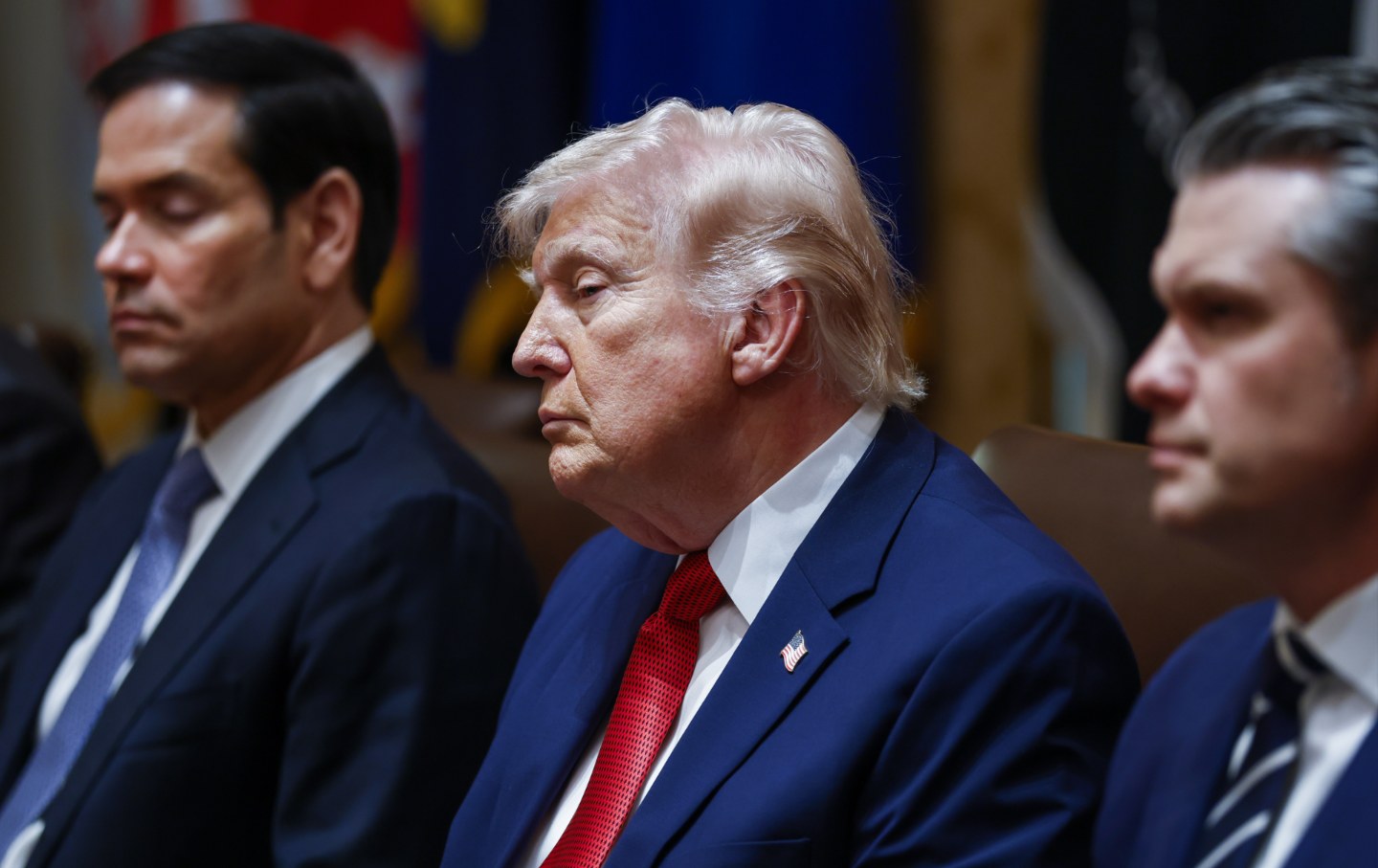
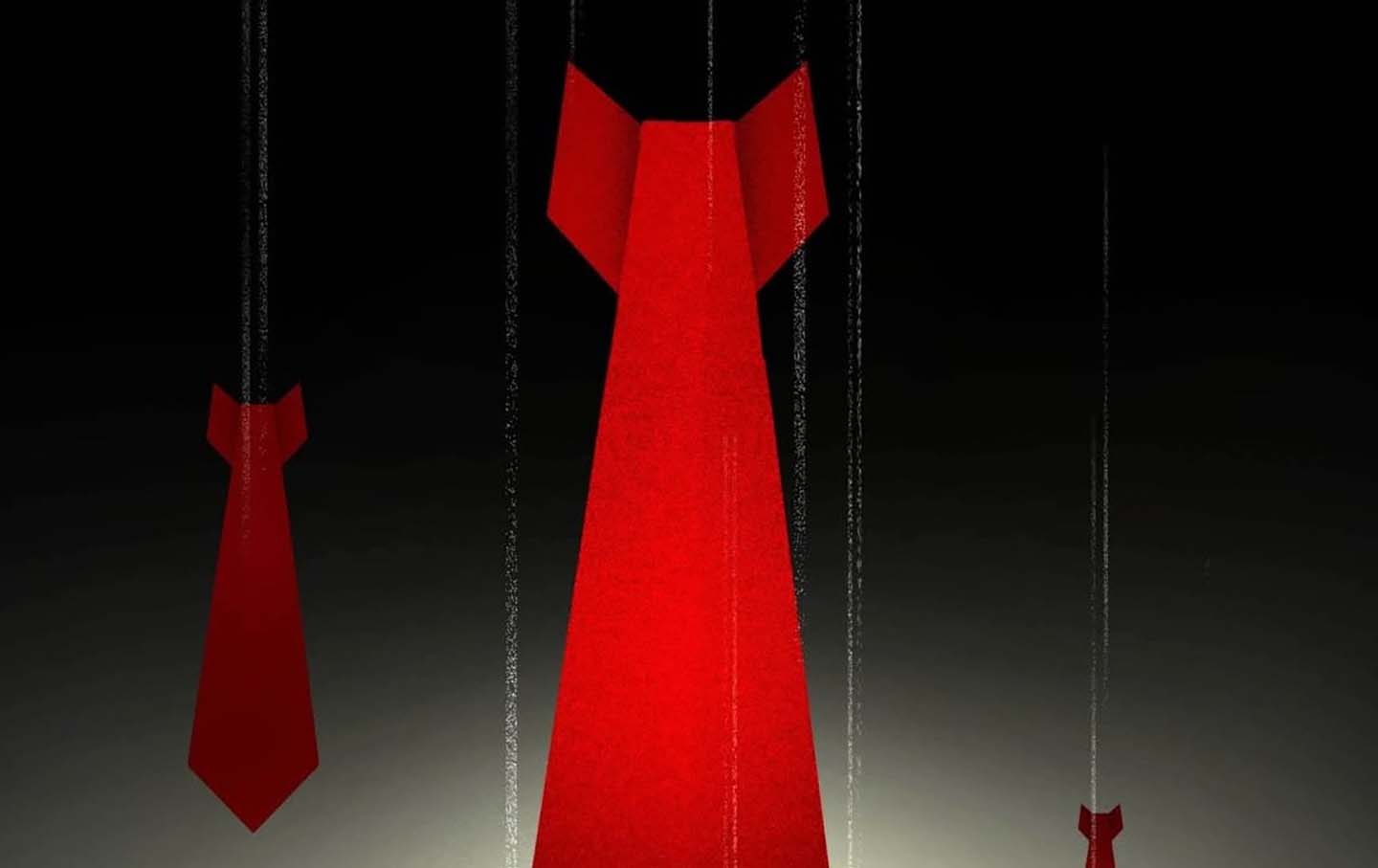
The truculent trio—Trump, Hegseth, and Rubio—do Venezuela.
Since the early 20th century, the United States has commandeered coups around the world, helping opposition figures and their mutinous militaries topple leaders whose policies they abhor. Why? These heads of state launched programs to redistribute land; strengthen labor unions, health and education systems; and nationalize industries. Washington insists they are “communist” or “socialist” and will threaten American dominance and corporate interests.
In the good old days, the hanky-panky was hidden, since the United States signed both the United Nations and Organization of American States charters, which stated that forced regime change was illegal.
But by the 1990s, US politicos scrapped the secrecy and told it like it was. For example, right-wing thinkers such as William Kristol and Robert Kagan, pilots of the Project for a New American Century, had no qualms writing a 1998 New York Times op-ed about the US and Iraq: They insisted that the US should overthrow Saddam Hussein’s regime “to ensure America’s greatness.”
Since then, everything has been on the table. Along with Kristol and Kagan, Dick Cheney, Donald Rumsfeld, Paul Wolfowitz, Lewis “Scooter” Libby, and Richard Perle joined the Bush II team. Finding no need to pussyfoot around, they insisted that the US should intervene wherever regimes rejected Washington’s road map.
Venezuela is just the latest country the US considers a threat. Since it sits on the world’s largest oil reserves (five times that of the US), former president Hugo Chávez and, after him, Nicolás Maduro chose an independent course. Despite US sanctions, Venezuela has sent its oil to countries such as China (which gets the lion’s share) as well as India, Cuba, Turkey, and even small amounts to Italy and Spain. Such goings-on cannot continue.
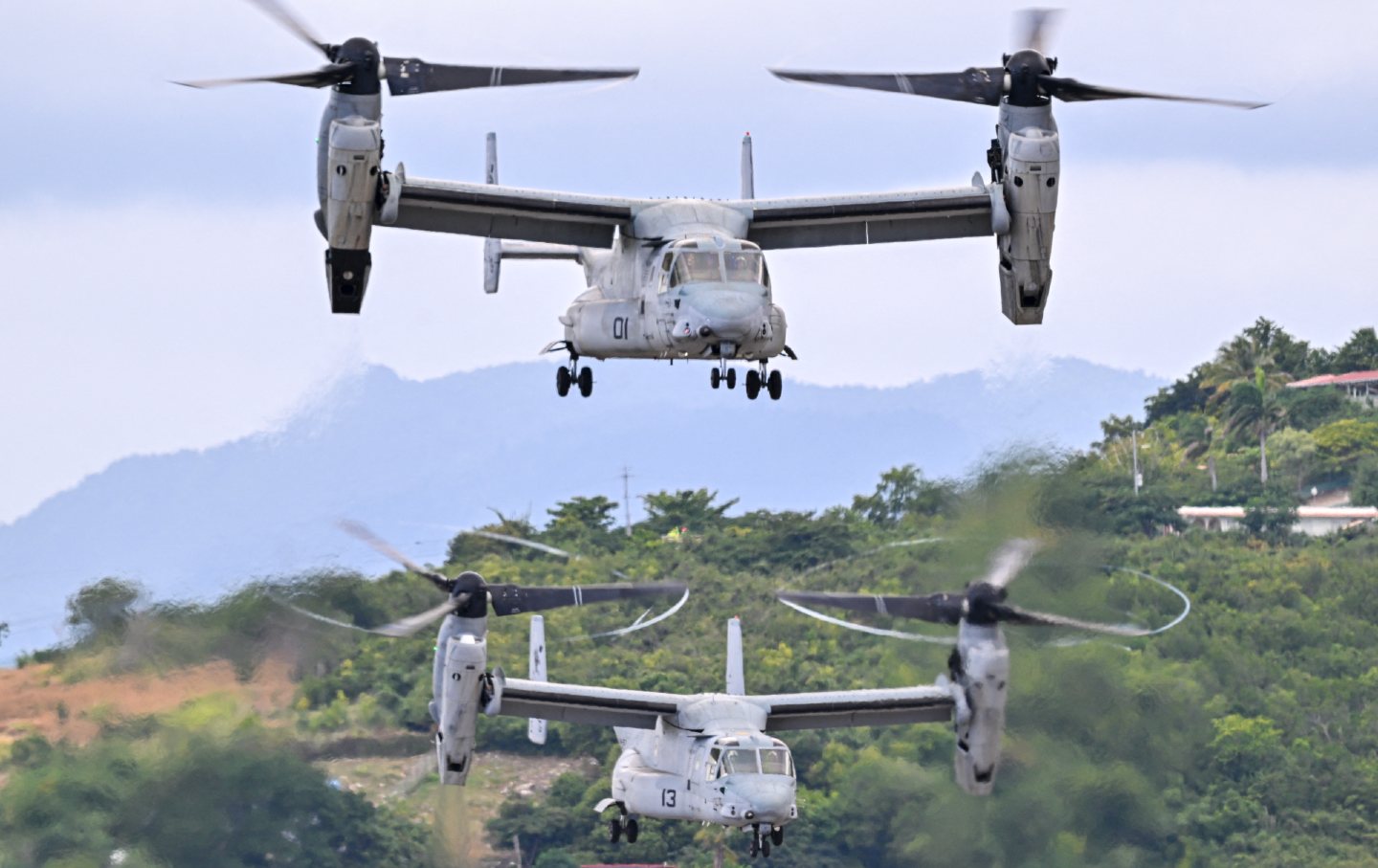
Thus, the truculent trio—Trump, Hegseth, and Rubio—have sent warships, fighter planes, missiles, and 15,000 troops to Venezuela’s coastal waters; and, on December 11, the US seized one of the country’s oil tankers. Before that, the US had destroyed 23 Venezuelan boats, killing all 87 on board. The trio claim that sinking these boats will stop the flow of fentanyl to the US, although they haven’t offered any evidence that this drug—or any other—was on board. Trump insists that each obliterated boat carried enough fentanyl to kill 25,000 Americans.
The US seized a second oil tanker on December 20, discarding the fentanyl fiction. Secretary of Homeland Security, Kristi Noem, boasted of “a lightning strike” to block Venezuela from “evading the sanctions” the US imposed to prevent it from selling its oil. “We will find you and stop you,” she warned.
It’s unlikely the US will invade Venezuela since many of the MAGA base oppose a new war with US “boots on the ground.” But it can bring down the government without a full-scale invasion as it has repeatedly done elsewhere.
Though the geography has changed, none of this is new. During the Cold War, the CIA cast cloaks and daggers to remove regimes, bankroll opposition figures, and train forces, as it did with the Nicaraguan contras in the early 1980s.
The number of interventions is huge. In some countries, the CIA meddled in elections. Dov Levin, a political scientist at the University of Hong Kong, wrote that since the end of World War II, the United States interfered in 81 countries’ elections. He added that if the list were backdated to the end of the 19th century, it would be twice as long. Russia, he noted, came in second, interfering in 36 elections.
For example, before the 1948 elections in Italy, the CIA sought to discredit candidates who were Communists (the party was legal). Since they were the backbone of the resistance in World War II, many could have won. Thus, the CIA circulated millions of embarrassing forged letters and aired broadcasts warning of the catastrophe to come if the Communists won. The tactics mainly succeeded.
But election meddling was the least deadly of the CIA’s cloaks and daggers. For the next seven decades, it helped topple or kill both elected and non-elected leaders in Panama (in 1941 and 1989), Iran (1953), Guatemala (1954), the Congo (1960), Brazil (1964), Indonesia (1965–67), the Dominican Republic (1965), Bolivia (1971), Chile (1973), Argentina (1976), Grenada (1983), Haiti (1991), Libya (2011), and Ukraine (2014).
For example, in Indonesia, the CIA helped oust President Sukarno and install General Suharto. It financed opposition groups and anti-communist propaganda, trained military factions, and ran psychological operations to create instability—and revealed the names of insurgents. It also produced a pornographic film in which the lead wore a mask of Sukarno. After the coup, the Suharto regime killed between 750,000 and 1,000,000 individuals.
In Brazil, the CIA supported the generals’ coup, since it and the US thought President João Goulart was a leftist threat that had to be squashed. This led to a 24-year military dictatorship that killed or “disappeared” at least 1,000 political dissidents and activists. It also promoted the broader US strategy of intervening in the region.
In Chile, Richard Nixon, the CIA, and Secretary of State Henry Kissinger supported the 1973 Pinochet coup that toppled Salvador Allende, the democratically elected president, who committed suicide during the attack. Kissinger warned President Nixon that “the example of a successful Marxist government in Chile would surely have an impact on other parts of the world and significantly balance our own position in it.”
Similarly, in Argentina, the US supported the 1976 military coup to counter “leftist” threats. Here, the CIA provided intelligence and logistical support to the military junta to destroy its opposition. And the tactics succeeded. Afterward, at least 30,000 people were “disappeared” as the generals systematically abducted, tortured, and murdered them—even tossing some out of airplanes. The US looked the other way because it wanted the junta to stabilize the region and protect American interests.
On very few occasions, the schemes failed. For example, the CIA tried to kill Fidel Castro for decades. Through Operation Mongoose, the agency sent him explosive cigars or poisoned food, ballpoint pens, and scuba diving suits. But Castro survived until his death in 2016 at the age of 90.
Popular
“swipe left below to view more authors”Swipe →Decades earlier, the United States, Britain, France, and Japan sent troops to Russia in the 1918 civil war to block a Bolshevik victory. They failed, and the Soviets retained power until 1989.
Interestingly, when Smedley Butler, a US Marine Corps general, retired in 1935, he famously announced, “I spent most of my time being a high-class muscle man for big business and the bankers. I was a gangster for capitalism.”
In April 2025, Dr. David Kirk, an assistant chair of intelligence studies at the American Military University, frankly said the US will “engage in denial and deceptions” to hide its plans from its enemies. However, over the past few decades, secrecy strategies have been scrapped.
But fine-tuned secrecy habits die hard. When I asked the Pentagon’s spokesman, Lt. Col. Bryon McGarry, about the weapons the US has sent to Israel and Ukraine since 2023, he said, “We don’t comment on specifics.”
As Kurt Vonnegut often wrote, “and so it goes.”