How Long Before Taking Tylenol While Pregnant Is a Crime?
In light of new data showing over 400 people have been prosecuted for pregnancy-related crimes, we should be wary of how Trump’s directives may be used against women.
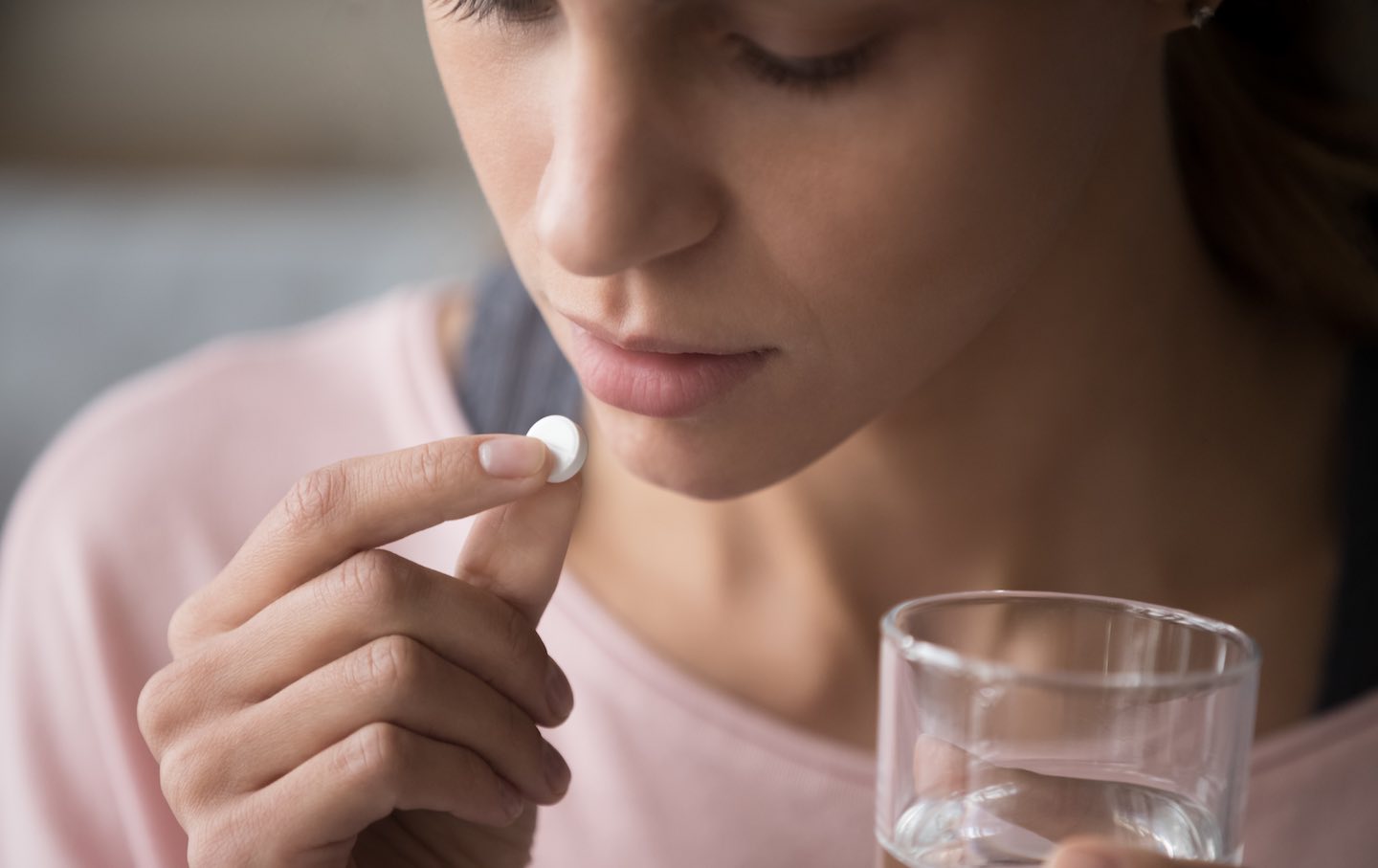
Accompanying Donald Trump’s press conference last week on the purported link between Tylenol and autism was a fact sheet on the White House website titled, “Evidence Suggests Link Between Acetaminophen, Autism.” It begins with a quote by press secretary Karoline Leavitt: “The Trump Administration does not believe popping more pills is always the answer for better health.”
Since the widely criticized press conference, medical associations and autism advocacy groups have spoken out against the president’s baseless claims. The American College of Obstetrics and Gynecology (ACOG) noted that the most reliable studies have shown no significant association between Tylenol use and autism and that the White House was undermining one of the few medications that can be used to treat “pain and fever” during pregnancy. The autism self-advocacy network urged leaders to ground their recommendations in evidence and take actions that would “materially improve” the lives of autistic people and their families.
Though shocking, the announcement is representative of the administration’s repertoire on matters related to reproduction: sow disinformation, downplay women’s suffering, and blame women. In the face of new data on a growing number of prosecutions for pregnancy-related rimes since the US Supreme Court overturned Roe v. Wade, this instruction by the president should concern us all.
Despite its centrality to our very existence, pregnancy is under-studied in science and medicine. Long-standing (and sometimes necessary) exclusions on women in clinical trials, especially where there might be some risk to the fetus, have produced gaps in what we know about pregnancy and fetal health.
Those who suffer the most from this lack of information are pregnant people who cannot sort through what they should or should not do in their daily life during the period that they are gestating. Contradictory research, if there’s any at all, and misinformation fill the void, making it difficult for people to navigate even basic questions of daily life, from how much coffee to drink to how much exercise is too much. A serious health issue can complicate this even further, particularly in states where pregnancy outcomes are criminalized, forcing pregnant people to make grueling decisions about how much to suffer before seeking medical intervention.
Federal agencies, including the CDC, often provide guidance on interpreting the field of pregnancy-related information, but today these groups seem more concerned about sowing doubt that benefits the administration politically than promoting evidenced-based best practices that would improve maternal and infant health.
In upending settled ideas about acetaminophen’s safety in pregnancy, the administration has reinforced the idea that the suffering of women—which we have seen spike since the Dobbs decision—is not something to be concerned about. In recent years, women have been denied life-saving abortion care, have become septic, have lost fallopian tubes and the ability to carry future pregnancies, and have died. No amount of suffering seems to be enough to turn the heads of anti-choice lawmakers and leaders to the consequences that state actions have had on pregnant people. Instead, anecdotes of women’s suffering seem to be having the opposite effect than intended.
If not the pregnant person, then whom should we care about? The answer is resounding: Above a pregnant person’s life, organs, or well-being, the most important entity is the future child, no matter the stage of embryonic or fetal development. This undermines the idea that pregnant people, too, should have a right to life.
Finally, the administration lays the blame. Are women really “popping pills”? The phrase suggests irresponsible use of medication during pregnancy.
Over the calls of researchers and physicians to study the complex manifestations of autism, to recognize the shifting definition of autism, and to recognize the various factors and despite the pleas for resources from advocates, the Trump administration has identified the guilty parties in the increasing rates of autism: mothers, acetaminophen, and, by association, the physicians who advise women take the medication.
This could have several effects. First, there is a growing willingness to prosecute mothers for their purportedly bad behavior in pregnancy. This builds on a long history: Even when there was a fundamental right to abortion, women have been prosecuted for actions taken during pregnancy. These prosecutions often prevented more sustained efforts to intervene and help mothers and infants whose behavior might be the outcome of poverty or lack of access to care. Prosecutions have continued with greater force since Dobbs: A new Pregnancy Justice report shows that over 400 people have been prosecuted for crimes related to pregnancy, childbirth, and pregnancy loss in the first two years after the decision.
With consideration for women’s suffering in pregnancy on the back burner, and blame and accountability taking center stage, we should be wary of how pregnancy directives will be mobilized in the criminal legal system.
Popular
“swipe left below to view more authors”Swipe →Second, medical practitioners who fear being blamed for autism due to medical interventions, like acetaminophen, may cease to recommend it for use in borderline cases. This could have the perverse effect of discouraging women from accessing needed treatment during their pregnancies, thereby causing the woman to suffer while actually exposing her child to harm. Will physicians hesitate to suggest Tylenol? Instances of physicians acting out of fear of litigation, to the detriment of pregnant women, have been well discussed and documented. If so, pregnant people will suffer while the administration overstates connections between acetaminophen and autism and the medical establishment seeks to protect itself from liability.
To be sure, there is nothing fundamentally wrong with HHS dedicating more resources to understanding how drugs might impact our health, fetal health, or the health of future populations. What matters is that we do it in a way that prioritizes care, deemphasizes blame, and builds on the best available evidence.
Disobey authoritarians, support The Nation
Over the past year you’ve read Nation writers like Elie Mystal, Kaveh Akbar, John Nichols, Joan Walsh, Bryce Covert, Dave Zirin, Jeet Heer, Michael T. Klare, Katha Pollitt, Amy Littlefield, Gregg Gonsalves, and Sasha Abramsky take on the Trump family’s corruption, set the record straight about Robert F. Kennedy Jr.’s catastrophic Make America Healthy Again movement, survey the fallout and human cost of the DOGE wrecking ball, anticipate the Supreme Court’s dangerous antidemocratic rulings, and amplify successful tactics of resistance on the streets and in Congress.
We publish these stories because when members of our communities are being abducted, household debt is climbing, and AI data centers are causing water and electricity shortages, we have a duty as journalists to do all we can to inform the public.
In 2026, our aim is to do more than ever before—but we need your support to make that happen.
Through December 31, a generous donor will match all donations up to $75,000. That means that your contribution will be doubled, dollar for dollar. If we hit the full match, we’ll be starting 2026 with $150,000 to invest in the stories that impact real people’s lives—the kinds of stories that billionaire-owned, corporate-backed outlets aren’t covering.
With your support, our team will publish major stories that the president and his allies won’t want you to read. We’ll cover the emerging military-tech industrial complex and matters of war, peace, and surveillance, as well as the affordability crisis, hunger, housing, healthcare, the environment, attacks on reproductive rights, and much more. At the same time, we’ll imagine alternatives to Trumpian rule and uplift efforts to create a better world, here and now.
While your gift has twice the impact, I’m asking you to support The Nation with a donation today. You’ll empower the journalists, editors, and fact-checkers best equipped to hold this authoritarian administration to account.
I hope you won’t miss this moment—donate to The Nation today.
Onward,
Katrina vanden Heuvel
Editor and publisher, The Nation