
Recent Democratic Victories Have Republicans Running Scared
Elise Stefanik is just the latest top Republican deciding against running in the 2026 midterms.
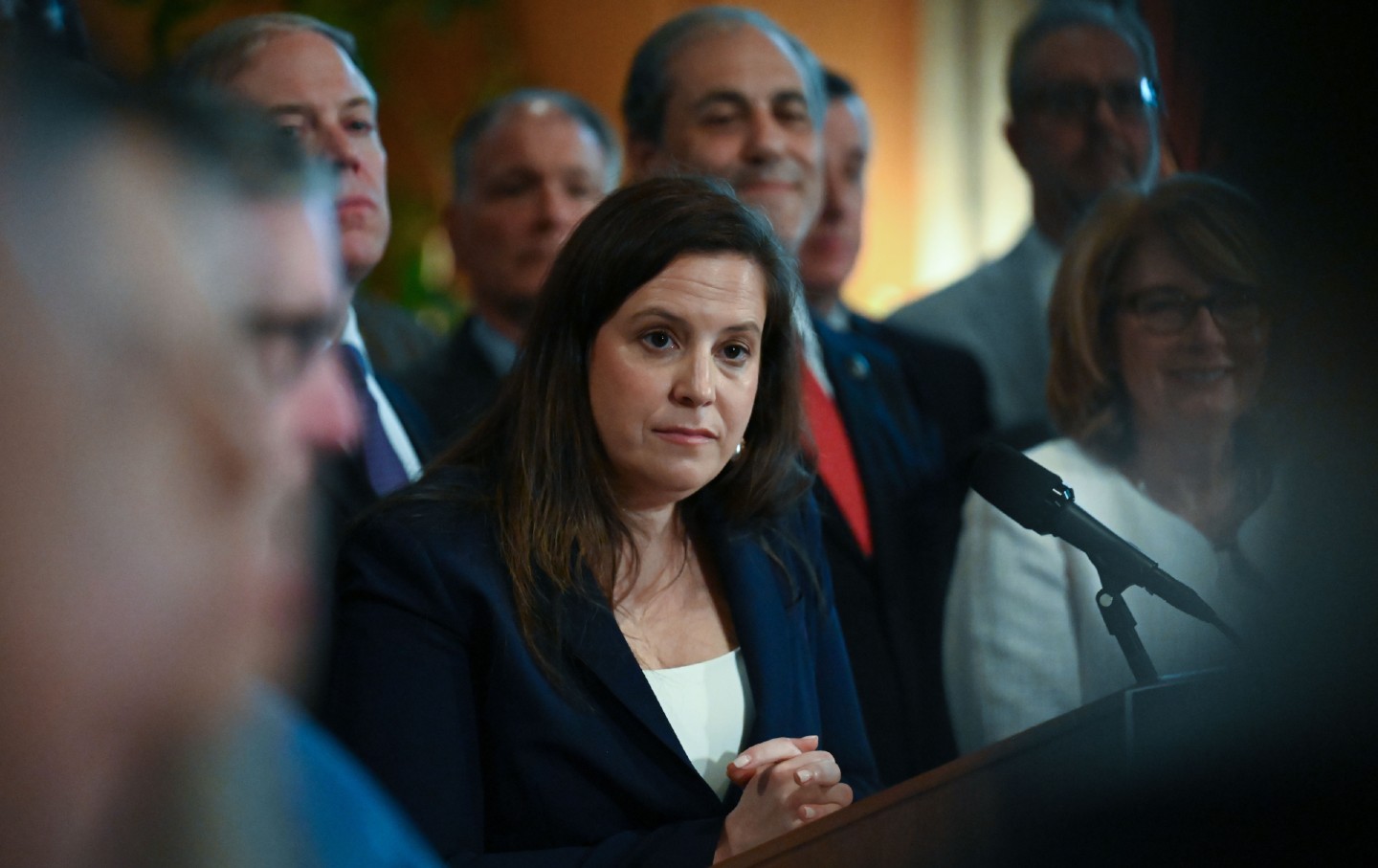
Elise Stefanik is joined by state GOP lawmakers during a news conference where she spoke in opposition to Governor Kathy Hochul on June 9, 2025, in Albany.
(Will Waldron / Albany Times Union via Getty Images)When Republican US Representative Elise Stefanik signaled in late June of this year that she would challenge Democratic incumbent Kathy Hochul for governor of New York, Republican operatives anticipated that the Stefanik-Hochul contest would be one of the premier contests of the 2026 election. A few months later, Stefanik formally launched her bid, with a combative video that tagged her as the “courageous leader ready for the fight” to raise New York from the “ashes of Kathy Hochul’s failed policies.”
Echoing the language of President Trump, with whom the formerly “moderate” Republican representative had closely aligned herself, as well as her MAGA Republican allies in Congress, Stefanik’s video hailed her as a candidate who was ready to “stand up to the woke mob” of liberals and Democrats.
But now Stefanik is standing down. She announced Friday that she will not run for governor. And, as part of a double blow to the GOP, she announced that she would not seek a new term representing a northern New York district that Democratic strategists think they might just be able to flip in 2026.
What gives? Stefanik offered the standard politician’s excuse that she just wanted to spend more time with her family. She indicated that she didn’t want to have to compete in a Republican primary for the governorship—even as she claimed that she “would have overwhelmingly won it.”
But savvy observers of New York and national politics had what sounded like a more plausible explanation.
She was, as Hochul spokesperson Ryan Radulovacki said, “going to lose.” And she’s not the only Republican faced with that daunting prospect. Stefanik’s announcement came just days after US Representative Dan Newhouse revealed that he would join the two dozen House Republican Caucus members—more than 10 percent of the current GOP majority—who have already signaled that they won’t run in 2026.
While some retirements were to be expected, analysts are now anticipating a GOP exodus that could be unprecedented in modern American political history.
More and more Republicans, it appears, see a perilous new year on the horizon. How perilous? “Republican lawmakers grow alarmed over signs of 2026 election wipeout,” read a November headline in The Hill, a widely read DC-insider journal.
It’s not just that Trump’s approval ratings have collapsed, or that general approval ratings for Republicans have tanked—after a year in which the GOP has, with full control of the federal government, provided a stark illustration of how dangerously and destructively it wields power. It is the practical reality of how voters have been casting their ballots in 2025—and are increasingly likely to cast their ballots in 2026.
“In 2025 alone, Democrats won or overperformed in 227 out of 255 key elections—nearly 90 percent of races,” noted DNC deputy executive director Libby Schneider, in a memorandum shared with The Nation. “In nearly every major contest, Democrats swept, from the Wisconsin Supreme Court race to the New Jersey and Virginia gubernatorial races, to the Georgia Public Service Commissioner race, to the Miami mayoral election, where a Democrat won for the first time in nearly 30 years. In state legislative elections, Democrats flipped a whopping 25 seats to Republicans’ zero.”
The Democrats faced enormous challenges going into the 2025 election cycle, after losing the presidency and both houses of Congress following a 2024 campaign that saw the party struggling to deliver an effective message on economic issues and disappointing much of its own base by failing at its highest levels to take necessary steps to thwart the genocide in Gaza. Trump began his second presidency with a show of force, as billionaires surrounded him on Inauguration Day, media networks bent to his demands, and billionaire Elon Musk launched his slash-and-burn DOGE project as the new president’s “special government employee.” In short order, Trump got the cabinet he wanted, as well as massive tax cuts for the rich, dismissals of government employees, assaults on popular safety-net programs, and a hateful crackdown on immigrants.
From the start, however, there was evidence that Americans did not like what they were witnessing. US Senator Bernie Sanders drew huge crowds for “Fighting Oligarchy” rallies in deep-red states, and millions showed up for “No Kings” events nationwide.
But the steadiest measure of disgust with Trump and the Republicans came in election results from regular odd-year elections and special elections. And as the year advanced, the evidence of popular objection to the MAGA agenda became overwhelming. “Across red, purple, and blue states, Democrats have gotten off the mat and proven that when you organize everywhere, you can win anywhere—in every part of the country,” says Schneider, who argues, as the critical 2026 midterm election season kicks off, that Democrats should “feel buoyed by the strong results we’ve seen up and down the ballot all year long.”
Political operatives are prone to hyperbole. But the Democratic record in 2025 is compelling, as is illustrated by a month-by-month analysis of movement toward the Democrat column, which Schneider shared with The Nation.
January
Iowa: Democrat Mike Zimmer flipped Iowa State Senate District 35, a district Trump won by 21 points in 2024.
Virginia: Kannan Srinivasan won Virginia State Senate District 32, and J.J. Singh won Virginia House District 26.
February
Maine: Democrat Sean Faircloth won Maine House District 24 with an 18 percent outperformance of the top of the 2024 ticket.
March
Pennsylvania: Democrat James Malone flipped Pennsylvania Senate District 36, becoming the first Democrat to win this seat since the 1880s. And Democrat Dan Gougner won the open House District 35 seat, ensuring that Democrats retain the Pennsylvania House majority.
Iowa: Democrat Nanette Griffin over-performed by 24 percent in a deep-red district.
April
Wisconsin: Susan Crawford won the Wisconsin Supreme Court seat by double digits after Elon Musk spent over $20 million trying to buy the seat.
Florida: Democrats Josh Weiland’s and Gay Valimont’s congressional special election wins outperformed by 15+ points the baseline margin at the top of the 2024 ticket.
May
New York: Sam Sutton won NY State Senate District 22 by 35 points—a district that Trump won by 55 points in 2024.
Nebraska: John Ewing Jr. flipped the Omaha mayoral, formerly the sixth-largest city led by a Republican, by defeating one of the longest-serving Republican mayors in the country.
June
Texas: Gina Ortiz Jones won the San Antonio mayoral race.
South Carolina: Democrat Keishan Scott won a South Carolina House seat in a landslide, outperforming the top of the 2024 ticket by 36 percent.
August
Iowa: Democrat Catelin Drey flipped Iowa Senate District 1, breaking the GOP supermajority in the Iowa Senate.
Rhode Island: Democrat Stefano Famiglietti over-performed by a whopping 56 percent in Rhode Island’s Senate District 4 election—one of the biggest over-performances this year.
September
Arizona and Virginia: Democrats Adelita Grijalva and James Walkinshaw won in AZ-07 and VA-11, ensuring that US House Republicans have the slimmest majority since the Great Depression.
November
Virginia: Abigail Spanberger flipped the VA gubernatorial race, winning by the largest margin for a Democrat in 60 years. Democrats won down the ballot as well, securing every statewide race on the ticket and flipping 13 legislative seats.
New Jersey: Mikie Sherrill won the NJ gubernatorial, shifting every county in New Jersey more Democratic from 2024.
Georgia: Alicia Johnson and Peter Hubbard won Georgia Public Service Commission seats, the first Democrats to win a nonfederal statewide election in Georgia in nearly 20 years.
Pennsylvania: Supreme Court Justices Christine Donohue, Kevin Dougherty, and David Wecht overwhelmingly won retention despite millions in right-wing dark money opposing them.
Mississippi: Democrats broke the GOP supermajority in the Mississippi State Senate.
December
Tennessee: Despite millions of dollars spent against her in a Trump +22 district, Democrat Aftyn Behn over-performed in the Tennessee-07 special election by 13 points.
Florida: For the first time in nearly 30 years, a Democrat, Eilleen Higgins, prevailed in the Miami mayoral race. Higgins won this race by more than double-digits.
Georgia: Democrat Eric Gisler flipped a Trump+13 seat gerrymandered to try to rig the race in favor of Republicans.
That was 2025. What about 2026?
There are never guarantees for how upcoming elections will turn out. But there can be reasonable speculation based on patterns from recent elections. And as members of Congress and candidates from both parties are considering their prospects for 2026, more and more of them are taking note of what Schneider credibly describes as a “dominating trend of Democratic victories and over-performances.”
More from The Nation
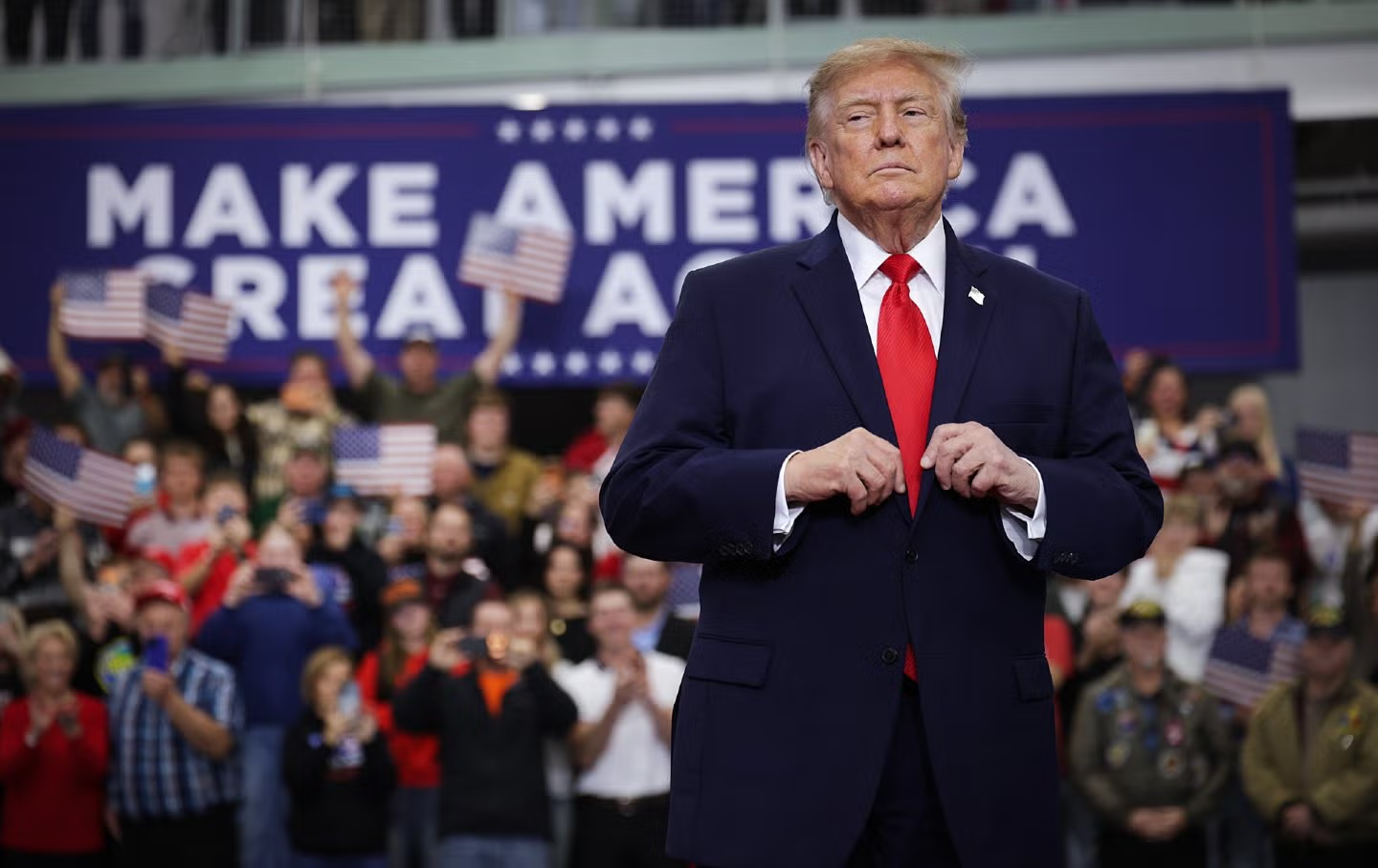
Trump Just Told Us How He Intends to Steal the Midterms Trump Just Told Us How He Intends to Steal the Midterms
The Alaska case is a red flag that Trump has no intention of accepting the results of an election that Republicans lose.

French Protests Are Hijacked by Agitators French Protests Are Hijacked by Agitators
Peaceful demonstrations were overshadowed by violence and destruction in the streets of Paris and Limoges.

Trump’s Attack on Ilhan Omar Is Just the Beginning Trump’s Attack on Ilhan Omar Is Just the Beginning
The attempt to strip Omar of her citizenship is part of a much bigger push for the mass denaturalization of American immigrants.

Donald Trump Is Bad at Politics Donald Trump Is Bad at Politics
The president’s flailing midterms campaign underscores a truth we should be acknowledging more often: He kind of sucks at this.
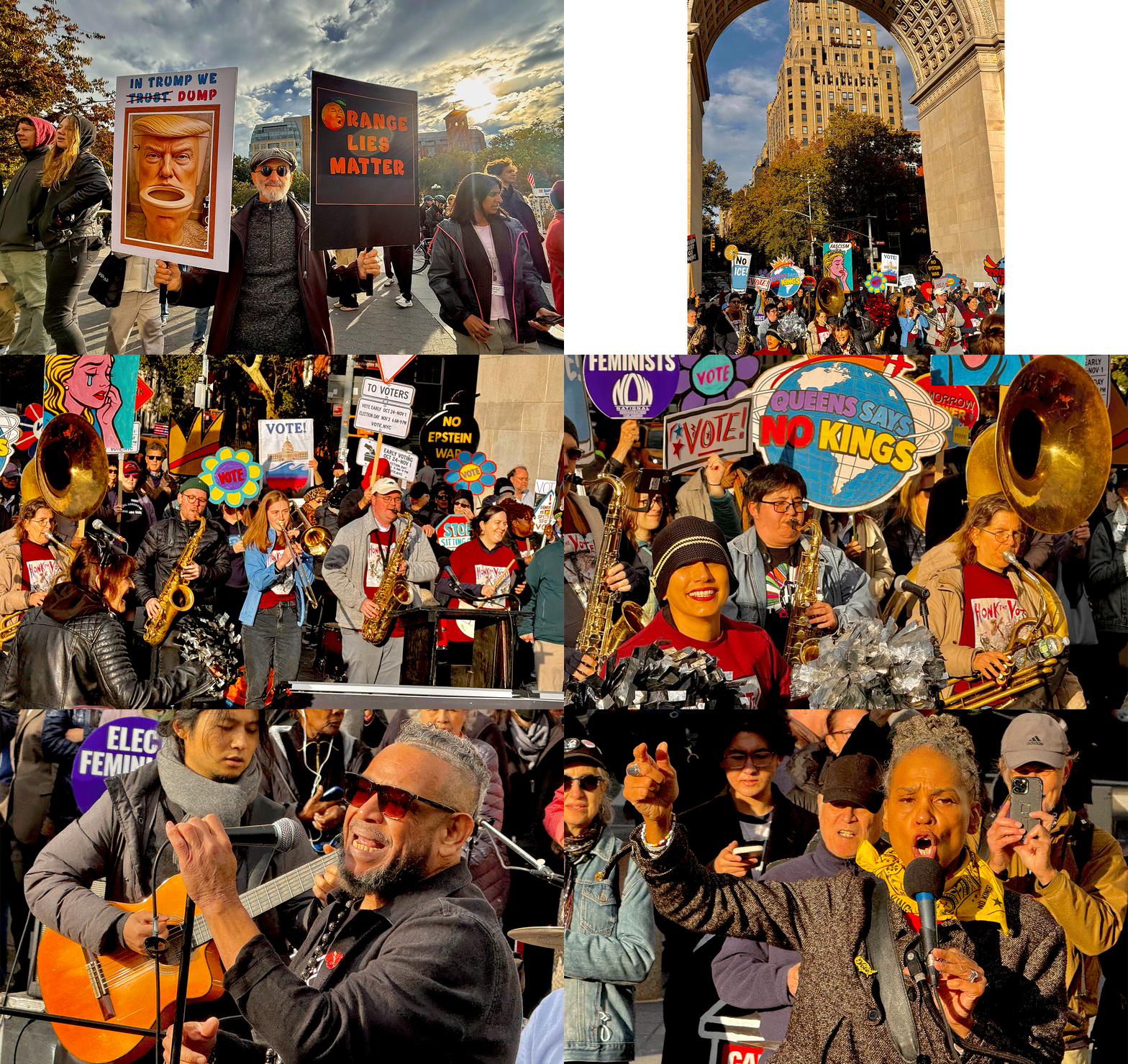

Obama Delivers a Scorching Rebuke to Trump—and Centrist Dems Obama Delivers a Scorching Rebuke to Trump—and Centrist Dems
Unlike other establishment figures, the former president isn’t scared to associate with the party’s left flank.

