The Climate Movement Has Blind Spots. We’re Here to Expose Them.
The people most harmed by ecological violence are usually the least represented in the stories we consume about climate change. That’s why the podcast A People’s Climate exists.

Most Americans know the climate crisis through statistics: degrees of warming, billions in damages, acres burned. But numbers don’t tell us whose lives are cut short, whose futures are being stolen, and whose voices are ignored.
That erasure isn’t accidental. The climate movement has blind spots, and they line up with the blind spots of our democracy. The people most harmed by the poisoned rivers, food apartheid, and ecological violence are usually the least represented in the stories we consume about climate change. Their struggles and wins are treated as side notes—if they appear at all.
That’s why A People’s Climate, a podcast launching in partnership with The Nation on September 27, exists. Each week I sit with people who aren’t usually invited into the “mainstream” climate conversation—community organizers, farmers, movement builders, and cultural workers who make the crisis visible in ways numbers never could. The show is both a critique and an act of repair: It exposes the omissions in climate coverage while amplifying the visions of resilience and solidarity that point us forward.
Take Representative Justin J. Pearson, a young Democratic lawmaker from Tennessee who was expelled from the state legislature after leading a protest for gun safety. The headlines framed it as a partisan fight. But Representative Pearson shows us it was something else: a warning about what happens when elected officials, especially young Black ones, are punished for standing with their communities. In South Memphis, those same communities are now battling Elon Musk’s xAI Colossus: a data center powered in part by 35 unpermitted methane gas turbines that emit more pollution than the city’s airport. It is reported to draw up to 1.5 million gallons of water per day for cooling, making it one of the largest industrial polluters in Shelby County.
These operations are occurring with little regulatory oversight, raising questions about accountability and the environmental costs imposed on nearby Black communities. Representative Pearson makes clear that the silencing of dissent and the greenlighting of polluters are two sides of the same coin. If communities cannot freely participate in decisions that determine whether they breathe clean air or drink safe water, then democracy itself is already compromised.
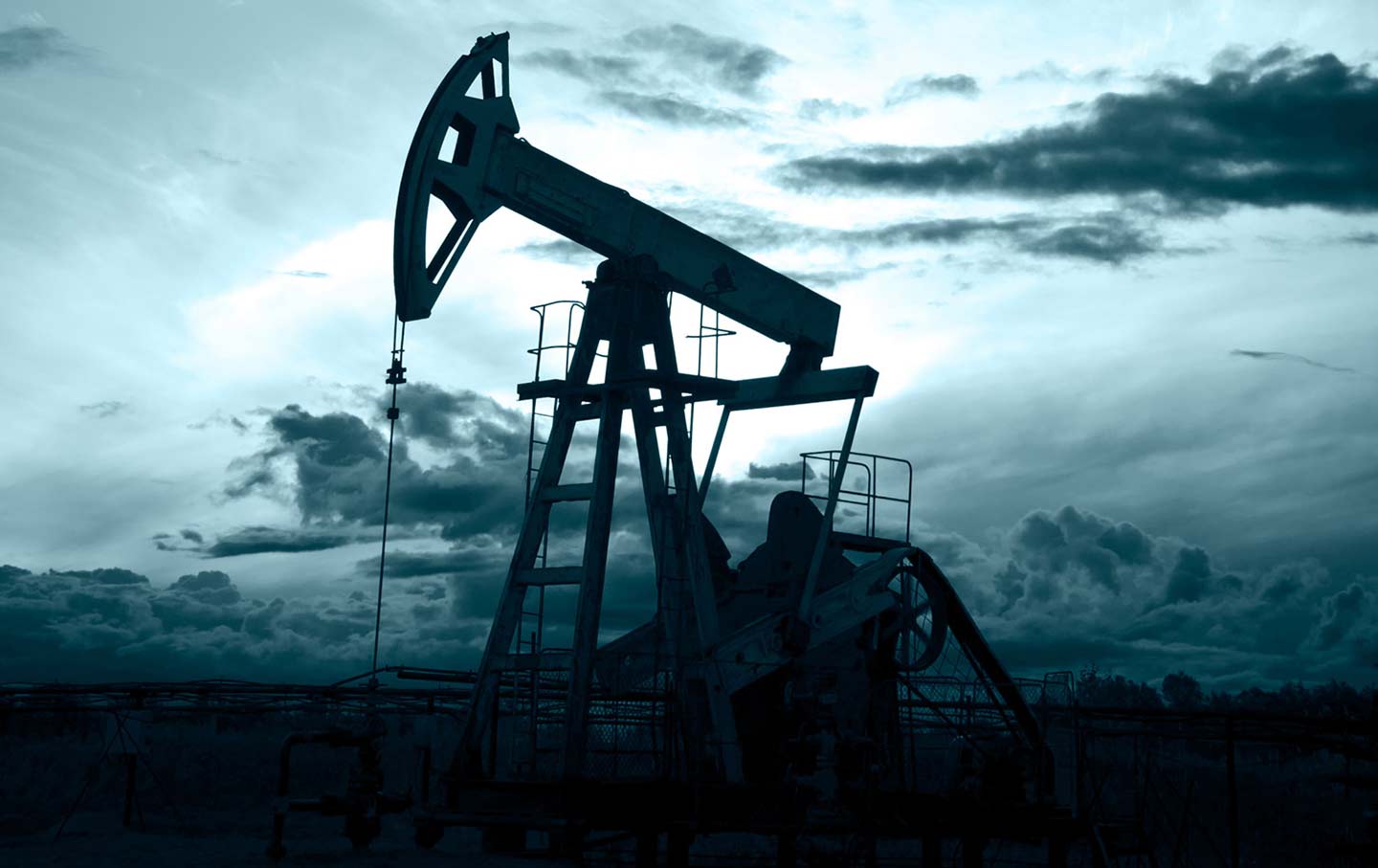
In Seadrift, Texas, Diane Wilson has been waging that fight for decades. A fourth-generation shrimper, she went up against Formosa Plastics—the sixth=largest chemical company in the world—after the company poisoned her bay with toxic plastic pellets. Wilson ultimately won one of the largest citizen environmental settlements in US history under the Clean Water Act, proving that persistence and community power can take on a multinational corporation. But her story also forces us to confront plastic for what it really is: the industry’s Plan B as the world phases out fossil fuels. Plastics are made from oil and gas, and as demand for fossil fuels in energy declines, companies are banking on plastic to secure their future. Every bottle, bag, and pellet is the byproduct of drilling and fracking, refined in chemical plants that choke nearby communities.
In other words, plastic isn’t just a recycling problem—it’s the business model for Big Oil. It’s also a democracy problem when corporations pollute with impunity and working-class people must risk everything to fight back. Permits are fast-tracked, subsidies flow freely, and regulators look the other way as communities bear the burden of environmental health impacts. Reports like the American Lung Association’s State of the Air show that the costs are real: Children of color are far more likely to suffer from asthma in heavily industrialized regions, and the American Society of Civil Engineers gives US water infrastructure a C-minus. These aren’t abstract statistics; they’re a measure of a country failing to protect its people.
And climate coverage too often draws the line at national borders, as if ecological violence outside the United States is irrelevant to the story of climate justice. But Vivien Sansour, founder of the Palestine Heirloom Seed Library, shows us how genocide takes ecological form under Israeli occupation: generations of farmers cut off from their land, vegetable fields bulldozed for tobacco companies, and seed banks destroyed as acts of cultural annihilation. Through her work, Sansour saves and shares heirloom seeds, protecting a lineage of farming practices and food sovereignty that occupation seeks to extinguish. To save seeds during a genocide, she explains, is to save history—and to insist on a future.
In our conversation, we discussed the hypocrisy that runs through the environmental movement: how often food justice, water protection, and land rights are named as rallying cries in US climate spaces, while those same spaces remain silent about Palestine. The point is as uncomfortable as it is urgent: If we ignore genocide, then the very ideals of food, water, and land justice become hollow—stripped of their integrity when applied selectively.
Survival depends on solidarity across movements for justice. As Nick Tilsen of NDN Collective underscores through the Land Back movement, that solidarity stretches from the HeSapa (the Black Hills, South Dakota) to Gaza and the West Bank, where Indigenous resistance is inseparable from the survival of democracy itself. But while movements are building power in these ways, the stories that dominate headlines look very different. Mainstream climate coverage too often celebrates shallow policy wins or billionaire-led schemes while ignoring the systems doing the most damage. Covering extractive industries and corporate “solutions” is how the media entrenches pollution and injustice rather than dismantling them. The climate crisis is not only about carbon. It’s about power and voice, about whose lives are deemed expendable and whose futures are protected. Once you’ve truly heard these stories, it’s much harder to look away. And that’s the first step toward building the kind of democracy capable of confronting the climate crisis.
Become a Sustaining Donor This September
Between the reemergence of right-wing red-baiting and Donald Trump’s use of the chilling National Security Presidential Memorandum–7 to criminalize left political organizing, we’re seeing McCarthyism reborn before our eyes.
This assault on democracy cannot be ignored or wished away. Resisting it requires bravery in the face of threats and repression, a steadfast commitment to the truth, and the unwavering belief that we can—and will—overcome this darkness.
We must have an independent media that sets the record straight, unearths corruption and abuses of power, and advances a politics of justice and dignity for all if we’re to win this fight.
That’s why I’m writing to you today. This September, The Nation needs to add 100 monthly donors to sustain our progressive journalism. Your contribution makes the next investigative report, the next truth-speaking column, and the next pathbreaking essay all possible.
I hope you’ll support our work with a recurring donation today. If you donate $10 or more a month, we’ll send you a brand new “Hands Off the Free Press!” sticker to recognise your commitment to our cause. Please, donate today.
Onward,
Katrina vanden Heuvel
Editor and Publisher, The Nation