In Chicago, a Coalition of Unions, Community Organizers, and Drivers Have Forced Uber to Come to the Table
As the tech industry moves increasingly into alignment with the far right, the issue of worker power has never been more important. The Chicago campaign offers some key lessons.
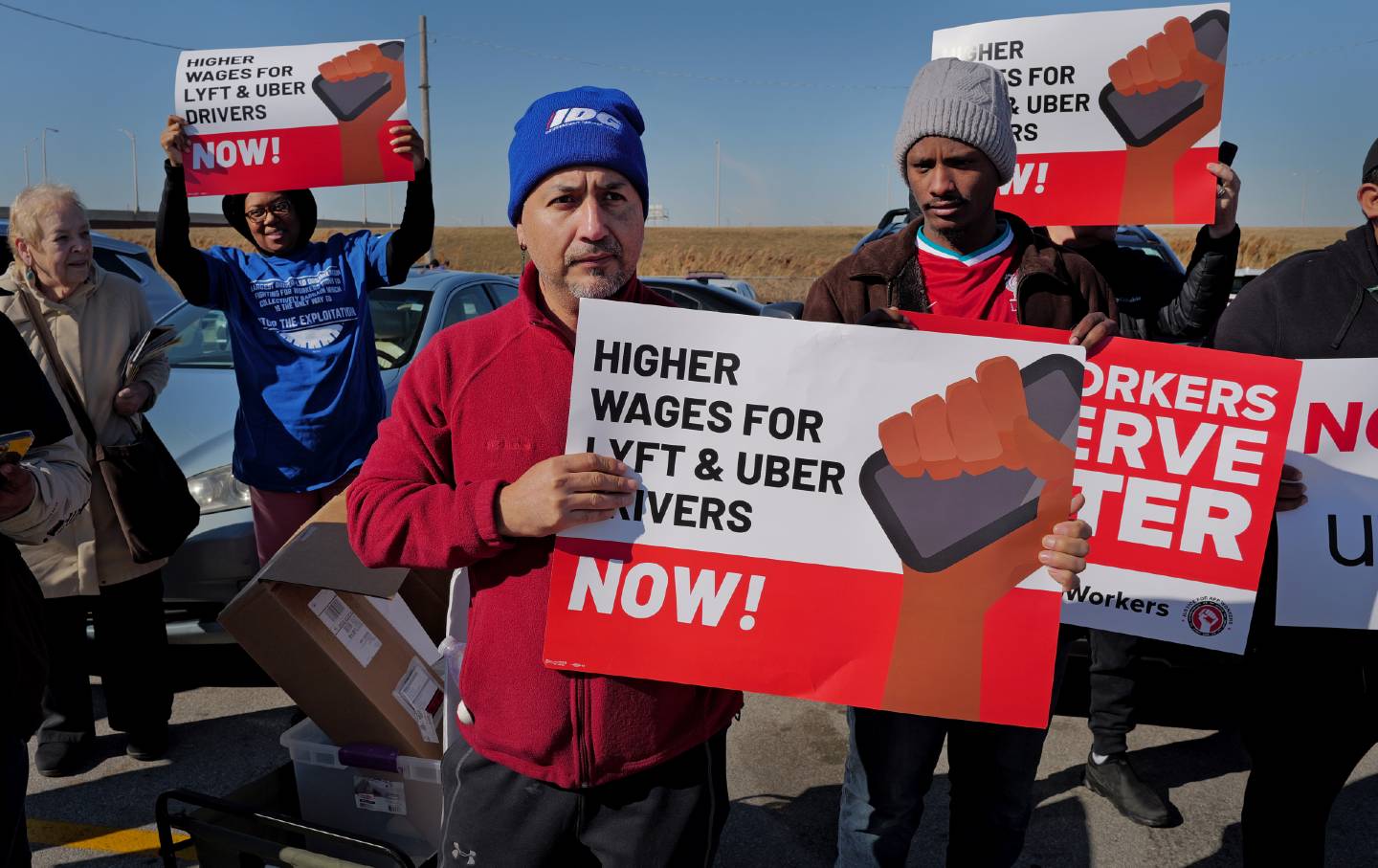
Chicago—Last month, a coalition of rideshare drivers, grassroots organizations, and unions announced an agreement with Uber declaring that the company would support Illinois state legislation enabling drivers to unionize and then bargain around pay and working conditions in the rideshare industry. This agreement was a result of Chicago drivers’ organizing for more than six years—a story that shows both the potential and the challenges of worker organizing in the tech industry as that industry takes a sharp turn towards the far right.
When Uber and Lyft were founded, drivers and passengers alike were excited by the technology and its promise of low prices for passengers and decent pay and flexible work schedules for drivers. For a time, these advantages overshadowed an industry business model that relied on a workforce of independent contractors with no worker protections and a company culture that prioritized growth at all costs. Over the past decade, it has become clear that this early honeymoon period was only temporary and had been subsidized by venture capital to undercut competition and corner the market. Beginning in 2017, both companies gradually decreased pay for drivers, who went from making over a dollar a mile in 2015 to $.64 a mile in 2022—even as the cost of vehicle ownership and maintenance skyrocketed and the cost the companies charged passengers increased by 83 percent from the beginning of 2018 to the third quarter of 2022. Although at one point Lyft had a reputation as a friendlier, more socially responsible company, drivers have consistently experienced broad similarities in the pay and working conditions between the two companies. Today, neither company provides any kind of standard time or distance-based pay rate to drivers in Chicago, and the cost of every ride as well as how much of the total fare the driver receives are determined in an unpredictable way by a mysterious algorithm. What has become clear is that these app companies rely on worker exploitation and paying workers below the minimum wage in order to be profitable.
Drivers in Chicago started organizing in 2017, directly following Uber’s announcement that workers would no longer receive the bulk of their “surge” pay (the upcharge passengers pay when the platforms are busy). Even then, the writing was on the wall, as Uber described itself explicitly as a “technology” company rather than a transportation company—and both companies have continually tried to divest from the workforce they begrudgingly rely on until the time they hope to replace drivers with self-driving vehicles. Driver organizing began through an informal self-organized group and then, starting in 2019, became a project of The People’s Lobby called Chicago Gig Alliance. Drivers lobbied at City Hall and held rallies, protests, acts of civil disobedience, and vigils for workers killed on the job. We shared harrowing stories of assaults on the job, arbitrary firings by algorithm, and pay rates that left drivers in poverty and even sometimes homeless.
In 2022, Chicago Gig Alliance worked with allies in the Chicago City Council to draft and introduce an ordinance to raise pay and improve working conditions. Drivers held meetings with their council members to ask them to support this ordinance and held rallies and direct actions to call attention to the dramatically worsening pay and conditions in the industry— a campaign which earned dozens of media hits that reached millions of Chicagoans.
The People’s Lobby included support for that ordinance as a condition of the organization’s 2023 endorsement process, which led then–mayoral candidate Brandon Johnson and a dozen members of the City Council to commit to supporting the rideshare living-wage ordinance before drivers and other People’s Lobby members knocked thousands of doors to help them win their elections. In response to ongoing driver organizing as well as the progressive momentum coming from the 2023 election, Alderman Mike Rodriguez reintroduced the ordinance in the first meeting of the new council in May 2023. Over the next 18 months, drivers and Alderman Rodriguez built the cosponsor list up to 29 alders.
Throughout this process, Chicago drivers were in constant communication with drivers in other cities fighting similar campaigns. PowerSwitch Action and Action Center on Race and the Economy brought together driver organizations from a number of states to learn from successes and failures and provide research and legal support. Drivers from places like California, Colorado, and Seattle were soon traveling to Chicago to participate in rallies for our rideshare living-wage ordinance, and drivers from Chicago marched on Uber’s HQ in San Francisco to deliver demands for fair pay and safe jobs.
While drivers focused initially on the need for a city ordinance to regulate pay, we also recognized that organizing a union could empower workers to negotiate directly with the companies while also leveraging worker power to push for regulations such as the wage ordinance we were fighting for. Toward that end, we worked to build relationships with unions that might be interested both in supporting the ordinance—and potentially organizing a union of drivers over the longer term. In early 2025, Chicago Gig Alliance came together with the Service Employees International Union (SEIU) Local 1 and the International Association of Machinists and Aerospace Workers (IAM) to push the ordinance over the finish line and then work together to organize a statewide union of rideshare drivers.
In March 2025, a competing union joined the fray on the opposite side when International Union of Operating Engineers Local 150 (who had given $1 million to Brandon Johnson’s opponent in the 2023 mayoral runoff, Paul Vallas, and has opposed affordable housing and environmental measures over the years) announced a “labor peace” agreement with Uber and promptly began denigrating the wage ordinance as unnecessary. IUOE is one of the largest contributors to City Council campaigns in the city and had close enough relationships with a key handful of council members who had cosponsored the ordinance that they were able to convince them to reverse course. Meanwhile, the companies threatened to lay off 10,000 drivers and raise prices by 50 percent if the ordinance passed.
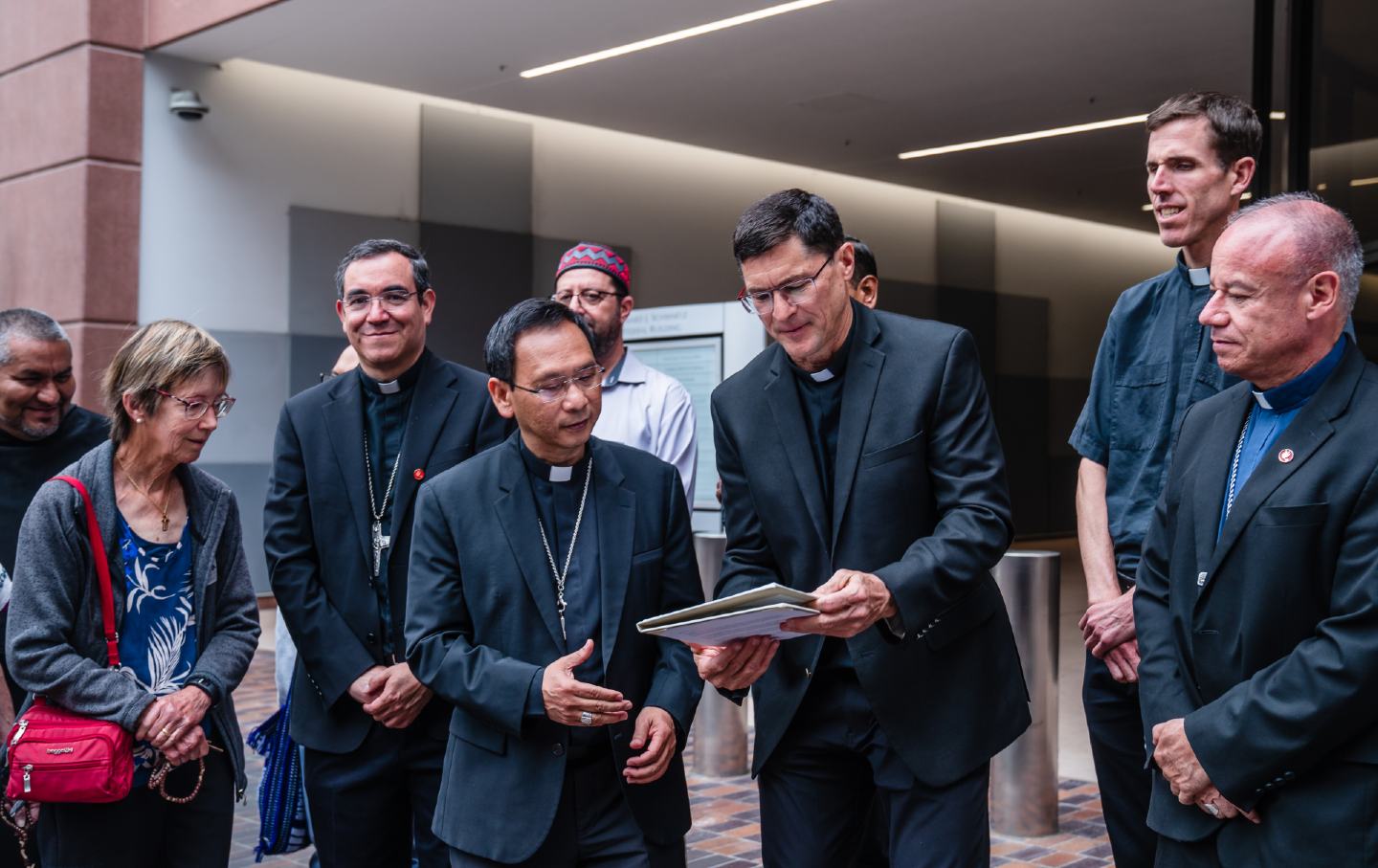
As we moved towards a summer deadline for moving legislation before the council shifted its focus to an escalating budget crisis in the fall, drivers and Alderman Rodriguez worked furiously to shore up the votes we needed. After dozens of drivers, religious leaders, and other allies packed a four-hour City Council committee hearing—and a few key council members who had previously committed to support the ordinance continued to waver—it became clear that there were real questions about our getting the bill over the finish line. At the same time, the escalating campaign by Chicago Gig alliance, the SEIU, and IAM represented a credible enough threat that Uber worried we might be able to pass the ordinance, or at least that we might be able to continue to do damage to their interests in our city and state. In response, the company came to the negotiating table and agreed to a deal that provides a path to statewide bargaining rights for the more than 100,000 rideshare drivers across our state—but which also required dropping the city ordinance.
It was a bittersweet moment for the drivers—who had been organizing for years while working for less than minimum wage, and who urgently needed a raise. Because independent contractors are legally prohibited from engaging in traditional collective bargaining, state legislation is required to enable unionization and bargaining by rideshare drivers around pay and working conditions. That process could take one to two years to get workers the raises that are long overdue. At the same time, this process offers the potential for larger-scale worker power and transformation of the industry.
The question of worker power in the tech industry is especially important as the tech industry moves increasingly into alignment with the far right. Rideshare drivers are on the front lines of holding the tech industry accountable to prioritizing the needs of workers, community, and democracy rather than maximizing profits and fueling the rise of white nationalist authoritarianism. While this Illinois rideshare campaign milestone is bittersweet, it is a reminder that worker organizing has the potential to transform the industries that are increasingly important to the current moment in our economy and politics.
Time is running out to have your gift matched
In this time of unrelenting, often unprecedented cruelty and lawlessness, I’m grateful for Nation readers like you.
So many of you have taken to the streets, organized in your neighborhood and with your union, and showed up at the ballot box to vote for progressive candidates. You’re proving that it is possible—to paraphrase the legendary Patti Smith—to redeem the work of the fools running our government.
And as we head into 2026, I promise that The Nation will fight like never before for justice, humanity, and dignity in these United States.
At a time when most news organizations are either cutting budgets or cozying up to Trump by bringing in right-wing propagandists, The Nation’s writers, editors, copy editors, fact-checkers, and illustrators confront head-on the administration’s deadly abuses of power, blatant corruption, and deconstruction of both government and civil society.
We couldn’t do this crucial work without you.
Through the end of the year, a generous donor is matching all donations to The Nation’s independent journalism up to $75,000. But the end of the year is now only days away.
Time is running out to have your gift doubled. Don’t wait—donate now to ensure that our newsroom has the full $150,000 to start the new year.
Another world really is possible. Together, we can and will win it!
Love and Solidarity,
John Nichols
Executive Editor, The Nation