Harvey Milk Loved Something That Scares Pete Hegseth: Democracy
The defense secretary’s scheme to rename a Navy ship honoring the LGBTQ+ rights activist is an insult to what’s most hopeful about the American experiment.
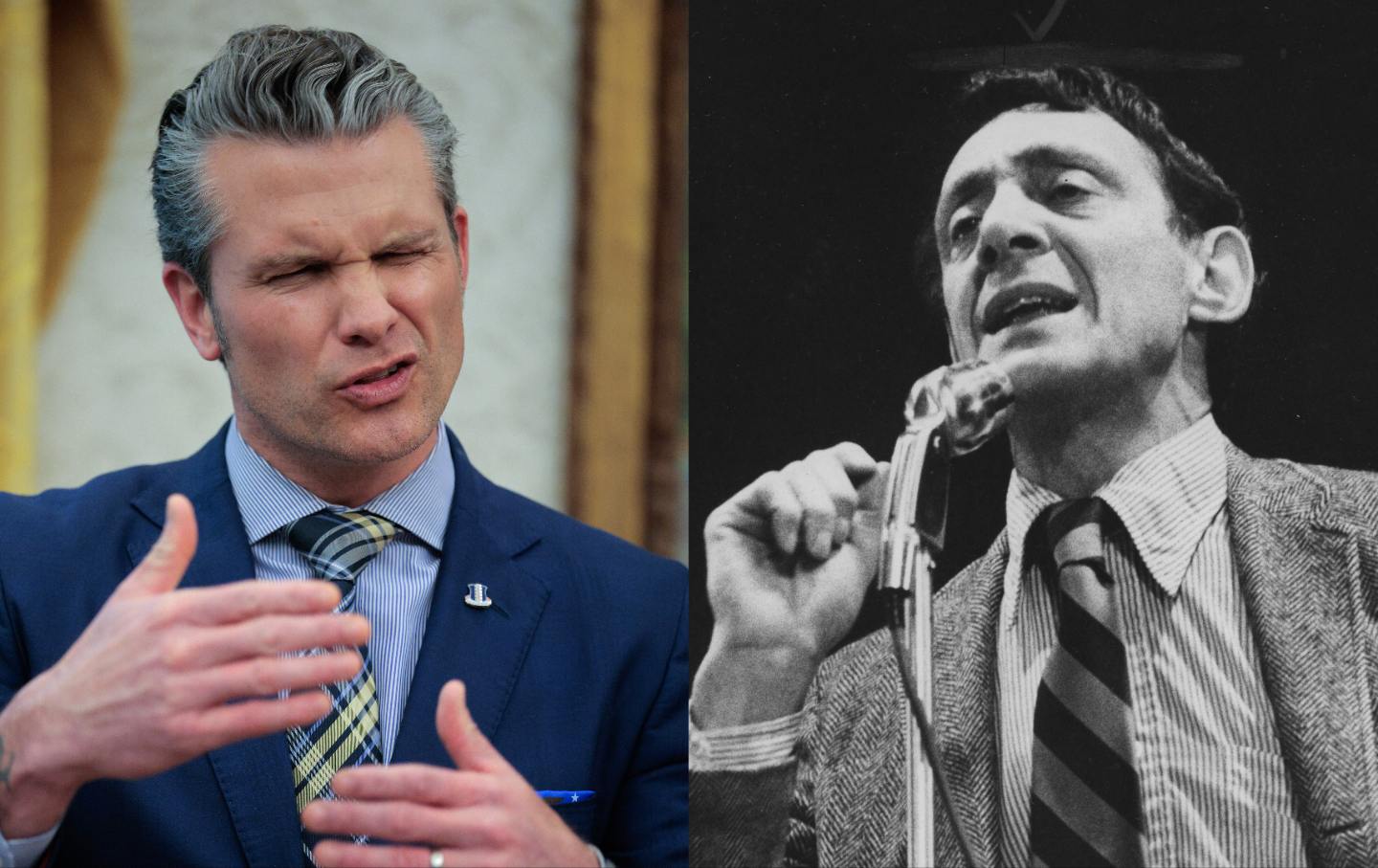
Defense Secretary Pete Hegseth has chosen Pride Month as the time to order that the US Navy Ship Harvey Milk, which honors the remarkable legacy of the Navy veteran who became a groundbreaking advocate for LGBTQ+ rights, be renamed. The timing is insulting, just as the decision is indefensible. Yet Hegseth cannot change the history that Milk made. Nor will the defense secretary’s crude calculus diminish the promise of American progress that Milk’s advocacy embraced and so ably advanced.
That fundamental truth was outlined in 2016, when the ship was named for Milk, who joined the Navy during the Korean War and served with distinction on a submarine rescue ship before being forced to resign because of his sexuality, At the time, Obama administration Secretary of the Navy Ray Mabus hailed Milk as an internationally recognized advocate for “justice, equality and freedom.”
Recalling Milk’s 1978 assassination, which came when he was serving as one of the first openly gay elected officials in the history of the United States, Mabus said Milk’s electoral activism and his outspoken advocacy for the LGBTQ+ community “offered hope for millions of Americans who were being ostracized and prosecuted just for who they loved.” Naming a Navy ship for Milk was just another reminder , said the navy secretary, that: “Even after death, his voice still spoke, his struggles continued and his cause [was] taken up by countless others.”
This notion apparently did not sit well with Hegseth and Trump’s Pentagon team, which, according to documents obtained by CBS News, has a “recommended list” for renaming Navy ships that includes civil rights champions, pioneering feminists, and labor rights activists. “Among them are the USNS Thurgood Marshall, USNS Ruth Bader Ginsburg, USNS Harriet Tubman, USNS Dolores Huerta, USNS Lucy Stone, USNS Cesar Chavez and USNS Medgar Evers,” reported the network.
Choosing to rename Milk’s ship during Pride Month, which for decades has celebrated the LGBTQ+ community, is the kind of blatant slap in the face prized by the Trump administration. But the Pentagon has chosen to be coy about the move, even as defense sources told journalists that it was intentional. A Pentagon spokesman would only say, “Secretary Hegseth is committed to ensuring that the names attached to all DOD installations and assets are reflective of the Commander-in-Chief’s priorities, our nation’s history and the warrior ethos” (emphasis added).
The current administration’s “priorities” have never been aligned with a vision of the American experiment as an ongoing struggle to expand democracy and freedom, one which—at its best—has been powered by a Lincolnian faith that “government of the people, by the people, for the people, shall not perish from the earth.”
But this is the faith that Harvey Milk embraced—and proved could be made real.
Milk was a militant believer in small-d democracy who preached a politics of liberation and radical inclusion that demanded a place for members of every disenfranchised and dismissed community in the corridors of power—not pleading merely for tolerance or recognition, but campaigning for election as city supervisors, mayors, senators and presidents.
Operating on the premise that it was possible to carry the “democracy is in the streets” activism of the 1960s into the local elective politics of the 1970s, Milk argued that seeking public office was a way to “make a statement.” By doing so, he explained, “You say, ‘I’m here, pay attention to me.’” But he did not want to stop there. He wanted to win in order to shape policy and provide “a green light” for others who would do the same.
That determination to fight, in coalition with all who were on the outside, framed a broader vision for a movement politics that would see Milk join union picket lines, champion gender equity, defend the neglected elderly, fight against apartheid abroad and racism at home, and boldly declare, “It takes no compromise to give people their rights… it takes no money to respect the individual. It takes no political deal to give people freedom. It takes no survey to remove repression.”
Harvey Milk’s life and service have been honored frequently over the decades since the San Francisco supervisor was slain (along with then-San Francisco Mayor George Moscone) by a conservative local politician on November 27, 1978. Milk was a posthumous recipient of the Presidential Medal of Freedom, earning recognition for the way in which “he fought discrimination with visionary courage and conviction.” His smiling face has appeared on a US postage stamp. He was the subject of a best-selling book and an Academy Award-winning film.
These many forms of recognition would have been seized upon by Milk the activist, who saw every march, every rally, every campaign, every setback, and every victory as a teachable moment. Even as he was winning local and state political fights in the 1970s, Milk understood that those teachable moments would need to continue. He kept pushing the envelope, responding to threats on his life with the epic declaration, “If a bullet should enter my brain, let that bullet destroy every closet door in the country.”
Popular
“swipe left below to view more authors”Swipe →Were he around today, Milk would, undoubtedly, see Hegseth’s renaming frenzy as an opportunity to open up new debates, and to build bigger and bolder coalitions to combat assaults on individual liberty, social progress, and democracy.
What is vital for those who still respect Milk’s theory of teachable moments is an understanding of the importance not merely of pushing back against a wrongheaded administration but of embracing and renewing Milk’s liberated and liberating vision of politics.
Milk saw his election campaigns, and his eventual service on the San Francisco Board of Supervisors, as a vehicle to inspire hope and activism within the LGBTQ+ community. Yet he refused to narrow his appeal for a more open-minded and humane America. He was a coalition builder who wanted members of every community that had encountered hostility and discrimination to demand justice, together. As the late Representative John Lewis (D-GA) explained when the postage stamp honoring Milk was issued in 2014, “Harvey Milk and the men and women who followed him struggled to break down the barriers based on race, gender, class and sexual orientation.”
That broader vision of a multiracial, multiethnic, inclusive and expansive politics, which anticipated the Rev. Jesse Jackson’s Rainbow Coalition, must be renewed and expanded upon at a time when the progress that was achieved in the streets of the 1960s and at the ballot boxes of the 1970s is now under threat from reactionaries like Trump and Hegseth. This is the all-of-the-above politics that Milk spoke of when he explained almost 50 years ago, “I have never considered myself a candidate. I have always considered myself part of a movement.”
That movement lives on. It will outlast Pete Hegseth and Donald Trump. It will turn the page on reaction and repression, and it will renew the full promise of the American democracy that Harvey Milk gave his heart, his soul, and his life to advance.
Time is running out to have your gift matched
In this time of unrelenting, often unprecedented cruelty and lawlessness, I’m grateful for Nation readers like you.
So many of you have taken to the streets, organized in your neighborhood and with your union, and showed up at the ballot box to vote for progressive candidates. You’re proving that it is possible—to paraphrase the legendary Patti Smith—to redeem the work of the fools running our government.
And as we head into 2026, I promise that The Nation will fight like never before for justice, humanity, and dignity in these United States.
At a time when most news organizations are either cutting budgets or cozying up to Trump by bringing in right-wing propagandists, The Nation’s writers, editors, copy editors, fact-checkers, and illustrators confront head-on the administration’s deadly abuses of power, blatant corruption, and deconstruction of both government and civil society.
We couldn’t do this crucial work without you.
Through the end of the year, a generous donor is matching all donations to The Nation’s independent journalism up to $75,000. But the end of the year is now only days away.
Time is running out to have your gift doubled. Don’t wait—donate now to ensure that our newsroom has the full $150,000 to start the new year.
Another world really is possible. Together, we can and will win it!
Love and Solidarity,
John Nichols
Executive Editor, The Nation
More from The Nation

Christmas Wish Christmas Wish
The toll is staggering: in 2024, gun violence in the U.S. resulted in 40,886 deaths and 31,652 injuries.

Islamophobic Elites Lied to Destroy the Life of a Palestinian Brown Student Islamophobic Elites Lied to Destroy the Life of a Palestinian Brown Student
Plutocrats, pundits, and government officials joined together in a racist smear campaign against a queer Palestinian student at Brown University.
Recent Democratic Victories Have Republicans Running Scared Recent Democratic Victories Have Republicans Running Scared
Elise Stefanik is just the latest top Republican deciding against running in the 2026 midterms.
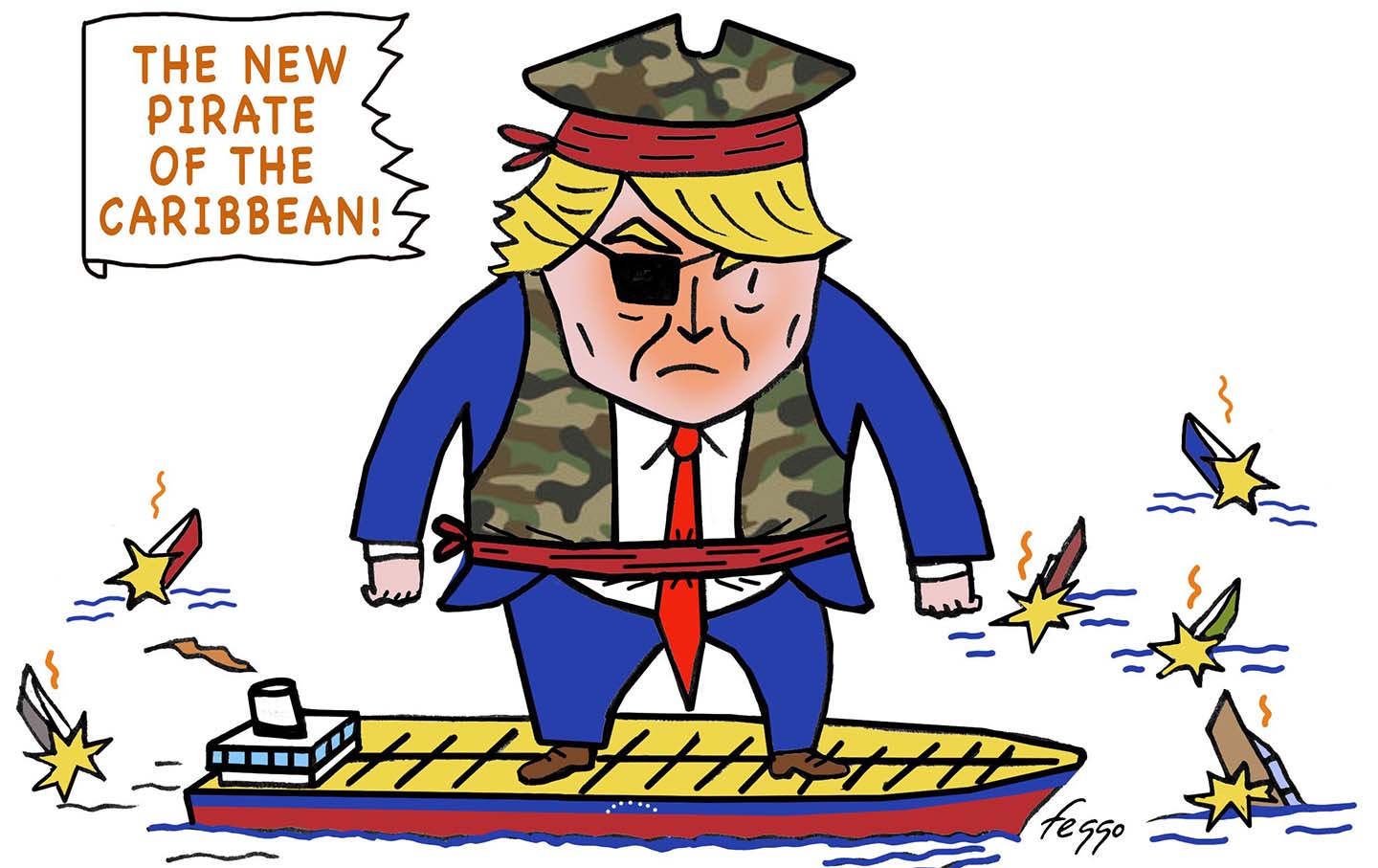
Pirate Trump Pirate Trump
Donald Trump escalates Caribbean tensions with vessel attacks near Venezuela.
Trump’s “Warrior Dividend” Might Be His Scariest Idea Yet Trump’s “Warrior Dividend” Might Be His Scariest Idea Yet
This week’s “Elie v. US” explores the authoritarian threat beneath Trump’s bonuses for military families. Plus, a case for getting rid of the Second Amendment.

