If Trump Could Make John Wayne the Head of Homeland Security, He Would
Trump’s appeal stems from the way he combines restoration and revolution. His reactionary modernism may have beguiled Silicon Valley, but the rest of us should expect repression.
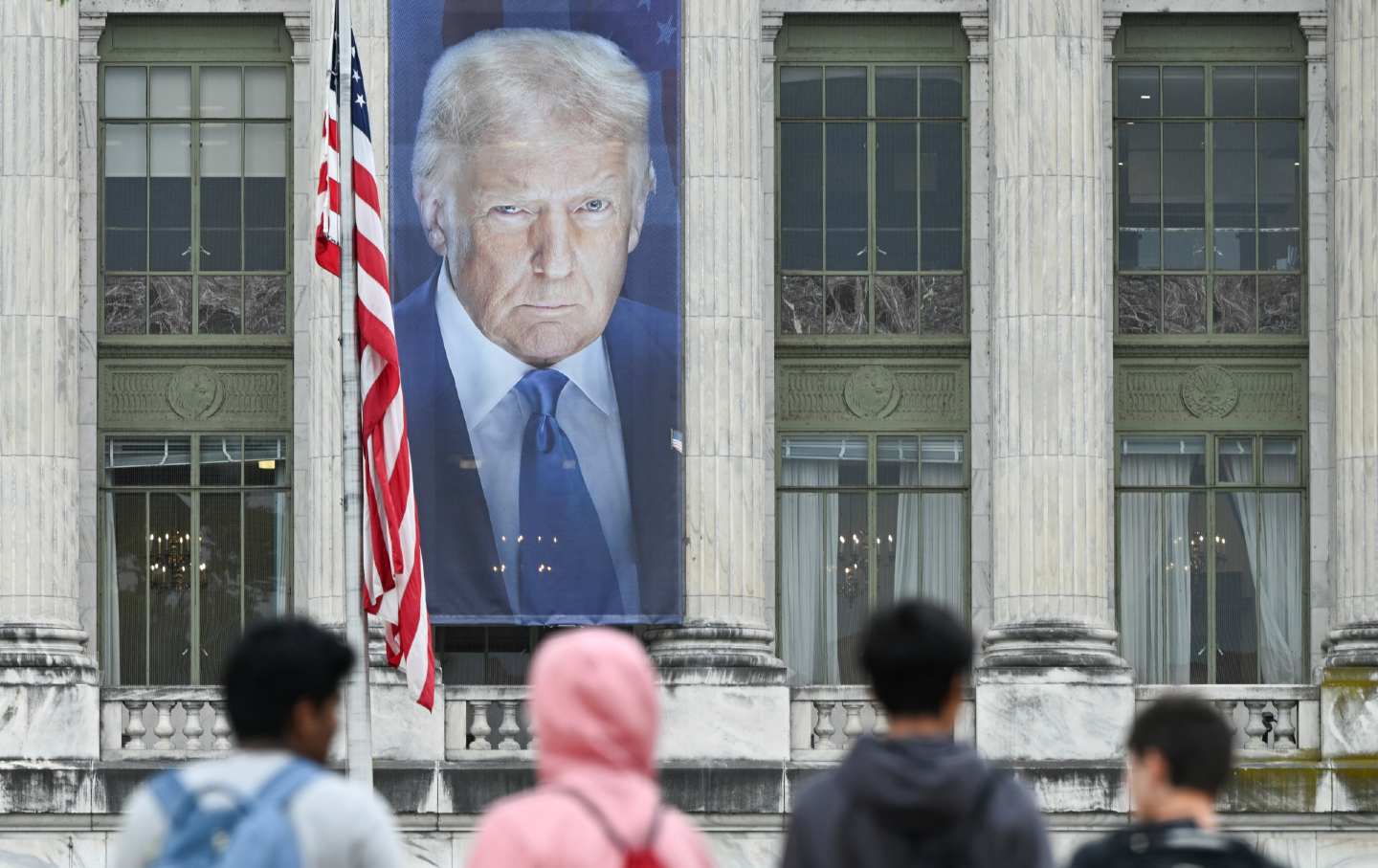
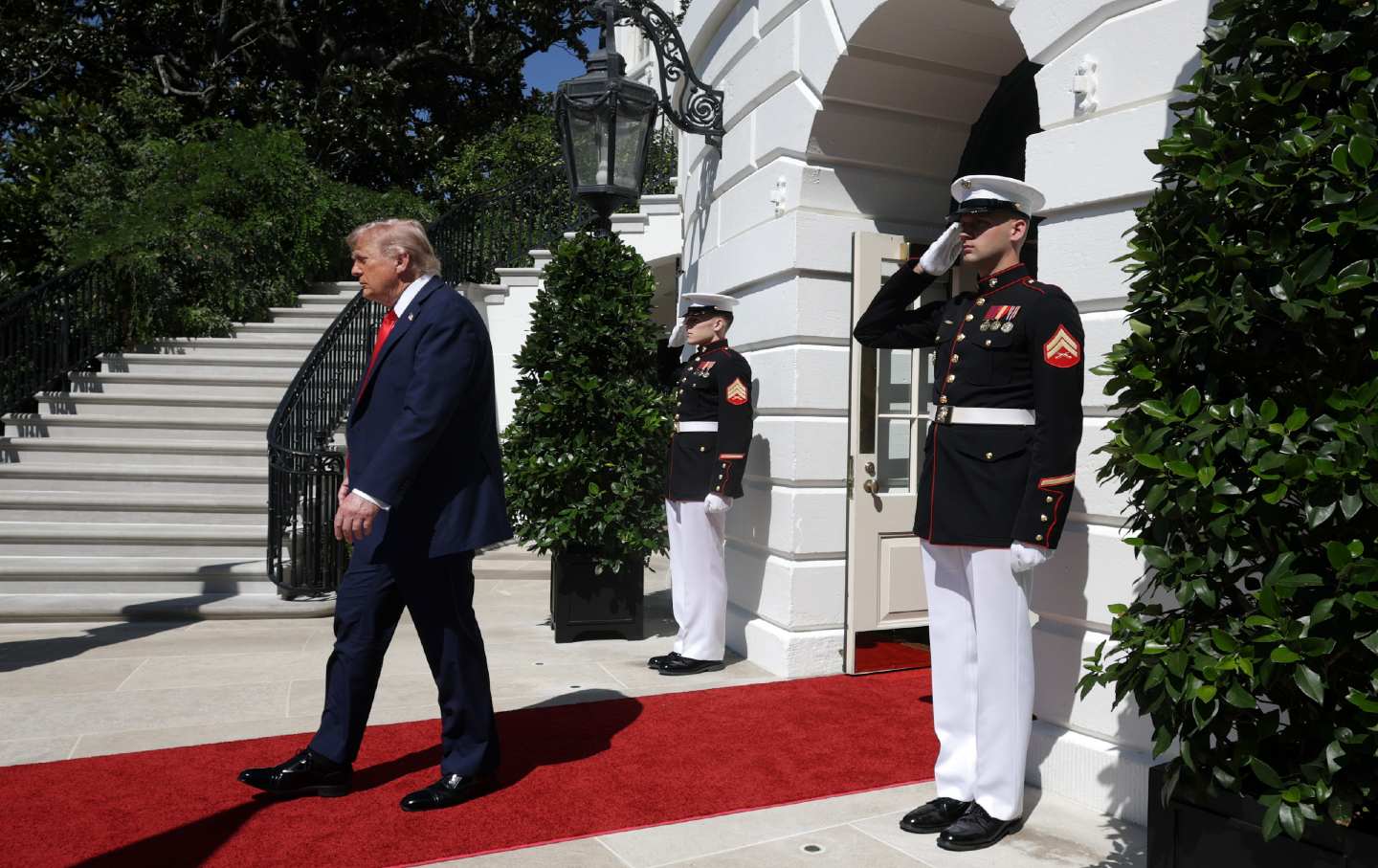
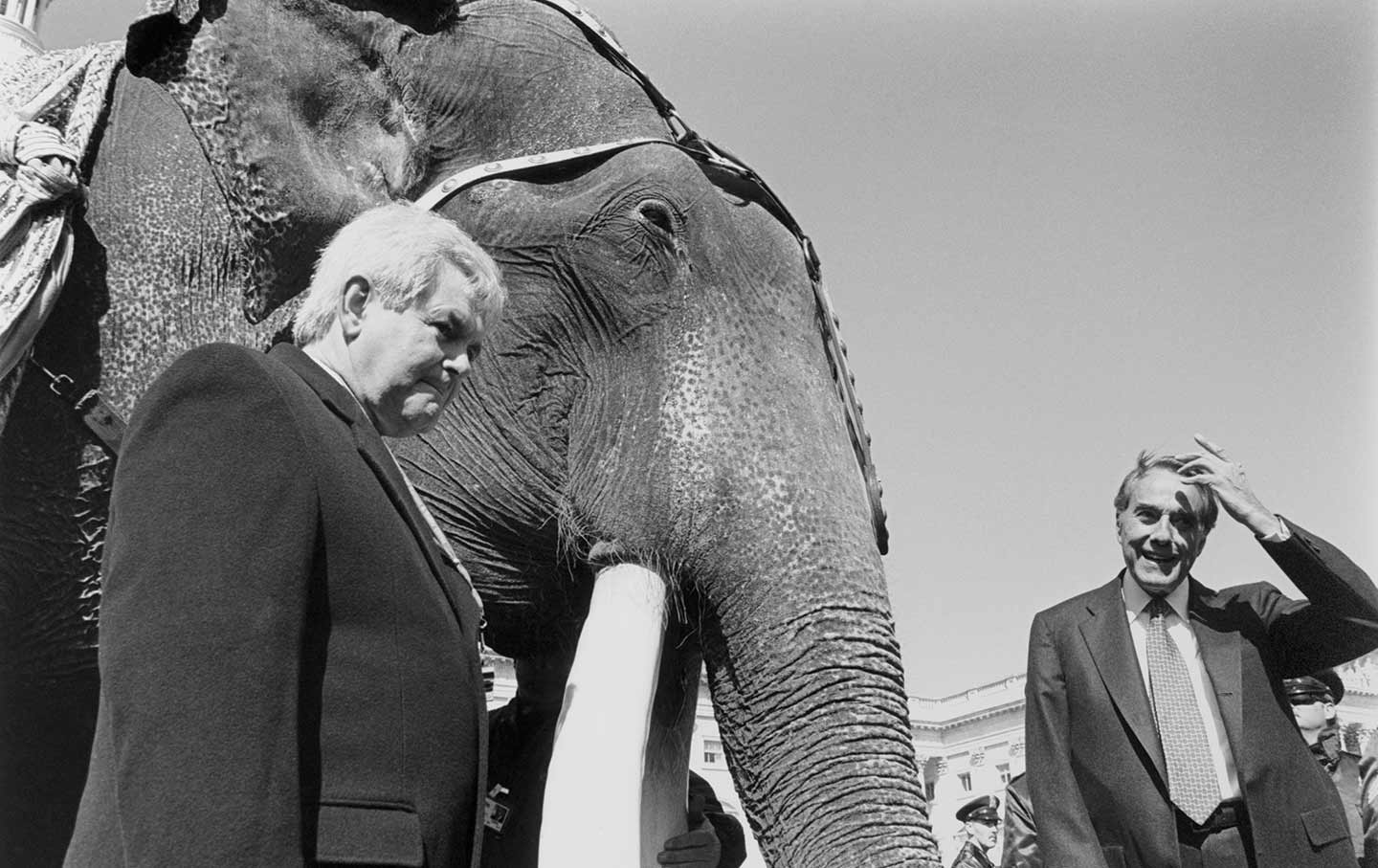
Donald Trump and his movement might seem like the quintessential example of backward-looking politics. Their motto, after all, is “Make America Great Again.” Precisely when it was great isn’t exactly clear; sometime in the past, before all those minorities got so uppity (or became majorities), when women knew their place and America built things. Nostalgia seems to animate Trump’s mind. Was it merely a coincidence that Escape From Alcatraz was on TV the night before he tweeted about reopening that doleful island for business? Trump knows what he’s doing, saying it’s “a sad symbol, but it’s a symbol of law and order.” If he could make John Wayne head of the Department of Homeland Security, he would. Trump himself is another “sad symbol”—of chintzy 1980s glamour that the swells believed had gone out of fashion. No such luck.
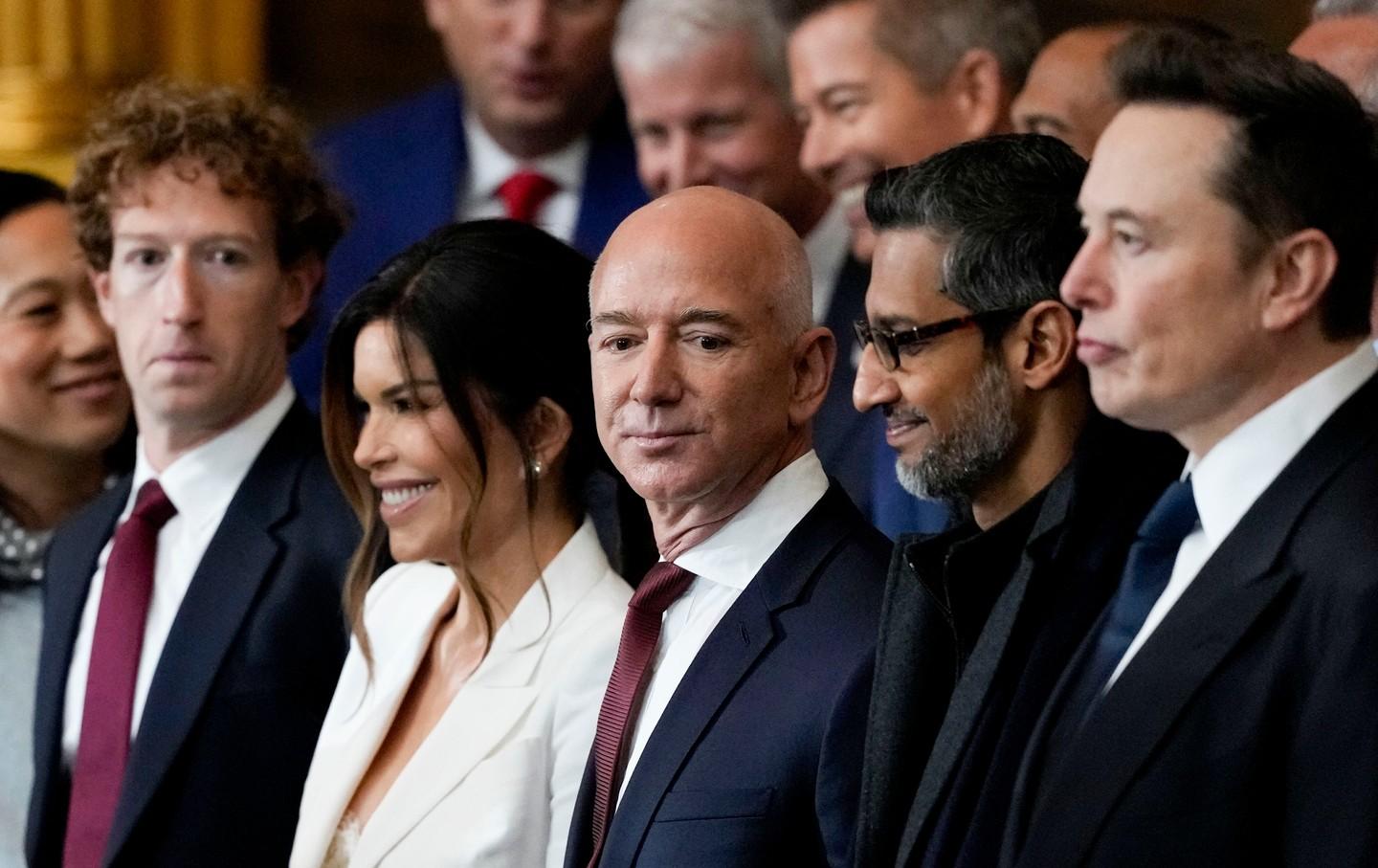
So past-focused is Trumpism’s appeal that some writers have concluded that it lacks any positive vision of the future. In a recent essay, Naomi Klein and Astra Taylor identified Trumpism with what they called “end times fascism,” a bunker mentality: “The average voter is offered only remixes of a bygone past, alongside the sadistic pleasures of dominance over an ever-expanding assemblage of dehumanized others.” That’s not exactly wrong, but perhaps it’s only part of the story. In 2016, when Trump carried the over-65 vote, the idea that he was a pure throwback might have been more plausible. But this time around, he attracted support from more young people—who have more of a future than a past—than hidebound Republicans usually do. And then there’s the fact that Silicon Valley oligarchs—who believe they have been called to build the future—gravitated to him.
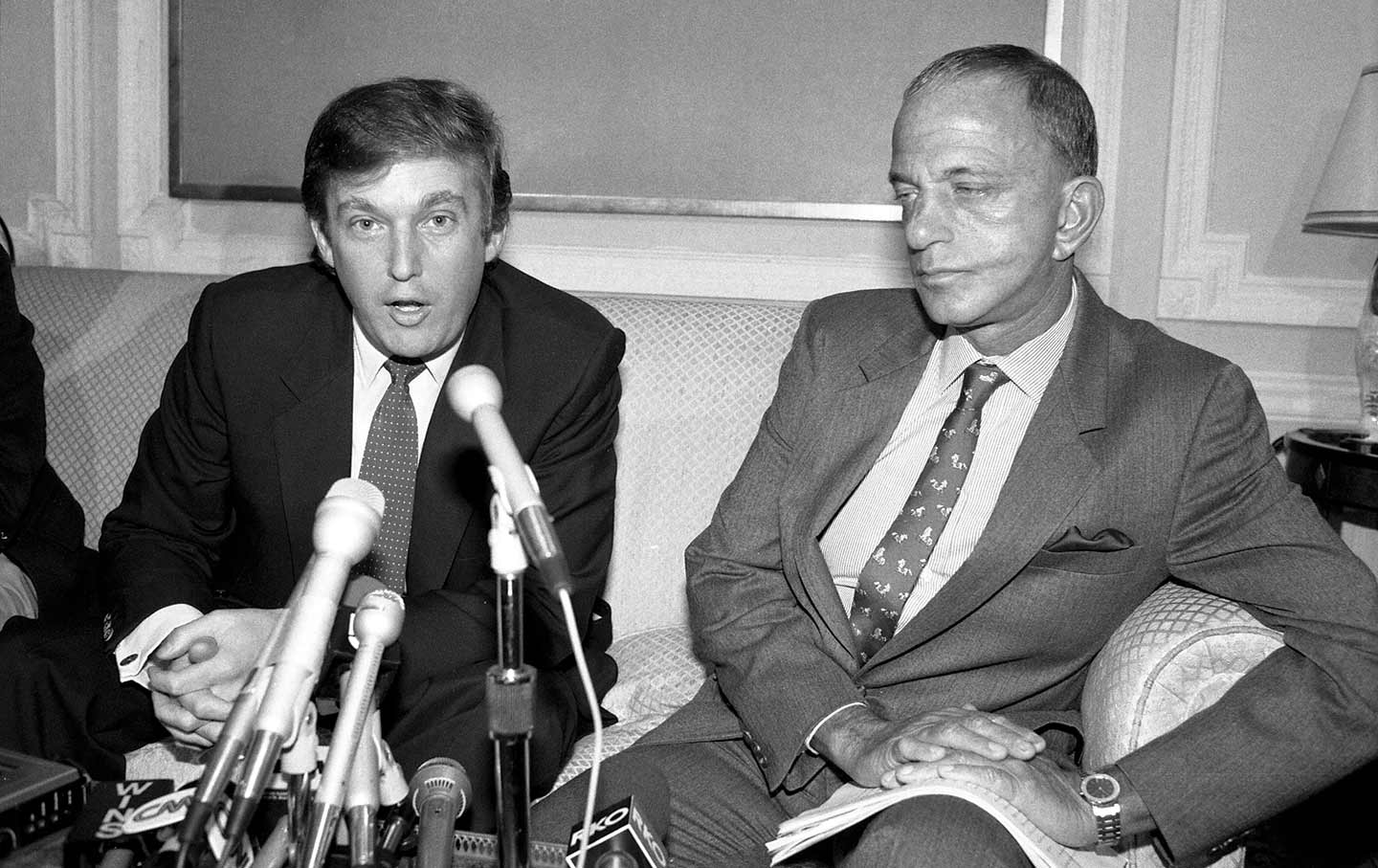
Rather than simple nostalgia, Trump’s appeal derives in large part from the way he combines past and future, classic and modern, restoration and revolution. One of his earliest Silicon Valley investors, Peter Thiel, picked up on this back in 2017. “There are reduced expectations for the younger generation, and this is the first time this has happened in American history,” Thiel said. “Even if there are aspects of Trump that are retro…a lot of people want to go back to a past that was futuristic—The Jetsons, Star Trek. They’re dated but futuristic.” Futuristic but familiar, though more “Meet George Orwell” than “Meet George Jetson.” In his 1990 book Surviving at the Top, Trump identifies himself as highly conventional and even somewhat staid, “a man with very simple tastes—not in building design, perhaps, but in most other things.” Manhattan, with its topless towers, always represented an escape from Fred Trump’s retro-drab Queens, with its squat lower-middle-class duplexes and Jamaica Estates’ faux-Tudor stodginess.
The Trump administration may have decreed neo-neo-Classicism for federal architecture, but Trump’s own taste in architecture has never favored the antique. His signature projects—the renovation of the Commodore Hotel and the building of Trump Tower—involved replacing Olde New York landmarks with the modernist architect Der Scutt’s imposing glass-and-steel mirrored boxes. (Trump was notoriously unsentimental about the Bonwit Teller building’s exquisite Art Deco friezes.) His unrealized plan for Television City—a name that already sounded retro-futurist in the 1980s—was to employ Helmut Jahn, a Mies van der Rohe protégé who earned the sobriquet “the Flash Gordon of architecture.” And as his Atlantic City casinos sagged into the sea during one of his close calls with bankruptcy, he reportedly considered hiring the postmodern pioneer Philip Johnson to spiffy them up. Today, the skyscraper itself is a discarded symbol of a lost order, representing 20th-century capitalism at its most powerful. Indeed, you could sum up the Trump aesthetic in the contrast between sleek modernism on the outside and monarchical kitsch on the inside—a combination that happens to fit very well with Thiel court philosopher Curtis Yarvin’s notion of a techno-feudalism.
Trump’s fantasized American industrial rebirth also has this future-past character. Even the mechanism is a throwback: 19th-century protectionism to rebuild a 21st-century nation. The historian Jeffrey Herf has called this fetishization of technology and industry alongside an authoritarian government and the reimposition of a hierarchal social order “reactionary modernism”—a label that fits both Trump and his Silicon Valley supporters to a T. Lenin once said that “communism is Soviet power plus the electrification of the whole country.” Reactionary modernism, Herf wrote, is electrification minus the Enlightenment. He coined the term while studying the ideological progenitors of the Third Reich. Conveniently for the tech oligarchs, the reactionary modernist agenda requires the alignment of state and capital to facilitate the construction of its monumental projects. Thiel frankly calls for a monopoly capitalism to protect technological innovators. In his recent book The Technological Republic, Alex Karp—the CEO and cofounder (with Thiel) of Palantir—calls for a union of state and industry to build arms and surveillance tech with the Manhattan Project as its model. But nothing is more emblematic of Trump 2.0’s reactionary modernism than the bizarre “Freedom Cities” initiative, which involves the construction of futuristic conurbations, replete with flying cars, on federal land to compete with China’s gleaming megalopolises.
Since Trump is involved, we can expect America’s foray into reactionary modernism to take on aspects of a scam and a boondoggle, but the tragic history is still a stark warning: Fascism 1.0’s architects of doom promised new wonders but left only ruins and rubble. Let’s just hope that Trump’s aftermath is more Atlantic City 1992 than Berlin 1945.
Become a Sustaining Donor This September
Between the reemergence of right-wing red-baiting and Donald Trump’s use of the chilling National Security Presidential Memorandum–7 to criminalize left political organizing, we’re seeing McCarthyism reborn before our eyes.
This assault on democracy cannot be ignored or wished away. Resisting it requires bravery in the face of threats and repression, a steadfast commitment to the truth, and the unwavering belief that we can—and will—overcome this darkness.
We must have an independent media that sets the record straight, unearths corruption and abuses of power, and advances a politics of justice and dignity for all if we’re to win this fight.
That’s why I’m writing to you today. This September, The Nation needs to add 100 monthly donors to sustain our progressive journalism. Your contribution makes the next investigative report, the next truth-speaking column, and the next pathbreaking essay all possible.
I hope you’ll support our work with a recurring donation today. If you donate $10 or more a month, we’ll send you a brand new “Hands Off the Free Press!” sticker to recognise your commitment to our cause. Please, donate today.
Onward,
Katrina vanden Heuvel
Editor and Publisher, The Nation