In Canada’s Anti-Trump Election, Liberals Eke Out a Victory
As recently as January 20, it looked like the conservatives were on track for a historic win—but then Trump came to power next door.
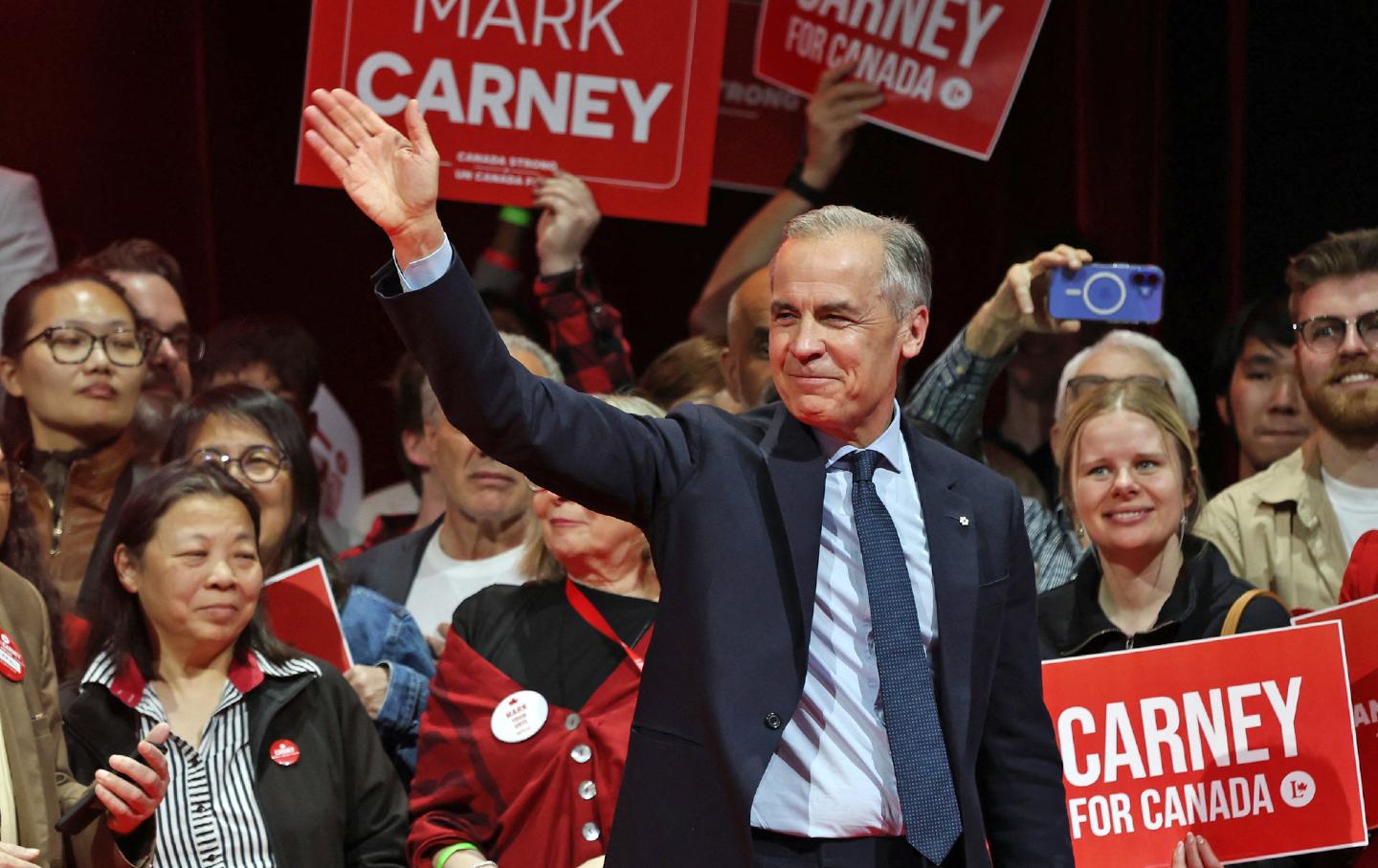
Canadian Prime Minister and Liberal Party leader Mark Carney waves to supporters at a victory party in Ottawa, Ontario on April 29, 2025.
(Dave Chan / AFP via Getty Images))In 1969, Canadian Prime Minister Pierre Elliott Trudeau met Richard Nixon in Washington, DC, and described the relationship between Canada and the United State in a phrase that lives on in popular memory: “Living next to you is in some ways like sleeping with an elephant. No matter how friendly and even-tempered is the beast, if I can call it that, one is affected by every twitch and grunt.” Trudeau and Nixon had a fraught relationship. In one of the Watergate tapes, Nixon can be heard describing Trudeau as an “asshole.” When told of this insult, Trudeau quipped, “I have been called worse things by better people.”
As bad as the Trudeau-Nixon feud was, it now looks like a healthy relationship. Under Donald Trump, the United States is an elephant that is not just twitchy but rampaging. Trump has repeatedly called for Canada to be annexed by the United States and turned into the 51st state. This bizarre revival of 19th-century imperialism has rattled the Canadian electorate, and it shaped the results of Monday’s election.
While votes are being counted, it is clear that the Liberals will form the next government. What remains uncertain is if they will be a minority government or a majority one. To form a majority, they need 172 seats. They currently have 168, but votes are still being counted, and there is a possibility that the Liberals will eke out a slim majority. If the Liberals fall short, they will have to work with one of the other parties to pass legislation, most likely the social-democratic New Democratic Party (NDP), which, although much diminished, is likely to have at least seven seats, which could make it crucial for Liberal governance.
Even a Liberal minority government is a huge shift from what Canadians were expecting only a few months ago. The Liberals have been in power since 2015 and like many incumbent governments have been battered by the global cost-of-living crisis. Liberal Prime Minister Justin Trudeau (Pierre Elliott Trudeau’s son) was hugely unpopular and resigned on January 7 of this year, leading to quick leadership convention where he was replaced by Mark Carney, a central banker with no previous political experience. The Conservative Party of Canada, under the adept leadership of Pierre Poilievre, had effectively exploited inflation and rising costs to hammer a compelling right-wing populist message under the slogan, “Canada is broken.” This brought into the CPC fold many voters who didn’t normally support conservatism, including working-class voters, the young, and some immigrants.
As recently as January 20, it looked like the CPC was on track for an overwhelming victory. Polling aggregation showed that it had the support of 44.8 percent of the public, as against 21.9 percent for the Liberals. Under Canada’s parliamentary system, this would have translated into a strong CPC majority, larger than anything the party has enjoyed since the early 1990s.
But Trump, in his role as elephant, interjected himself. In fact, on election day, he issued a strange Truth Social post that made it sound like he thought he was on the ballot (which metaphorically he was): “Good luck to the Great people of Canada. Elect the man who has the strength and wisdom to cut your taxes in half, increase your military power, for free, to the highest level in the World, have your Car, Steel, Aluminum, Lumber, Energy, and all other businesses, QUADRUPLE in size, WITH ZERO TARIFFS OR TAXES, if Canada becomes the cherished 51st. State of the United States of America.”
Trump’s clownish threats terrified the Canadian population and polarized the election into two camps: the center-left, which rallied behind Carney’s Liberals as the party to stand up for Canadian sovereignty, and the populist right, which still accepted the CPC message that “Canada is broken.”
The Liberals won, but just barely, and preliminary results point to a polarized country. The Liberals received 43.5 percent of the votes and at least 168 seats (up from 32.62 percent and 160 seats in the last election in 2021).
The CPC also improved its standing, getting 41.4 percent of the vote and roughly 144 seats (up from 33.75 percent and 120 seats in 2021). This normally would be a cause for happiness, but the result fell far short of the majority that CPC reasonably hoped for just a few months ago. Further, Pierre Poilievre lost his own riding. He might stay on as leader by running again in a safe Conservative seat, but his leadership will now be under challenge. Other Conservatives, notably Ontario premier Doug Ford, may hope to unseat him.
The two major parties were both able to improve their standing because the three minor parties—the NDP, the sovereigntist Bloc Québécois, and the Greens—all lost ground. The NDP suffered the biggest blow, receiving only 6.3 percent and roughly seven seats (down from 17.82 percent and 25 seats in 2021). One way to read the election results is that left-wing supporters of the NDP flocked to the Liberals to prevent a CPC victory. This is broadly true, although local riding results also indicate that some NDP voters might have gone to the CPC because of the populist “Canada is broken” message. In other words, the NDP was squeezed in two directions: outflanked on the national sovereignty question by the Liberals and on the cost-of-living question by the CPC.
While every country has its own national politics, Canada falls into the broader pattern we are seeing in many democracies: The center-left vote is consolidating behind a pro-system politics (the Democrats under Biden and Harris, Labour under Kier Starmer, Renaissance under Emmanuel Macron) while the right consolidates under an anti-system politics (embodied by figures such as Donald Trump, Poilievre, and Marine Le Pen).
In Canada, the liberal centrism continues to hold, but only tenuously, and whether it can ever decisively defeat the populist right remains an open question.
Disobey authoritarians, support The Nation
Over the past year you’ve read Nation writers like Elie Mystal, Kaveh Akbar, John Nichols, Joan Walsh, Bryce Covert, Dave Zirin, Jeet Heer, Michael T. Klare, Katha Pollitt, Amy Littlefield, Gregg Gonsalves, and Sasha Abramsky take on the Trump family’s corruption, set the record straight about Robert F. Kennedy Jr.’s catastrophic Make America Healthy Again movement, survey the fallout and human cost of the DOGE wrecking ball, anticipate the Supreme Court’s dangerous antidemocratic rulings, and amplify successful tactics of resistance on the streets and in Congress.
We publish these stories because when members of our communities are being abducted, household debt is climbing, and AI data centers are causing water and electricity shortages, we have a duty as journalists to do all we can to inform the public.
In 2026, our aim is to do more than ever before—but we need your support to make that happen.
Through December 31, a generous donor will match all donations up to $75,000. That means that your contribution will be doubled, dollar for dollar. If we hit the full match, we’ll be starting 2026 with $150,000 to invest in the stories that impact real people’s lives—the kinds of stories that billionaire-owned, corporate-backed outlets aren’t covering.
With your support, our team will publish major stories that the president and his allies won’t want you to read. We’ll cover the emerging military-tech industrial complex and matters of war, peace, and surveillance, as well as the affordability crisis, hunger, housing, healthcare, the environment, attacks on reproductive rights, and much more. At the same time, we’ll imagine alternatives to Trumpian rule and uplift efforts to create a better world, here and now.
While your gift has twice the impact, I’m asking you to support The Nation with a donation today. You’ll empower the journalists, editors, and fact-checkers best equipped to hold this authoritarian administration to account.
I hope you won’t miss this moment—donate to The Nation today.
Onward,
Katrina vanden Heuvel
Editor and publisher, The Nation
More from The Nation
Chile at the Crossroads Chile at the Crossroads
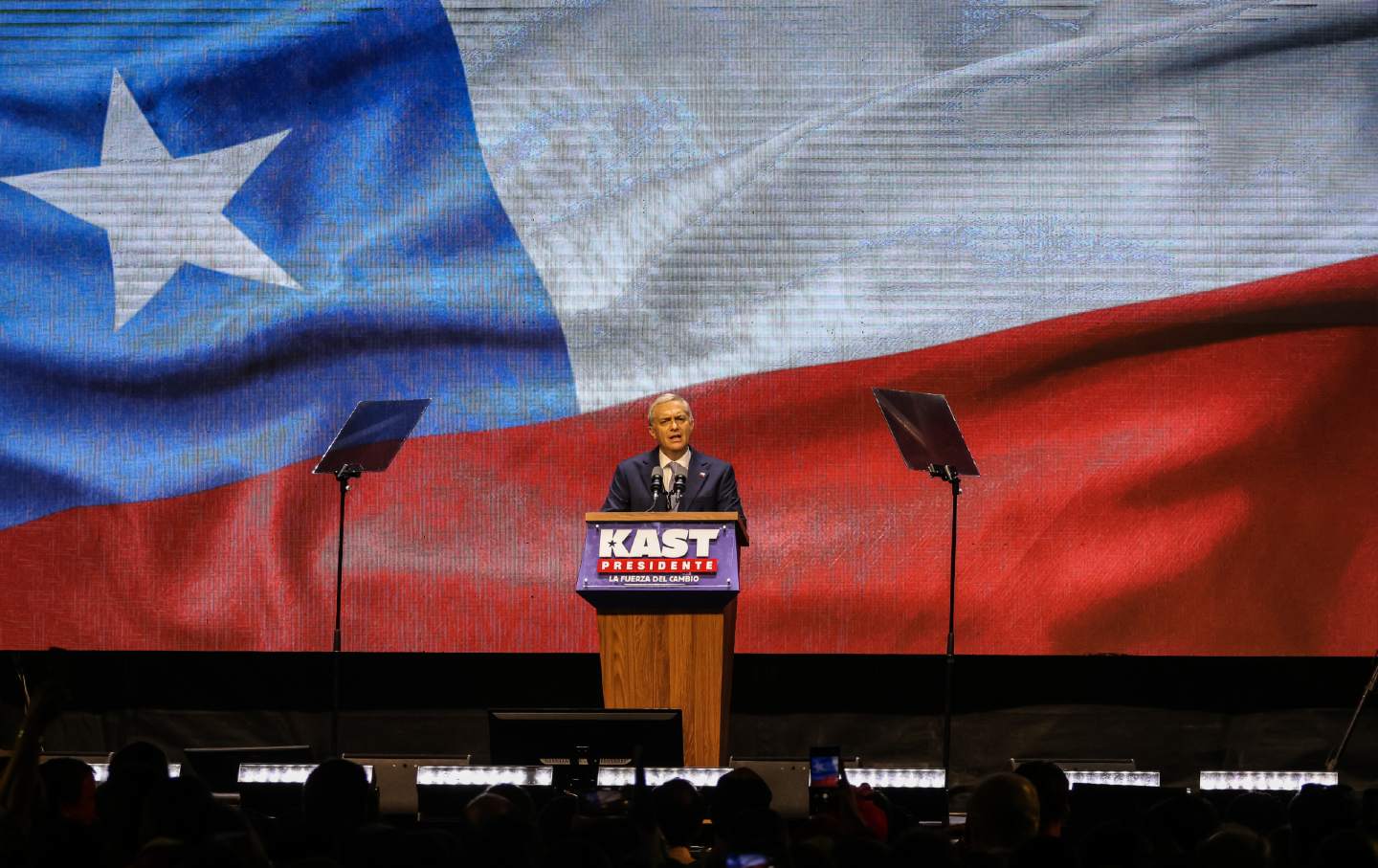
A dramatic shift to the extreme right threatens the future—and past—for human rights and accountability.
The New Europeans, Trump-Style The New Europeans, Trump-Style
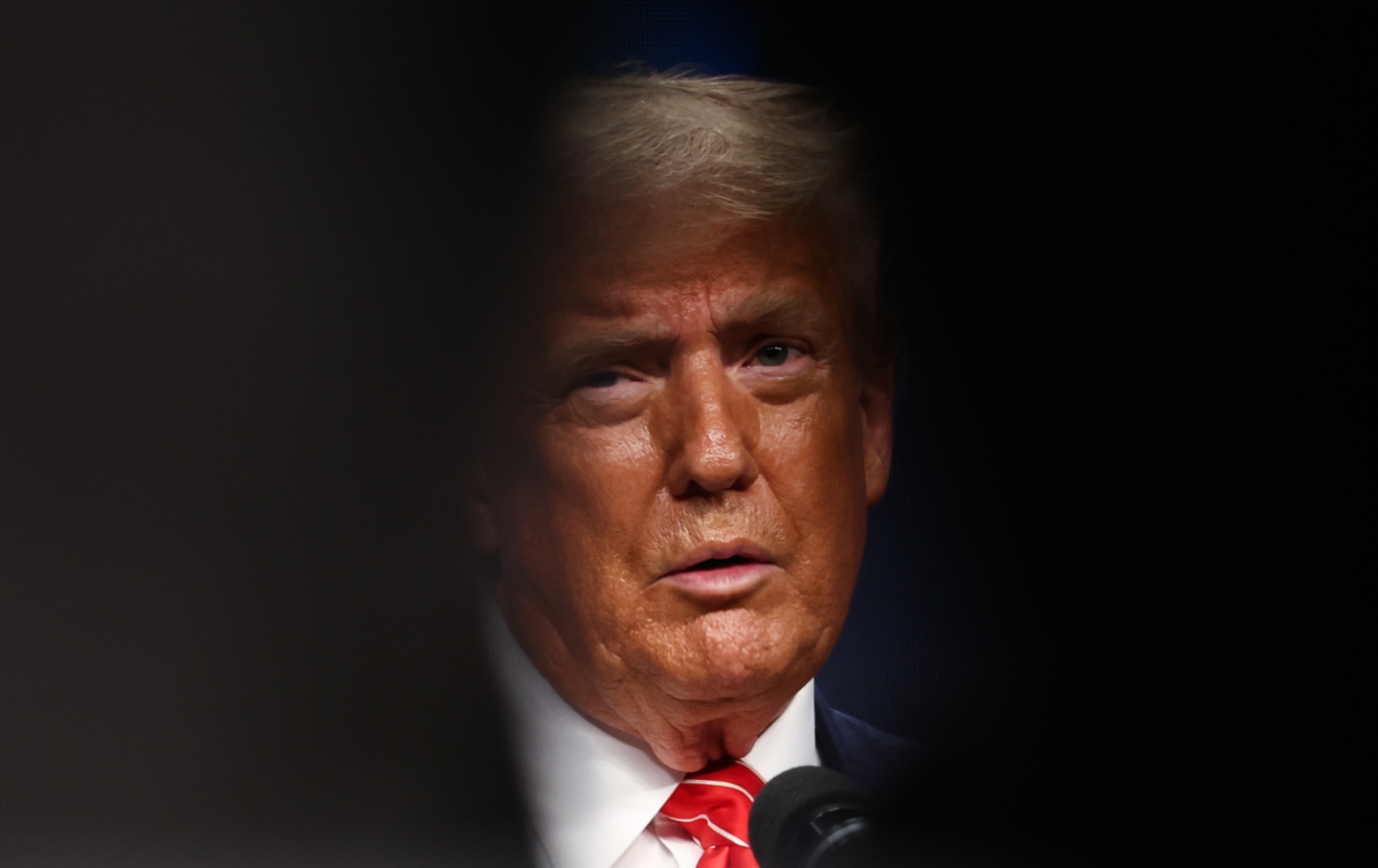
Donald Trump is sowing division in the European Union, even as he calls on it to spend more on defense.

The United States’ Hidden History of Regime Change—Revisited The United States’ Hidden History of Regime Change—Revisited
The truculent trio—Trump, Hegseth, and Rubio—do Venezuela.
Mahmood Mamdani’s Uganda Mahmood Mamdani’s Uganda
In his new book Slow Poison, the accomplished anthropologist revisits the Idi Amin and Yoweri Museveni years.

The US Is Looking More Like Putin’s Russia Every Day The US Is Looking More Like Putin’s Russia Every Day
We may already be on a superhighway to the sort of class- and race-stratified autocracy that it took Russia so many years to become after the Soviet Union collapsed.

Israel Wants to Destroy My Family's Way of Life. We'll Never Give In. Israel Wants to Destroy My Family's Way of Life. We'll Never Give In.
My family's olive trees have stood in Gaza for decades. Despite genocide, drought, pollution, toxic mines, uprooting, bulldozing, and burning, they're still here—and so are we.

