In 2024, the Sports Leagues Watched the World Burn
Looking back at the year, it’s clear that the anti-Trump movement we need won’t emerge from sports.
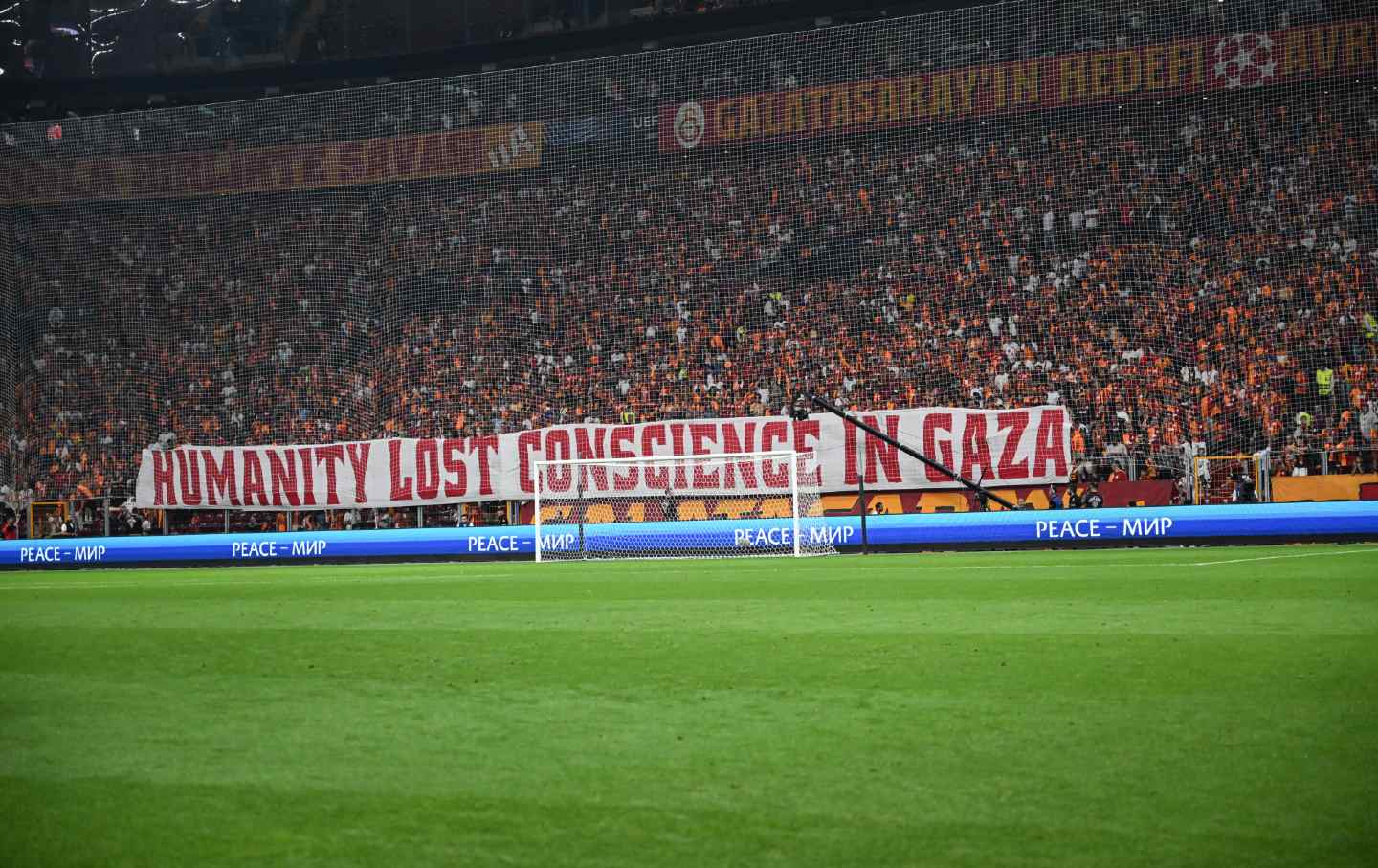
A banner reading “Humanity lost conscience in Gaza” is seen during the UEFA Champions League play-offmatch between Galatasaray and Young Boys at RAMS Park in Istanbul, Turkey, on August 27, 2024.
(Elif Ozturk / Anadolu via Getty Images)
In 2024, several seismic shifts upended the sports world. This past year, the most famous US-born basketball player under 30 emerged. Her name is Caitlin Clark, and she went from NCAA sensation at the University of Iowa to the head of a WNBA traveling roadshow that sold out arenas and brought record ratings. (She also spoke about how her straightness and whiteness factored into her popularity.) In baseball, the slugger standing astride the game, now with a World Series ring, was the Japanese mega-star of the Los Angeles Dodgers, Shohei Ohtani, and he didn’t even have to pitch. The most dominant basketball player remained the slow-footed Serbian bear with a feathery touch, Nikola Jokic, and the greatest threat to his perch was, ahead of schedule, a 20-year-old 7′ 5″ player from France, Victor Wembanyama. Appropriately, Sports Illustrated’s 2024 Sportsperson of the Year was Simone Biles—recognized not only as an all-time athlete but also for her incredible return to greatness at the Paris Olympics. These competitors did not only define their sports; they showed that diversity, opportunity, and excellence are inextricable. Their successes are a living cultural threat to the ideology of the coming administration.
But while these athletes deserve celebration, we shouldn’t forget that in 2024, the sports world faced a growing reactionary movement and, with few exceptions, chose silence. Leagues that had recently sang hymns to social justice revealed themselves to be staffed with Good Germans—and I’m not talking about Detlef Schrempf. In 2024, the idea that players should just “shut up and dribble” went from a racist Fox News taunt, taking aim at athletes like LeBron James for speaking out against police violence, to an accepted logic throughout league management and the media and even among athletes.
The stakes for silence have never been higher. The gambling-addiction industry and streaming services desperate for commercial-ready content are dumping billions into the sports world. To be controversial as a big-league athlete is to risk generational wealth. The country has polarized. Billionaire sports owners have never been wealthier, and top player salaries are stratospheric. This is taking place alongside the impoverishment of universal youth sports, which, lacking public financial support, have turned to families to make up the difference and are now inaccessibly expensive for many.
We should all be for players getting their share, but few athletes get Juan Soto’s $765 million deal. The story of player salaries is another story of polarization. The gap between the haves and have nots is especially clear at the collegiate level, where top athletes are finally—and justly—free to monetize their name, image, and likeness and can now access a transfer portal that gives them unprecedented freedom of movement. Yet the eye-popping stories of college athletes being offered fortunes to switch schools have also provided cover for the NCAA to do nothing to address collective-bargaining issues like unionization and healthcare. Now, you have college quarterbacks being offered millions to ditch their schools while players with less clout are paid in concussions.
The cost of standing up for justice in this political climate was too high for most leagues, athletes, and sports journalists. This was particularly true when it came to Israel’s war on Gaza. This past year Israel killed world-class—even Olympic—athletes. It used historic stadiums as places of interrogation and torture. Yet as Palestine’s athletic world burned, the sports world yawned. Palestinian athletes challenged the world’s embrace of Israel at the Olympics, yet received little media attention for their efforts. At the 2024 Paris Games, it was striking to see the contrast between the crowds cheering for Palestinian Olympians and seeing nothing in the media about the athletes, despite personal stories of incredible hardship, obstacles, and triumph: the very attributes about which NBC said represented the best of the “Olympic spirit.” Interviewing Gazan Paralympian Fadi Deeb is the memory from 2024 that I’ll carry with me the most dearly.
Dave Zirin’s Year in Sports:
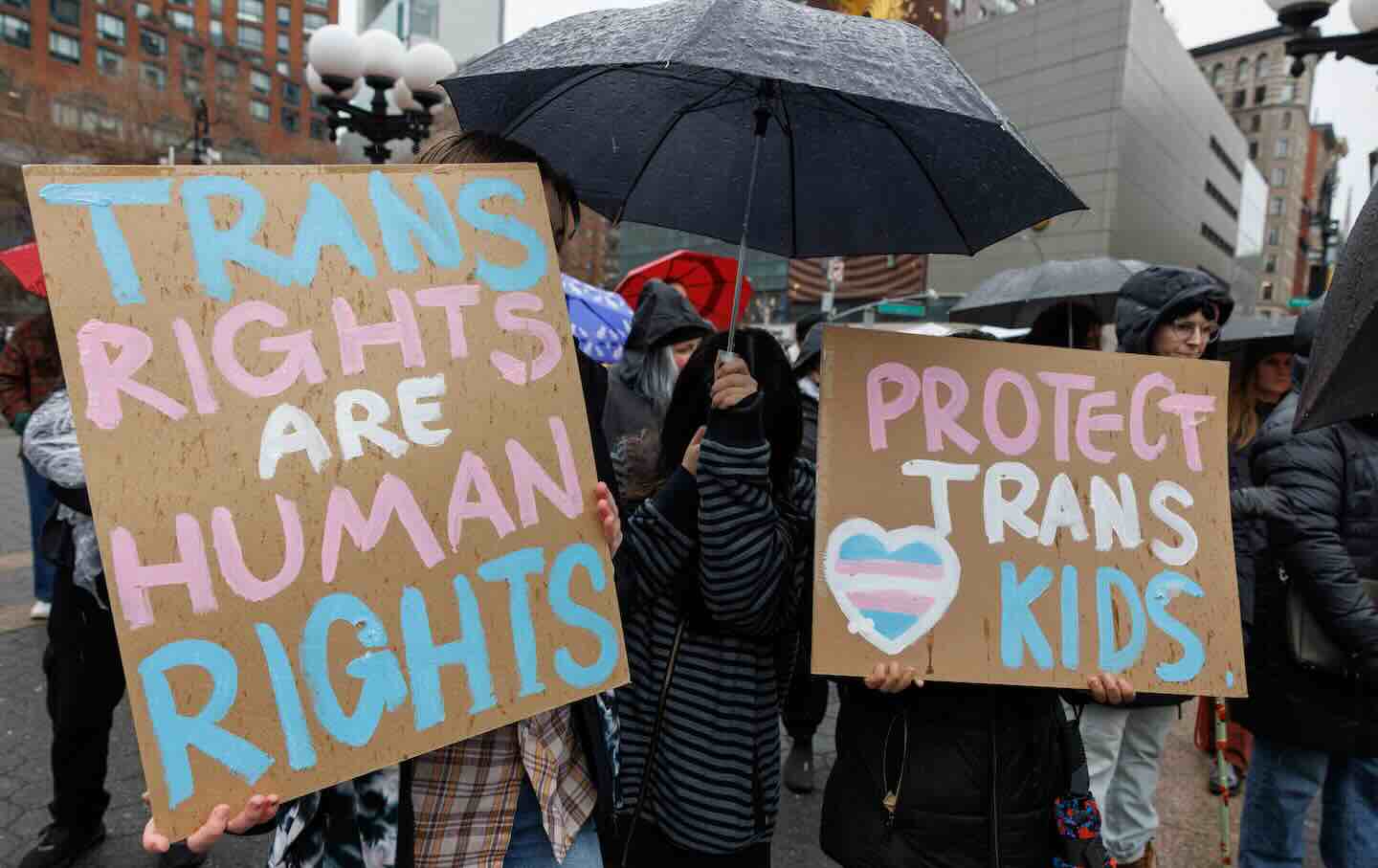
Olympic Paris was also the background to the forcible displacement of more than 12,000 people, which separated families, a grotesque human rights violation that the international press largely ignored. When politics did break through at the Games, it was mostly by ferociously anti-trans voices. The right-wing rage was directed at Algerian boxer Imane Khelif, who, despite not being trans, proved to be an effective post-truth target after she knocked out an Italian boxer, Angela Carini. That Carini was a state police officer under the authority of Italy’s ruling fascist right received far less coverage than Trump repeating the lie that Khelif was “a man” at his rallies. The hate machine was activated before Carini’s body even hit the canvas.
If the most influential corner of sports during the 2020 elections was the WNBA, this year the most politically potent voice may have come from Dana White’s Ultimate Fighting Championship. No place in the sports world is more besotted by Trump than the UFC. It’s run by White, who campaigned for Trump and spoke at the RNC. Several of his top mixed-martial-arts stars vocally supported Trump with a passion that no athlete voiced for Harris. The UFC is at the top of the fight world, occupying a space once occupied by boxing. The UFC is an entertaining product and attracts millions of young male viewers. We have seen in other countries, particularly in Eastern Europe and Brazil—documented rigorously by Karim Zidan—how mixed-martial-arts clubs and organizations can be conduits for a radical right that dominates this space from the top down. Challenging the dominant politics of these spaces—as some brave mixed martial artists and fans do—is no small task.
Moving forward, we should remember 2024 as a year that was historic between the hashmarks and on the court and that reminded us that the increasingly exclusive, profitable, and, in the case of gambling, addictive world of sports is not leading a resistance. Movements however small are going to have to be built off the field of play. Any time an athlete amplifies the struggle—especially in the case of Palestine—that should be celebrated, but at present expecting more is not a smart bet.