
Sherrod Brown Should Absolutely Run Again to Represent the Working Class in the Senate
The outgoing senator recognizes—to a greater extent than any other Democrat—the need to renew the party’s commitment to a politics of economic populism.
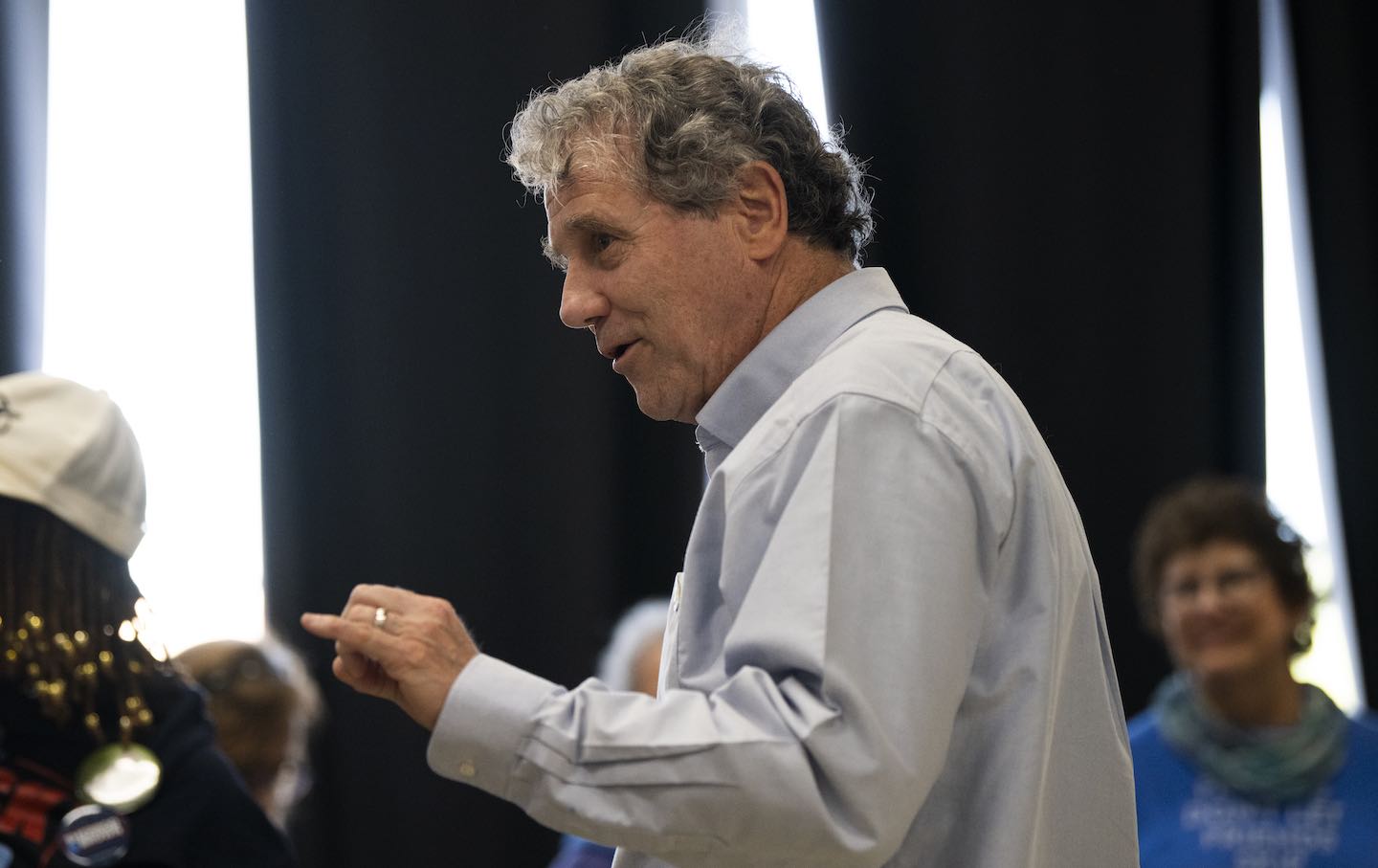
Democratic senate candidate US Senator Sherrod Brown (D-Ohio), addresses volunteers at a campaign office on November 4, 2024, in Cleveland Heights, Ohio.
(Stephen Maturen / Getty Images)
Long before the political setbacks of 2024 forced Democrats to recognize that they had lost touch with working-class voters, Sherrod Brown was warning the party that it had a problem. As a progressive with a long history of standing on the right side of history when it came to fights over economic, social, and racial justice, and matters of war and peace, the senator from Ohio kept telling Democrats they were failing to focus seriously enough—let alone sufficiently enough—on “the dignity of work.”
Brown briefly considered making a 2020 presidential bid because he believed a realignment toward working-class issues was essential for the party and the country. He argued then, as he does now, that the Democrats must turn the volume way up on raising the minimum wage, expanding union rights, saving the pensions of workers who were getting screwed over by multinational corporations, and reordering trade policy to favor working Americans rather than Wall Street speculators.
Brown decided against seeking the presidency. Instead, he stood his ground in Ohio, a once competitive state that after the 2016 election flipped hard to the Republicans and embraced the MAGA politics of not just Donald Trump but also Trump toadies such as Ohio Senator and now Vice President–elect JD Vance. Of all the Democrats running in competitive Senate races in the United States in 2024, Brown and Montana Senator Jon Tester faced the toughest tests, because they were campaigning in states where Trump was all but certain to win by a wide margin.
In a movie like Mr. Smith Goes to Washington, perhaps, a story like this might have ended with principled senators overcoming electoral adversity and winning reelection. But 2024 was a disaster pic for the Democrats.
Both Tester and Brown lost.
Brown has accepted that loss as a function of the dystopian 2024 election season. But he refuses to accept that this is the end of his long fight on behalf of economic democracy. He’s already being encouraged to run again for the Senate in 2026, when the reaction against the cynical politics of Trump and Trumpism could make Ohio voters dramatically more receptive to Brown’s brand of progressive populism.
It’s a run that Brown should make. His voice is needed now more than ever, in his party and in the Senate. The energetic 72-year-old has plenty of fight left in him, as was evidenced by the against-the-odds campaign he waged in 2024.
Brown made a serious race of it in Ohio. While Trump was winning the state by a 55–44 margin, Brown came within 3.6 points of retaining his seat.
Noting with a measure of pride, but a greater measure of determination, that he “ran 7.5 points ahead of the national ticket,” Brown has been speaking bluntly about how the party needs to get back to basics when it comes to addressing the economic anxiety of working families.
Brown has led epic battles during his three decades in the US House and Senate, against the North American Free Trade Agreement, against the granting of most-favored-nation trading status to China, and against the other failed trade agreements that hollowed out communities across Ohio, Indiana, Michigan, Pennsylvania, and Wisconsin. And in all of his years of service, he has never been afraid to call out his own party for its growing reliance on corporate campaign cash—and the compromises that extend from that reliance. Now, Brown, as not just an outgoing senator but also the author of a highly regarded book on trade policy, is amplifying the message.
“I’ve seen that erosion of American jobs and I’ve seen the middle class shrink,” explains Brown. “People have to blame someone. And it’s been Democrats. We are more to blame for it because we have historically been the party of [workers]. They expect Republicans to sell out to their corporate friends and to support the rich. But we don’t expect that from my party—and that’s my future in this party—to focus on helping the Democratic Party and my colleagues understand how important it is that we talk to workers and we make decisions with workers at the table.”
Brown did just that with his last address to the Senate. It was a passionate statement in which he spoke bluntly about his congressional record of opposing the corporate agenda, whether it was advanced by Republicans, or Democrats: “I remember when I helped lead the opposition to NAFTA in my first year in Congress, Bill Richardson—the pro-NAFTA Democrat from New Mexico—lamented Congressional recess to me. He said, ‘Every time members of Congress go home, my side loses votes.’
“There was a reason for that. We’re supposed to listen to our constituents.
“Almost every week, I spend Friday, Saturday, and Sunday in Ohio.
“I’ve crisscrossed the state—from Ashtabula to Athens to Akron to Warren to Steubenville; from Zanesville to Marietta to Portsmouth to Middletown; from Springfield to Bryan to Delaware to Defiance to Mansfield—holding roundtables and walking picket lines and touring plants. Talking to workers in break rooms and on worksites and behind checkout counters.
“On Monday afternoons, I return to Washington, carrying a satchel of good ideas, drawn from Ohioans. My job, in both the House and Senate, has been to represent those workers—to listen to them, to speak out for them, to fight for them.
“Not Wall Street. Not the drug companies. Not the big railroads. To fight for the people who make this country work.”
Popular
“swipe left below to view more authors”Swipe →Brown made it clear, throughout the address, that he is not done fighting. Indeed, he closed by declaring, “This is my last speech on the floor this year. But it is not—I promise you—the last time you will hear from me.”
That is one of the most hopeful promises voiced in the post-election season.
To take back the Senate in 2026, Democrats will need to recruit exceptional candidates. They should begin in Ohio, where they have in Sherrod Brown a prospective contender who has consistently run ahead of the party’s national tickets, and who doesn’t need to be told that Democrats will only win back the Congress—and upend the Trump agenda—as a genuinely, and aggressively, populist party of the working class.
More from The Nation

The White Man Can Always Take What You Have The White Man Can Always Take What You Have
In this week's Elie v. US, our justice correspondent breaks down the real message of the attacks on Ilhan Omar. Plus: the anti-trans case that will come for us all.

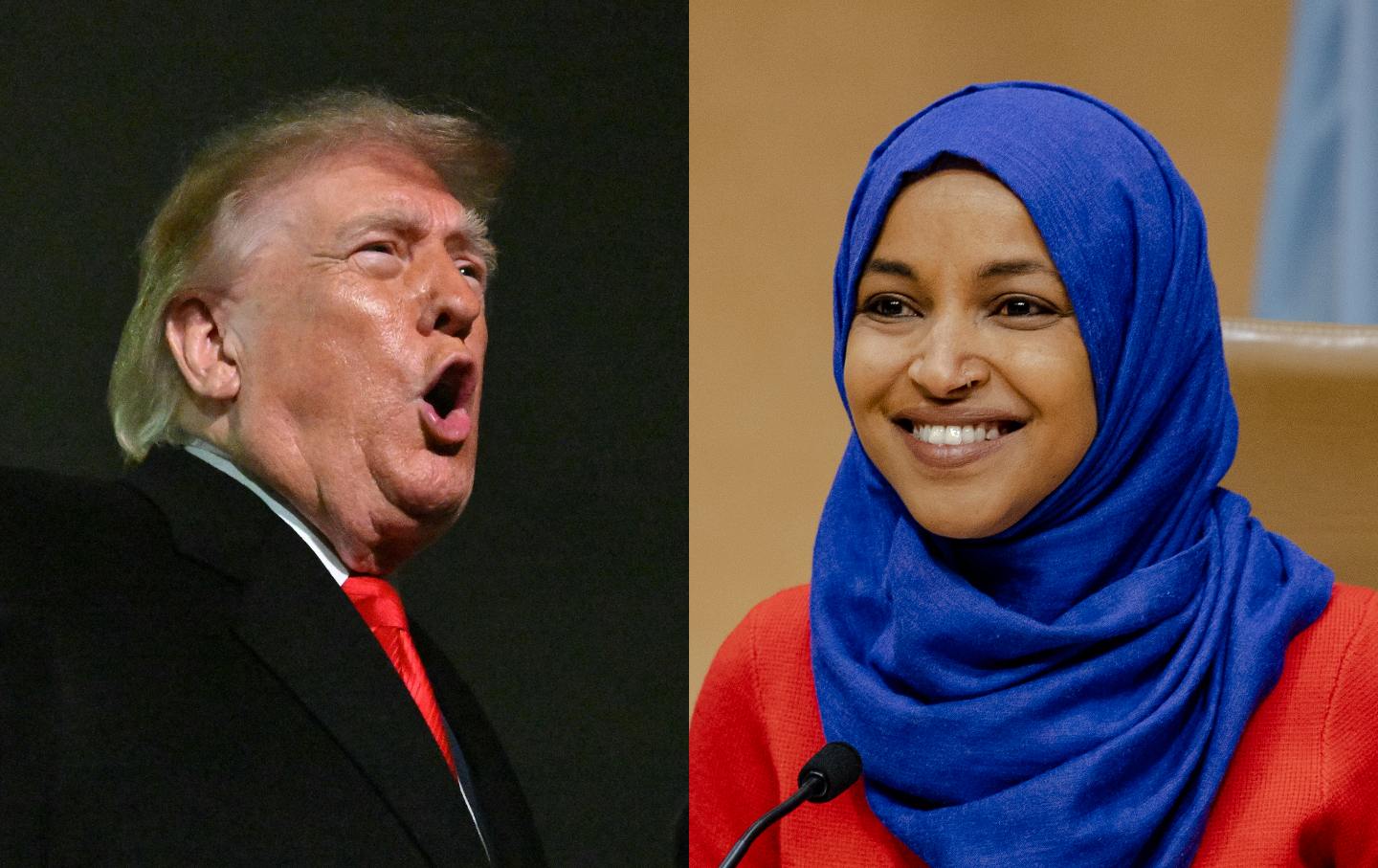
Where Is the Outrage Over Trump’s Racist Targeting of Ilhan Omar? Where Is the Outrage Over Trump’s Racist Targeting of Ilhan Omar?
The establishment press and some Democrats are strangely mute over the president’s flagrant abuse of the legal system.
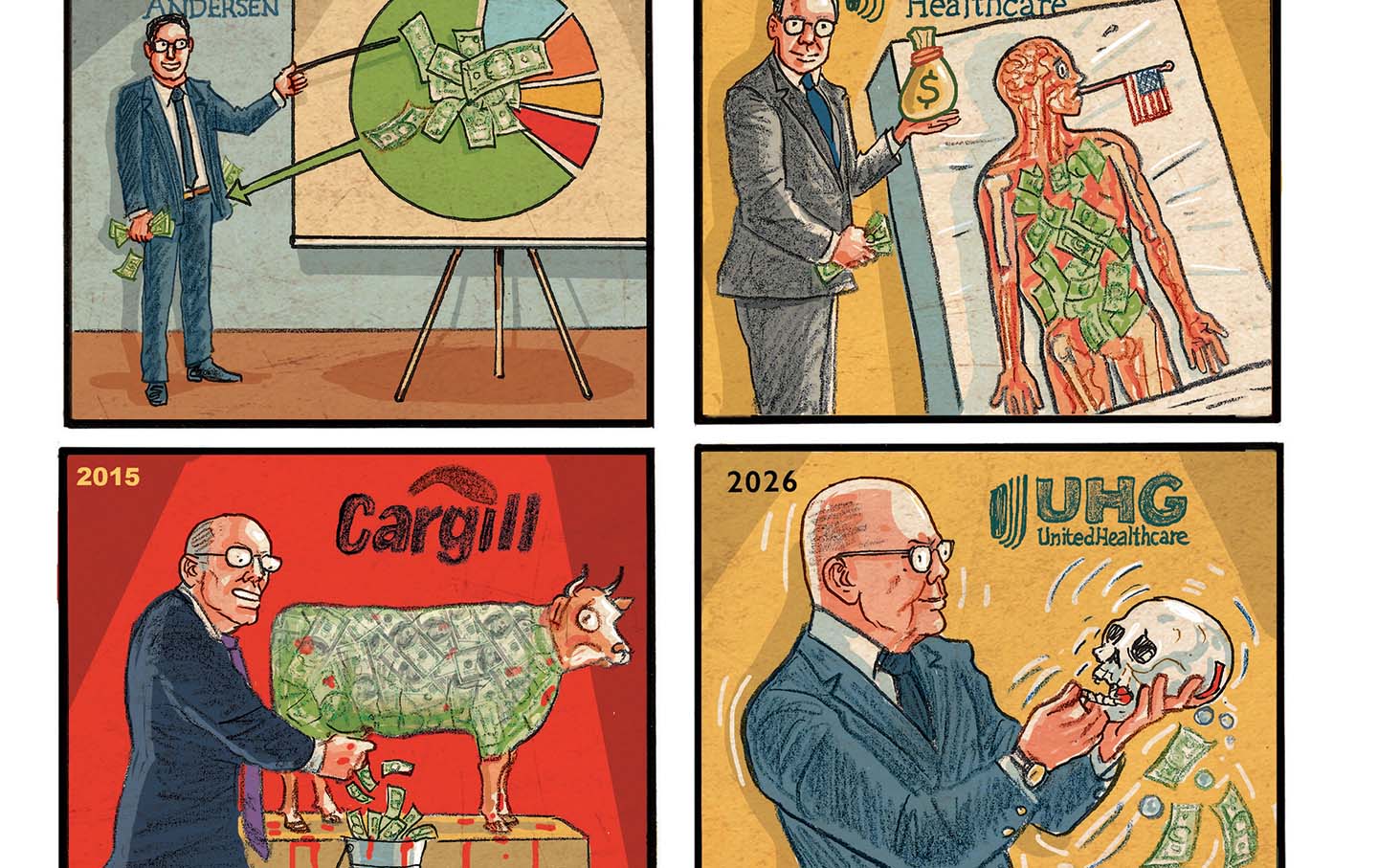
America’s UN-Healthcare Treatment America’s UN-Healthcare Treatment
The UnitedHealth group CEO’s savings plan.


Gina Hinojosa Is Showing Democrats How to Run Against Republican Grifters Gina Hinojosa Is Showing Democrats How to Run Against Republican Grifters
The Democratic gubernatorial candidate has closed the gap in Texas by focusing relentlessly on Greg Abbott’s corruption.

