The First Amendment Applies to Concert Stages Too
Protests like that of Macklemore on Palestine should never be silenced by billionaire owners.
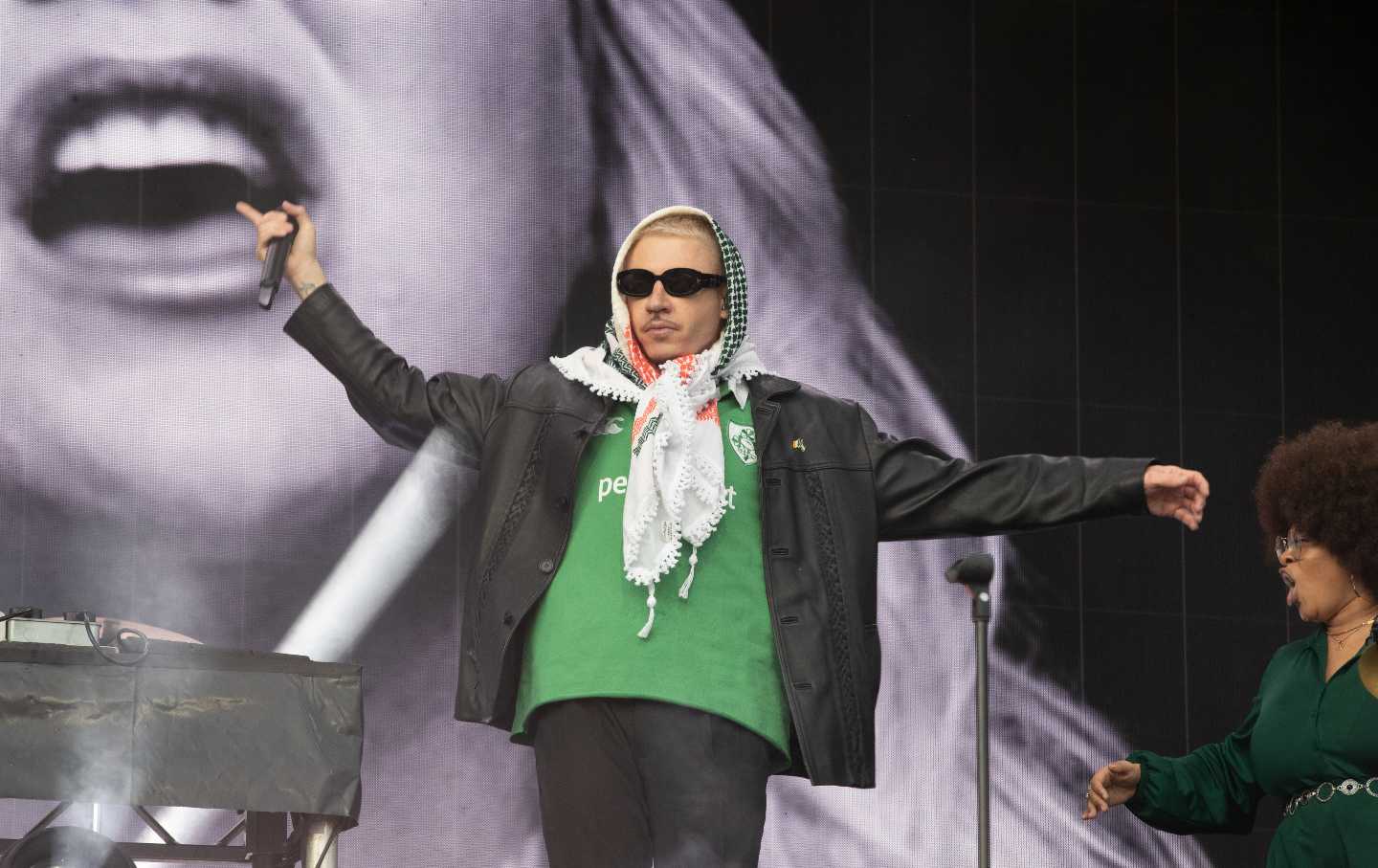
In the highly charged September moment when rockers and rappers responded to Ed Sheeran’s graceless dismissal of Macklemore from his American stadium tour, Patti Smith may have offered the most clarity. She did not mention the controversy that raged after Sheeran dropped the Seattle-based rapper as an opening act for some of the biggest shows of the year under pressure from Robert Kraft and other stadium owners who were unsettled by Macklemore’s declaring “Free Palestine” onstage. Rather, the Rock & Roll Hall of Fame inductee and National Book Award winner provided us with an example of the essential role that artists play in framing our discourse—as well as the importance of ensuring that platforms are always available for musicians whose heartfelt declarations speak deeper and more necessary truths than politicians and policymakers.
Introducing one of her most poignant and powerful songs, “Peaceable Kingdom,” at Chicago’s rain-soaked Riot Fest concert on September 20, Smith recalled: “Twenty-three years ago, we wrote this song for the Palestinian people. That was 23 years ago, and we had at that time some hope—some hope that the world would band together and that the people would do the right thing. And now we are, 23 years later, in the center of tragedy in one of the greatest heartbreaks of our time.” Chants of “Free Palestine” rose from the crowd, as Smith vowed that “we still, no matter what, will always hope for the Palestinian people—and this is for them.”
Smith offered a reminder that, even as commercial pressures so frequently diminish entertainment, many of our greatest rockers, rappers, folkies, and country performers keep on dissenting. Some songwriters put protest music at the heart of their repertoires. Many more mingle political songs into broader musical lexicons. There are still more who use their platforms, especially concert stages, to express outrage at economic, social, and racial injustice—and at US foreign policy.
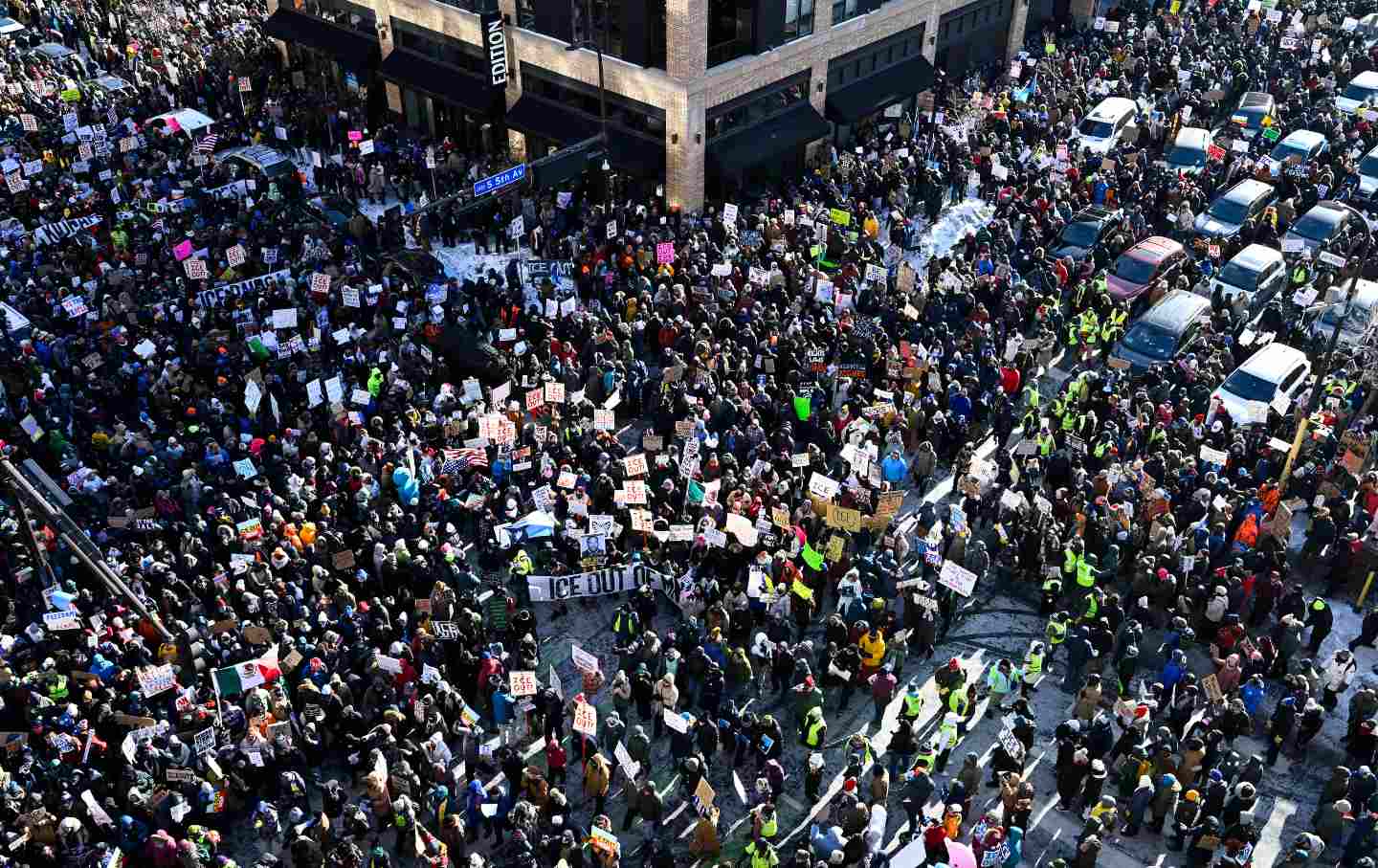
We got a powerful illustration of the resilience and necessity of protest music earlier this year, after Renée Good and Alex Pretti were shot dead by US Homeland Security officers in Minneapolis. Bruce Springsteen’s anti-ICE anthem “Streets of Minneapolis” became the centerpiece of a spring tour that packed arenas nationwide and highlighted the fundamental threats posed by the Trump administration. Billy Bragg took his song about the assault on Minneapolis immigrants and their allies, “City of Heroes,” on the road. Other artists, from Mary Gauthier and Eliza Gilkyson (“Soldier of Fortune”) to Cain Culto and Xiuhtezcatl (“¡Basta Ya!”), added their own great tracks to the mix.
One of the most compelling protest songs of recent years was Macklemore’s 2024 single “Hind’s Hall,” which embraced the student demonstrations against the Gaza genocide that has taken the lives of almost 75,000 Palestinian children, women, and men since Israel launched its assault on the strip following the October 7 Hamas attack on an Israeli music festival and kibbutzim. Macklemore’s song asked an urgent question (“What is threatenin’ about divesting and wantin’ peace?”) and offered an insightful answer (“The problem isn’t the protests, it’s what they’re protesting / It goes against what our country is funding”). The song attracted millions of streams and social-media hits, with proceeds from the downloads going to the United Nations Relief and Works Agency for Palestine Refugees in the Near East. So it was no surprise when Macklemore played the song during his opening performance for Sheeran’s Loop Tour, explaining, “To all of my Jewish brothers and sisters: Criticism of Israel, criticism of apartheid, being against genocide, in no way is a criticism of you,” and then declaring, “Free Palestine.”
Those remarks should have come as no surprise from the artist who gave us “Hind’s Hall,” but they got Macklemore booted from the tour. As The Guardian noted, Sheeran “apparently crumbled when billionaire Robert Kraft demanded Macklemore be pulled from his tour because of the rapper’s pro-Palestine advocacy.” Sheeran’s backing band, Beoga, quit the tour, as did the rest of his opening acts. Dozens of celebrities joined the outcry at a time when, as PBS reminds us, “The debate over the war in Gaza continues to reverberate throughout politics and pop culture.” Sheeran offered a sort-of apology, but no invitation to Macklemore to rejoin the tour. Macklemore, for his part, announced a new European tour to raise funds for pro-Palestine organizations. He said he would be joined by “artists who understand that our platforms mean very little if we’re only willing to use them when it’s safe” and added: “When the billionaire class can decide which voices are allowed onstage and which ones are too dangerous to hear, everyone should be paying attention.”
He’s right. Freedom of the press is a vital underpinning of the American experiment, but newsrooms are not the only places where First Amendment rights are exercised; concert stages count as well. When billionaire stadium owners block honest expressions of conscience and outrage, the experiment is just as endangered. So, too, is the hope of reconciliation that Patti Smith held out when she observed that, through art and activism, “maybe one day we’ll be strong enough to…build the peaceable kingdom.”