Why We Need Prison Journalism More Than Ever
If we lose incarcerated journalists, we lose a whole voice from the conversation.
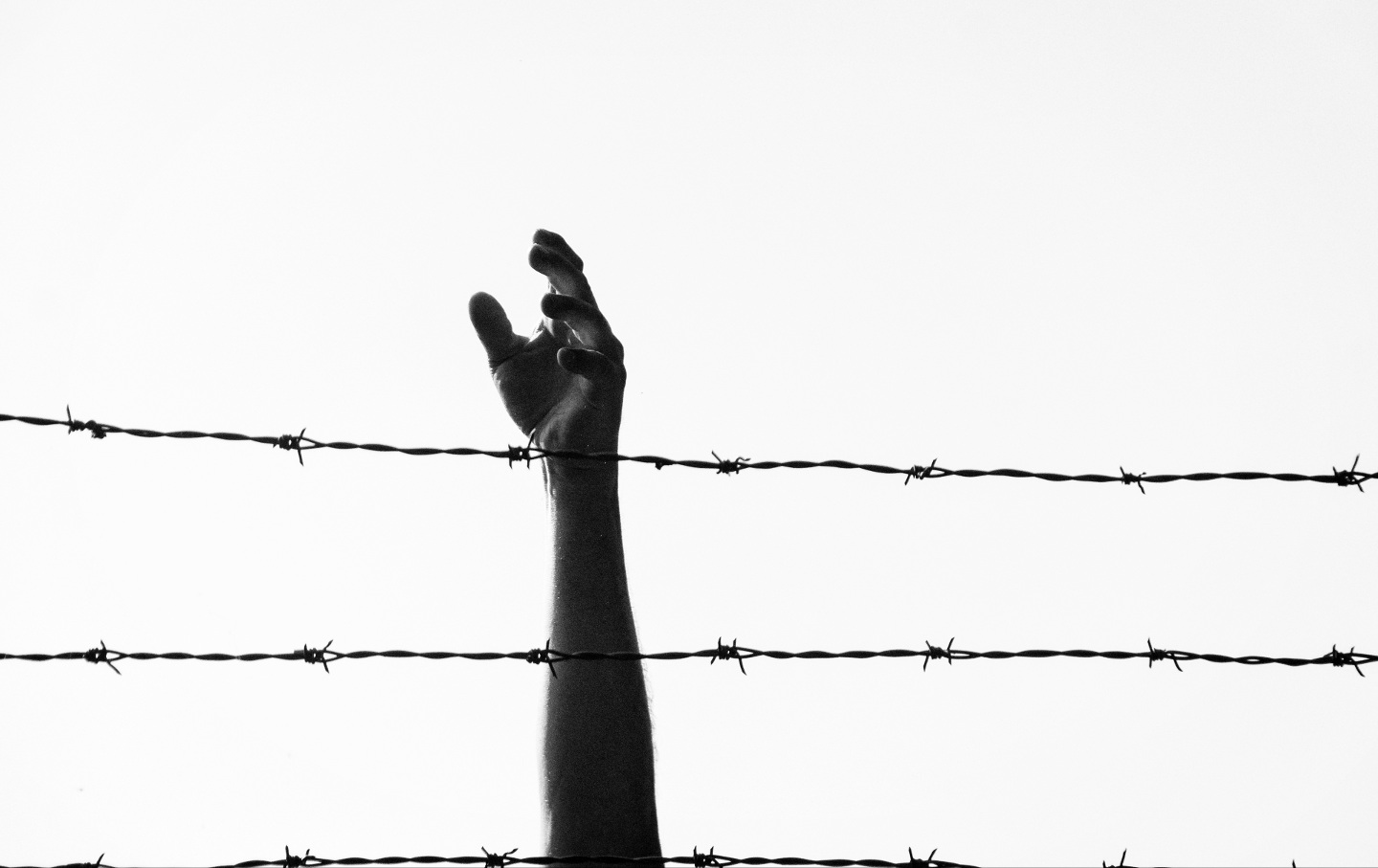
During the height of the Covid-19 pandemic, incarcerated people who were highly exposed to the virus found themselves with minimal information on how to survive. It marked the beginning of a public health crisis in carceral facilities across the country—and the system, already designed to operate in secrecy, became an impenetrable fortress the public had no access to, and little information about.
For a small group of incarcerated journalists around the country, the situation provided a clear mandate: Tell the story. Mostly confined to parking-lot-sized cells, they wrote about being denied masks, cleaning supplies, and showers; feeling trapped among guards who didn’t take the virus seriously; thrown in solitary confinement while sick instead of receiving medical care.
Outside the prison walls, a small, grassroots movement formed around an equally urgent task: Share these stories with the world. Incarcerated writers, lacking e-mail and Internet access, mailed handwritten and typewritten drafts to a team of media workers convincing editors to publish them.
Under these conditions, the two of us began working together—Chris as an incarcerated journalist, Emily as an outside supporter—under the collective Empowerment Avenue. We refused to let the history of Covid-19 inside prisons be dictated by prison officials.
Four years later, the importance and urgency of prison journalism hasn’t waned, and the audience for it is bigger than ever. The words of incarcerated journalists appear in local newspapers, online publications, and mainstream media. And readers, we’ve found, are hungry for narratives that express the humanity of people behind bars and expose the conditions they’re forced to live under.
But even the readers who engage with this writing may not realize the tremendous risk, labor, and struggle required to ensure that a story makes it out of a prison cell and onto the pages of a publication like this one.
Incarcerated people’s desire to report, and the impact of that reporting, has a long history.
The Prison Mirror, the first American publication produced solely by incarcerated people, began in 1883 and continues to this day. Between the late 1960s and early ’80s, prison newspapers were common and often operated independently from the administration. As Dan Berger and Toussaint Losier explain in their book, Rethinking the American Prison Movement, “Prisoners used media to sustain connections with other prisoners and with sympathetic outsiders. As collective action became more difficult, writing and editing provided an opportunity to continue working collaboratively with others on both sides of the prison walls.”
During the tough-on-crime era, prison publications and press freedom sharply decreased. In that vein, our work at Empowerment Avenue emerged to connect incarcerated reporters directly to mainstream publications. The collective serves as an intermediary, ensuring that the reporting makes it outside prison walls and into the hands of editors who want to publish it. It’s a community effort: 40 incarcerated writers around the country work directly with about 60 outside volunteers as we navigate pitching, editing, fact-checking, contracting, publication, and publicity for a writer who has no Internet or e-mail access.
The work can be life-changing for both the incarcerated writers and outside volunteers—mostly media workers without much prior experience of the criminal justice system. Together, we see our efforts pay off.
After Raymond Williams published an op-ed in The Seattle Times urging the Washington Department of Corrections to restore valuable prison programs, it did. Following Kwaneta Harris’s reporting about life-threatening heat inside her solitary confinement unit, the Texas Department of Criminal Justice installed air-conditioning. (She has since been moved to a new unit, without A/C, which she recently wrote about.) Juan Haines produced impactful investigative reporting and editorials throughout the pandemic, was named editor in chief by Solitary Watch, and now oversees an initiative funding other incarcerated journalists to produce investigative work.
Even when there’s no clear through line to change, these are stories that outside reporters just can’t access. It might be a story about the transformative impact of a crotchet club in a California men’s prison, or the wrongful death of a prisoner who didn’t have access to insulin. There are stories about incarcerated women experiencing Mother’s Day in prison, as well as the pervasive sexual abuse they face without recourse.
We view this work not just as journalism but as educational, positive, and empowering to everyone involved. Writers come home from prison to continue reporting, public speaking, working in advocacy, and contributing positively to their communities.
But our work is often seen by prison administrations as a threat. The Federal Bureau of Prisons explicitly forbids any incarcerated person from acting as a reporter. Last year, the New York Department of Corrections passed a directive that banned incarcerated writers from freely publishing their work without administrative approval. It was rescinded last summer after extreme public backlash.
In April, the ACLU of Michigan filed a lawsuit against the Michigan Department of Corrections to demand it release video footage and any other public records of retaliatory assaults against Demetrius Buckley, a writer we work with, after writing about correctional officers who arbitrarily revoke prisoner’s access to positive programming.
Even when we’re not facing these kinds of explicit bans and outright retaliation, policies that inform daily life behind bars can make reporting next to impossible. Unexpected transfers to different prisons upend not just reporting but an incarcerated reporter’s life and support network. The surveillance and blocking of mail is common; Chris reported on the Washington Department of Corrections mishandling mail which went on to win an award from the Institute for Nonprofit News. Many writers have drafts, books, and research materials disappear after cell searches.
Lack of access to the Internet, e-mail, and computers also hamper prison journalism. While tablets with private e-message services are available to prisoners in some states, these devices are costly, have no keyboards or mice, and often lack basic tools like cut and paste. Last year, Chris lost nine drafts he had spent hundreds of hours reporting and writing. He then wrote about the experience and the risks of data loss through prison communication systems.
Still, incarcerated journalists fight to tell the story—and their work could not be more critical. Prison journalism is one of the few beacons of transparency in America’s most opaque institution. The American public—most of whom acknowledge that we simply incarcerate too many people—should not accept that over 1.9 million people are held in a system with little oversight or accountability, with too few avenues to hear and see how the system works, and purportedly keeps us safe.
Popular
“swipe left below to view more authors”Swipe →If we lose incarcerated journalists, we lose a whole voice from the conversation—allowing dangerous and misleading propaganda from prison administrations to go unchallenged.
To ensure the protection of this work, and the First Amendment Rights of incarcerated reporters, we need urgent reforms within our carceral system. The Federal Bureau of Prisons is the only prison agency in the country that explicitly forbids any incarcerated person from acting “as a reporter”—and it must be lifted. As of this January, there were 156,532 individuals incarcerated in the Federal Bureau of Prisons; this is akin to banning the entire population of Kansas City from reporting on their community.
Secondly, basic Internet and e-mail access would not just benefit incarcerated reporters; better communication to the outside world positively impacts the entire prison population. For journalists and their supporters, it alleviates unnecessary barriers and allows more writers, editors, and sources to connect across prison walls.
Protecting communications is also important. According to the Prison Policy Initiative, only four states—Arkansas, Georgia, Michigan, and Texas—treat correspondence with the news media as “privileged communication,” meaning that letters between an incarcerated person and a media outlet cannot be opened or read by prison staff. We see no reason these protections can’t be adopted nationwide.
Finally, incarcerated journalists need more support from the media world at large. That means more editors signing up for prison communication systems to work directly with incarcerated reporters, more non-impacted reporters willing to team up and co-report with incarcerated reporters on investigative stories, and dedicated budgets to publish this work. Editors and publications should build long-lasting and sustained relationships with incarcerated contributors, especially considering thatthey are at risk of retaliation after publication.
Over four years, we’ve introduced countless people to this work, supported the publication of hundreds of impactful stories, and radically transformed how people relate to the criminal justice system, just by reporting true stories about it. Most of us come to see how the media is more comfortable upholding false narratives about the carceral system than directly challenging them. In our work, the promise of prison providing societal safety and well-being falls apart.
We don’t have all the answers to address the scourge of mass incarceration in America. We just have those voices in our head: tell the story, share the story with the world.
We hope you’ll listen.
Become a Sustaining Donor This September
Between the reemergence of right-wing red-baiting and Donald Trump’s use of the chilling National Security Presidential Memorandum–7 to criminalize left political organizing, we’re seeing McCarthyism reborn before our eyes.
This assault on democracy cannot be ignored or wished away. Resisting it requires bravery in the face of threats and repression, a steadfast commitment to the truth, and the unwavering belief that we can—and will—overcome this darkness.
We must have an independent media that sets the record straight, unearths corruption and abuses of power, and advances a politics of justice and dignity for all if we’re to win this fight.
That’s why I’m writing to you today. This September, The Nation needs to add 100 monthly donors to sustain our progressive journalism. Your contribution makes the next investigative report, the next truth-speaking column, and the next pathbreaking essay all possible.
I hope you’ll support our work with a recurring donation today. If you donate $10 or more a month, we’ll send you a brand new “Hands Off the Free Press!” sticker to recognise your commitment to our cause. Please, donate today.
Onward,
Katrina vanden Heuvel
Editor and Publisher, The Nation
More from The Nation
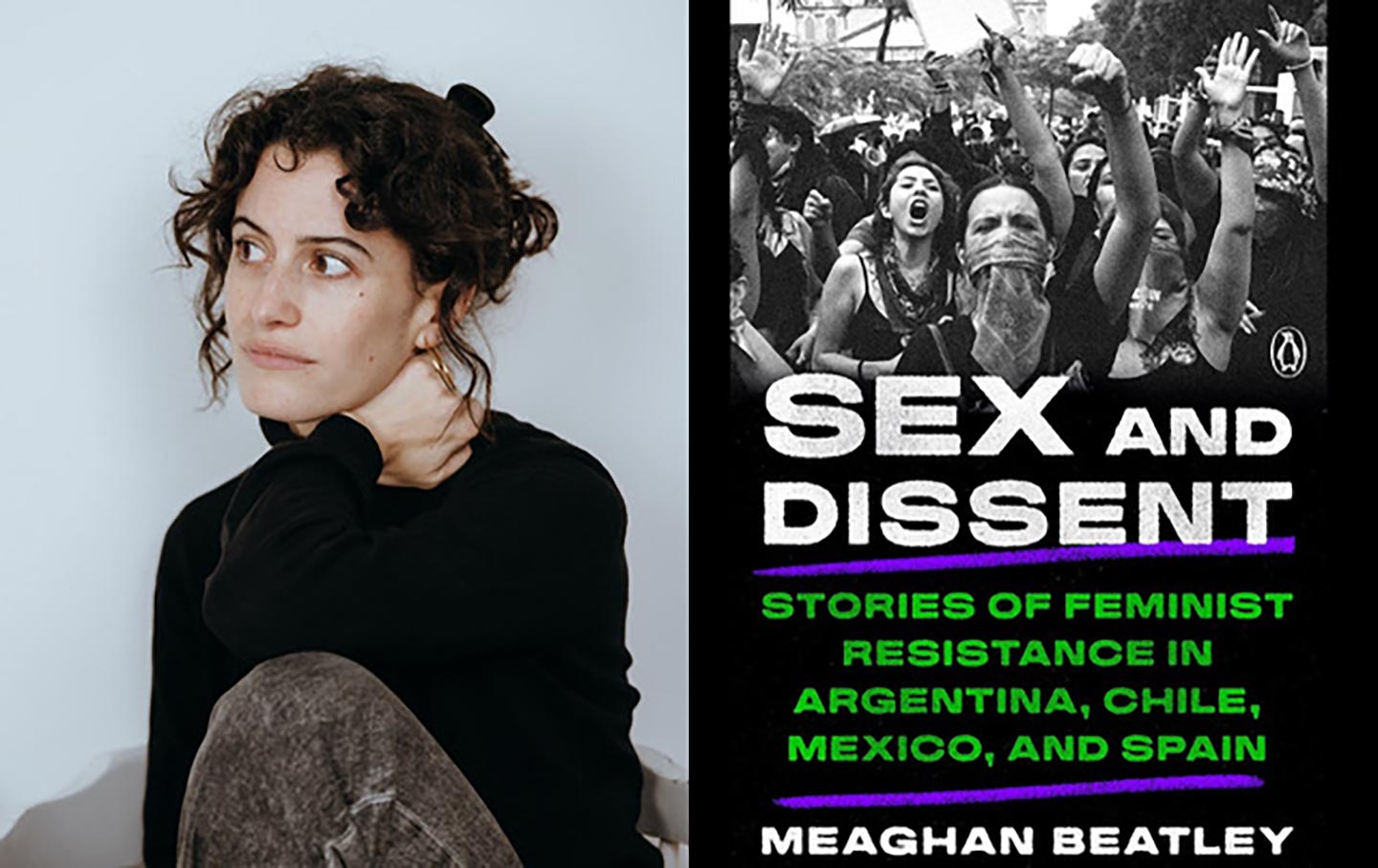
Journalist Meaghan Beatley on Latin America’s Feminist Resistance Journalist Meaghan Beatley on Latin America’s Feminist Resistance
A conversation with the author of Sex and Dissent about what American feminists can learn from the Green Wave movement.
As Cornell’s Rape Case Draws National Attention, Students Want Accountability. As Cornell’s Rape Case Draws National Attention, Students Want Accountability.
A new lawsuit alleging that a former student was drugged and gang-raped by Chi Phi fraternity members is sparking outrage in the Cornell community.

Irish Goalkeeper Gavin Bazunu’s Refusal to Play Against Israel Puts Him on the Right Side of History Irish Goalkeeper Gavin Bazunu’s Refusal to Play Against Israel Puts Him on the Right Side of History
Bazunu’s decision raises the perennial question: Why is a country that is currently committing a genocide allowed to compete in the first place?
The Promises and Compromises of the University of California The Promises and Compromises of the University of California
I grew up in a neighborhood manufactured by the University of California, Irvine. It felt like a utopia for academics—until the university forsook its mission of serving the publi...

Is Platonic Co-Parenting the Future of the Family? Is Platonic Co-Parenting the Future of the Family?
Disillusioned with the nuclear family and apprehensive of tethering their reproductive futures to the bleak hellscape of modern love, young people are seeking a different way.