
What the Movement for Palestine Can Learn From the Fight Against Apartheid
The successful push to change US policy toward South Africa provides a useful blueprint for our current moment.
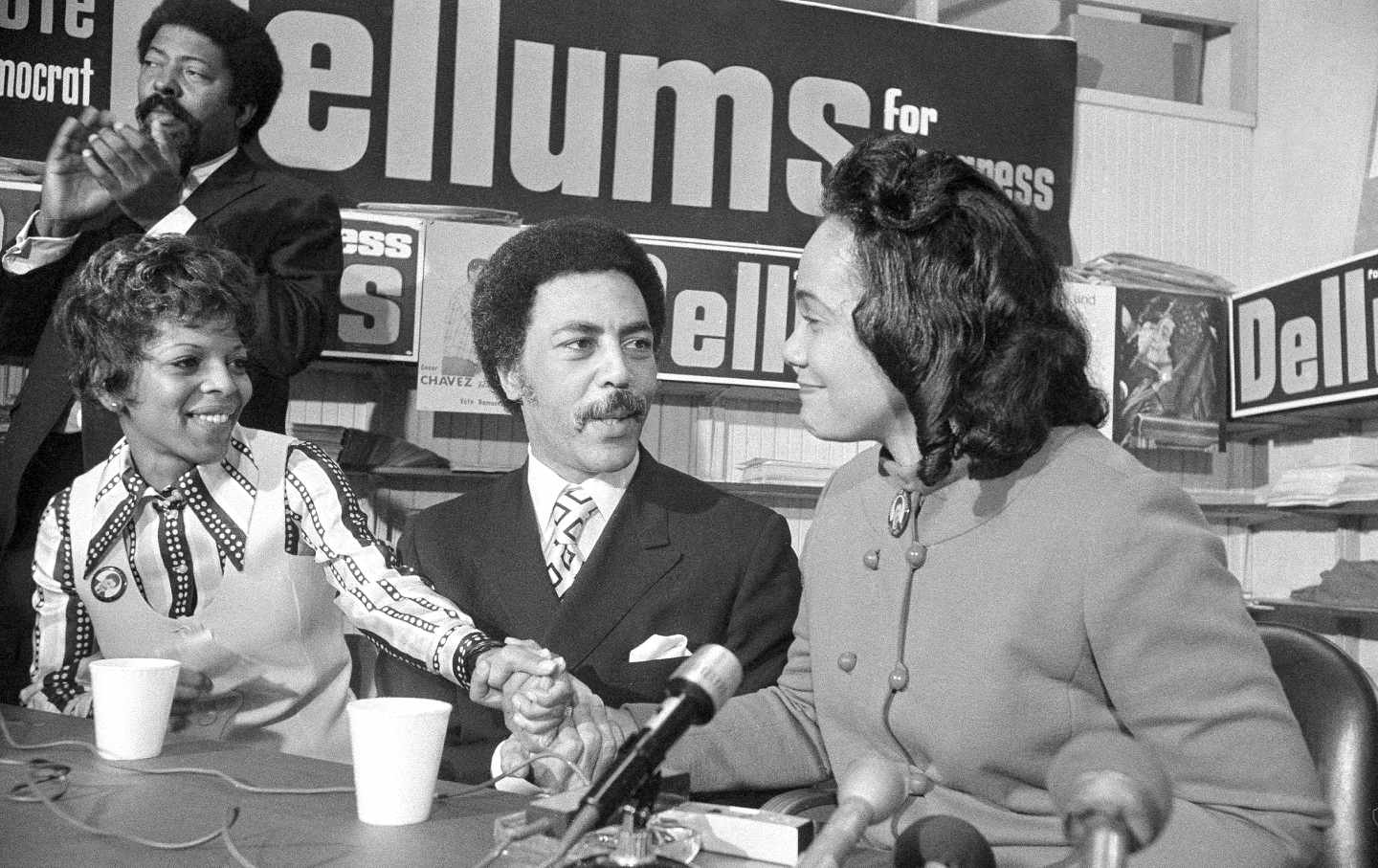
Democratic congressional candidate Ron Dellums, and his wife, Roscoe, left, clasp hands with Mrs. Coretta Scott King, widow of Martin Luther King. Mrs. King appeared at a press conference in Oakland October 30, 1970, to endorse Dellums’s candidacy for the Oakland-Berkeley congressional district.
(Lennox McLendon / AP)The US anti-apartheid movement of the 1970s and ’80s offers a useful blueprint for today’s movements to follow—especially those working to end American support for Israel’s military rule over Palestinians. There are valuable lessons for activists to learn from the way the anti-apartheid movement transformed grassroots energy into political power.
US foreign policy toward South Africa did not change overnight; it was the product of sustained organizing, strategic alliances, and deep moral clarity, culminating in the passage of the Comprehensive Anti-Apartheid Act of 1986. But its success showed that you need all of those elements, not just some, to win.
The key players in the movement challenging Washington on the inside, like Representative Ron Dellums of California, Representative William Gray of Pennsylvania and Randall Robinson of TransAfrica, understood that protests and boycotts, though essential, were not enough. To force change, they needed to navigate Washington’s corridors of power.
Dellums, who represented the East Bay in the House for nearly 30 years, was committed to the anti-apartheid fight from early on in his tenure. In 1972, he introduced his first disinvestment bill, calling for a complete boycott of South Africa. Although initially unsuccessful, the bill became a powerful organizing tool for activists and raised awareness about apartheid on Capitol Hill. Dellums’s approach to politics was deeply rooted in his radical beliefs, reflecting the progressive movement in Berkeley that brought him to Washington. As Dellums said, “I had not gone to Congress in 1971 to take up the banner of ending apartheid, but I had been swept into the fight.”
Dellums’s radical stance often faced political challenges, especially in Congress, where his uncompromising approach was viewed as too extreme.”When certain political leaders and much of the establishment press looked at me, they did not see Ron Dellums, a member of Congress equal to all others under our system, where districts grant mandates to representatives through the ballot—they saw Ron Dellums, representative of that ‘commie-pinko left-wing community of Berzerkely,’ and a person whose ideas belonged outside the legislative chamber, if anywhere.”
Dellums was undeterred. He kept the fight against apartheid in the public eye, using his platform to continually push for sanctions, even as his bills repeatedly failed to pass. In Race for Sanctions: African Americans Against Apartheid, 1946-1994, Francis Njubi Nesbitt explores the pivotal relationship between Dellums, TransAfrica, and Capitol Hill. Led by Randall Robinson, TransAfrica worked closely with Dellums, forming strategic alliances with civil rights groups, labor unions, Black churches, and student activists. Nesbitt details how these coalitions applied grassroots pressure on Congress, overcoming opposition and shaping US anti-apartheid policy. At the same time, TransAfrica organized protests and sit-ins at the South African embassy. Robinson’s leadership helped to turn apartheid into a national issue, galvanizing a multiracial movement that drove media attention and increased support from Black lawmakers.
The anti-apartheid movement had to contend with Cold War geopolitics. Throughout the 1970s and ’80s, US foreign policy was dominated by fears of communist expansion, particularly in Africa, where liberation movements often received support from the Soviet Union. The apartheid regime skillfully exploited these fears, presenting itself as a bulwark against communism in southern Africa. President Ronald Reagan justified continued US support for apartheid by framing South Africa as strategically essential to the West. His policy of “constructive engagement” argued that isolating South Africa would drive it toward the Soviet sphere of influence, and that maintaining friendly relations with the apartheid government was a more effective way to bring about reform.
Dellums, Gray, and Robinson worked to dismantle this narrative. Robinson, in particular, reframed the debate by arguing that apartheid was not only a moral issue but also a destabilizing force in southern Africa. Supporting the apartheid regime, Robinson contended, only fueled anti-American sentiment across the continent, weakening US influence and credibility. Similarly, Senator Edward Kennedy argued that US foreign policy should reflect American democratic values, and that supporting liberation, not repression, was the best way to counter Soviet influence in the region. By focusing on the human rights violations of apartheid, these activists sidestepped accusations of aiding communism and made arguments rooted in American values and national security interests, allowing them to advocate for sanctions without being dismissed as Soviet sympathizers.
The fight reached a climax in the 1985–86 legislative session. Dellums and the CBC were gearing up for a significant fight over the “Dellums bill,” which called for the United States to sever all ties with South Africa’s apartheid regime. This bill was driven by demands from South African leaders like Bishop Desmond Tutu and members of the African National Congress, reflecting the broader anti-apartheid movement’s insistence on sweeping US disengagement from the apartheid system. The Reagan administration was staunchly opposed to the measure.
The movement wasn’t without internal friction. William Gray, another prominent Black representative, introduced a more moderate bill that sought to prohibit only new investments in South Africa, reflecting a more pragmatic approach to winning broader support. The CBC, navigating the need for both progress and principle, cosponsored both bills, ensuring that the issue remained alive in Congress while striking a balance between radicalism and pragmatism.
Dellums, despite his hesitations, understood that his radical bill could exert pressure from the left, even if it wasn’t likely to pass. When the Gray bill came to the floor for a vote as an amendment on June 19, 1986, Dellums seized the opportunity to present his more radical bill as an alternative.
Although it was only allotted one hour of debate in the 10-hour period set for Gray’s legislation, Dellums saw this as a crucial opening. Although expectations for the Dellums bill were low, it passed during a voice vote, catching Republicans off guard. They believed the radical nature of Dellums’s bill would lead to its failure in the Senate. Yet this initial victory sent a strong signal to the Senate that the House was serious about imposing significant sanctions on South Africa.
Dellums famously remarked that “nothing would be the same again” after the House vote, signaling a fundamental shift in the political landscape. He noted that neither Democrats nor Republicans wanted to be seen supporting apartheid, and this vote set a new standard below which the House would not fall.
The Senate responded with a more moderate sanctions bill, spearheaded by Richard Lugar, which passed with bipartisan support. Dellums and the Congressional Black Caucus (CBC), though disappointed, agreed to the compromise. They understood that pushing through the Senate’s version, even if watered down, was a necessary step toward legislative victory. Compromise, they believed, would still move the needle against apartheid.
The compromise was bitter. Dellums’s vision for sweeping sanctions was reduced, but he and his allies saw the writing on the wall—this was the only path forward. The Senate bill would restrict new investments and impose limited trade sanctions, a far cry from Dellums’s radical call for total divestment. But in Washington, compromise often means sacrificing ideals for incremental progress. Dellums accepted that enacting imperfect legislation was better than holding out for a purer, doomed alternative, and he ensured that key provisions—such as bans on nuclear and computer technology transfers—were integrated into the final legislation.
Popular
“swipe left below to view more authors”Swipe →In the end, the strategy worked. President Reagan’s veto of the bill was overridden by a Republican-controlled Senate—a stunning defeat for the administration. Dellums had introduced the first sanctions bill in 1971, and after nearly two decades of struggle, he witnessed a historic turning point. While the final bill did not live up to his full vision, it marked a profound moral and political victory in the fight against apartheid. The balance between radicalism and compromise had paid off.
And Dellums wasn’t done. In 1988, he presented a revised sanctions bill, which gained significant support from the House Foreign Relations Committee despite fierce opposition from Republicans and business interests. The bill mandated US corporations to divest from South Africa and imposed a ban on both direct and indirect trade, marking a sharp escalation in US opposition to apartheid. While critics, including Lugar, called the bill too radical, Democrats rallied behind it, with the House passing it in August. Dellums received a standing ovation for his impassioned speech, cementing his role as a leading voice in the anti-apartheid movement.
Just as Reagan’s constructive engagement was rooted in Cold War fears, today’s US foreign policy in the Middle East is shaped by concerns over Iran and China. Much like the anti-apartheid movement had to challenge the DC political establishment’s narrative that apartheid was necessary for Cold War stability, today’s Palestinian rights movement faces the task of dismantling the assumption that unconditional US support for Israel is required to counterbalance Iran and China. By doing what the anti-apartheid movement did, and reframing the issue as one of human rights and in the self-interest of US national security concerns, Palestinian human rights advocates can challenge the status quo and push for a more just US foreign policy.
Apartheid in South Africa and Israel’s military rule over Palestinians aren’t identical. Unlike its role in the devastation of Gaza, the United States didn’t back a massive assault on Black South Africans with military aid. Plus, the end of Jim Crow in the US fostered sympathy for South Africa’s struggle, especially among a key Democratic voting bloc and the Congressional Black Caucus. Yet, the lesson remains: Protests alone don’t shift US foreign policy. It takes strategic legislative moves, coalition building, and inside engagement. The Comprehensive Anti-Apartheid Act evinced more than moral clarity—it came from years of pressure, careful planning, and political maneuvering. The anti-war and Palestinian rights movements can draw from these strategies to reshape US policy on Israel.
More from The Nation
An Effective Movement for Palestine Needs Allies Like Zohran Mamdani An Effective Movement for Palestine Needs Allies Like Zohran Mamdani
In order to build a broad-based coalition, we need to work together—not practice purity politics.
The First Amendment Applies to Concert Stages Too The First Amendment Applies to Concert Stages Too
Protests like that of Macklemore on Palestine should never be silenced by billionaire owners.
France’s Students Won’t Back Down France’s Students Won’t Back Down
Without full-time teachers, temperature-regulated classrooms, or school nurses, French students are turning their grievances into a national movement.

Inside Cornell’s Week of Protest Inside Cornell’s Week of Protest
“We won’t be silenced anymore. Our university needs to start protecting us, like they should’ve with Jane Doe and all other survivors on campus.”
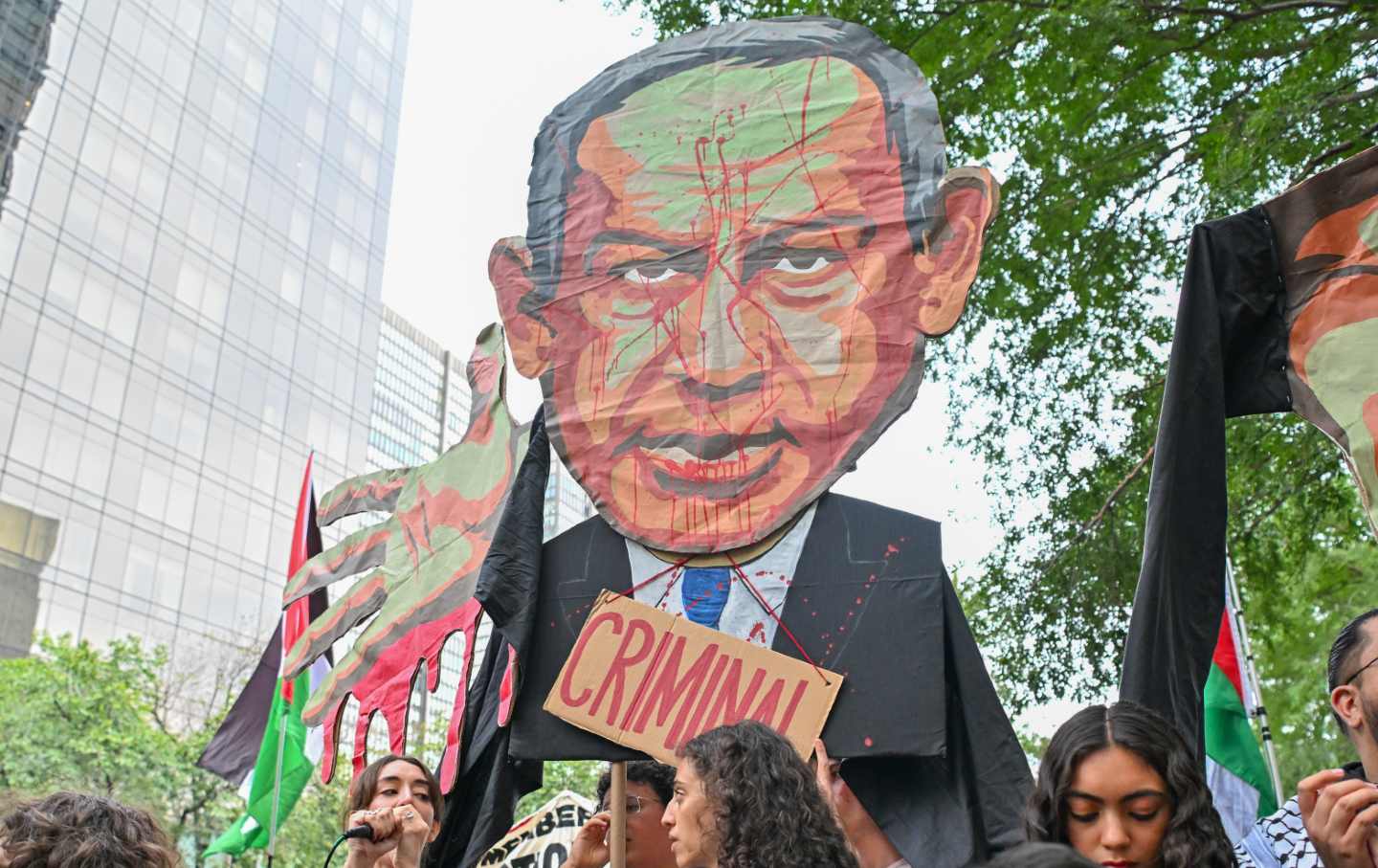
Netanyahu Came to New York. New Yorkers Were Ready for Him. Netanyahu Came to New York. New Yorkers Were Ready for Him.
Scenes from the defiant protest against the genocidal leader’s UN speech.
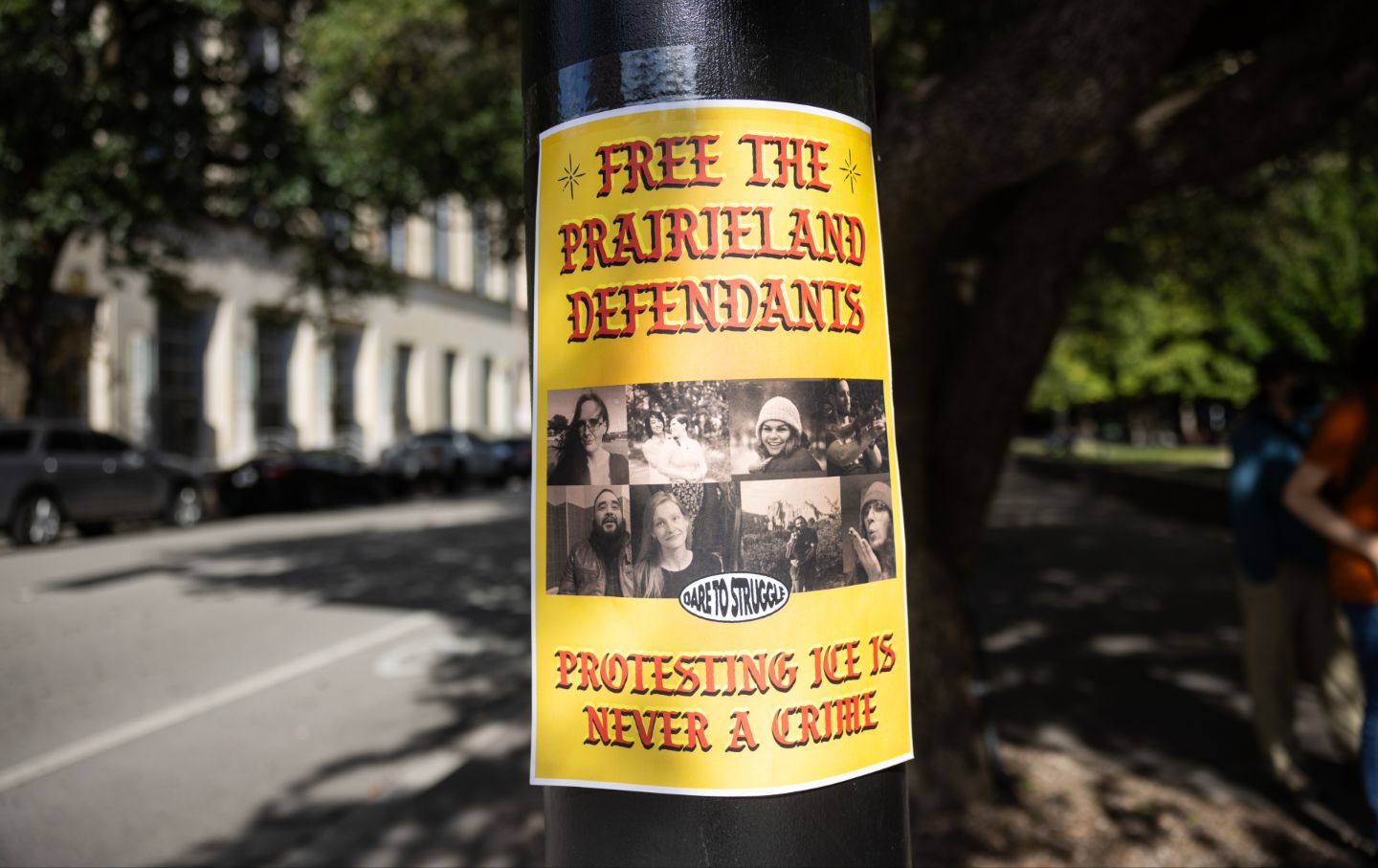
A Message From Prairieland Prisoner Autumn Hill: “Don’t Be Afraid” A Message From Prairieland Prisoner Autumn Hill: “Don’t Be Afraid”
I talked to the political prisoner about the politics of love, her case, surviving as a trans woman in a men’s prison, and how she makes it through the day.

