
How High School Voters Can Impact the 2024 Election
More than 4.4 million Americans are currently 18 years old—many of them in high school—yet their value as a voting bloc is severely underrepresented.
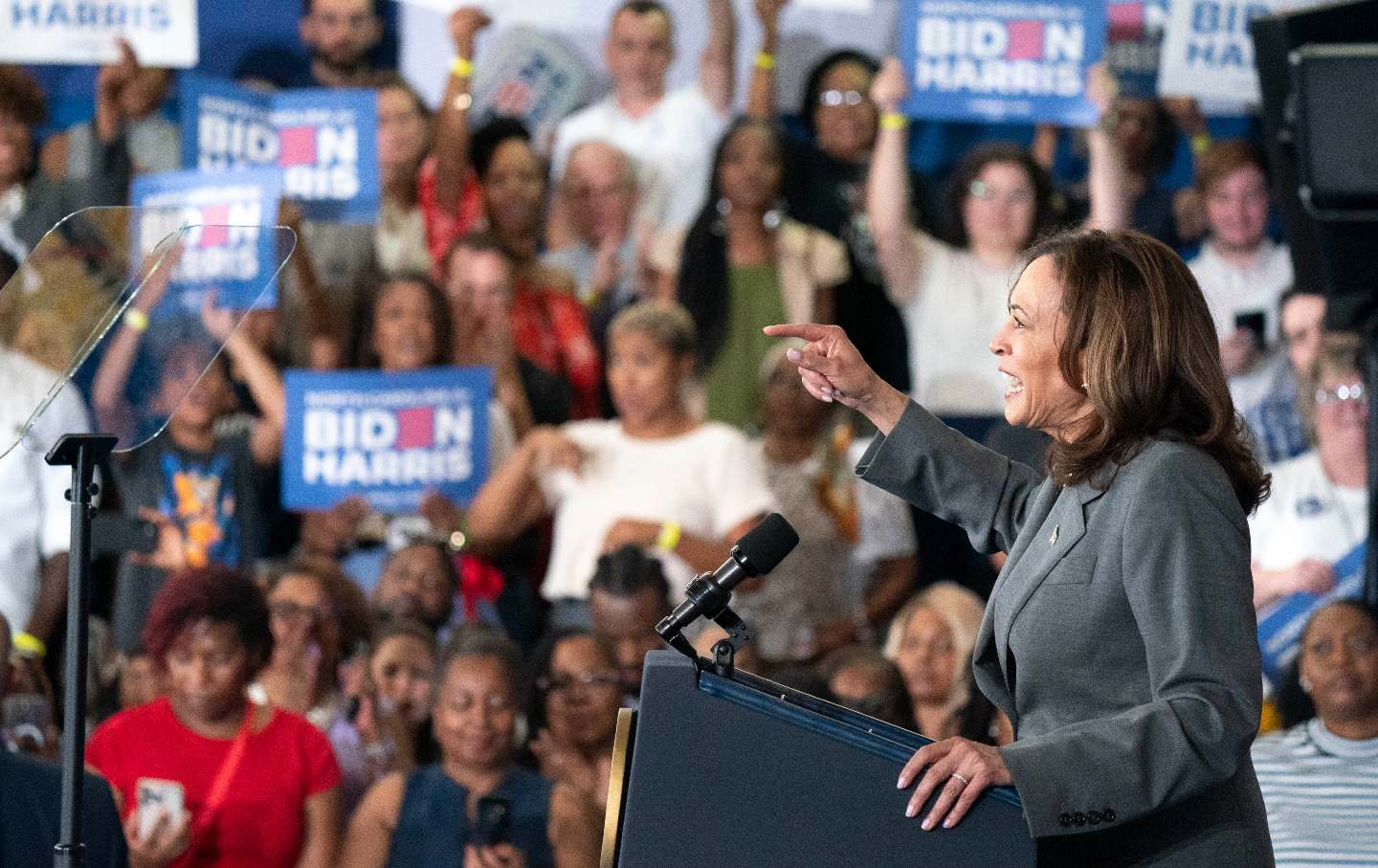
Kamala Harris speaks to a crowd during a campaign event at James B. Dudley High School in Greensboro, North Carolina.
( Sean Rayford / Getty)In 2016, Jahnavi Rao realized her civic voice was underestimated, even ignored. So, as a high school student in Pennsylvania, she founded New Voters, a school club that aimed to register high school students to vote and amplify their voices in elections.
“I wanted to be heard and I wanted my friends to be heard,” Rao said. “And as New Voters grew, I realized that high school was just such an untapped group of people in these elections.” As the president of the organization, Rao, now 23, has helped register more than 80,000 students coast to coast.
To Rao, high school is the perfect place to reach the next generation of voters. “From an equity lens, everybody goes to high school, right? Not everybody goes to college,” said Rao. “But every single person goes to high school, regardless of socioeconomic status or racial identity or anything.”
Although this fall will be the first election in which she can vote, high school senior Gabri Kurtzer-Ellenbogen has volunteered on campaigns since 2020. “I was looking for a way to stay engaged in politics and specifically the issues that matter most to me, one of which is voting rights and access,” said Kurtzer-Ellenbogen. She started working with New Voters, and helps run voter registration drives at her school in Washington, DC. “These decisions being made impact high school students more than anybody else,” said Rao, “because they’re going to be alive the longest, but they’re least heard or represented.”
Many barriers still prevent high school students from registering to vote, and when families and communities don’t emphasize voting as a milestone in young adults’ lives, civic action takes a backseat. “During voting drives, people would be excited about registering to vote, and then they’re like, ‘Oh, wait, I don’t know my Social Security number. Let me call my parents,’ and their parents wouldn’t pick up,” she said. “Even if they were enthusiastic, they can’t register at that moment because they don’t have that information, and then it just falls off their radar.”
More than 4.4 million Americans are currently 18 years old—many of them in high school—yet their value as a voting bloc is severely underrepresented because of historically low turnout rates.
Around 23 percent of those between 18 and 29 voted in the 2022 midterms, according to Tufts University’s Center for Information and Research on Civic Learning and Engagement, down from the historic turnout of 28 percent during the 2018 midterms, but still much higher than the 13 percent turnout in 2014.
In recent years, young adult electoral participation has been on the rise. In September, Harvard University’s Institute of Politics released a public opinion survey of over 2,000 adults under 30 showing further growth in voter registration and plans to vote. Of respondents under 24 years old, 74 percent report they are registered to vote and 69 percent said that they will definitely or probably vote in the 2024 presidential election.
The fight for 18-year-olds’ right to vote is one of the most under-discussed social movements of the 1960s and 1970s, said Jennifer Frost, a US historian at the University of Auckland in New Zealand. “The youth enfranchisement movement doesn’t really get off the ground till 1969,” Frost said.
Compared to other movements of the time, organizing for the 26th Amendment, which lowered the voting age to 18 from 21, was less flashy, she said, and was initially spurred by lowering of the draft age in World War II. “Immediately, you have people in Congress, and also even high school students and other kinds of civic leaders, like Eleanor Roosevelt, saying, ‘We need to have the voting age match the draft age.’” Decades later in 1971, the 26th Amendment was officially ratified and millions of Americans were newly enfranchised.
However, youth turnout in elections remained low, and while there’s been a recent uptick in youth participation, many still feel alienated from the electoral system.
Kawanza Billy is the youth mobilization manager at D.C. Action, a children’s advocacy organization based in Washington. “Locally and nationally, young people are finding it difficult to connect with the people who are supposed to be representing them,” Billy said. Role models are important, Billy said, when considering voting habits. “If you don’t see your parents, your cousin, an adult or someone closer to your age talking about voting, it might not be as interesting for you to do. Especially if you are living in an environment that hasn’t necessarily benefited from civic engagement.”
“School boards across the country need to assess what they’re doing to ensure that students are equipped with the knowledge to make some of these decisions regarding governance and civics, and using their voice,” said 23-year-old Divon Pender. “If you’re not educating a population on the power that they have, then it’s almost like, what are you teaching them?”
In 2019, Pender left New Jersey’s South Plainfield High School determined to make a difference. Two years later, he was elected to the board of education of his hometown. “I looked at the current make and model of the school board, and I was like, none of these people look like me, none of our elected representatives look like me and our demographic in town,” said Pender.
Pender credits the success of his campaign to the overwhelming support of young voters and even students below voting age. “The fact that I resonated so much with younger people, I didn’t even necessarily need to talk with their parents, because they would pitch me to their parents.”
When Frost first began research into the history of the 26th Amendment, she initially laid blame for low youth turnout on young people. “I immediately blamed young people for not voting—that they just couldn’t get themselves organized into it,” she said. “Then I started doing research on voter suppression aimed at young people, and it was there from the beginning.”
Trying to vote across state lines has always been difficult for young adults studying or working outside their permanent address, Frost explained, because absentee ballots are not guaranteed in every state and application processes can be cumbersome. A major obstacle to student voting today is the inaccessibility of polling places near many centers of student life, as reported by The Nation in 2022.
Calique Barnes is a junior in high school, and at 16 he’s just old enough to preregister to vote in Washington. Preregistering allows teens in certain states to register to vote one-to-two years before they can legally vote at 18. Initially, Barnes—like many his age—had no idea preregistering to vote was possible. He found that his peers take voting for granted, largely because of lacking civic education.
Popular
“swipe left below to view more authors”Swipe →Despite barriers, Barnes is active in his community and uses his voice to confront his local leaders. When Barnes’s friends say they feel like their vote doesn’t make a difference, he disagrees: “Eventually, the numbers will add up, and you will be a part of not one, but a thousand who chooses not to vote.”
Frost agreed, “If you’re not participating and you’ve opted out, it reinforces a sense of powerlessness. It reinforces a sense that we don’t have agency.”
Powerlessness is a common sentiment among America’s voting youth, according to Harvard Kennedy School’s spring 2024 youth poll. Over 45 percent of those between 18 and 24 agreed with the statement, “People like me don’t have any say about what the government does.” When asked if they didn’t believe their vote would make a real difference, nearly 40 percent of 18- to 24- year-olds agreed.
According to New Hampshire Representative Jonah Orion Wheeler, the cure to this sense of powerlessness is local involvement. “What we can do is build our communities up, work together on a local level to get things done,” said Wheeler, who at 21 years old is one of the youngest state legislators in the country. “So that’s what I chose to do, getting involved in politics at a very young age and choosing to run a few years after that for the state House and winning that seat.”
As a young teen, Wheeler was fired from his job for the way his hair was styled. In July, New Hampshire Gov. Sununu signed into law a bill sponsored by Wheeler that prohibits discrimination based on someone’s hairstyle as it relates to their ethnicity. Similar legislation was passed multiple times by the US House of Representatives, but continues to be blocked in the Senate. In Wheeler’s two years as a state representative, he has sponsored and cosponsored 13 pieces of legislation that passed both houses.
“Most often people are told to sit down and be quiet, and in many ways, I did. I was an observer in my first year, and I sat down and I was quiet,” he said. “But I ran for office for a reason, and who knows how long I have here, whether or not I get another two years, and I wasn’t just going to sit there and be idle.”
Svante Myrick was elected to the Ithaca City Council as a junior at Cornell University in 2007. By 2011 he was elected mayor—the youngest in the city’s history and the first person of color. After stepping down in 2022, joined the progressive advocacy organization People for the American Way. But the tug of war between apathy and hope for the future is something Myrick still faces on a nearly daily basis. “What keeps me going is that it’s easier to work than to quit,” Myrick said.
At People for the American Way, he focuses on protecting voting rights, preserving democracy and electing young and progressive leaders. “I hear young people say this, ‘Politics is so corrupt, so frustrating—so I don’t engage in it.’ To me that sounds like saying the air is so polluted, I don’t even want to plant trees,” Myrick said. “The trees are cleaning the air; engaging in politics is what makes it better.”
Young adults’ task of saving the world, as Wheeler put it, is daunting enough to make many shy away from any action at all. Such dread often freezes people in place, but Wheeler and Myrick both know that taking the first step toward change can be extremely empowering. “I still have a sense of depression about where we’re at in politics these days,” Wheeler said, “but it breaks every day that I see more and more people get involved, start to actually organize around their material needs,”
Myrick made an impact not just through his policy priorities but also on those he spurred to seek local leadership. “I’m really proud that we also inspired more young people themselves to get into office, to run for office and to be involved in the community.” According to Myrick, the city council now has more people under 30 than at any time in Ithaca’s history.
Wheeler said, “There is the opportunity to get involved, and to have a say, and to make a difference.”
More from The Nation
Why Calling Anti-Trans Hate a “Distraction” Is So Troubling Why Calling Anti-Trans Hate a “Distraction” Is So Troubling
It’s a familiar line in the midterms: Anti-trans attacks are a “distraction” from “kitchen-table” issues. That sends a chilling message about whose rights are worth fighting for.
Mamdani Is Facing Heat Over the NYPD. Here’s What He Should Do. Mamdani Is Facing Heat Over the NYPD. Here’s What He Should Do.
The mayor is being given a series of false choices over his public-safety agenda. But there is another way forward.
So What Is Socialism, Anyway? So What Is Socialism, Anyway?
In a world dominated by neoliberal market fundamentalism, “socialism” is what will make a more moderate, regulated form of capitalism work for most people.
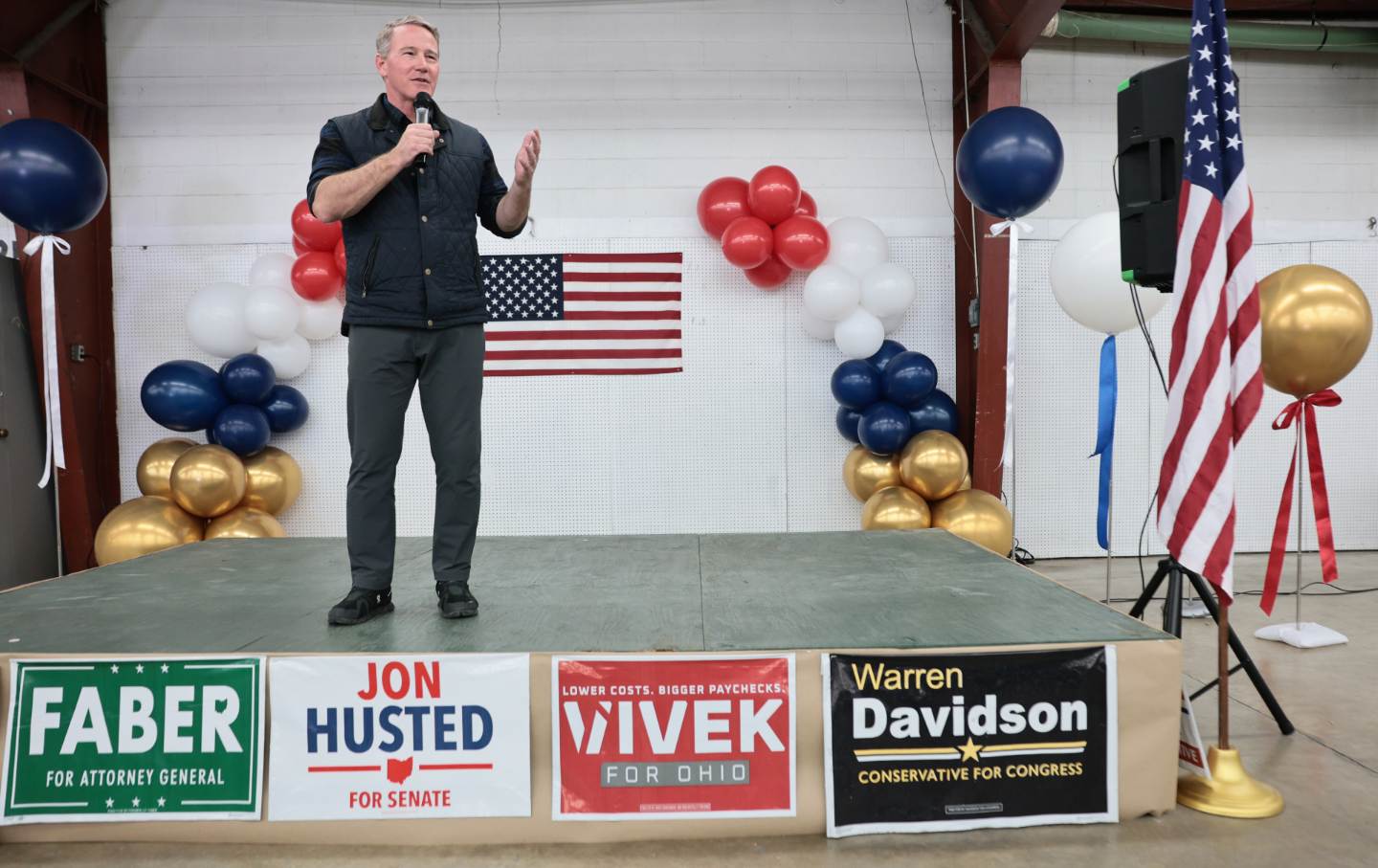
Will the GOP’s Big Money Save Jon Husted in Ohio? Will the GOP’s Big Money Save Jon Husted in Ohio?
Former senator Sherrod Brown is leading in most polls, but a tidal wave of spending may prop up the struggling incumbent.
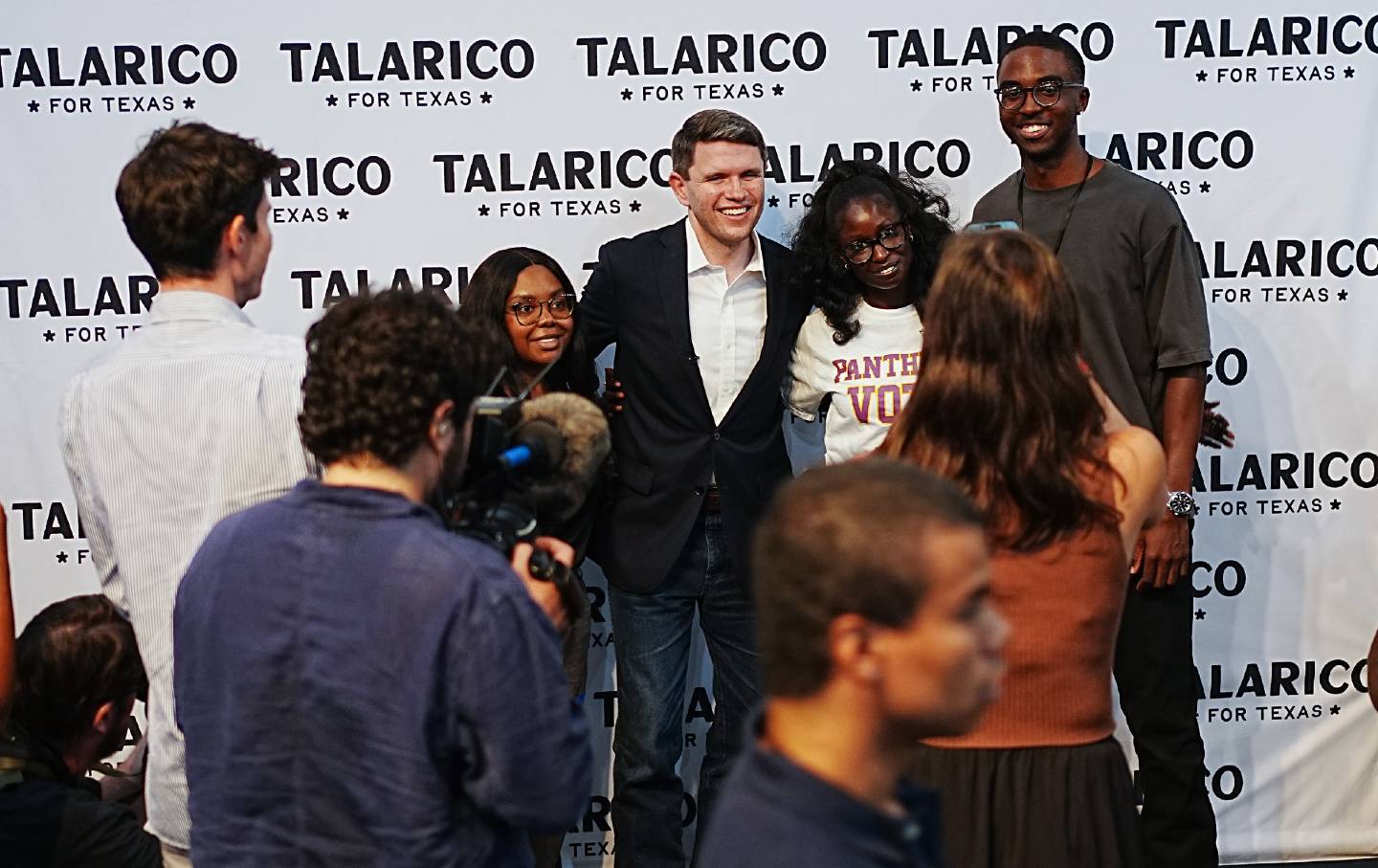
James Talarico Is Preaching a Gospel of Pluralism James Talarico Is Preaching a Gospel of Pluralism
He’s not the only progressive doing it.
Even Republicans Are Waking Up to Trump’s Corruption Even Republicans Are Waking Up to Trump’s Corruption
And, somewhat shockingly, so are Democratic elites.

