
Democrats Want the Uncommitted Delegates to Go Away. They Won’t.
Even after their request to feature a Palestinian speaker at the DNC was rejected, delegates say they are staying and fighting.

One by one, the delegates from the Uncommitted National Movement sat down on the concrete in front of Chicago’s United Center. Behind them, towering light displays advertised the Democratic National Convention taking place at the arena.
It was the third night of the convention, and inside the United Center, Democrats were having a ball. Stevie Wonder had performed. Mindy Kaling was telling jokes. Bill Clinton was holding court.
The uncommitted delegates were just steps away from these festivities, but they might as well have been on a different planet. And that was the way the party appeared to want it. They had just told the delegates that their strikingly modest demand—to have a Palestinian American speaker on the main stage—had been denied by the DNC, even as the parents of an Israeli-American hostage were given a slot. The message was clear: Israeli lives matter enough to be honored and acknowledged. Palestinian lives do not.
As the press huddled around them, the uncommitted delegates declared that they were staging a sit-in until their demands were met.
“I’m willing to do whatever it takes to make sure our voices are heard as Palestinians,” said Sabrene Odeh, an uncommitted delegate from Washington state, explaining why she was sitting down. “We are Palestinian Americans, and we deserve a seat just like anyone else.”
A steady stream of politicians either joined the sit-in or called in remotely, from both the federal level (Representatives Ilhan Omar, Rashida Tlaib, Cori Bush, Pramila Jayapal, Ayanna Pressley, Alexandria Ocasio-Cortez, and Summer Lee) and the state and local level (such as Ruwa Romman, the first Palestinian ever elected to the Georgia state legislature.)
Dan Engelhart, a delegate from Minnesota, said in a booming voice, “It’s weird to say ‘ceasefire’ and keep sending the fire. That’s weird, Walz!”
June Rose, an uncommitted delegate from Rhode Island, declared, “Not another bomb!” while sitting down.
The rejection came amid feverish efforts by the Uncommitted movement to organize DNC attendees and delegates around their call for a permanent ceasefire in Gaza and an arms embargo on Israel. So far, they say, they’ve persuaded nearly 300 delegates to do so, and have worked to spread their message through panels, events, and vigils. At each of these, the emotional tenor has been high. This should not be surprising, given the circumstances. Israel has killed at least 40,000 people in Gaza, more than 16,000 of them children, and an untold number of them killed using US weapons. The total killed both directly and indirectly is almost certainly far higher, and experts and scholars have said that Israel’s actions in Gaza are genocidal.
Delegates and organizers have openly wept at every event this week, a jarring contrast with the celebratory tone of the DNC main stage. But none of these events were televised in prime time. And now, it appeared that not a single Palestinian would get a chance to bring their story—their lives—into the heart of the convention. Uncommitted delegates have mobilized at the DNC as thousands have marched outside, with the Coalition to March on the DNC demanding an end to the genocide and a halt to all US aid to Israel. Various organizations have taken to the streets throughout the week, and they have faced a “repressive police response,” according to the National Lawyers Guild, which said that at least 74 people have been arrested total since Sunday.
While Uncommitted has been trying to play the inside game, Abbas Alawieh, a delegate from Michigan, said at an event on Sunday he has “a lot of respect” for what protesters are doing.
“What we are doing on the inside is an act of protest itself, and what protesters are doing on the outside is another dignified form of protest,” Asma Mohammed, an uncommitted delegate from Minnesota, said. The Uncommitted movement has referenced Fannie Lou Hamer’s speech at the 1964 DNC, where she asked, “Is this America?,” as inspiration for their own actions.
It is worth emphasizing how hard delegates tried to be conciliatory toward the DNC, not to pit inside and outside protesters against each other but because it illuminates the dynamics of the party overseeing lockstep, material support for Israel’s military operations. Many of the delegates have worked for the party for years. They didn’t disrupt convention proceedings. They didn’t object as Democrats welcomed a string of former Trump administration officials and plutocrats to the stage. They supported the decision to highlight the families of Israeli hostages. They promised that the DNC would be free to vet any speech that an uncommitted delegate might give. All they asked for was a brief chance for Palestinians to affirm their humanity in front of the United Center crowd. And this demand is a far cry from their ultimate aim: not another bomb to Israel. And the Democrats said no.
In announcing the sit-in, Alawieh seemed to be at a breaking point. He is the former chief of staff for Representative Cori Bush, and has also previously worked for Representatives Rashida Tlaib and Andy Levin. “I am an insider,” he said. “I’m playing an inside game.”
Alawieh has been open about his own experience, as an immigrant from Lebanon, of surviving Israel’s devastating bombing of southern Lebanon in 2006 while he was visiting family there at the age of 15. Those weapons, including cluster munitions, were provided by the United States, as they are in Gaza today. When he spoke about the more than 16,000 children who have been killed in Gaza in the past 10 months, he said over and over, “I could have been one of those children.”
And he is not just representing himself. The 29 uncommitted delegates who traveled to the DNC represent the roughly 740,000 people who voted “uncommitted” during the Democratic primary, in protest against US support for Israel’s operations in Gaza. They are bringing their demand for an arms embargo at a time when it has undeniable mass support. Seven major unions representing half of all unionized workers in the US have endorsed it, and polling shows that Israel’s actions are unpopular in the base of the Democratic Party. Every fleeting mention of Gaza on the convention floor has been met with huge cheers from the Democrats in the audience.
For Mohammed from Minnesota, what is so frustrating about the DNC’s refusal is that the ask for a speaker is “the lowest bar. We are saying at the bare minimum, can we have a Palestinian-American speak at the DNC? How much lower could that bar go?”
Mohammed has multiple sclerosis and told The Nation that “sitting out here is extremely painful. I’m in excruciating pain, and I can’t access my medicine right now either. But it’s worth it if being out here means that we are heard.”
We spoke over the phone the next morning, Thursday. Around half a dozen people had stayed the night, continuing their sit-in. She told me she was still in pain, still had not taken her medicine, but she’s not going anywhere.
Popular
“swipe left below to view more authors”Swipe →“The ground was cold and hard, and we waited and waited for a response from the DNC,” she said. “They gave us a ‘no’ to a Palestinian-American speaker, and then they called again and asked if we would be willing to meet with them instead. We asked if the meeting would be about a speaker, and they said no, so we said no.”
“We are tired, but we have gotten such a beautiful outpouring of support from throughout the nation,” she added. “We’ve gotten so many texts and calls. I had someone from Australia call me this morning and say, ‘I’m so proud of you.’”
Mohammed is still in severe pain, she said, but has not budged on her intentions. “We are staying.”
Sarah Lazare reported from Chicago. Jack Mirkinson contributed reporting from New York.
Become a Sustaining Donor This September
Between the reemergence of right-wing red-baiting and Donald Trump’s use of the chilling National Security Presidential Memorandum–7 to criminalize left political organizing, we’re seeing McCarthyism reborn before our eyes.
This assault on democracy cannot be ignored or wished away. Resisting it requires bravery in the face of threats and repression, a steadfast commitment to the truth, and the unwavering belief that we can—and will—overcome this darkness.
We must have an independent media that sets the record straight, unearths corruption and abuses of power, and advances a politics of justice and dignity for all if we’re to win this fight.
That’s why I’m writing to you today. This September, The Nation needs to add 100 monthly donors to sustain our progressive journalism. Your contribution makes the next investigative report, the next truth-speaking column, and the next pathbreaking essay all possible.
I hope you’ll support our work with a recurring donation today. If you donate $10 or more a month, we’ll send you a brand new “Hands Off the Free Press!” sticker to recognise your commitment to our cause. Please, donate today.
Onward,
Katrina vanden Heuvel
Editor and Publisher, The Nation
More from The Nation
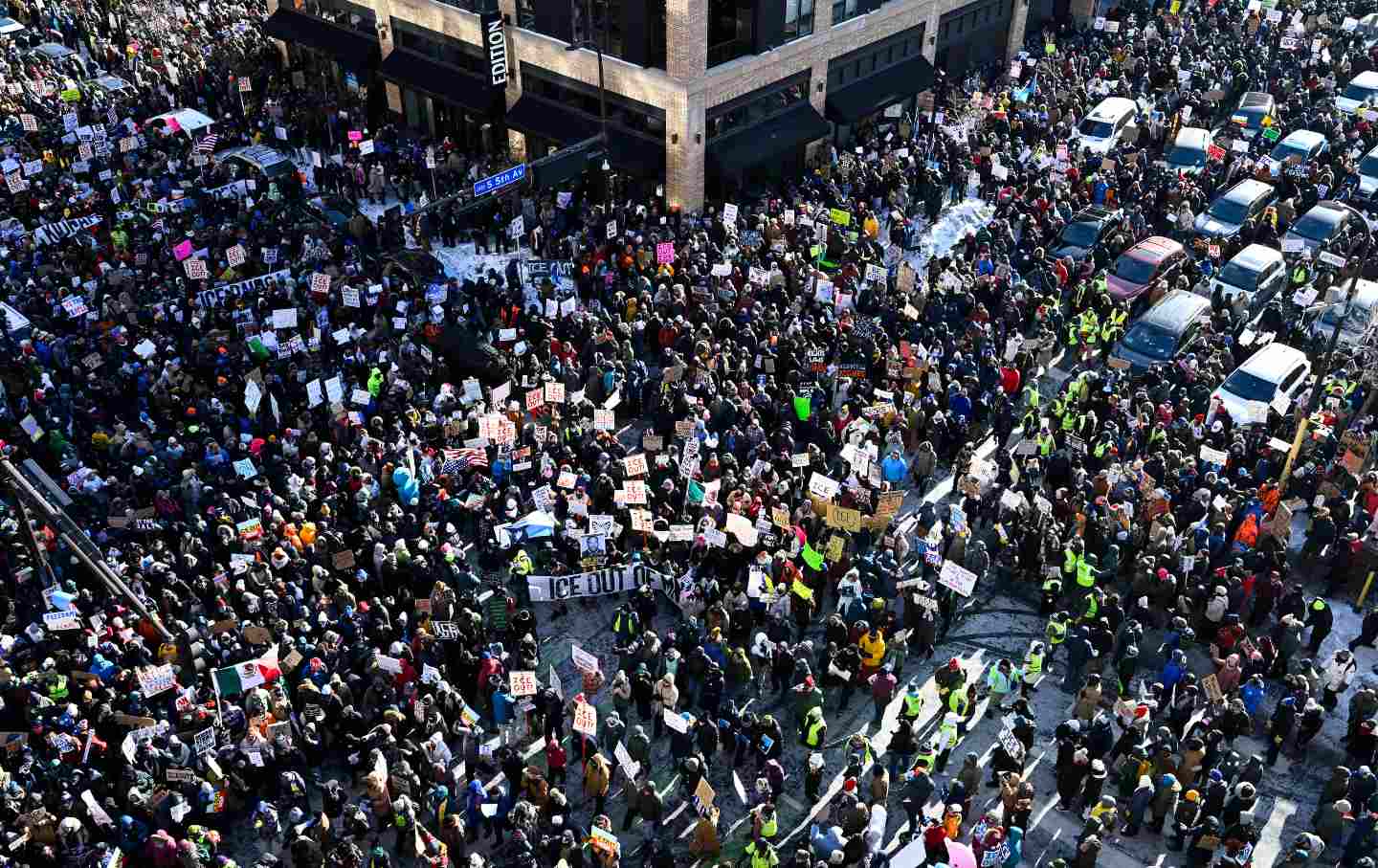
The Impossible Will Take a Little While: The Power of Persistence The Impossible Will Take a Little While: The Power of Persistence
In troubled times, history offers a lesson: Seemingly impossible change can begin with ordinary people who refuse to give up.
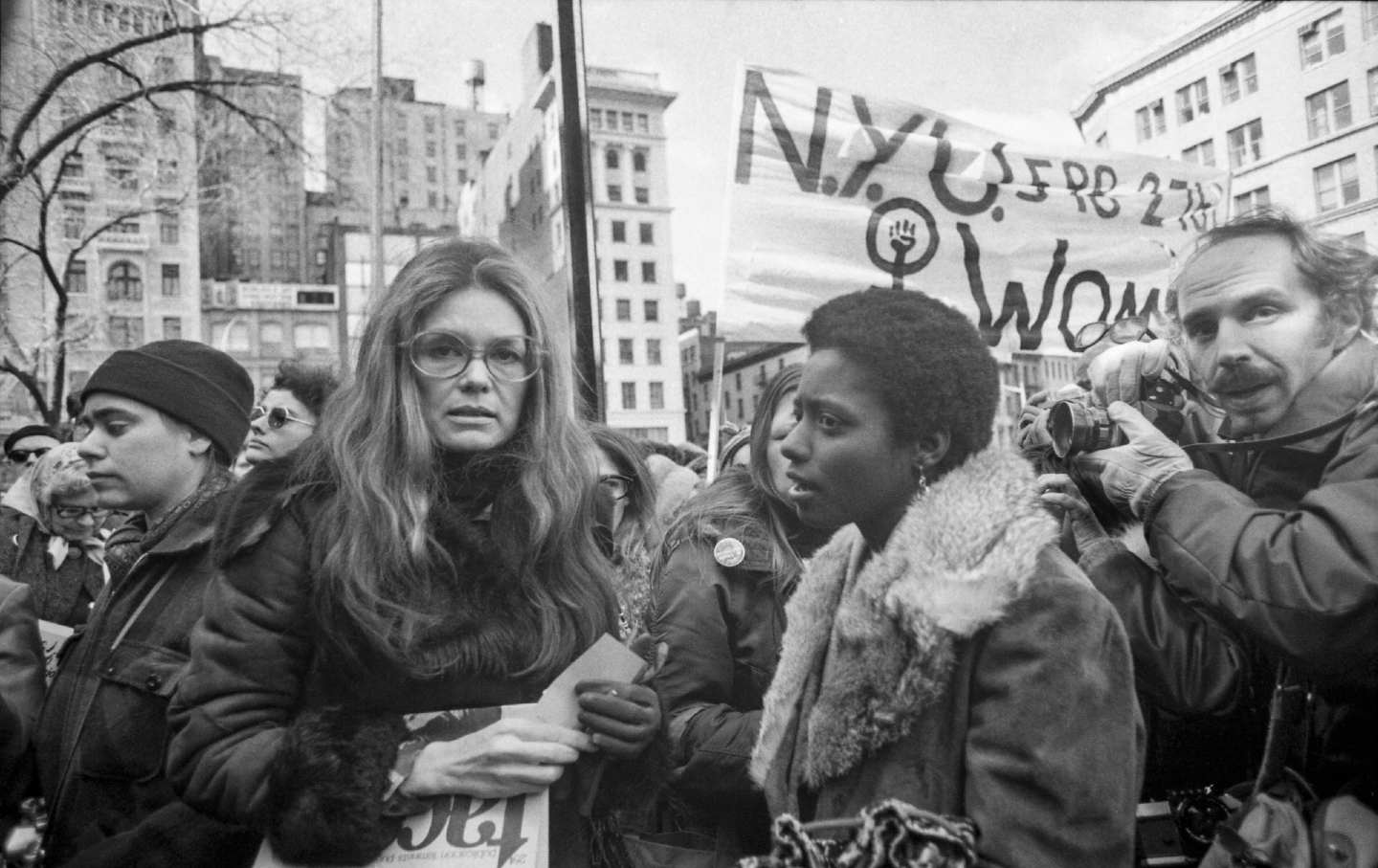
Gloria Steinem’s Many-Splendored Feminist Life Gloria Steinem’s Many-Splendored Feminist Life
The feminist icon lived the struggle for gender equality and always found time to lend support and solidarity to other women leaders, even in her final days.
No, Woke 1 Was Not Crazy No, Woke 1 Was Not Crazy
AOC and others are laughing off 2020 as a wild, isolated moment. None of that is true.
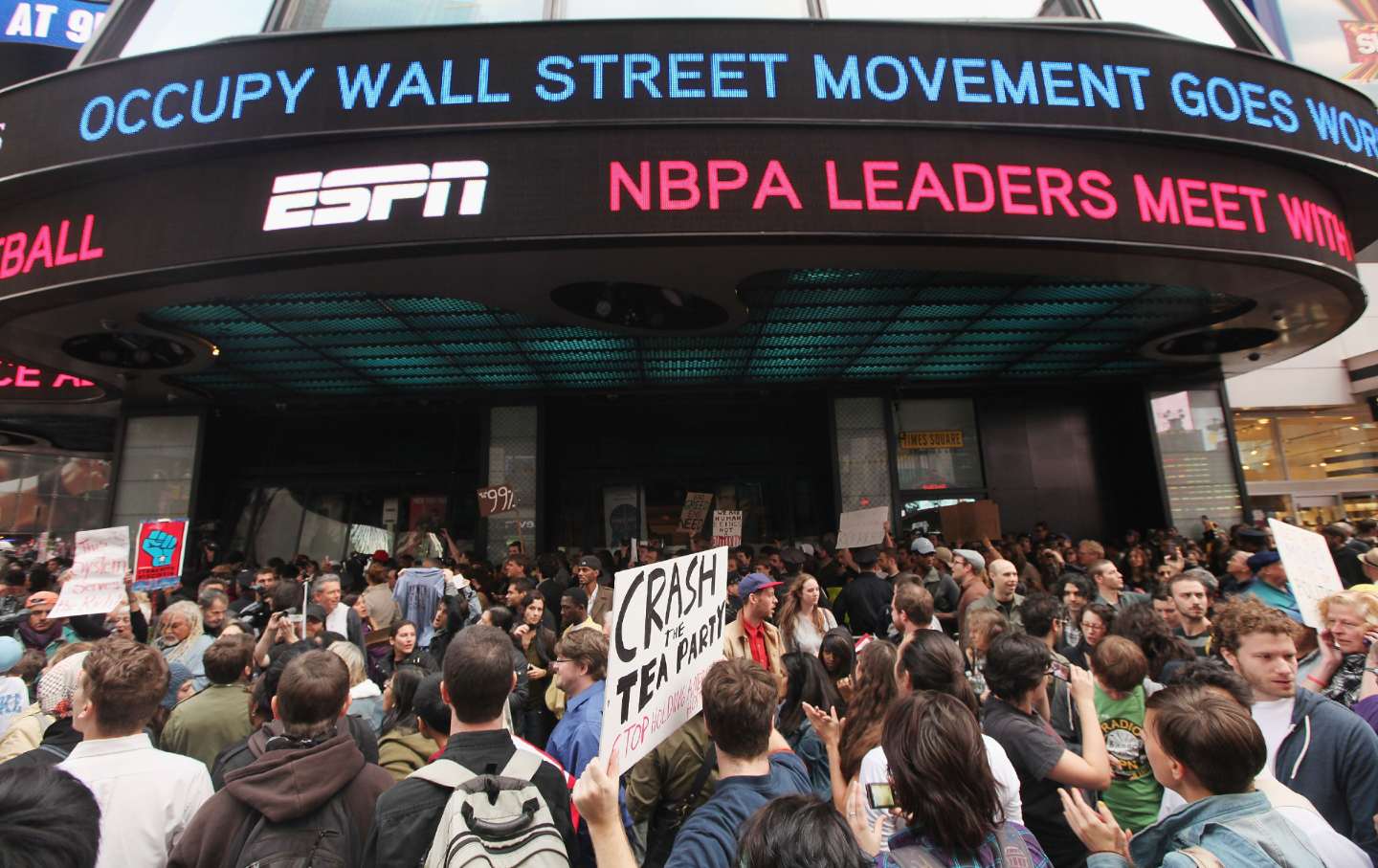
How Occupy Wall Street Still Explains Politics Today How Occupy Wall Street Still Explains Politics Today
It sowed the seeds for a new era of social movements—but its politics of powerlessness should act as a cautionary tale.
Abdul El-Sayed’s Win Is a Landmark. But the Fight Is Far From Over. Abdul El-Sayed’s Win Is a Landmark. But the Fight Is Far From Over.
Even though the Palestine movement is on the march, we can’t afford any complacency.
Mamdani’s Team Redefined Political Video. Now They’re Betting on Short Films. Mamdani’s Team Redefined Political Video. Now They’re Betting on Short Films.
Premiering exclusively in The Nation, a new short film produced by City Hall and narrated by Morgan Spector highlights the efforts of the biggest tenant-led union in New York City...

