
Hochul and Mamdani Teach Democrats a Vital Lesson in Party Unity
New York State’s governor and New York City’s mayor are illustrating how ideologically diverse Democrats can build winning coalitions.
To paraphrase a classic work, there is a specter haunting the Democratic Party, and its name is “socialism.” Or at least that’s what the mainstream American media would have you believe.
Whichever network I appear on, I’m sure to get a breathless question about the looming civil war between the progressive and moderate wings of my party.
It is treated as an article of faith that peaceful coexistence is an impossibility, and that any chance of unity will inevitably be subverted by the wily and newly empowered Democratic Socialists of America.
This narrative is oh-so-clean and fulfills the normal journalistic desire for conflict.
But the facts on the ground in 2026 suggest a far different reality, one that has been consistently developing over the last decade and that in truth offers new possibilities for the growth of the party.
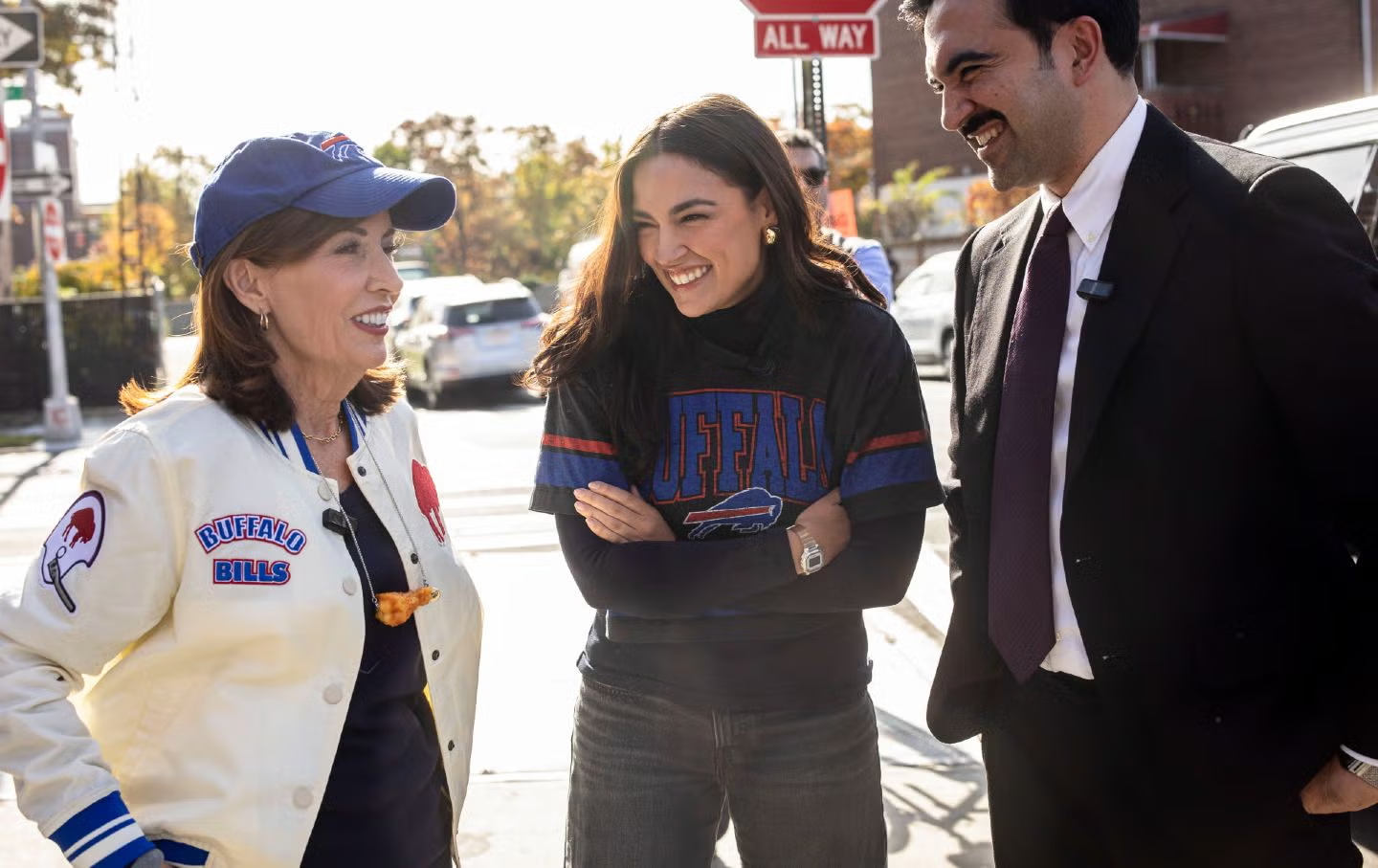
The most powerful example is on display in my state: New York. Here, Mayor Zohran Mamdani and Governor Kathy Hochul have formed a mutually beneficial and strikingly cohesive alliance. In the New York context, we are getting an object lesson in the ways both wings of our party actually need each other.
On many of the issues that matter, it is Mamdani who often sets the tone ideologically and moves Hochul leftward, a phenomenon we will see more frequently around the country.
The recent adoption by the state legislature of a pied-a-terre tax for NYC—asking a little more from those with expensive second homes—is an example of a progressive policy that Albany would never have passed on its own but felt it had to because of the grassroots energy created by Mamdani’s movement.
To be clear, this is not an entirely new reality. When I was elected mayor in 2013 on a platform of higher taxes on the wealthy to fund Universal Pre-K, my campaign created inexorable pressure on then-Governor Andrew Cuomo to act.
The difference now is that rather than resisting Mamdani at every turn (which was my experience with Cuomo), Hochul understands that the best way to both win elections and to govern is with the mayor by her side.
The governor has taken positions on taxation and on Mamdani’s enlightened Universal Childcare Plan that she otherwise might not have. But instead of the sky falling for her politically because she worked with a democratic socialist, she is arguably in a stronger position to lead than ever.
In the run-up to today’s midterm elections, the Democratic Party’s Washington-based organs began to embrace the general election campaigns of progressive primary-winners in ways they wouldn’t have in the past. It may be grudging and not generous enough, but it has been happening.
DNC chair Ken Martin has more genuine affinity for the progressive wing than almost any of his predecessors, and Democratic congressional leaders Chuck Schumer and Hakeem Jeffries have clearly been changing their tune about the new voices emerging around them.
Have we seen a seamless and elegant transition to a new political reality? No, as has been illustrated by the drama surrounding defeated centrist Democratic Senate candidate Haley Stevens, and her late-stage withdrawal of support for the party’s nominee, Abdul El-Sayed.
But Stevens is the exception, not the norm. In most states, open warfare is rare. For the most part, the two tendencies are working together.
Even in Michigan, after arguably the nastiest primary fight in the nation, the vast majority of the mainstream Democratic establishment, led by centrist Senator Elissa Slotkin, quickly united behind El-Sayed. Indeed, Slotkin had been a steady and effective campaigner for El-Sayed.
Were there entirely practical motivations for Democrats such as Hochul and Slotkin to embrace unity and enlightened approaches to the 2026 campaign?
Absolutely!
But what’s striking is the growing recognition that moderates now need the energy and mobilization and new ideas that progressives bring.
And these examples also remind us that progressives can benefit from the resources (in Hochul’s case) and the access to important constituencies (in Slotkin’s case) that moderates often bring to the table.
Although I don’t want to overstate the notion that a productive modus vivendi is developing between the two wings of the party, it’s fair to say nationally there has been a striking change in recent years.
If 2016 was an extraordinary growth moment for the left because of Vermont Senator Bernie Sanders’s campaign for the Democratic presidential nomination, it also marked a low point for party unity. The Clinton campaign and the Democratic establishment simply couldn’t forgive Bernie’s audacity and didn’t want to embrace his movement. I had a front-row seat in Philadelphia as this huge mistake of arrogance and underestimation unfolded at that year’s Democratic National Convention. As I watched Bernie take the microphone and call for Hillary to be nominated by acclamation, I thought surely this was the beginning of the coalition we needed to win. But that fleeting moment was followed by a spurning of progressive ideas and energy that may well have cost Democrats the White House in 2016.
Popular
“swipe left below to view more authors”Swipe →A scenario like that may not be unthinkable today, but it is much less likely.
Progressives have gained strength and won elections to such a degree that the Democratic mainstream now broadly understands they no longer have the party to themselves. Increasingly, they recognize that mainstream Democrats must work with the powerful movement that progressives have built.
Could this end up being a 1932- or 1964-like moment, when a new and bigger Democratic coalition developed accompanied by a more progressive vision?
It’s certainly possible, especially given the increasing openness of American voters to solutions that address the more glaring failures of the capitalist system.
As the discourse opens up, and proposals for real change begin to emerge, we Democrats should understand that Donald Trump—and the real threat of authoritarianism he poses—has inadvertently played a major role in sparking a long-overdue renewal in our party.
For while his disruption of the Republican Party has surely led it rightward—and badly damaged his party’s prospects in this midterm election season—his broader disruption of American politics, and of the American economy, has led to a disruption of the Democratic Party.
That disruption, along with decades of hard work by Sanders and the recent victories of a new generation of candidates, has brought Democrats closer to our New Deal and Great Society roots and begun to forge a party that is ready to win again. And when Democrats regain power, to build a future than does not just reject Trump but that builds a progressive future for our country.
More from The Nation
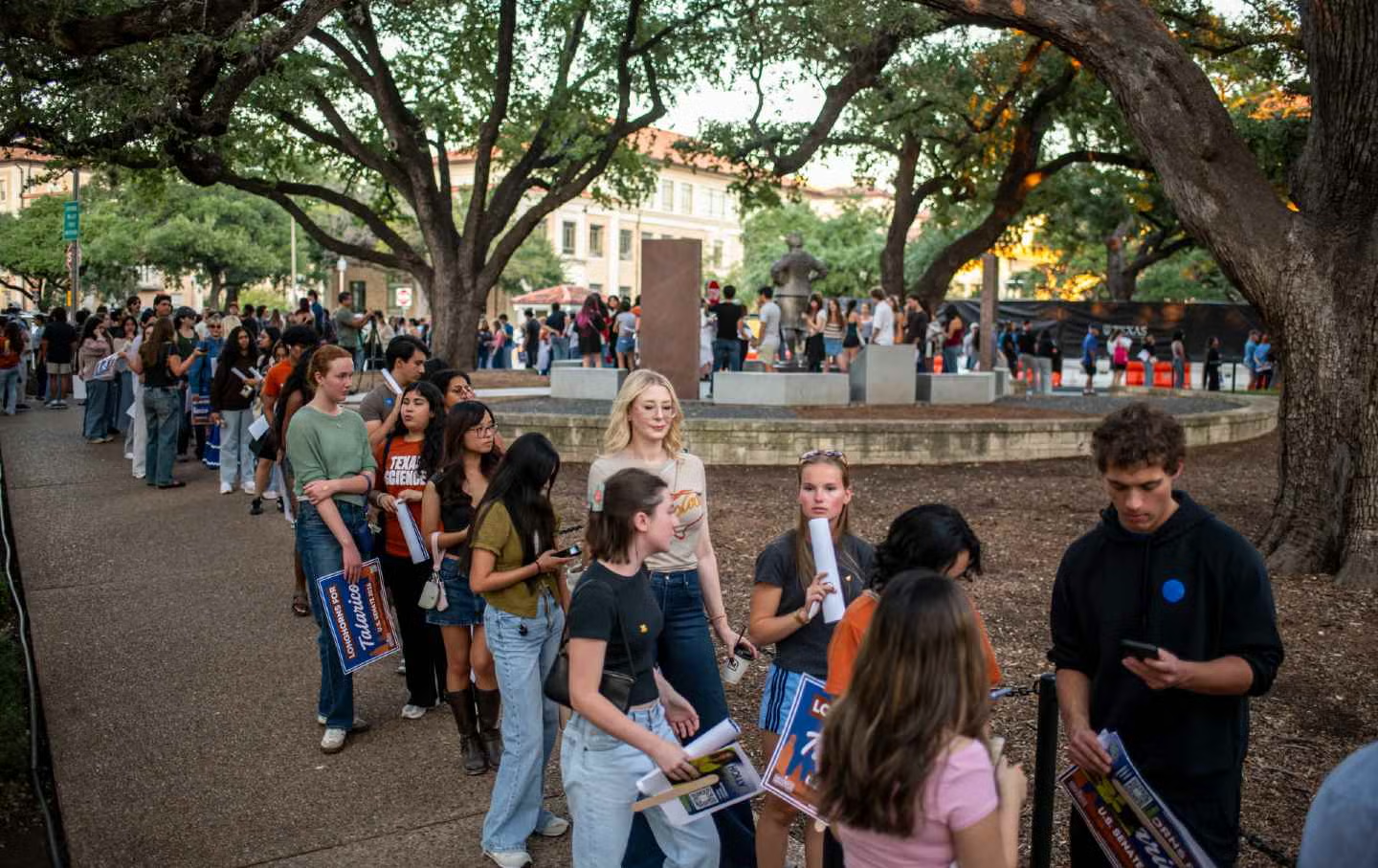
I Am a UMich Student From Texas. Choosing Where to Vote Was Impossible. I Am a UMich Student From Texas. Choosing Where to Vote Was Impossible.
Despite Michigan being a battleground for one of the most contentious midterm races this cycle, I couldn’t help but feel a draw to my native Texas.
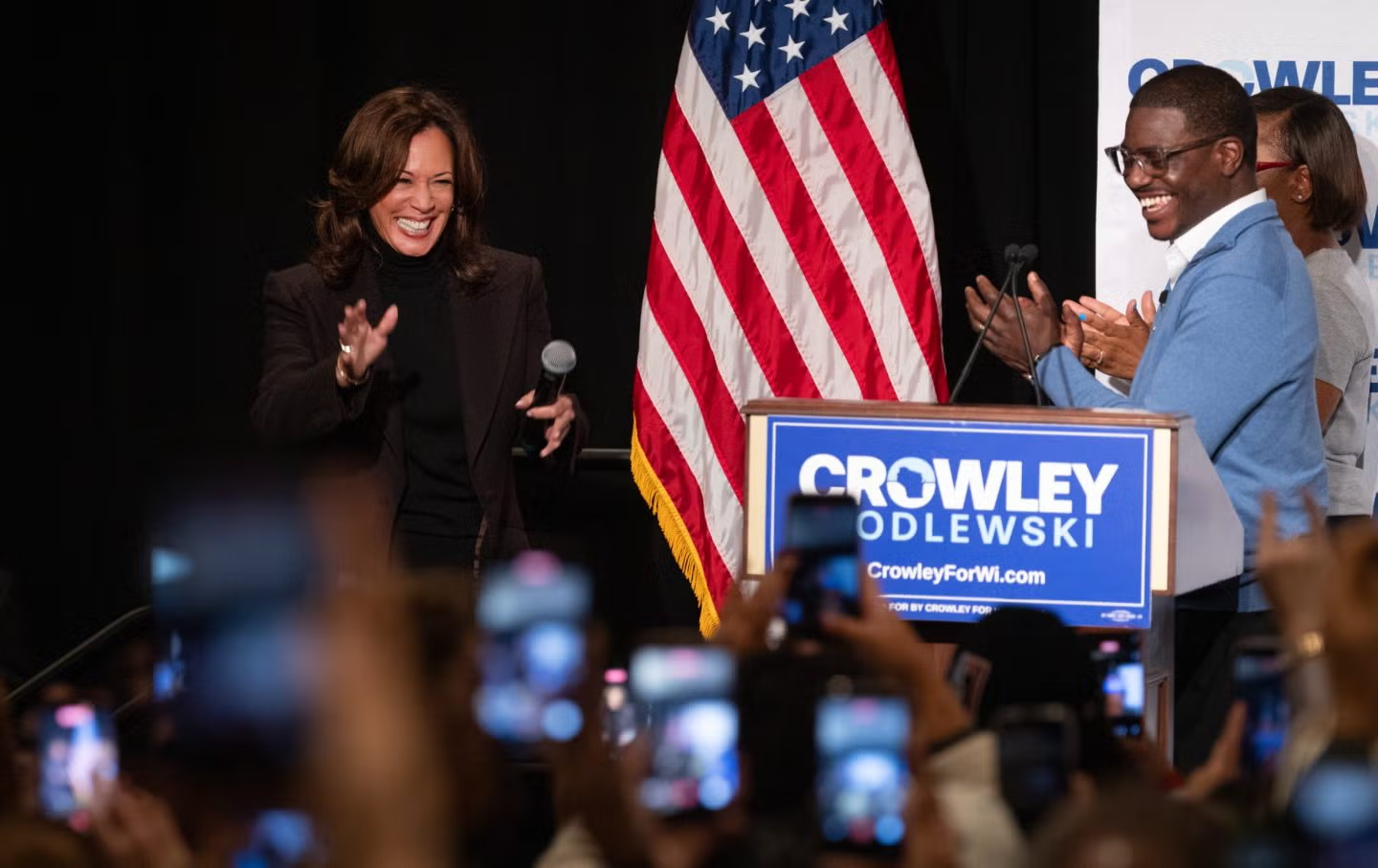
Kamala Harris Has Her Eye on Today’s Gubernatorial Races Kamala Harris Has Her Eye on Today’s Gubernatorial Races
The former vice president reminds The Nation that, even if government is divided in DC, “a governor, as the chief executive of a state, can actually make things happen.”
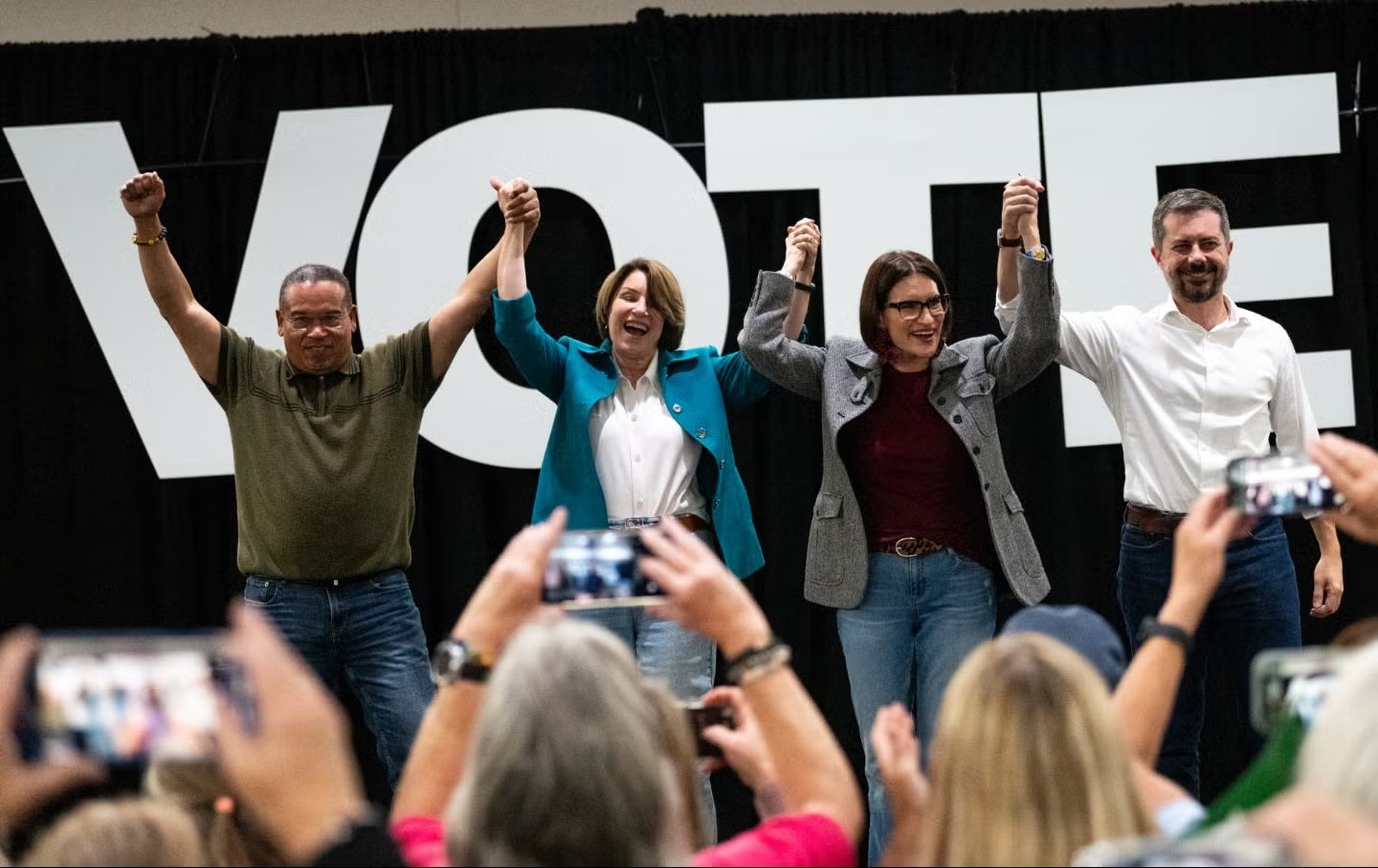
Peggy Flanagan Makes Her Closing Argument Against Trump’s “Cruelty and Chaos” in the Minnesota Senate Race Peggy Flanagan Makes Her Closing Argument Against Trump’s “Cruelty and Chaos” in the Minnesota Senate Race
Flanagan opponent Michele Tafoya’s extreme and erratic stands on Operation Metro Surge may well cost her the Senate seat.
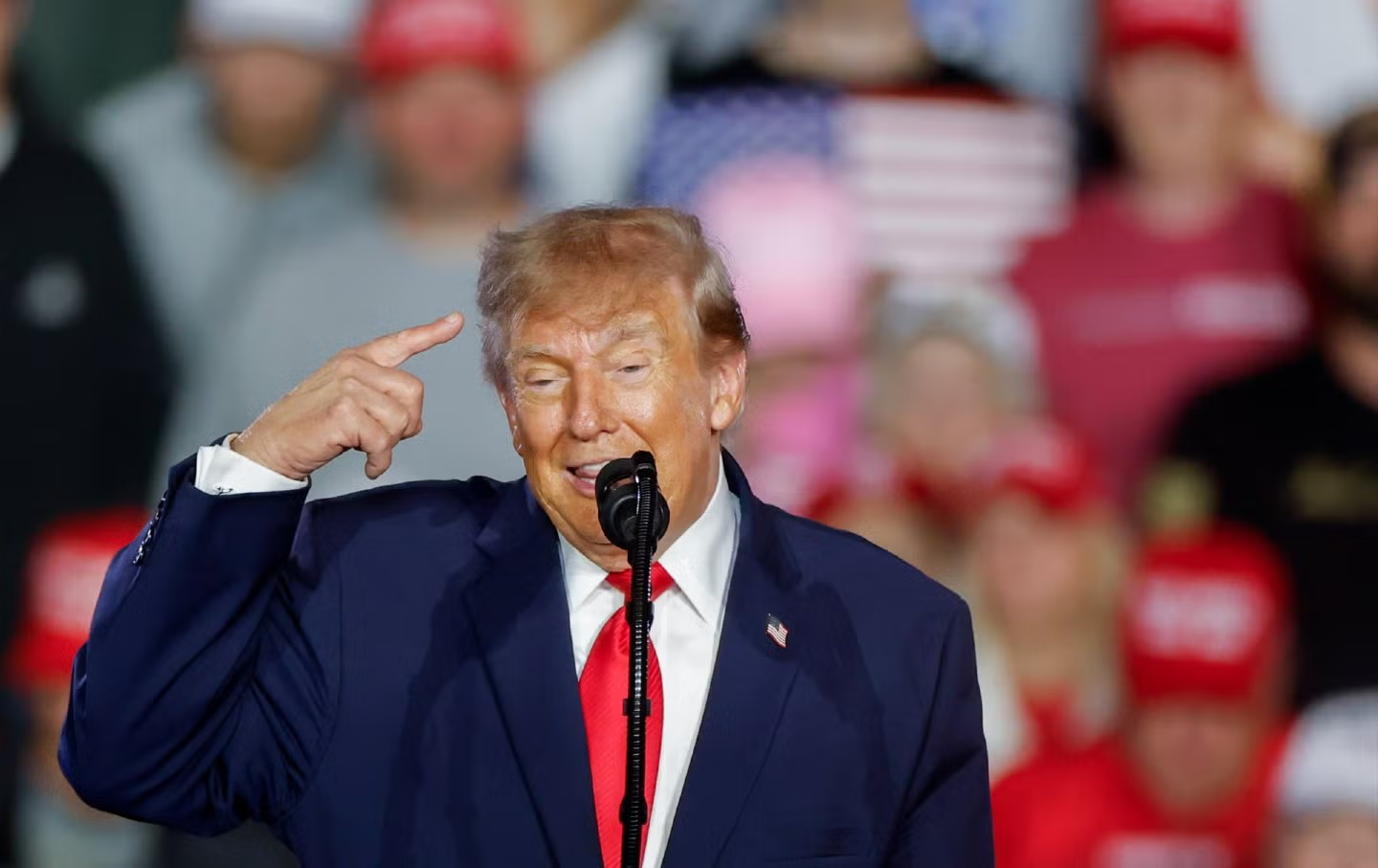
Donald Trump Has Lost It Donald Trump Has Lost It
At one of his final midterm rallies, the president showed just what a spent political force he has become—and what little grip on reality he still has.
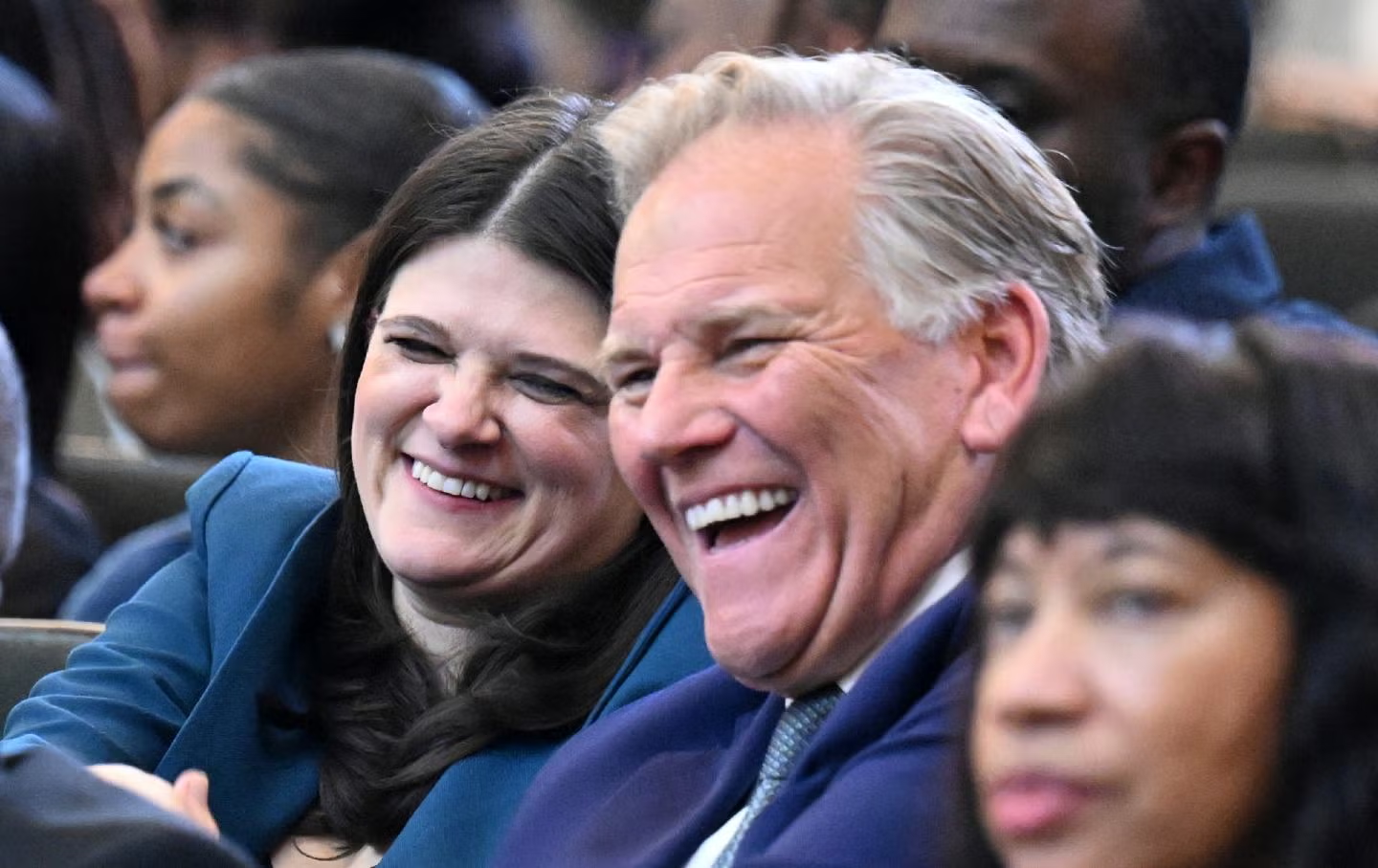
Haley Stevens’s Betrayal Is a Fiasco for the Democratic Establishment Haley Stevens’s Betrayal Is a Fiasco for the Democratic Establishment
Centrist, pro-Israel Democrats helped Stevens undermine Abdul El-Sayed for months. Now they are reaping the consequences.
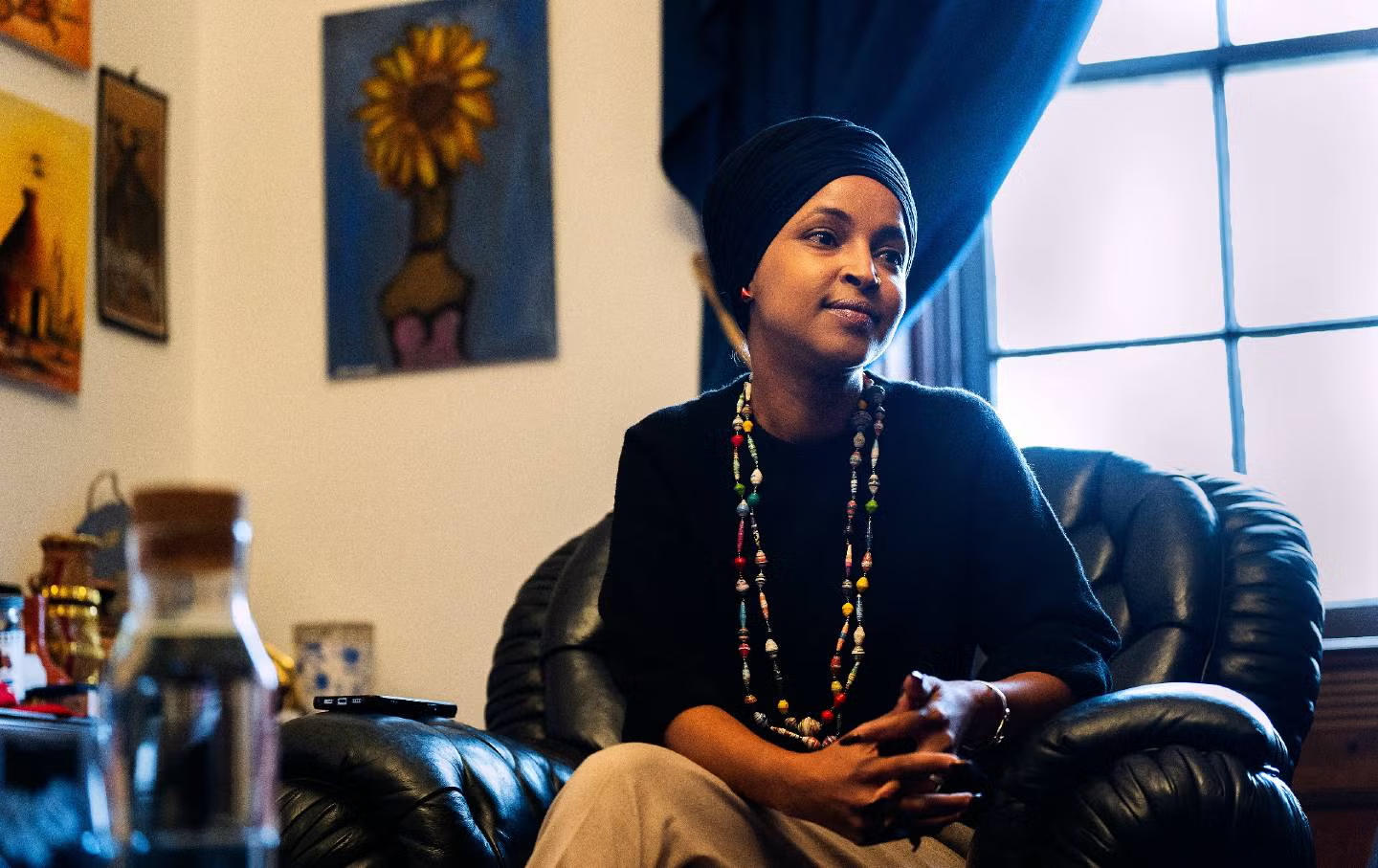
Ilhan Omar: “Trump Has an Unhealthy and Creepy Obsession With Me” Ilhan Omar: “Trump Has an Unhealthy and Creepy Obsession With Me”
The Minnesota representative tells The Nation that her targeting is “a deliberate attempt to distract the American people from the failures of this administration.”

