
As Democrats Party, Doctors Beg the World to Listen to Gaza
“The reason we cry tears isn’t sadness anymore. It’s the feeling that we have no ability to get the most powerful country in the world to stop the bombs.”
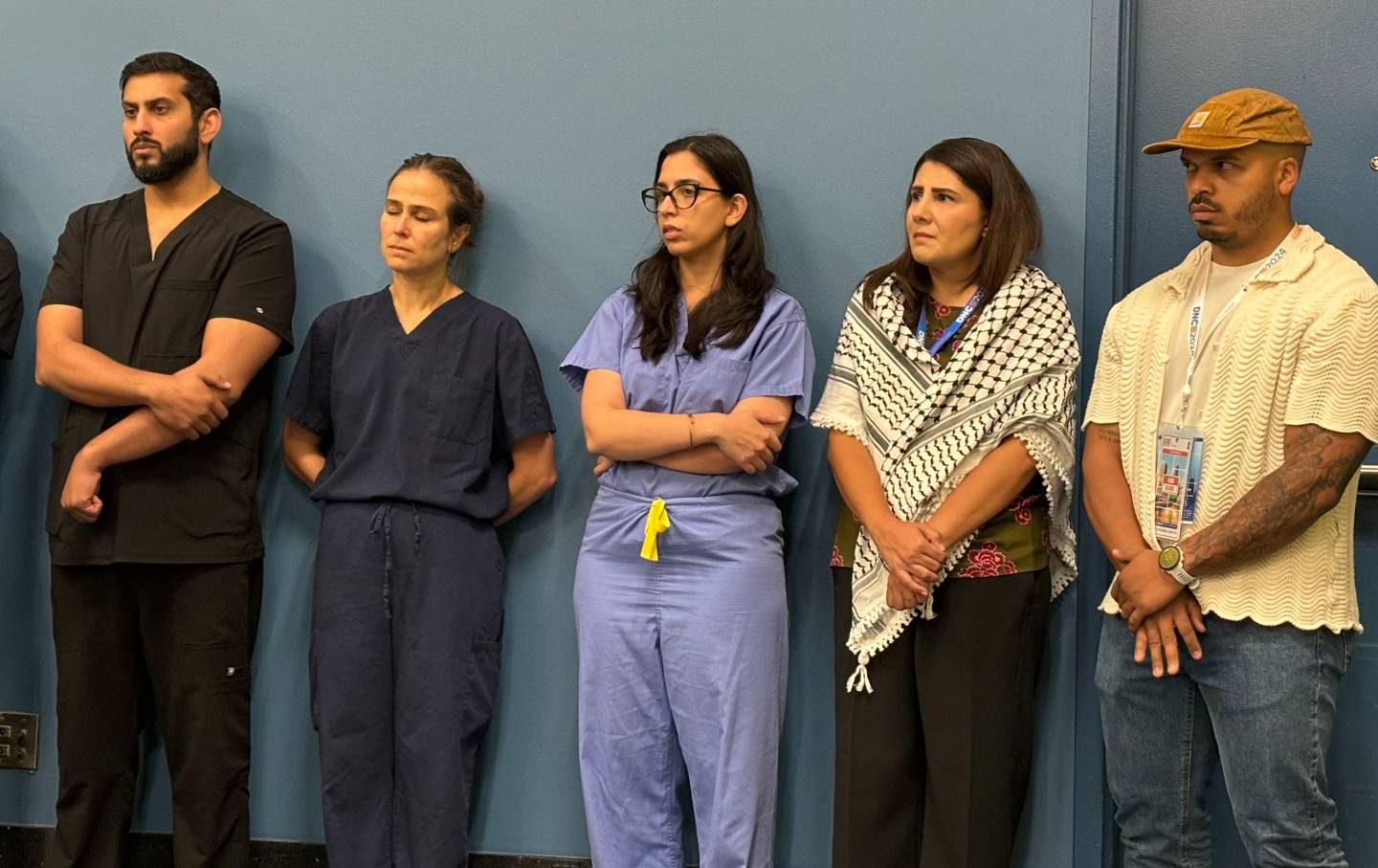
Chicago—The mood on Tuesday in the small room tucked away on the fourth floor of the McCormick Place Convention Center could not have been more different from the pageantry of the Democratic National Convention being held five miles away.
Six doctors stood in a row, wearing scrubs and sneakers, somber expressions on their faces. One by one, they stepped up to the podium to share what they witnessed during their recent medical humanitarian work in Gaza—and begged for Democrats, particularly presidential nominee Kamala Harris, to reverse their lockstep arming of Israel’s relentless killing campaign.
Despite superficially backing the abstract idea of a “ceasefire,” the Biden administration has distorted the sense of the term, so activists have shifted their core demand. They are now pushing for an arms embargo, reflecting a growing consensus among those mobilizing in solidarity with Palestinians that material support for Israel’s operations must stop. Thus far, despite “tone” shifts, Vice President Harris has rejected their desperate pleas.
Tanya Haj-Hassan, a pediatric intensive care doctor, described holding the hands of dying children “taking their last, final gasps with no family alive able to comfort them.” The phenomenon of wounded children arriving alone is so common there, she said, that there is a term for it: “wounded child, no surviving family.”
Ahmad Yousaf, a doctor in internal medicine and pediatrics, told of a woman who had severe burns all over her body. Doctors discovered she was pregnant, and “we knew she was going to die there and her baby would die there, and there was nothing we could do,” he said. She moved to the intensive care unit and “every day she lived until she died she was in pain, because we didn’t have the kind of medicine we needed for her.” One day he walked in and her bed was empty. “Her story is just one of tens of thousands,” he said, “and her family mourned for her just like we would mourn for her own family members.”
Tammy Abughnaim, a doctor in emergency medicine, said, “The things we were seeing in Gaza were unimaginable. Children do not have access to basic nutrition. Every single child is in need of psychological care that they are not going to be able to get for a very long time.”
“I cannot tell you how disheartening it is,” she added, “to know as I’m standing in front of a patient pulling shrapnel from my patient’s body, that my tax dollars have paid for this.”
The doctors had traveled from across the country to share their testimony, flanked by delegates representing the roughly 740,000 people who voted “uncommitted” in the Democratic Primary to protest the bombing and siege of Gaza. Tuesday’s event was one of many the uncommitted delegates have organized, and it followed a packed panel about Palestinian human rights the day before. They seem to be doing everything they can to make sure the DNC doesn’t forget about what the United States is doing in Gaza, where its arms and munitions, on top of ongoing aid packages, have been used by Israel to kill more than 40,000 people, over 16,000 of them children (though the real number killed is likely far higher).
But the spectacle of the DNC is difficult to penetrate. Political conventions are well-choreographed events designed to put on a show, not to have difficult conversations. This DNC convention also has an extra jolt of energy from Harris’s replacement of the sluggish Biden at the top of the ticket. It has been filled with themes of joy, unity, and “Brat” memes, and high-level party speakers met with thunderous applause (though President Biden did face one disruption from DNC members urging the US to stop arming Israel). To the extent that Gaza has flickered across the event’s mainstage, it is relatively brief, and it does not disrupt the atmosphere of celebration and festivity.
This does not mean that no one in the Democratic Party’s base cares about Gaza. Polling shows that an overwhelming majority of Democrats want a ceasefire. Seven major labor unions, representing nearly half of all unionized workers, are calling for an arms embargo pursuant to a permanent ceasefire, and the number of unions and labor organizations that are urging a ceasefire is even greater. Asma Mohammed, an uncommitted delegate from Minnesota, told the room that conversations with other delegates “have been really positive.” More than 200 delegates have signed onto the Uncommitted National Movement’s letter calling for an arms embargo, she said.
There is a clear gulf between this base and the party’s leaders. Vice President Harris has refused to agree to stop sending bombs to Israel. And while the Uncommitted movement was granted a panel at the daytime off-site McCormick Place, and a vigil space, they are being kept far away from the main stage, despite their demands to feature a Palestinian-American speaker. “What we need urgently is for the bombs to stop,” said Abbas Alawieh, an uncommitted delegate from Dearborn, Michigan.
“There is no music that you can play on the main stage during this convention that’s going to make us forget the sounds and the tears of all of the children that we saw laid on the hospital floors,” said Thaer Ahmad, a Palestinian-American emergency medicine doctor who recently worked in Nasser Hospital in Khan Younis.
Popular
“swipe left below to view more authors”Swipe →Those addressing Tuesday’s event spoke openly about the challenge of trying to make people care. “We get caught up in numbers, but every single human being there is a human like you and me,” said Nabeel Rana, a vascular surgeon. And indeed, the numbers are staggering. One study found one in 10 people in Gaza is dead, wounded, or missing as the result of Israel’s actions over the last 10 months. Just six months into the war, the UN determined that 19,000 children had been orphaned, a number that is surely far higher by now.
To communicate these stakes, advocates are often compelled to rehash their trauma over and over again. Throughout the event, speakers broke into tears. Uncommitted delegates turned their backs to the crowd and held their faces in their hands while they cried. Tissues were passed around multiple times. One doctor could be seen silently mouthing to another, “Are you OK?” This group of doctors has formed an ad hoc community around their shared experience of working in Gaza, and one, Yousaf, had flown all the way to Arkansas just for this event, to speak to the handful of press outlets who will listen.
“The reason we cry tears isn’t sadness anymore,” he said. “It’s the feeling that we have no ability to get the most powerful country in the world to stop the bombs.”
Become a Sustaining Donor This September
Between the reemergence of right-wing red-baiting and Donald Trump’s use of the chilling National Security Presidential Memorandum–7 to criminalize left political organizing, we’re seeing McCarthyism reborn before our eyes.
This assault on democracy cannot be ignored or wished away. Resisting it requires bravery in the face of threats and repression, a steadfast commitment to the truth, and the unwavering belief that we can—and will—overcome this darkness.
We must have an independent media that sets the record straight, unearths corruption and abuses of power, and advances a politics of justice and dignity for all if we’re to win this fight.
That’s why I’m writing to you today. This September, The Nation needs to add 100 monthly donors to sustain our progressive journalism. Your contribution makes the next investigative report, the next truth-speaking column, and the next pathbreaking essay all possible.
I hope you’ll support our work with a recurring donation today. If you donate $10 or more a month, we’ll send you a brand new “Hands Off the Free Press!” sticker to recognise your commitment to our cause. Please, donate today.
Onward,
Katrina vanden Heuvel
Editor and Publisher, The Nation
More from The Nation

The Impossible Will Take a Little While: The Power of Persistence The Impossible Will Take a Little While: The Power of Persistence
In troubled times, history offers a lesson: Seemingly impossible change can begin with ordinary people who refuse to give up.
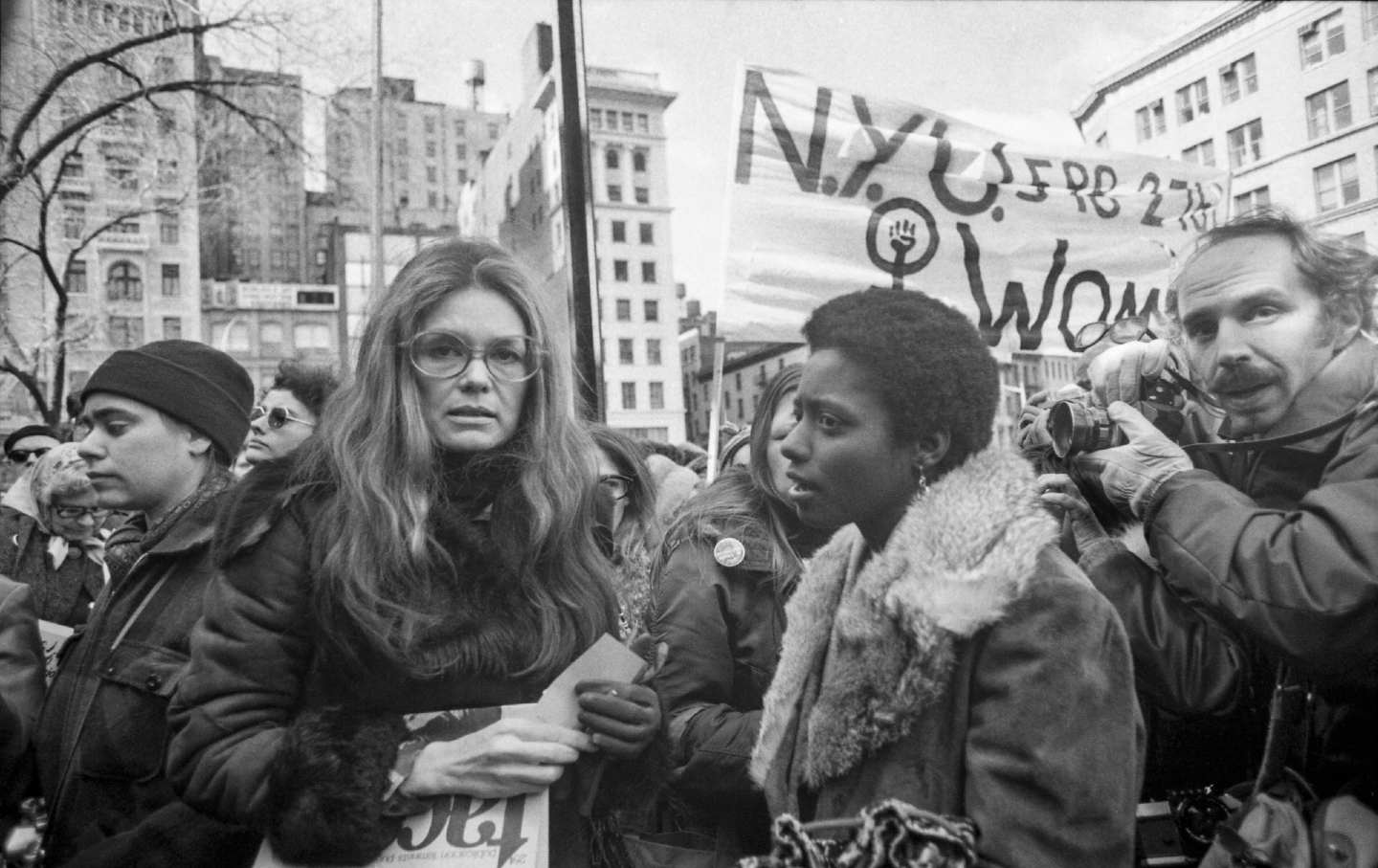
Gloria Steinem’s Many-Splendored Feminist Life Gloria Steinem’s Many-Splendored Feminist Life
The feminist icon lived the struggle for gender equality and always found time to lend support and solidarity to other women leaders, even in her final days.
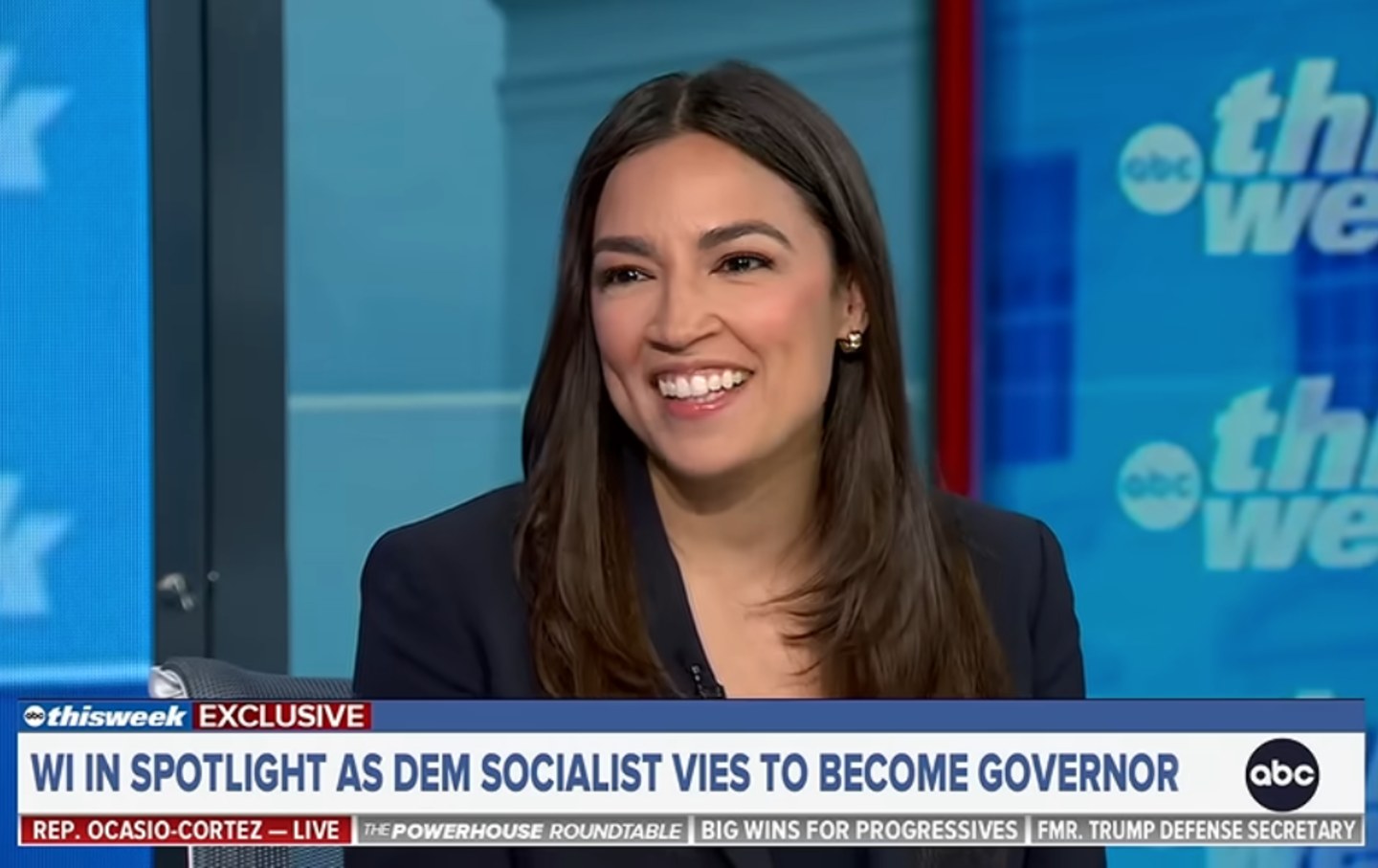
No, Woke 1 Was Not Crazy No, Woke 1 Was Not Crazy
AOC and others are laughing off 2020 as a wild, isolated moment. None of that is true.

How Occupy Wall Street Still Explains Politics Today How Occupy Wall Street Still Explains Politics Today
It sowed the seeds for a new era of social movements—but its politics of powerlessness should act as a cautionary tale.

Abdul El-Sayed’s Win Is a Landmark. But the Fight Is Far From Over. Abdul El-Sayed’s Win Is a Landmark. But the Fight Is Far From Over.
Even though the Palestine movement is on the march, we can’t afford any complacency.

Mamdani’s Team Redefined Political Video. Now They’re Betting on Short Films. Mamdani’s Team Redefined Political Video. Now They’re Betting on Short Films.
Premiering exclusively in The Nation, a new short film produced by City Hall and narrated by Morgan Spector highlights the efforts of the biggest tenant-led union in New York City...

