The Accidental Activists of Data Center Alley
These would-be rebels in Northern Virginia joined the fight against data centers mostly to stop the encroachment on their homes and exclusive private communities.
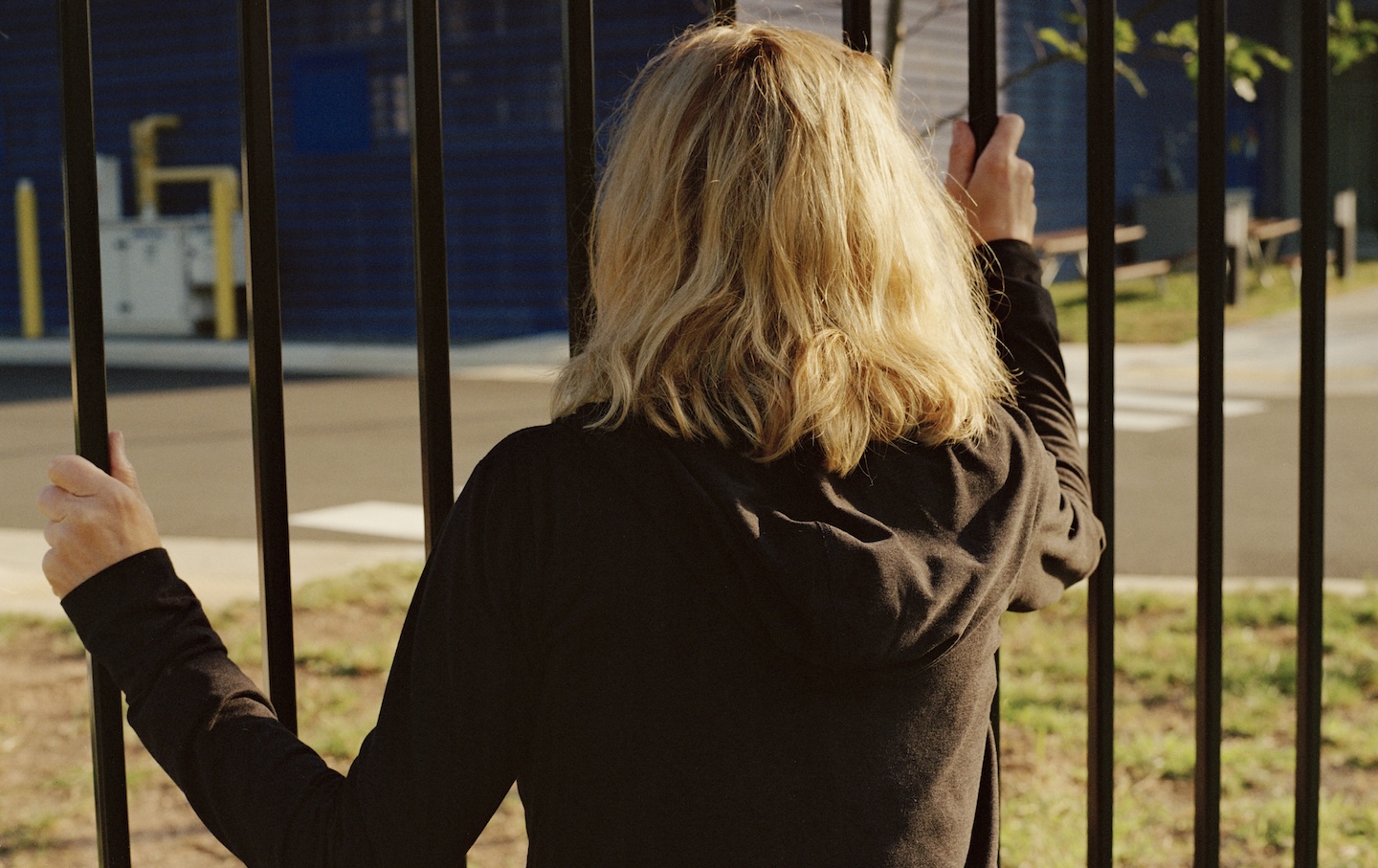
Jessica Medeiros staring at the Vantage 2 data center that looms over her neighborhood in Sterling, Virginia, 2026.
(Joe Cuccio)
I am hiking on a nature park that cuts through 45 miles of Northern Virginia, crisscrossing grassy terrain, wetlands, wooden bridges, and goldenrod, and then a dozen promontories offering the most unnatural of sights—windowless, hulking block-long data centers and their attendant transmission lines and substations. I heard “the hum” of the centers before I saw them; their sound resembled a horde of cicadas on meth. I felt nervous, and somewhat overwhelmed, as I counted roughly 20 of them in just the two miles I walked on the Washington and Old Dominion Railroad Trail in Loudoun County.
Here is the country’s thickest concentration of data centers—233 centers in all, over three percent of the county’s overall land mass. Data Center Alley, as it’s called, is a harbinger of what is to come in this country if tech hyper scaling continues unchecked. But Loudoun County is not only an example of tech infrastructure running amuck. It’s also an example of a semi-successful battle to press pause.
The week I visited in September, local activists had just secured a significant victory when the county’s Board of Supervisors voted 7-1-1 to impose a 12-month pause on board action for data centers and electrical substations. It was one win for the broader opposition, who were cross-partisan, unlikely dissidents in their 50s and 60s, who joined the fight mostly to protect their own homes and exclusive private communities. Some of them even refused to say a bad word about AI, claiming the fear of data centers in popular imagination was “overblown,” even though they themselves had been organizing against them as they encroached on their homes.
One of these accidental activists is Jessica Medeiros, 55. I met her in front of her home, in the Oak Trail Square development in Sterling. She works with juvenile offenders by day, as a pretrial officer in nearby Prince William County. In her off hours, she is just another empty nester of two grown children, hanging with her boyfriend, enjoying frequent outdoor runs in the area and five-times-a-day walks with her dog. Well, that was before the gargantuan blue Vantage VA2 data center at the end of her street, four city blocks long and wide, rose up.
That Vantage VA2 center happens to be one of the worst ones out there. For one thing, it isn’t connected to the electrical grid, meaning its energy comes from on-site or nearby power plants. These plants are primarily powered by natural gas; the VA2 center uses gas turbines and backup emergency diesel generators. This reliance means that such hubs risk being louder than normal, filthier than normal, and ultimately worse for the environment than normal. As a case in point, on the morning we met, Medeiros pointed out where the soot from the day usually falls.
More and more developers have sought power plant equipment like turbines and generators to elide regional power grids, which are now stressed under data center electricity requirements.
To me, these data centers are physical embodiment of both the decline of the rule of law and the rise of the tech oligarchs. They are, of course, part the national conversation around AI and have become a center of the activism against it. In the first half of 2026, the Data Center Watch project by AI security company 10a Labs, found that at least 75 data center projects worth $130 billion were disrupted by local groups in the first quarter and at least 45 projects worth $68 billion in the second. The Data Center Opposition Report found that 640,000 people are in anti-data center Facebook groups in the US. Gen Zers have joined groups like New Jersey’s Climate Revolution Action Network, or CRAN.
“To me, this center…is just indicative of what is happening in our country, because the money and the power are taking over the lives of citizens,” says Medeiros, a petite blonde who describes herself as having the energy of a puppy, with the swift gait of a runner, despite a recent foot injury. She was rapidly walking around the perimeter of a building that looks like a post-lobotomy IKEA. It has got the same cheerful cobalt exterior but no furniture, customers or meatballs inside, only racks and heat. “Last week, Trump eliminated the, what was it? Oh yeah, the emissions level requirements for these power plant. For people like us, that basically screws us. We don’t have those protections anymore.” (The Trump EPA had recently exempted data centers from publicly disclosing their emissions.)
Medeiros and her neighbor Greg Pirio, 75, a government contractor who specializes in foreign aid, are two of a number of neighbors who have thrown themselves into protesting the Vantage plant, attending community meetings and town halls, doing press, creating systems for monitoring noise and air quality, and petitioning their local representatives.
But the center has also taken its toll, they say, on their bodies. Both have gone to doctors and Pirio twice to the ER, with extremely dry eyes that they believe were caused by the plant. (After an hour, my own eyes were throbbing, and I was blinking for tears to relieve the irritation.) For more vulnerable people in the area, the effects have been even worse. According to Medeiros and other neighbors, one family’s four children have all developed respiratory problems as a result. Medeiros’ voice is a rasp, now, as well, which she attributes to the centers.
They aren’t just imagining things. A recent report, “Health-Informed Computing: Estimating and Addressing the Public Health Impact of Data Centers,” modeled emissions from data center electricity and onsite generators usage, projecting health risks and costs particularly in host communities. One of the key culprits is the fine particulate matter these centers create.
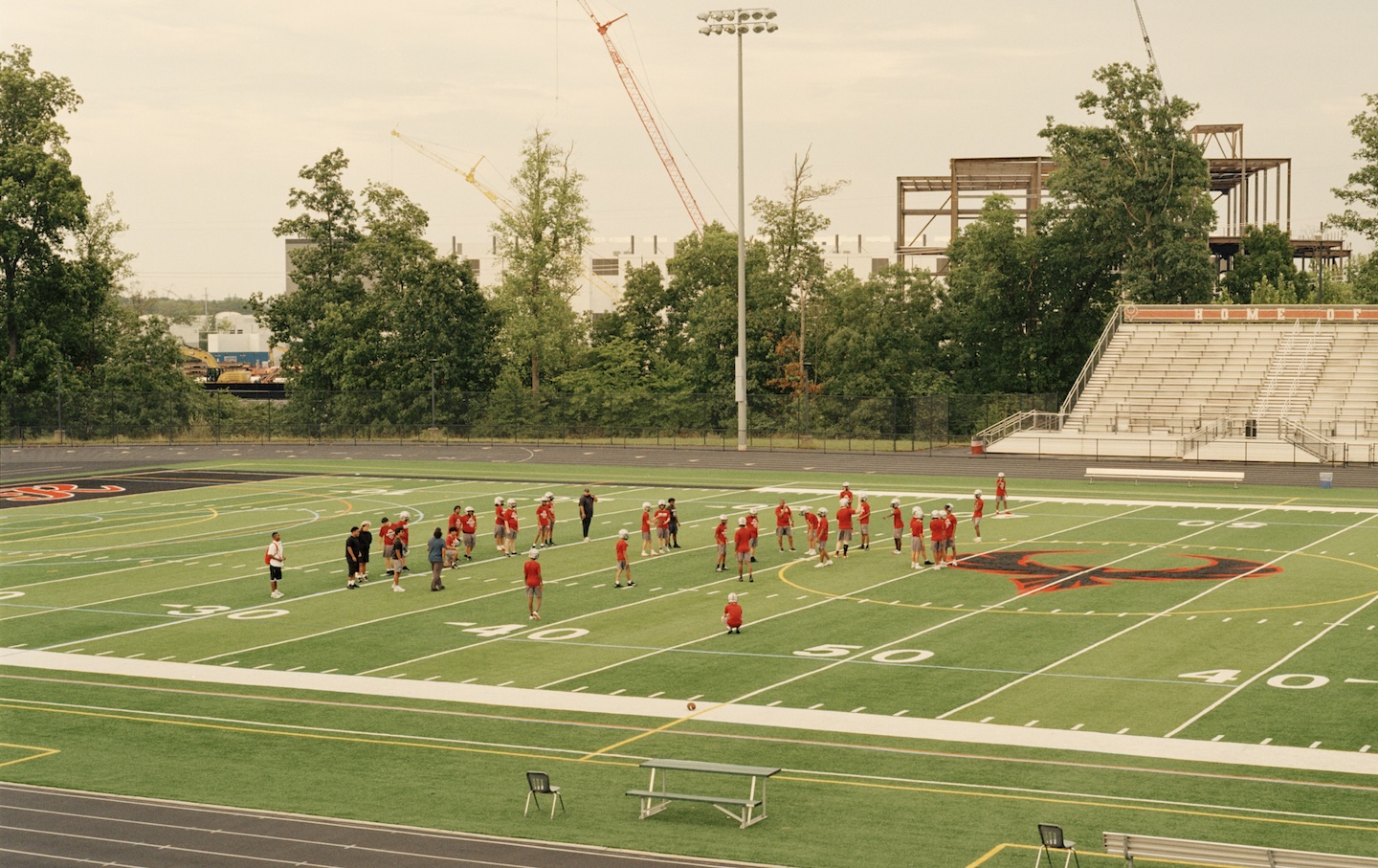
But that’s not their only threat. Their constant whining noises should be understood as noise pollution, which the WHO describes can cause high blood pressure, heart disease, and sleep disturbances. (Two of the people I spoke to mentioned sleep disturbances since the centers opened near their homes.) Hearing damage is a possibility if the roar of the center goes above 85 decibels—and the constant sound, all day, near schools has also been connected to lower educational outcomes, according to a forthcoming study from researchers at Brown University. How would the football team I watched, playing at a high school field hemmed in by an Amazon data center complex, be affected?
Popular
“swipe left below to view more authors”Swipe →As Medeiros says, “It’s not an escape to get outside anymore.”
On the upside, Loudoun County has become a symbol for how these centers have given rise to new assemblies of people fighting back. These would-be rebels included two middle aged men who worked in tech, who were clad in polo shirts, one who I met overlooking the giant pool at his housing development, and a couple employed in real estate and construction that own two vintage Jaguar cars.
Another of these unlikely mavericks is Ben Keethler. Wearing one of those polo shirts, his hair close cropped, the 54-year-old father of three co-owns an IT business that often serves federal agencies. The night I met him, after he had returned from ferrying his 12-year-old to golf practice, he was quick to say he was “skeptical of sensationalism,” by which he casts some allegations of data center health consequences as insufficiently substantiated. Nevertheless, he did add that he was no fan of how closely two data center campuses abut his own housing development in Ashburn, Virginia, looming over the $1.5 and 2 million 5-bedroom homes and the association’s manmade pond. “This should not happen,” he says, gesturing at the data center across the water. “What was once a beautiful view of a lake is now a beautiful view of Microsoft.”
It’s “invaded us,” Keethler says, before quickly shifting gears and sounding more relativistic. He notes the tax revenue that has been raised and the quality athletic complexes that now exist thanks to Big Data. We get closer to the data center in the moonlight: I can hear it buzzing like hundreds of air conditioners, its klieg lights blaring at 8:30 on a weeknight. Keethler’s vibe shifts. “I’ve told them not to leave the lights on like this!” he says. We walk right by the house in his neighborhood that’s closest to the data center, a mere 140 feet away, behind a wood fence and fir trees.
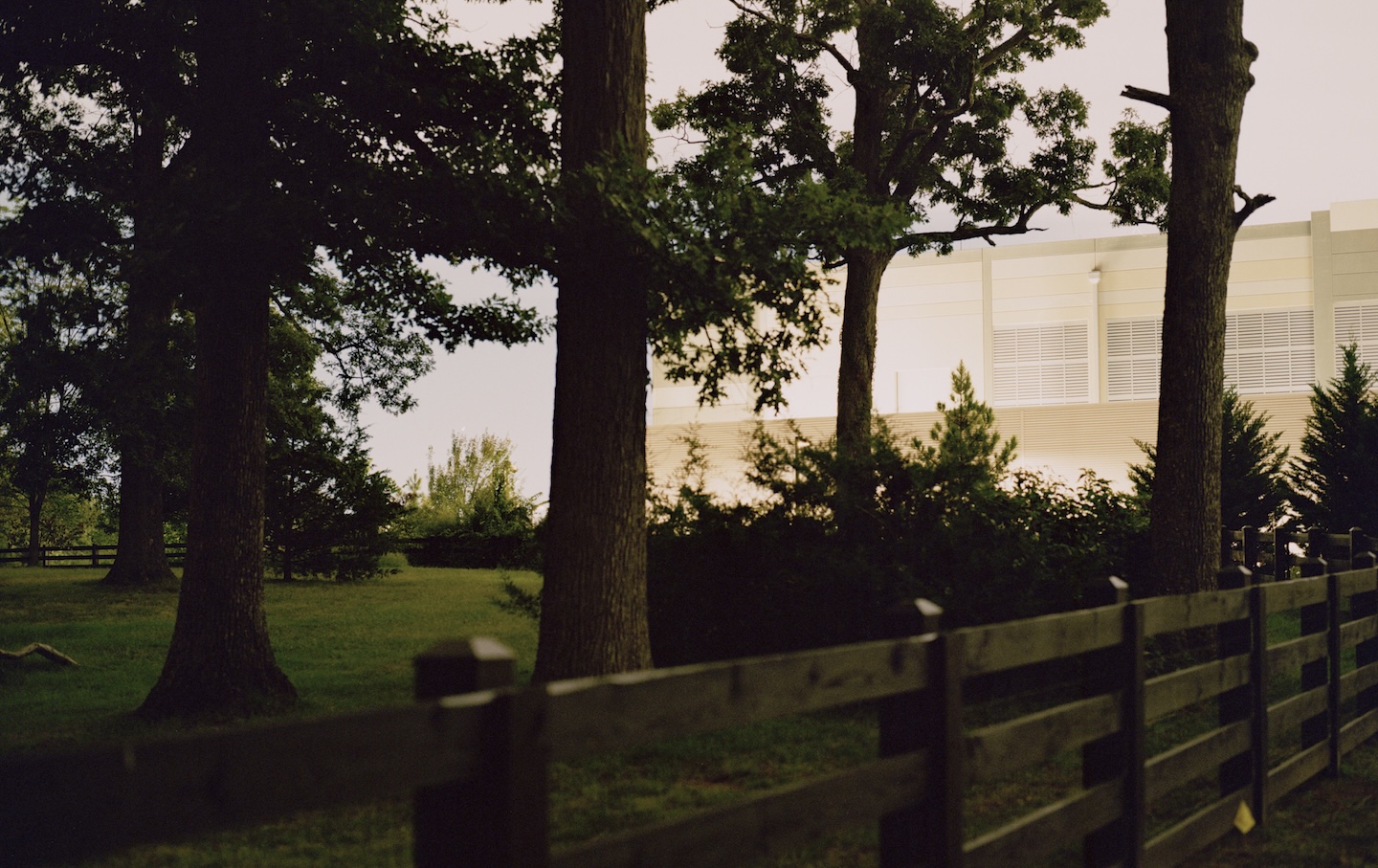
There are now over at least 3,000 operational facilities like this across the country, that account for 5% of the United States electric usage, and by 2030 they could comprise up to 12%, the amount of yearly electricity consumed by New York City—times twelve.
To me, the growth and ubiquity of the data centers embody the theorist Mark Fisher’s idea of “science fiction capital.” The centers are avatars of tech monopolies, which calculate probabilities and promise surplus value in the future but also threaten humans’ jobs and sense of meaning in the present. According to an essay by Maha Hosain Aziz, a professor of international relations at NYU, an “AI Precariat” is now being created, whose jobs have been made contingent or volatile by the large language models.
Data centers and the AI they enable are sci-fi enough to have turned public opinion decisively against them. For instance, the House just approved a federal bill to keep AI data-center power costs from being put back on citizens’ electricity bills. The rare nearly unanimous Congressional vote reflects the immense negative outcry over hyper scaling of physical computing infrastructure, although even this watered-down victory is sure to be eventually voted down by Trump.
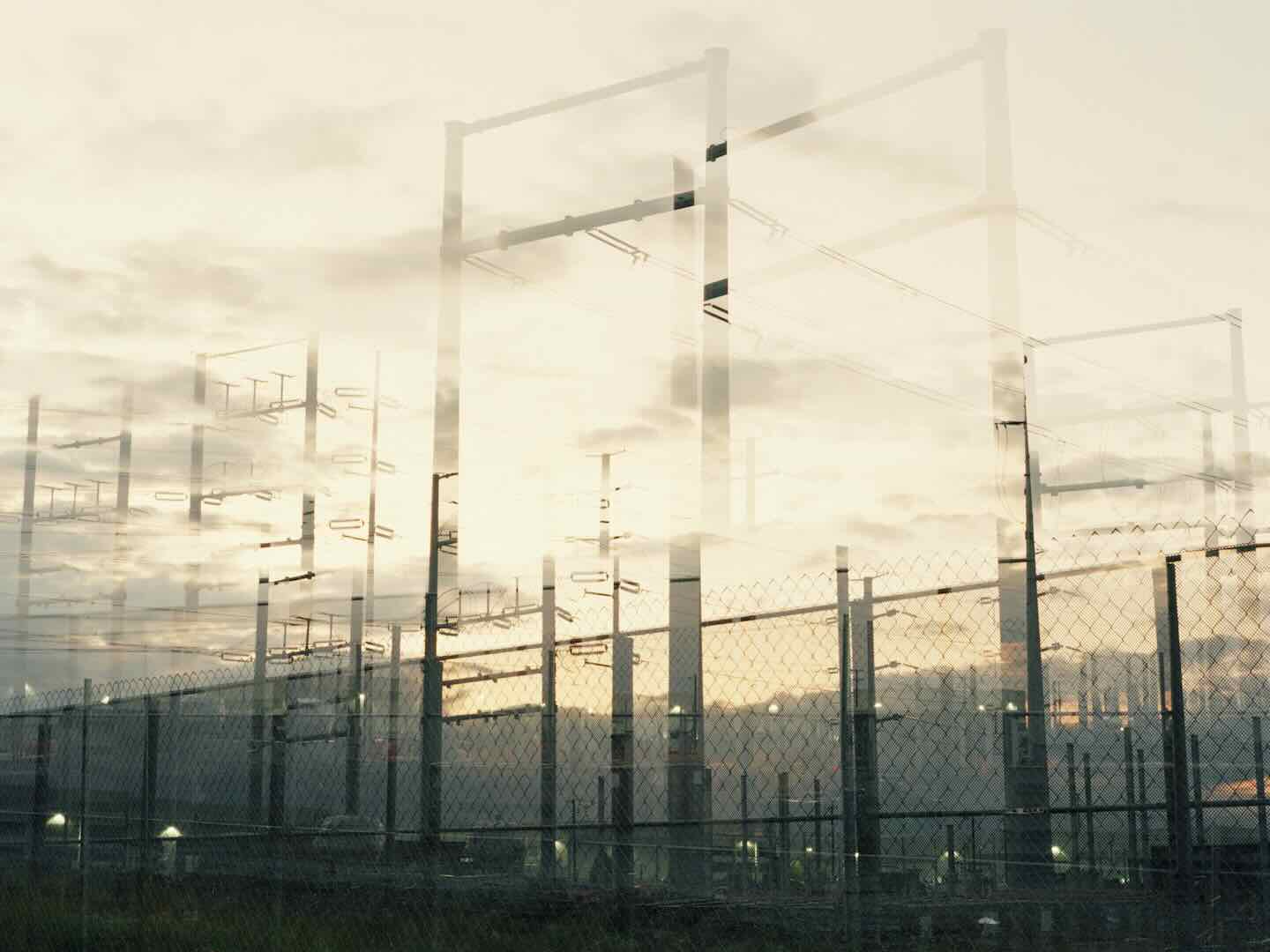
The function of these centers is to know everything about us, analyze, and sell our information, but what do we know about them? As an early Internet hub near the nation’s capital, Loudoun County first saw data centers in the late 1990s. But the boom really began when, with the takeoff of cloud computing, county leaders aggressively courted tech companies with economic and regulatory incentives to build data centers in its communities. Now the AI race has only driven up demand for more facilities, and quickly. And their transmission lines, with towers’ sometimes as tall as 185 feet, can be viewed from their gardens and heard from their porches: while the area is called Data Center Alley, it might as well have been called Data Center Boulevard, given its wild sprawl.
I started to think of their uncanny physical presence as a Toxic Sublime. The Sublime, as it was defined by Edmund Burke, is a larger structure or natural occurrence that produces the “strongest emotion which the mind is capable of feeling,” almost always pain rather than pleasure. I feel ripples of the Toxic Sublime when I look at these dehumanized and overwhelmingly large server farms with their corporate names emblazoned—say, AWS or Equinix—that seem to have no beginning or end, appearing among other overblown elements of the suburbs, like golf courses, high-voltage power lines, and innumerable, evil-looking, perimeter fences. They look as if they could devour us in their Brutalist jaws. Their aesthetic is the literal visualization of how humans have colonized nature.
They are clearly villainous. But to complicate matters and our complicity in these monstrosities of hyper scaling, by some estimates AI only comprises up to 20 percent of data center energy usage, while 80% flows toward other stuff that isn’t AI, that many of more of us rely on, like cloud storage and Web hosting.
Thus, for Vicky Hu, longtime resident of Ashburn and one of the accidental activists of Loudoun County, the enemy isn’t AI at all but rather the companies who want to build on her property. Her self-created dream house in Ashburn, Virginia, has 200 orchids. She also has a large outdoor garden, including an elaborate set of vegetable patches with statues of birds in it. All of itis now threatened, though, by a 185-foot-tall data center transmission line.
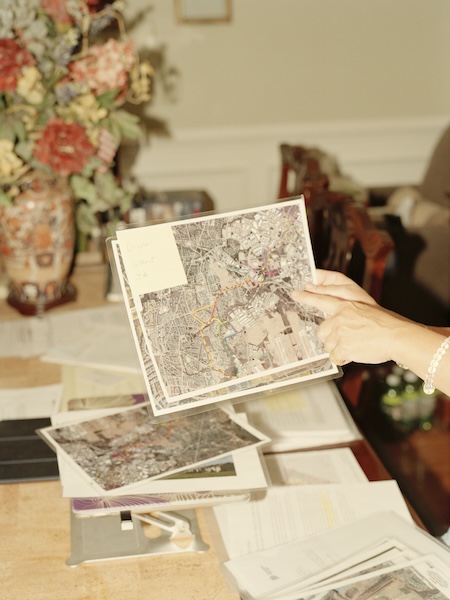
She takes me on a walk around her property, where the planned pole and attendant line that would serve a nearby data center would be built. Hu and her family have tied pink bands to the trees that would have to be cut down to make room for the power line, as well as yellow caution tape to show where it would stand, 122 feet from her home: The yard now looks like a set from Law & Order: SVU.
Hu is a real estate broker and a contractor, who runs her own construction company. “When Dominion told me about the zoning and construction, I told them to zip it because they’re thinking I don’t know anything,” says Hu. “I’ve been [working in construction] for 27 years.”
Hu and others discuss which local leaders have rallied to the cause and which haven’t. Again, the breakdown doesn’t always adhere to political party here either. Juli Briskman, a member of Loudoun County’s Board of Supervisors, is planning to challenge fellow Democrat Phyllis Randall for board chair, on the grounds that Randall has been “pro-data center” and insufficiently critical. Briskman has pushed hard for more restrictions to data center growth.
AI experts like Edward Ongweso Jr., co-host of the podcast “This Machine Kills,” see the anti-data center cross-partisan coalitions as more than just people joining together in NIMBY-ified hatred. They are also angry at AI itself as well as how they feel like they’ve been kept in the dark about the tech firms’ machinations: “how these companies plan the centers, what their local governments have offered the data centers, what the negotiations were like.” In an age of multiple varieties of insecurity and instability, we can feel as if we are losing the narratives of our lives, especially as Big Tech and its oligarchs have all the power and agency. No one else seems to have a say in determining how these machines will change the future.
To quicken the transformation, activists want to see more pauses on data center creation as well as better environmental and noise protections for people in places like Loudoun County, where the buildings drone on.
For Medeiros, being so close to the Vantage 2 center has become so intolerable that she and her partner are now planning to move to Ecuador. But if they want to sell the house first, tough luck. Jessica and her neighbors worry that their property value has fallen. The reason for the devaluation is clear: the ominous center and its endless, inhuman hum.