Can Harris and Walz Meme Their Way to the White House?
The online jokes are not just about having fun. They represent a newfound political energy within the Democratic Party.
For a brief, magical time in July, the Internet was focused. No distractions. No tangents. No interruptions. There was one task in front of us: post jokes about JD Vance engaging in sexual intercourse with a couch.
Now, Vance did not have sex with a couch—that we know of. And yet, one misleading tweet led to a lasting joke. Maybe it’s because it’s not the least believable thing we’ve ever heard—RFK Jr. did, of course, leave a dead bear in Central Park—but more likely it’s because we’re living in meme-times. Ever since Kamala Harris became the nominee, this has been a Meme Election.
It’s easy to dismiss memes as mindless Internet fodder, but in this race, they serve a critical purpose: They create a permission structure for those who are often cynical or politically disengaged. In particular, they’re a way for younger people and those on the left to express excitement about a Democratic campaign, which, refreshingly, feels both unifying and like it might be headed in the right direction.
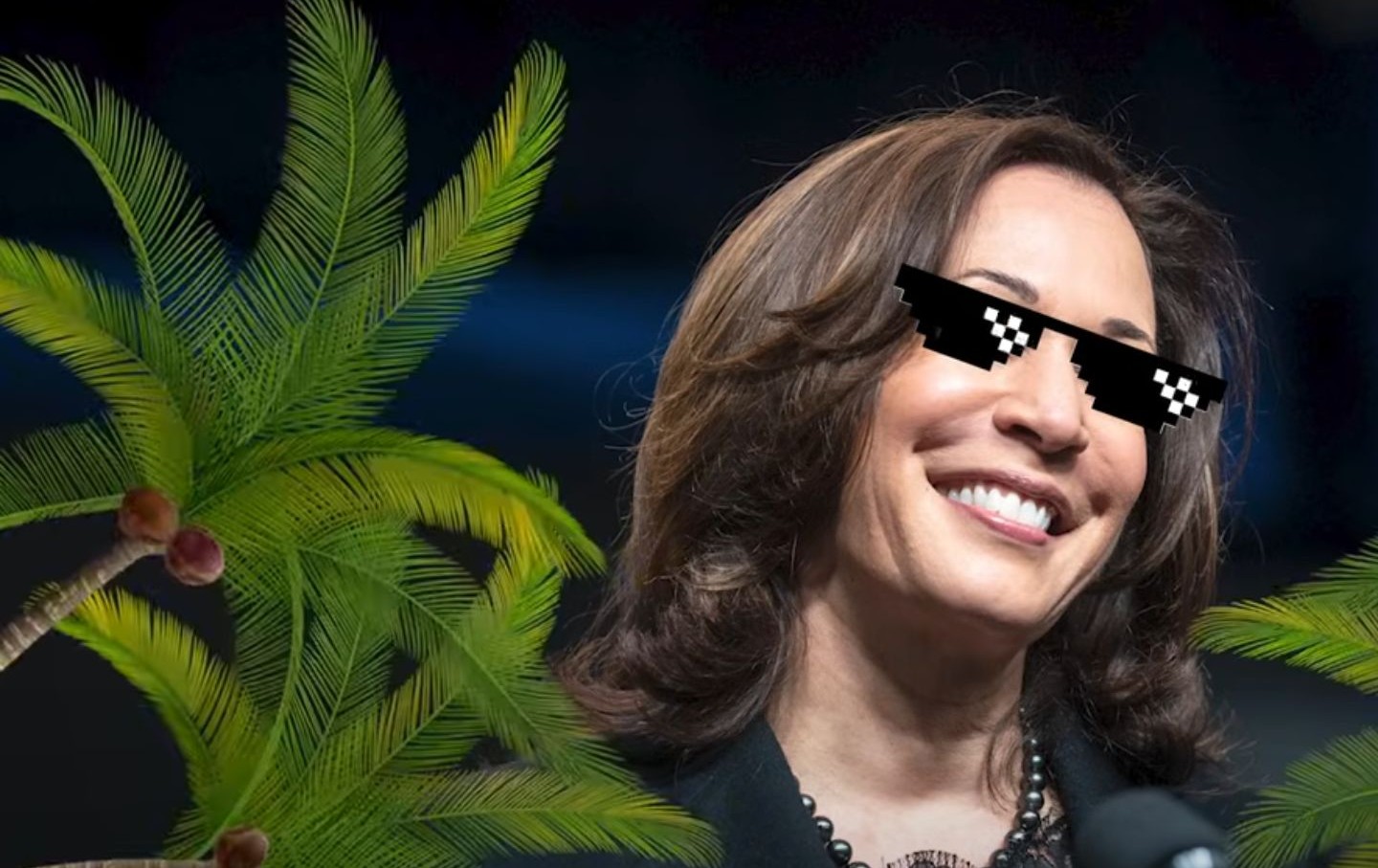
These days, everything Kamala Harris does turns into a meme: her call to ask Tim Walz to join her ticket, an exasperated look at her husband, a past conversation with Mindy Kaling. While the best memes originate with quick-to-the-news and quick-witted Internet users, they wouldn’t stick the way they are if it weren’t for the candidates embracing them. The day Biden dropped out of the election and endorsed Harris, Charli XCX posted “Kamala IS brat” on X, formerly Twitter. The tweet didn’t just go viral—Harris’s team capitalized on the cultural touchpoint. The official KamalaHQ X account used the “BRAT” font in its cover photo and changed its description to “providing context” in an explicit reference to the “coconut tree” meme. Harris’s willingness to embrace memes suggests that she is perhaps as devoted to Gen Z voters as she claims she is. We choose politicians based not only on who we like but also on who we think likes us, so Harris is wise to show admiration for the youth, who in past elections have turned out at varying rates: in 1996, only 39.6 percent of voters aged 18–29 voted, but that figure was 55 percent in 2020. The broad range suggests there’s an opportunity: Young people could turn out, but it’s by no means guaranteed that they will. And while I’m impressed with the Harris campaign, I also recognize that lightheartedness is her only option. As a Black woman, she doesn’t have the luxury of displaying extreme public anger unless she wants to get tagged with racist, sexist labels like “Angry Black Woman” or “shrill.” But luckily, she has a warm laugh, a talent for striking the right tone at her rallies, and a skilled social media team.
Harris’s running mate, Tim Walz, has also jumped on the meme bandwagon. He’s drawn comparisons to the pop star Chappell Roan, as they are both Midwestern and became America’s sweethearts in a matter of weeks. His team similarly leaned into the comparison: Roan’s “Midwest Princess” branding became the inspiration for a new Harris-Walz camo hat, for example. In a speech last week, he referenced the Vance couch-sex joke, when he said he’d love to debate Vance: “If he’s willing to get off the couch” (followed by the ultimate dad-joke tag of “See what I did there?”). While many pundits criticized him for the comment, the reference served an important purpose: He was telling the meme makers to continue their pro bono political work. The candidates themselves don’t have to do much for it, so why not take the free marketing?
Besides the fact that saying someone fell out of a tree or sanctioned sanitary products in high school bathrooms are not much of a dig at all, Harris and Walz’s acceptance of the memes also demonstrates their ability to turn vulnerabilities into strengths. When Harris’s coconut tree video first came out, she was mocked mercilessly by right-wing pundits. Now, a coconut emoji in an Instagram handle is the ultimate show of support for Harris. Tim Walz could have put people off by being a boring old white guy, but he turned his age into a joke when he responded to a tweet about how he looked so much older than Harris. “[I] supervised the lunchroom for 20 years,” he said. “You do not leave that job with a full head of hair. Trust me.” In doing so, he also gave Gen Z permission to coin the term “Big Dad Energy” and turn him into the TikTok “father” of their dreams.
But the memes have also ignited a fire under many people who never really paid attention to politics in the first place. This tweet by writer Emma Vigeland demonstrates this exact phenomenon:
Posts like this gave permission to others to get enthusiastic about the election—and maybe even read the news more in order to understand the nature of the jokes. In that sense, the memes act as a binding agent for Harris’s broad coalition: You have to love a candidate to share a sincere post, but you only have to loosely approve of them to share a funny meme. I’m happy to vote for Harris—or perhaps the more accurate term is “relieved”—even if she wouldn’t have been my preferred candidate in an open primary. And yet, if I see a funny coconut joke, that’s going in my Instagram story. Lefties, centrists, and even anti-Trump Republicans can all revel in this same enthusiasm.
The real question, then becomes, will any of this matter come November? I think so, as someone who has always taken issue with the assertion that the Internet isn’t “real life.” I am a creature of the Internet, and I both exist and vote. While online culture doesn’t represent the entire country, neither does the demographic of a city council meeting in Omaha, or a diner in Cleveland, or the offices of The New York Times. There is no one group of people who captures all Americans. How a campaign activates people online matters. As Ezra Klein discussed in an episode of his podcast The Ezra Klein Show after Walz became the VP pick: “There’s a certain segment of liberal-leaning pundits or campaign strategists act like attention is not a thing, who act like that whole mediating layer between what a candidate says and how they get heard doesn’t exist, and that the only thing that really matters are their sort of demographic characteristics.”
In Harris’s short campaign, we’ve already seen the enthusiasm online correlate to real-life political engagement. An estimated 15,000 people came out to see Harris and Walz in Detroit, according to AP News. Trump and Vance can’t keep up in either crowd-side or online enthusiasm. In Trump’s defense, he’s barely trying. But JD Vance is trying very, very hard to be funny—and he’s failing. If Vance were a better politician or had a better PR team, he probably could have turned the couch joke around on Democrats. It’s an absurd, baseless attack, and he could easily have had his fans putting couch-emojis in their bios by now.
We don’t need him to, though. We don’t need any of Vance’s jokes. In Walz’s first speech of the campaign, he thanked Harris for bringing “joy” back to elections. And when I scroll through my feeds, I see that, too. I see it in memes from lefties, from Gen-Z users, and from people who were asserting a month ago that they would turn their phones off until after November. The memes, perhaps, could seem like lighthearted uselessness, but I would argue that they have actually brought us together. I want Medicare for All; some of Harris’s billionaire donors want her to fire FTC chair Lina Khan. But one thing we can all agree on is this: The coconut memes have brightened our feeds and provoked us all to pay attention just a little bit more.
Become a Sustaining Donor This September
Between the reemergence of right-wing red-baiting and Donald Trump’s use of the chilling National Security Presidential Memorandum–7 to criminalize left political organizing, we’re seeing McCarthyism reborn before our eyes.
This assault on democracy cannot be ignored or wished away. Resisting it requires bravery in the face of threats and repression, a steadfast commitment to the truth, and the unwavering belief that we can—and will—overcome this darkness.
We must have an independent media that sets the record straight, unearths corruption and abuses of power, and advances a politics of justice and dignity for all if we’re to win this fight.
That’s why I’m writing to you today. This September, The Nation needs to add 100 monthly donors to sustain our progressive journalism. Your contribution makes the next investigative report, the next truth-speaking column, and the next pathbreaking essay all possible.
I hope you’ll support our work with a recurring donation today. If you donate $10 or more a month, we’ll send you a brand new “Hands Off the Free Press!” sticker to recognise your commitment to our cause. Please, donate today.
Onward,
Katrina vanden Heuvel
Editor and Publisher, The Nation