
Progressives Can’t Give Up on White Voters
A new report purports to offer Democrats a way forward with white voters. It fails to convince.
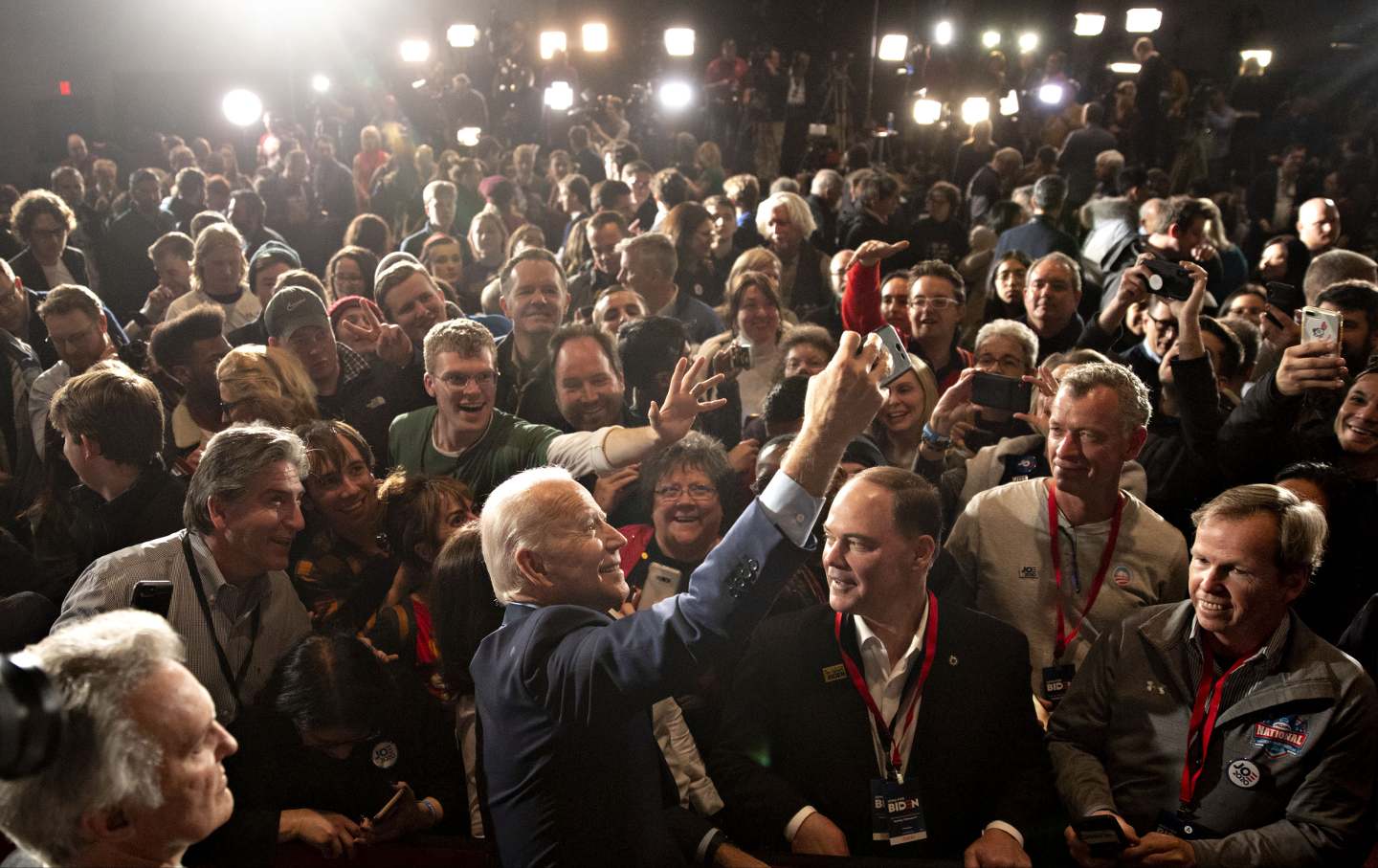
Joe Biden during a caucus night watch party in Des Moines, Iowa, on Monday, February 3, 2020.
(Daniel Acker / Bloomberg via Getty Images)Progressive author and columnist Steve Phillips recently offered Democrats some provocative advice in the pages of The Nation: Stop trying to persuade white people to vote for them.
“Democrats,” he argues, “need to realize that if Donald Trump’s felony conviction won’t weaken his support among most white voters, then nothing will.” Phillips sees the blind loyalty of hardcore Trump supporters as evidence that white voters who supported Trump in the past are irredeemably reactionary. As a result, he is left scratching his head as to why Democrats keep returning to this apparently poisoned well: “The dominant strategic focus of the Democratic Party has been and remains to woo white voters, but in my 30 years in national politics, I have seen precious few examples of empirical data and research guiding this quest to win white support.”
It’s not clear exactly what empirical data Phillips has seen, but there are pivotal examples in recent history that belie his claim. Take the 2020 presidential election. Scholars have estimated that around 6 percent of the electorate were swing voters (those who changed from one major party to the other between 2016 and 2020), and that 4 percent switched from Trump in 2016 to Biden in 2020. In turn, since whites represented 72 percent of the electorate in 2020 battleground states, and since Biden’s margin of victory in key swing states like Pennsylvania, Michigan, Georgia, Wisconsin, and Arizona ranged from .3 to 2.8 percentage points, it is clear that white swing voters were a large enough bloc to decide the election for Biden.
Likewise, political scientists Nick Carnes and Noam Lupu have shown that both Bill Clinton and Barack Obama regained a substantial share of working-class white voters lost by Dukakis and Kerry, respectively. So, they too were able to woo white voters, and one of them did so while being Black. Ironically, Phillips acknowledges the fact that Obama—famously reticent around issues of race and racism—enjoyed surprising popularity with at least a portion of white voters who later turned to Trump. Is it really the case that among the voters in the 206 counties that pivoted from Obama to Trump, the vast majority are simply lost to a rageful white nationalism?
Worse, Phillips’s focus on “white rage” as the main source and sustenance of Trump’s appeal not only allows him to dismiss a huge swath of the electorate; it assumes that only white voters are drawn to Trump. But liberal fears about the rage frothing just beyond the blue suburbs obscure a more complicated reality: It’s not just white people who are angry. While the vast majority of Black voters and most Latinos still vote blue, we see a worrying trend among non-white working-class voters who have been drifting away from the Democratic Party since 2012. And if recent polling around the 2024 election ends up being anywhere close to correct, we will likely see an even more pronounced shift of working-class Black and Latino voters toward Republicans in the fall. This is to say, confronting Trump requires casting a wider lens than one that looks at the election primarily through the prism of race and racism.
As to Phillips’s claim that nothing will persuade most Trump voters, that is correct, as far as it goes. But we’re not aware of anyone who argues that Democrats can or must win over “most” white Trump voters. In fact, we need only a sliver of this demographic in key swing states.
Democrats can and should keep trying to win over the admittedly small but strategically critical group of undecided working-class white (and increasingly non-white) voters who feel that Trump speaks to their anger at living in a rigged economic system and seeing their communities get eviscerated by decades of mass layoffs.
Despite his stark pessimism about white voters in general, however, Phillips does purport to want to help Democrats with this group (after all, they still make up some 70 percent of the population). Based on a recent report authored by the Sandler Phillips Center, Showing Up for Racial Justice (SURJ), and the Working Families Party, he offers some recommendations on “how to best expand the white stripe of the rainbow” that is the Democratic coalition. Among other dubious claims about the causes of Trumpism and the motivations of white voters, he argues that candidates can increase support among progressive-leaning infrequent white voters by running “toward—not away—from racial issues.” “Over and over again,” the report asserts, “the data showed that a race-forward approach was more successful at moving white voters than a race-neutral or centrist approach.” Yet the evidence provided (or in some cases not provided) leaves us with more questions than answers.
The report cites a range of studies its authors claim have demonstrated the efficacy of messaging based on the “Race Class Narrative” (RCN) approach. The RCN approach emphasizes the importance of messaging that explicitly invokes cross-racial solidarity rather than employing “color-blind” language that underscores class and not race. But in the few cases where it’s possible to find detailed information about the design and findings of these studies—in many cases, we could find no published results of any kind—the results do as much to call the RCN approach into question as they do to shore up its empirical bona fides.
Indeed, two of the three rigorous, independent academic studies of the RCN framework we could find (two by Joshua Kalla and Micah English, one by Nathan Kalmoe) directly contradict the claim that RCN-based messaging outperforms alternatives. In fact, one concludes that “racial framing generally decreases support for progressive policies.” And that “Democrats’ use of racial frames in describing their progressive policies may inadvertently make it harder for them to adopt public policies that will advance racial justice.”
Readers might find such a conclusion surprising, considering that Phillips implies the exact opposite.
A follow-up study shows that an RCN frame had no effect as opposed to other narrative frames. While a third paper does suggest that RCN messaging can generate modest positive effects on Democratic voters’ likelihood of voting for a Democratic mayoral candidate and support for progressive local policies, it did not uncover consistent aggregate effects among voters as a whole. In a couple of other cases, the report cites work analyzing ads that employ RCN-inspired material in a general way and gives evidence that these ads increased positive sentiments among some voter groups, but it’s not clear exactly which content the messages were tested against or what their overall effects were.
Evaluating the evidence for RCN-based messaging is particularly challenging because many of these studies mean different things by “being explicit about race.” (Phillips is also vague on his own definition.) Indeed, in his discussion of the positive effects of RCN messaging, Kalmoe emphasizes that the messaging he tested avoided discussions of the history of racial discrimination, that he was careful to steer clear of attributing racial disparities to the history of discrimination, and that the messages did “not dwell on the real horrors of longstanding racial oppression.” Kalmoe argues that a “heavier focus on those elements may…be counter-productive.” Kalmoe concludes that “the way race is invoked matters” (emphasis in the original).
Likewise, a recent study reviewing published articles on messaging meant to promote racial-equity-enhancing policies found that unless messaging around racial inequality is accompanied by detailed contextual information about its social and structural causes—not easy in an 80-word TV ad, though more plausible in deep canvassing with voters—such messaging “can undermine support for racial equity-promoting policies among white respondents.” Blanket statements like “Run toward–not away–from racial issues” obscure these facts and instead signal to politicians and policymakers that there are no political trade-offs when talking about sensitive issues like race and racism.
Popular
“swipe left below to view more authors”Swipe →By contrast, our experimental and observational analyses at the Center for Working-Class Politics, while far from conclusive, have offered consistent evidence that candidates who employ class-forward rhetoric—one that emphasizes shared class grievances by explicitly targeting economic elites and calls for improving the welfare of all working people—can boost Democrats’ performance among critically important working-class voters of all races.
Ultimately, we agree with Phillips that Democrats need to base their strategic decisions on empirically tested insights, and should direct “their attention and resources to doing what works to get the maximum number of realistically attainable white votes possible.” But we reject his assertion that it is not realistic for Democrats to win a critical mass of working-class white swing voters. In turn, the evidence he presents in support of “race forward” messaging is not conclusive, and as it happens, some of the evidence he cites doesn’t support his conclusions at all.
We want to win. So we’re all ears if Phillips’s insights can help to rebuild the Democrats’ working-class support and help the party secure the durable legislative majorities we need to improve the lives of working people. But to be convinced, we’ll need more evidence than what Phillips has provided. The stakes are just too high to take it on faith.
More from The Nation

The White Man Can Always Take What You Have The White Man Can Always Take What You Have
In this week's Elie v. US, our justice correspondent breaks down the real message of the attacks on Ilhan Omar. Plus: the anti-trans case that will come for us all.

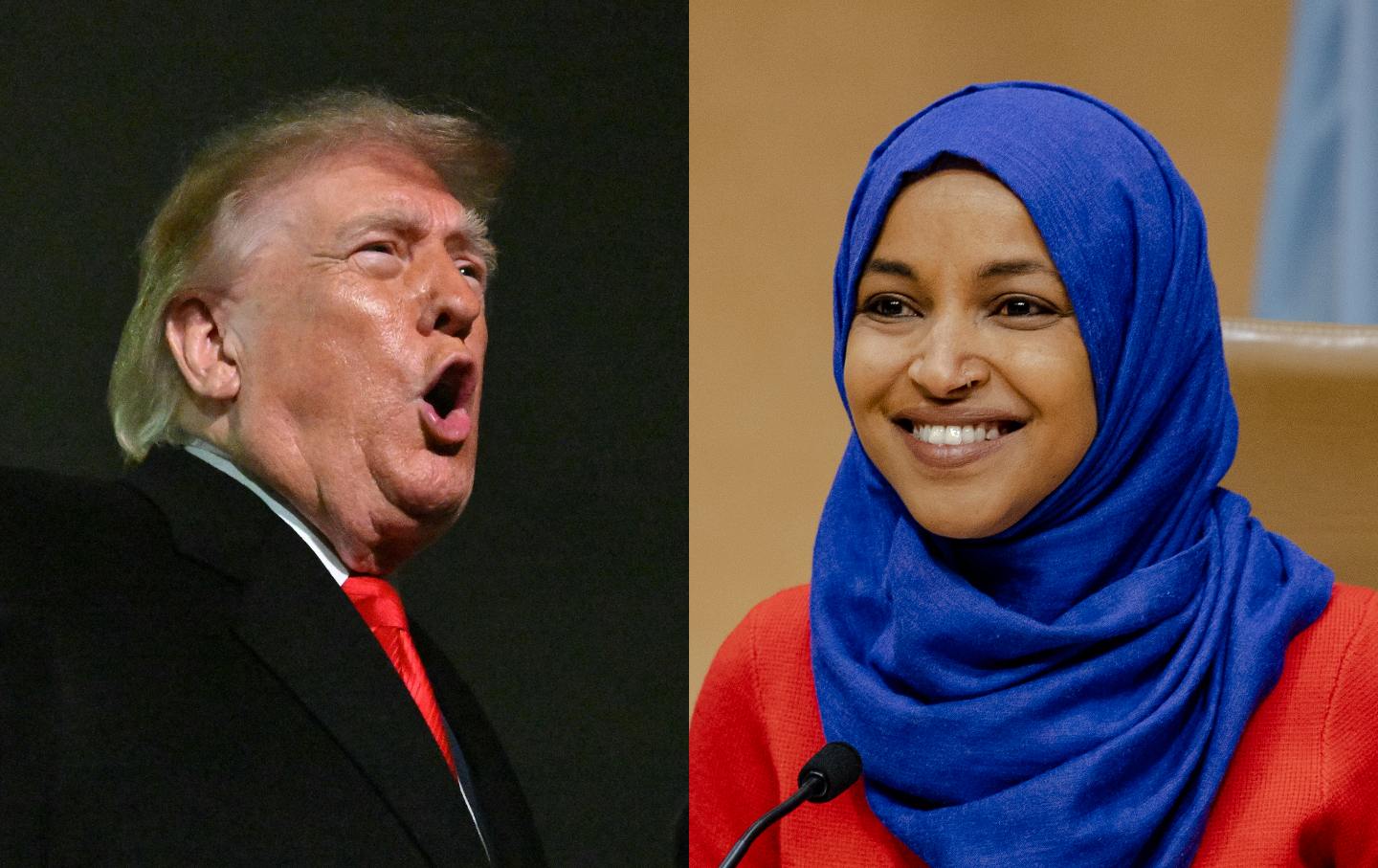
Where Is the Outrage Over Trump’s Racist Targeting of Ilhan Omar? Where Is the Outrage Over Trump’s Racist Targeting of Ilhan Omar?
The establishment press and some Democrats are strangely mute over the president’s flagrant abuse of the legal system.
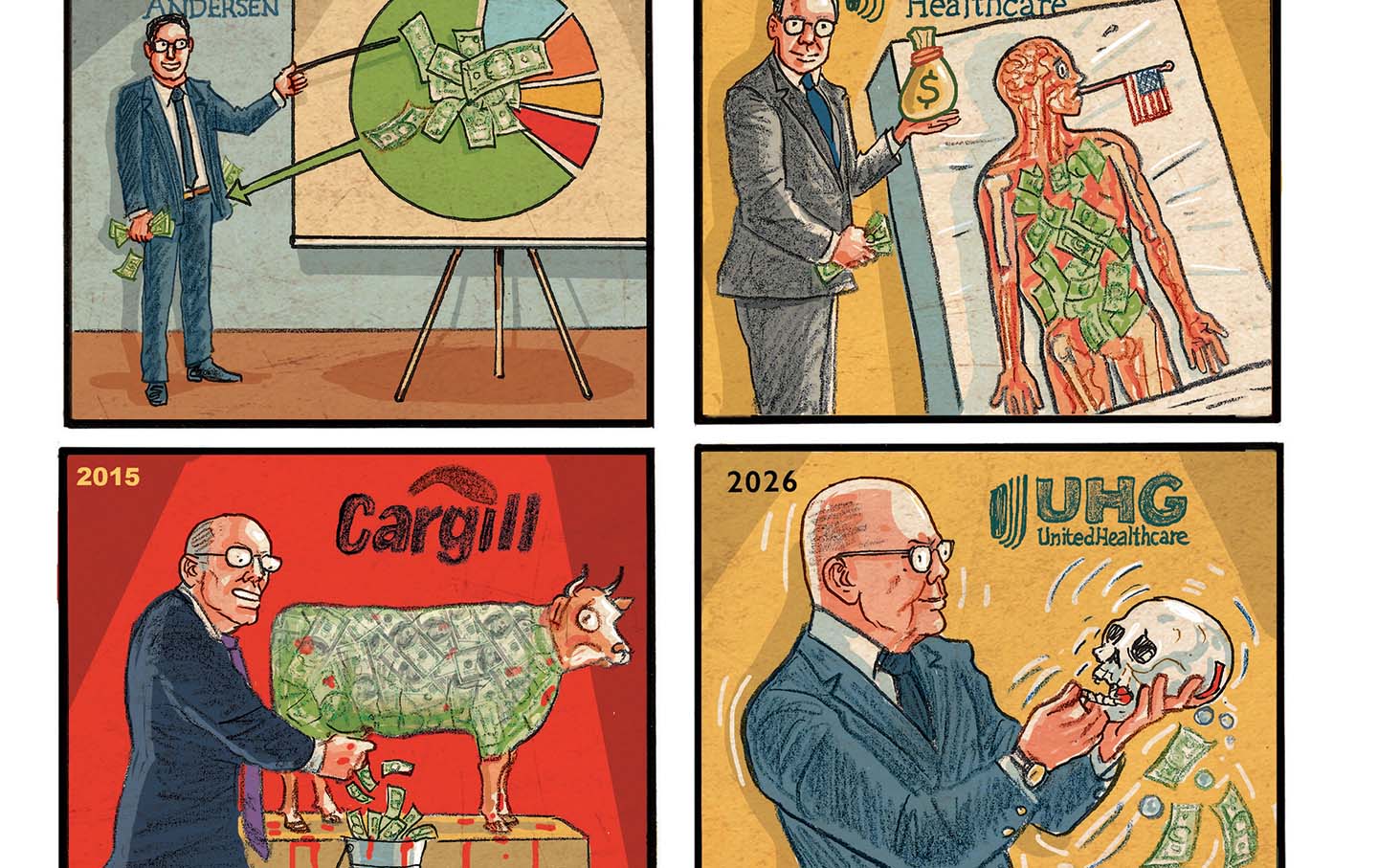
America’s UN-Healthcare Treatment America’s UN-Healthcare Treatment
The UnitedHealth group CEO’s savings plan.


Gina Hinojosa Is Showing Democrats How to Run Against Republican Grifters Gina Hinojosa Is Showing Democrats How to Run Against Republican Grifters
The Democratic gubernatorial candidate has closed the gap in Texas by focusing relentlessly on Greg Abbott’s corruption.

