The Perils of Wider War in Eastern Europe
We face a choice between a negotiated settlement in Ukraine and the possibility of a catastrophic war.
Violence continues to haunt Eastern Europe. the attempted assassination of Slovak Prime Minister Robert Fico on May 15 inevitably conjures up the memory of the assassination of Archduke Franz Ferdinand in Sarajevo 110 years earlier, which led to the First World War. It is, tragically, not an exaggeration to say that Europe (and crucially, this time, the United States) again faces a fateful choice: between a negotiated settlement in Ukraine and the possibility of a third, and perhaps final, world war.
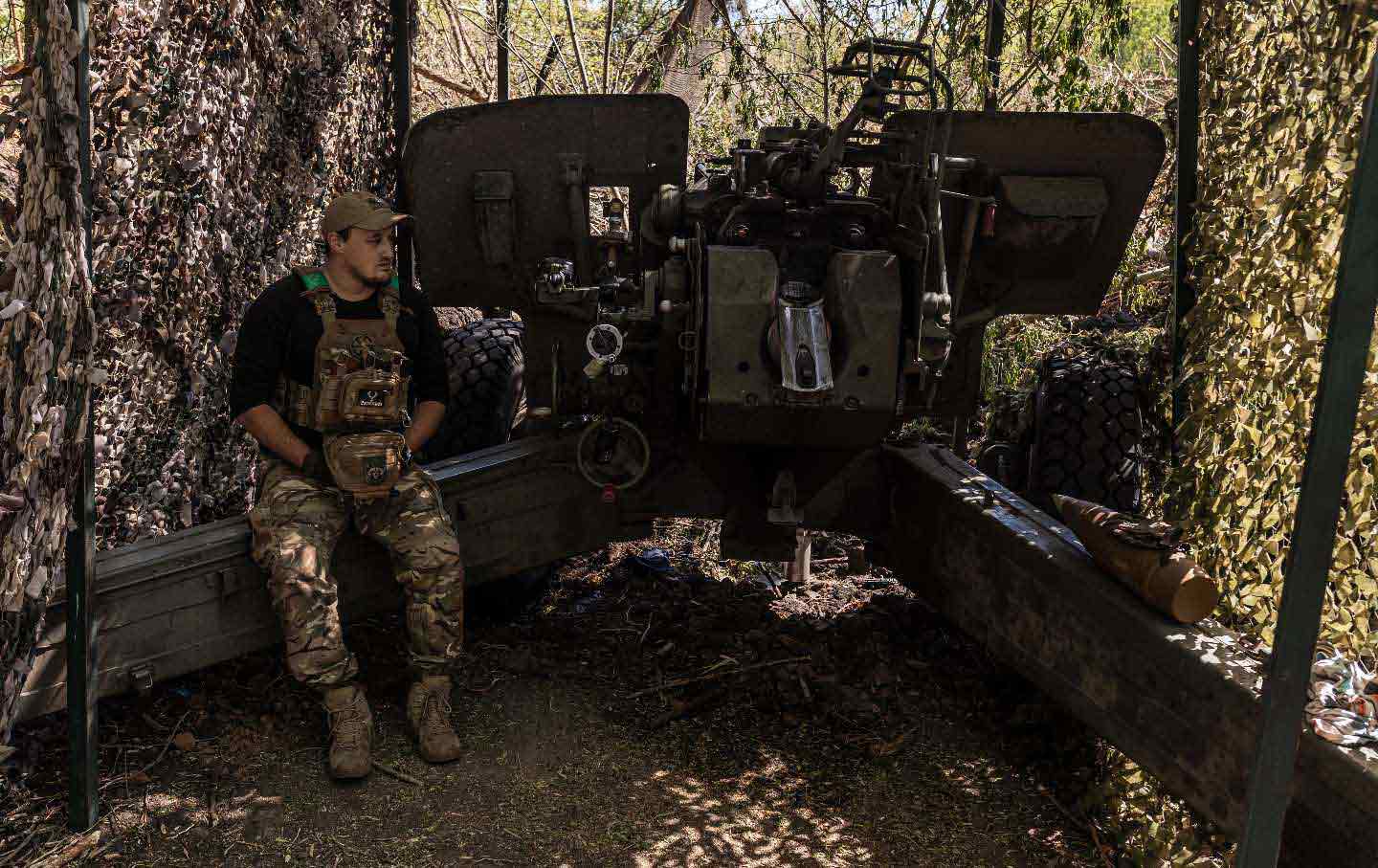
If recent statements by US and European officials are to be believed, there is a growing consensus in favor of war. On May 16, The New York Times reported that the chairman of the Joint Chiefs of Staff said, with regard to the possibility of NATO sending military trainers to Ukraine, “We’ll get there eventually.” The same report also noted that a US official floated the “possibility” of NATO advisers “training Ukrainian troops in Lviv.”
Given the Biden administration’s practice of telling us one thing and doing another—as when it was discovered that the administration had secretly sent long-range ATACMS missiles to Ukraine—there may already be US advisers on the ground. Indeed, in April 2022, a Pentagon official who requested anonymity told Asia Times that it is “likely we have a limited footprint on the ground in Ukraine, but under Title 50, not Title 10”—meaning US intelligence operatives and paramilitaries, as opposed to reserves.
Meanwhile, key officials—including French President Emmanuel Macron, UK Foreign Secretary David Cameron, and German Foreign Minister Annalena Baerbock—are calling for the delivery of even-longer-range weapons. The New York Times also notes: “Britain, Germany, and France are working to base defense contractors in Ukraine to help build and repair weapons systems closer to the combat zone.” Russia has responded to these developments with a series of threats.
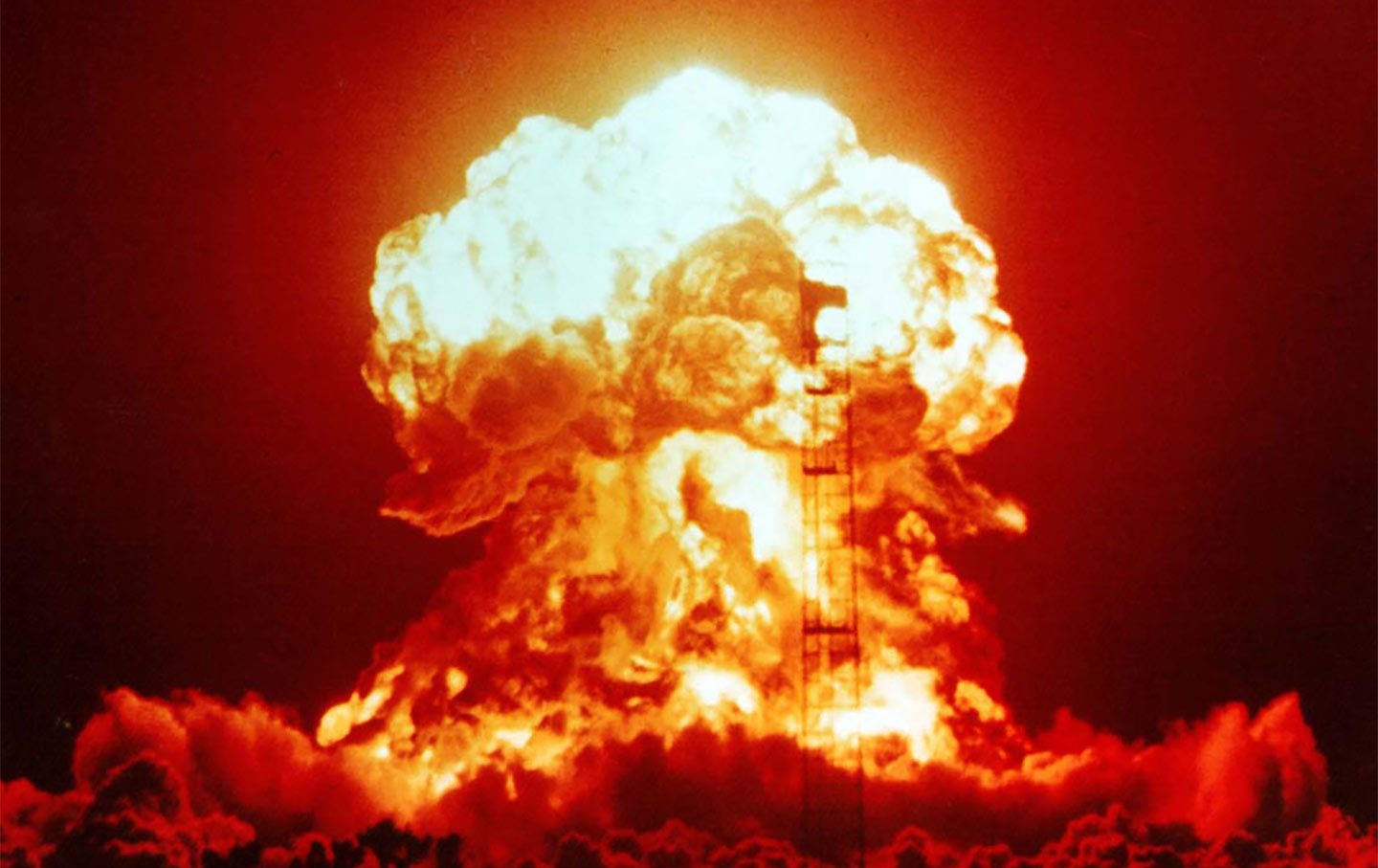
Russia and the West have started down the perilous path of tit-for-tat belligerence. The Russian Defense Ministry issued a statement claiming that Russian forces would “practice the issues of preparation and use of non-strategic nuclear weapons…in response to provocative statements and threats by certain Western officials against the Russian Federation.”
The question remains: Are these the signs of an approaching and tragic “inflection point”—and if so, can it still be avoided?
To do so, the Biden administration should, at long last, adopt a cold-eyed realism in Ukraine and understand that while the plight of the Ukrainian people is heartrending, the more humane option is not to widen the war. Even Ukraine’s original backers are coming to see a widening of the war for what it is: a danger to the future of Ukraine. Former Council on Foreign Relations president Richard Haass notes that Ukraine should “propose an interim ceasefire along existing lines,” explaining: “Ukraine would be better off with a military and diplomatic strategy that protects the country’s core, preserves its independence, and maintains external support.”
The unpleasant truth is that Russia today has a larger, more capable army than it did at the beginning of the war. As NATO’s supreme allied commander in Europe stated in testimony submitted to the Senate Armed Services Committee in April, Russia will soon “command the largest military on the continent.”
Every day, Ukraine inches further into the abyss. The United Nations International Organization for Migration reports that “more than 14.6 million people—a staggering 40 per cent of Ukraine’s total population—remain in need of some form of humanitarian assistance in 2024.” It is no surprise, then, that polls conducted by the Kyiv International Institute of Sociology show that millions of Ukrainians reject the official line that the war can be ended only by military means.
President Barack Obama recognized years ago that Russia possesses “escalatory dominance”—the ability to continually up the stakes—in Ukraine. “The fact is that Ukraine…is going to be vulnerable to military domination by Russia no matter what we do,” he said.
President Obama was right. Picking a fight over NATO expansion in Russia’s backyard was a tragic, costly mistake—and for the sake of the Ukrainian people, the Biden administration needs to find an off-ramp, and soon.
Become a Sustaining Donor This September
Between the reemergence of right-wing red-baiting and Donald Trump’s use of the chilling National Security Presidential Memorandum–7 to criminalize left political organizing, we’re seeing McCarthyism reborn before our eyes.
This assault on democracy cannot be ignored or wished away. Resisting it requires bravery in the face of threats and repression, a steadfast commitment to the truth, and the unwavering belief that we can—and will—overcome this darkness.
We must have an independent media that sets the record straight, unearths corruption and abuses of power, and advances a politics of justice and dignity for all if we’re to win this fight.
That’s why I’m writing to you today. This September, The Nation needs to add 100 monthly donors to sustain our progressive journalism. Your contribution makes the next investigative report, the next truth-speaking column, and the next pathbreaking essay all possible.
I hope you’ll support our work with a recurring donation today. If you donate $10 or more a month, we’ll send you a brand new “Hands Off the Free Press!” sticker to recognise your commitment to our cause. Please, donate today.
Onward,
Katrina vanden Heuvel
Editor and Publisher, The Nation