
Governor Newsom’s Visit to China Shows the Potential for a Sophisticated, Progressive Foreign Policy
We need intelligent dialogue, not crude confrontation.
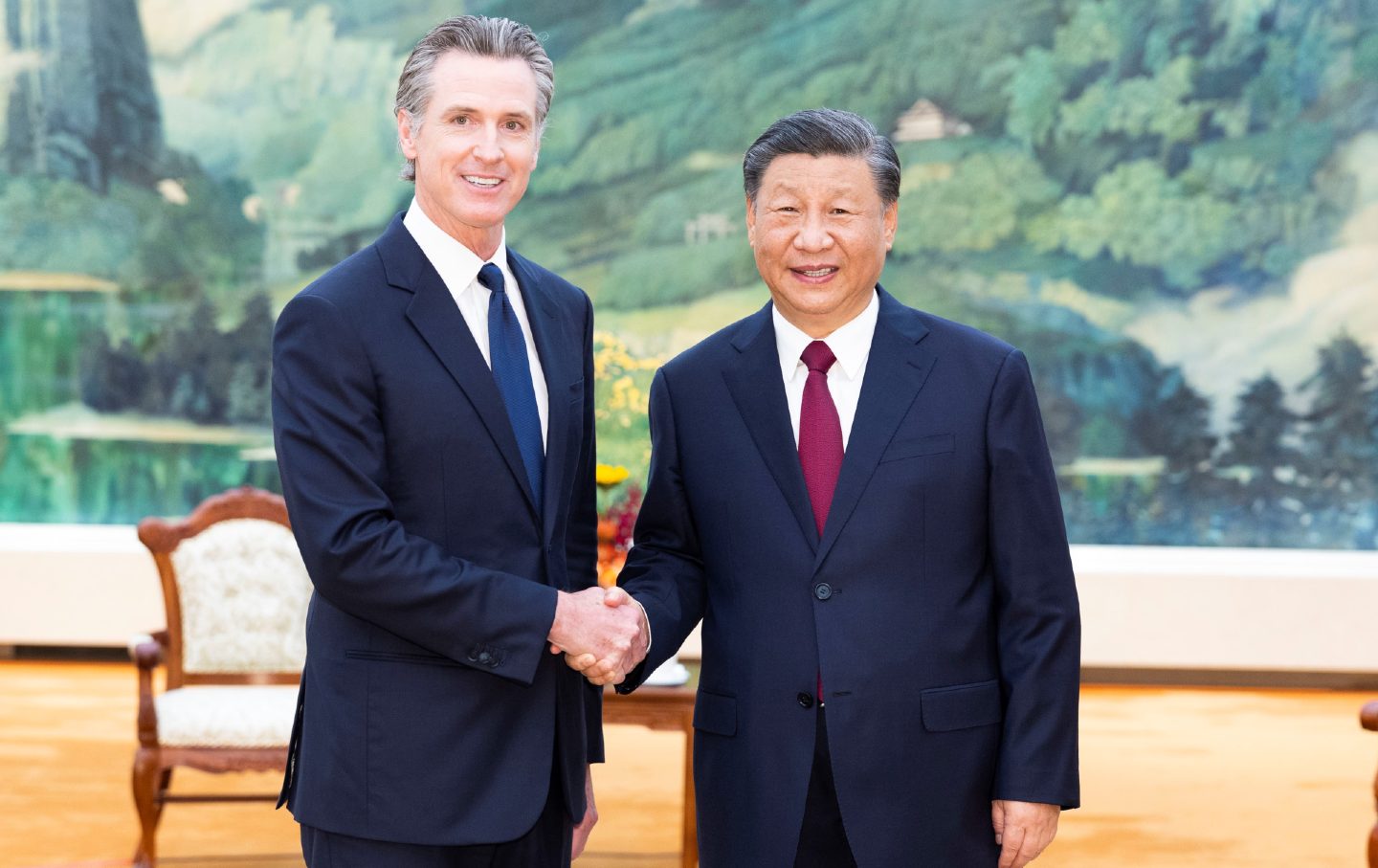
The controversy around California Governor Gavin Newsom’s trip to China last week illustrates a knotty problem for progressive politics. Newsom’s office pitched the trip as focused on climate cooperation. Seeming to sideline the points of tension between the United States and China—particularly the Chinese government’s deplorable human rights record—created an immediate backlash within the human rights community.
The ease with which core progressive commitments like climate action and respect for human rights can be pitted against each other demands careful consideration. In recent decades, political advocacy has largely been organized along single-issue lines. Such an approach may have been effective in an earlier, more stable period, when discrete issues could reasonably be isolated from other questions. But in our current moment of mutually reinforcing crisis, disaster, and violence, the existential threats facing humanity in general and excluded minorities in particular are systemic in nature.
An equally systemic strategy is needed to confront these dangers. That requires careful timing and diplomatic finesse alongside intelligent application of pressure, rather than crude polemics and confrontational tactics that could make the situation worse. The way Newsom’s trip ultimately played out gives hope for the kind of strategy that would be up to the challenges we face.
Initially, however, the prospects for the trip looked dim. After hearing about focus on climate, human rights advocates roundly denounced Newsom. Human Rights Watch called for Newsom to focus on the Chinese government’s widespread repression of civil society and ethnic minorities. A letter signed by dozens of mostly Hong Kong–oriented advocacy groups condemned Newsom for “meetings with officials of an authoritarian regime abroad” and chastened him for traveling to China when exiles living in California could not safely do so. Republican members of Congress from California demanded that Newsom either switch his focus to confronting Chinese leaders on human rights and Chinese companies selling chemicals used to make fentanyl or cancel the trip entirely.
Newsom did not cancel the trip. Nor did he crumple before the demands for a confrontational approach. On the contrary, in a weeklong trip that took him from north to south across the country with stops in five major cities and provinces, Newsom was exuberant at the opportunity to connect with Chinese officials. Stopping at a factory of BYD, one of the world’s largest electric vehicle manufacturers, he praised “the scale and the scope” of China’s transition away from fossil fuel-powered autos, calling it an “inspiration.” He also recognized that China’s ability to forge ahead flowed from a decades-long science and technology partnership with the United States—one that he was intent on reviving by renewing four existing California climate cooperation agreements with Chinese provinces and cities and signing a new one.
In an unplanned meeting with Chinese president Xi Jinping, Newsom avoided the antagonistic framing of bilateral relations that has become dogma in Washington. Instead, he placed his hopes for the future in a US-China relationship “of mutuality, one where we benefit the commonwealth.”
In one of the more memorable exchanges of the trip, a reporter asked Newsom about the idea that the US and China are locked in zero-sum competition. Instead of adopting the now-common pose of the grim Cold Warrior, bowed beneath the weight of a long twilight struggle pitting the American and Chinese peoples against each other, Newsom cheerfully repudiated the premise: “Some people see the world from a ‘scarcity’ frame, zero-sum. I don’t. I see the world from a framework of abundance.… I don’t begrudge other people’s success, I admire it. The more successful China is, the more successful we all will be.”
Throughout the trip, Newsom was responsive to Chinese leaders’ hunger for respect and recognition—rather than lectures and dictates—from US interlocutors. Far from sacrificing progressive priorities, by treating Chinese leaders with respect Newsom actually won a hearing for those priorities. In the end, he raised all the sensitive issues his critics had demanded he lead with: repression in Xinjiang, Tibet, and Hong Kong; tensions around Taiwan, imprisoned Americans, fentanyl exports. By starting from cooperation and shared interests, Newsom avoided the defensive counter-accusations that have come to dominate Chinese responses to US diplomats.
Of course, friendly persuasion is no more likely than belligerent condemnation to immediately change Chinese leaders’ behavior. But it points to a strategy more effective than issuing moralizing demands, which Chinese leaders—with good reason—consider cynical cover for a geopolitical agenda of military containment and economic exclusion.
American leaders should instead seek to cultivate the conditions under which progress on climate degradation, human rights abuses, economic inequality, and military conflict could simultaneously be achieved. As Newsom’s trip shows, human rights need not be abandoned in the pursuit of climate cooperation. And climate action need not be renounced in order to secure human rights. But progress on both will be impossible if we continue on the path to US-China conflict.
More than that: If the United States and China focused their energies on overcoming the core zero-sum pressures in the global system—slow and inequitable economic growth, an overconcentration of power in the hands of a few rich countries, and the looming climate crisis—then constructive US-China relations could also provide the impetus for structural reforms that would reduce human rights abuses and xenophobic hatred around the world.
That’s because scarcity is not just a mindset but a reality—one that is deepening divisions in every society. Existing lines of conflict, whether national, ethno-racial, or religious, have been significantly exacerbated by the breakdown of market-led globalization over the last 15 years. Added to the extreme inequalities and forms of exclusion that defined globalization even in its heyday, the disintegration of recent years has made the search for wealth and power increasingly zero-sum in nature.
The solution, however, is neither seizing what “we” can at the expense of others nor ineffectual denunciations of those who do so. Instead, we need Newsom’s optimism about working with others on the shared interest of making abundance possible for all. That means, above all, reforming the global system to become more rather than less inclusive.
To achieve such a transformation, progressive foreign policy will have to go beyond morally correct but strategically naïve criticism. It must recognize the interconnectedness of our crises and their potential solutions. Even as it stands firm against actions that make scarcity and conflict worse, it must also cultivate support from some of the very leaders responsible for those actions. Saying the right thing is not enough—it must be said in the right way and at the right time.
Become a Sustaining Donor This September
Between the reemergence of right-wing red-baiting and Donald Trump’s use of the chilling National Security Presidential Memorandum–7 to criminalize left political organizing, we’re seeing McCarthyism reborn before our eyes.
This assault on democracy cannot be ignored or wished away. Resisting it requires bravery in the face of threats and repression, a steadfast commitment to the truth, and the unwavering belief that we can—and will—overcome this darkness.
We must have an independent media that sets the record straight, unearths corruption and abuses of power, and advances a politics of justice and dignity for all if we’re to win this fight.
That’s why I’m writing to you today. This September, The Nation needs to add 100 monthly donors to sustain our progressive journalism. Your contribution makes the next investigative report, the next truth-speaking column, and the next pathbreaking essay all possible.
I hope you’ll support our work with a recurring donation today. If you donate $10 or more a month, we’ll send you a brand new “Hands Off the Free Press!” sticker to recognise your commitment to our cause. Please, donate today.
Onward,
Katrina vanden Heuvel
Editor and Publisher, The Nation
More from The Nation

Pinochet: The Verdict of History in the Letelier-Moffitt Case Pinochet: The Verdict of History in the Letelier-Moffitt Case
An act of international terrorism on the streets of Washington, DC, still reverberates 50 years later.
How to Arrest Benjamin Netanyahu How to Arrest Benjamin Netanyahu
Make no mistake: The United States can seize Netanyahu for crimes under US law and prosecute him in US courts when he is in New York City this week.

In the Age of AI, Nuclear Weapons Abolition Is a Renewed Imperative In the Age of AI, Nuclear Weapons Abolition Is a Renewed Imperative
As long as we have nuclear weapons, the job of ending humanity will continue to be as easy as the push of a button—or an AI agent hacking into a nuclear command-and-control system...
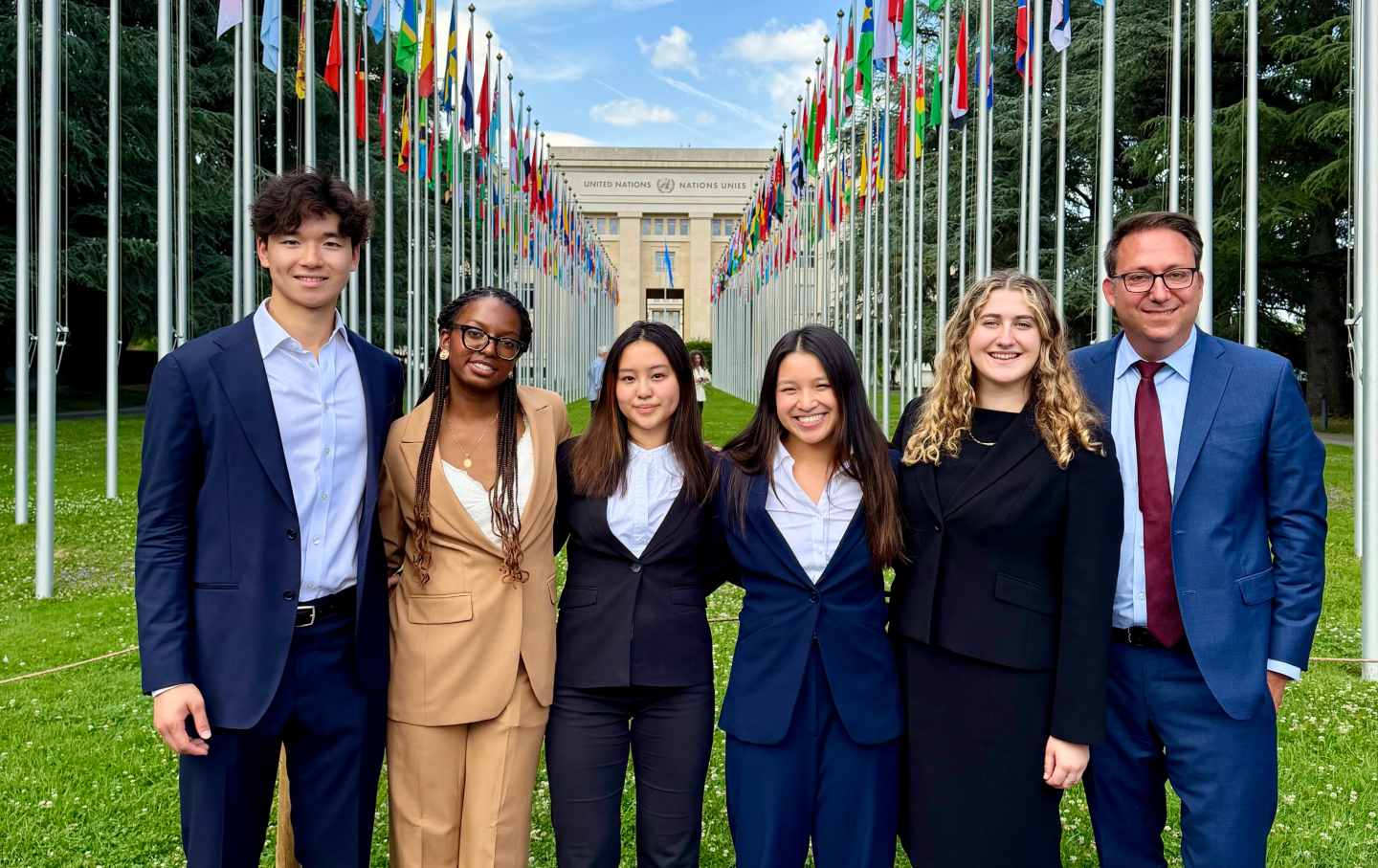
These Students Are Shaping UN Human Rights Policy These Students Are Shaping UN Human Rights Policy
Princeton undergraduates are helping the organization develop standards for post-mortem digital privacy and death in custody.
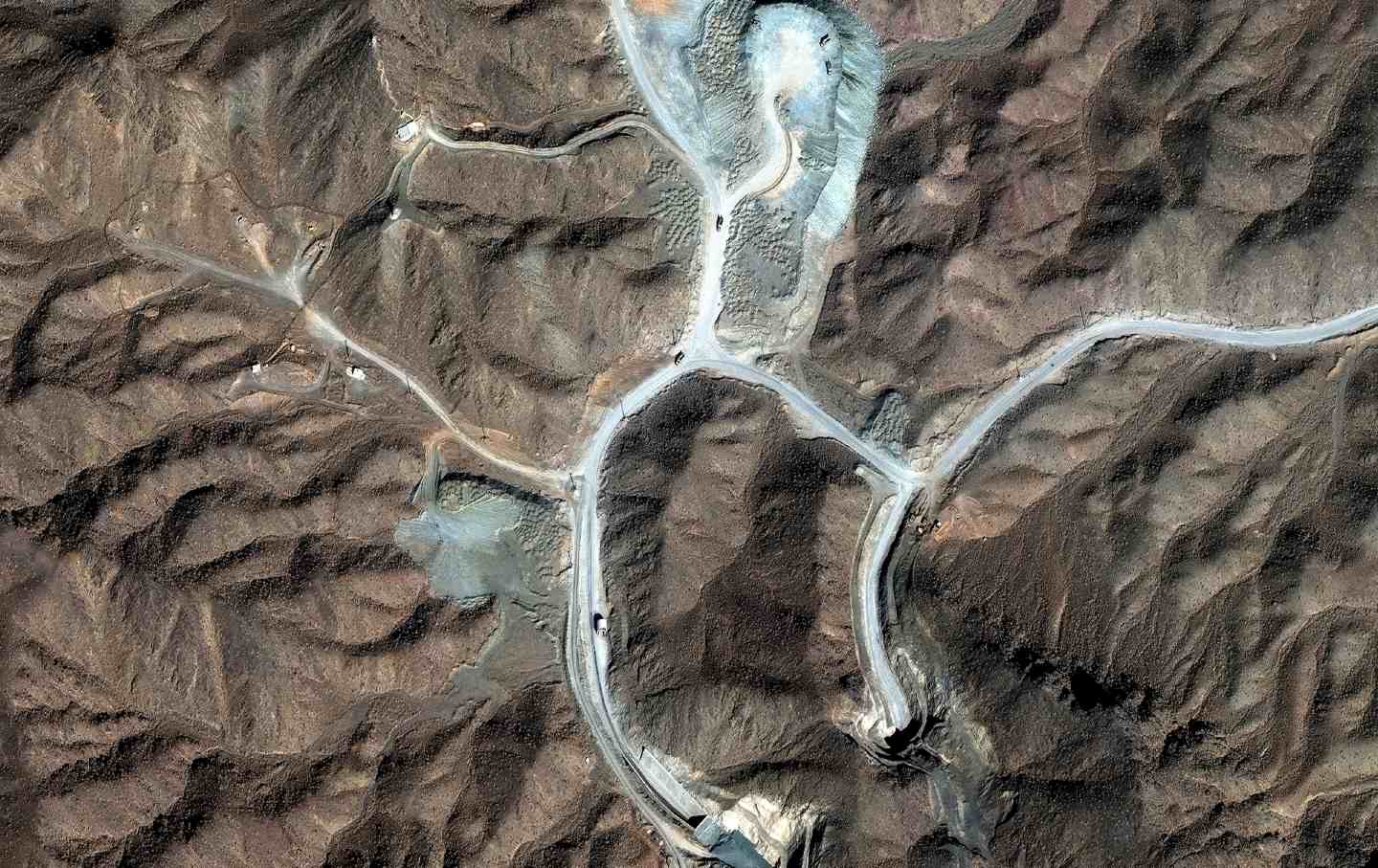
The Peril of Trump’s Final Act: Would He Use a Tactical Nuclear Weapon in Iran? The Peril of Trump’s Final Act: Would He Use a Tactical Nuclear Weapon in Iran?
Trump is trapped in a war that has already been lost, a reality that he will never allow himself to admit.
A Spreading War Rattles Global Energy Markets A Spreading War Rattles Global Energy Markets
Analysts say the consequences for energy prices and the world economy may be more serious in this later phase of a war that many had expected to be largely over by now.

