
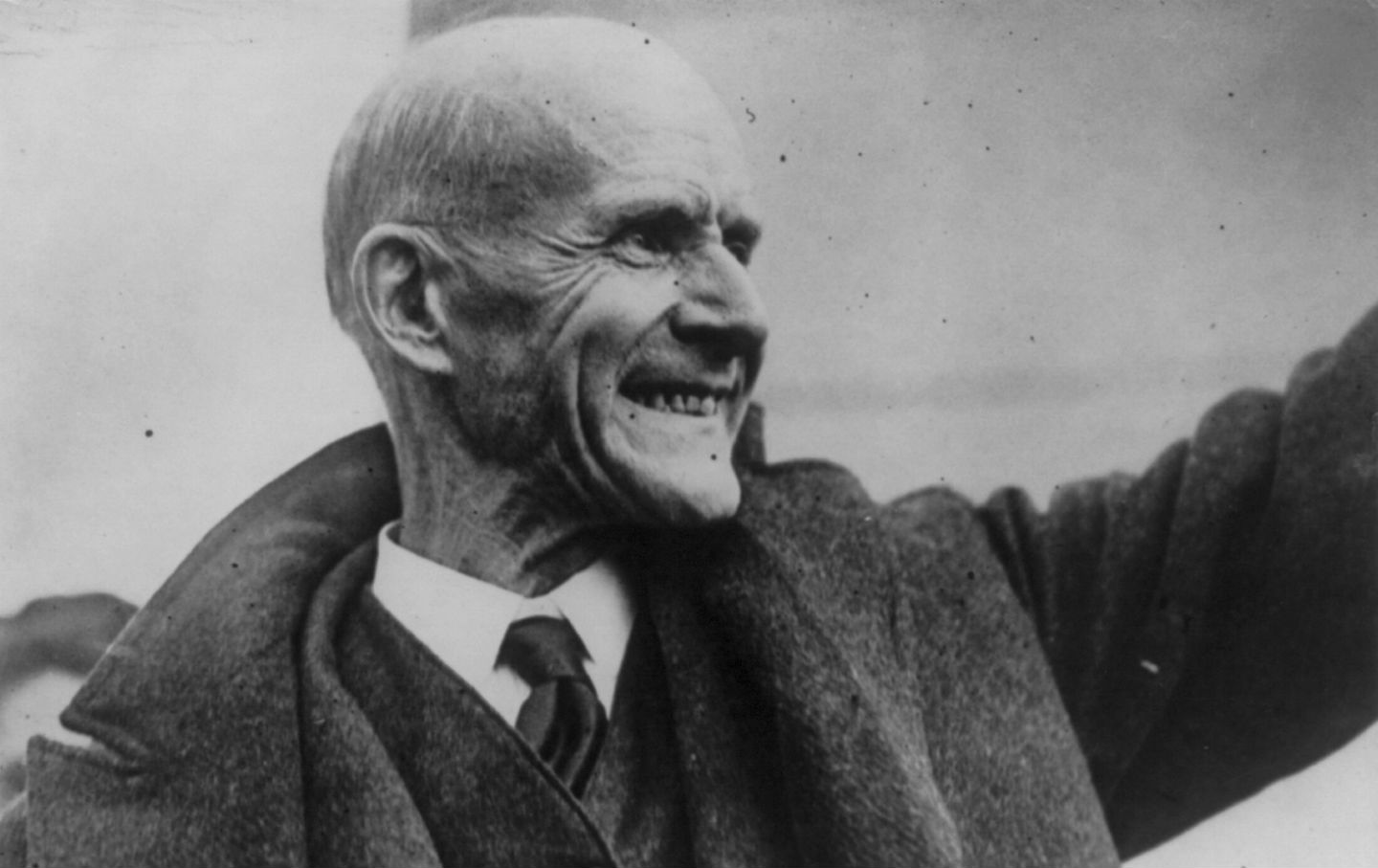
April 13, 1919: Eugene V. Debs Is Sent to Prison April 13, 1919: Eugene V. Debs Is Sent to Prison
“How can you punish a man with so compelling a consciousness of the right?”
Apr 13, 2015 / Richard Kreitner and The Almanac

Jobs and Empire Jobs and Empire
The music of Empire is the theology of capitalism.
Apr 8, 2015 / Books & the Arts / Joshua Clover

Trevor Noah’s Tweets Are Awful and Sexist. Don’t Fire Him for Them. Trevor Noah’s Tweets Are Awful and Sexist. Don’t Fire Him for Them.
The best response to the new Daily Show host’s sexism would be to put more women in the writers’ room.
Mar 31, 2015 / Books & the Arts / Michelle Goldberg
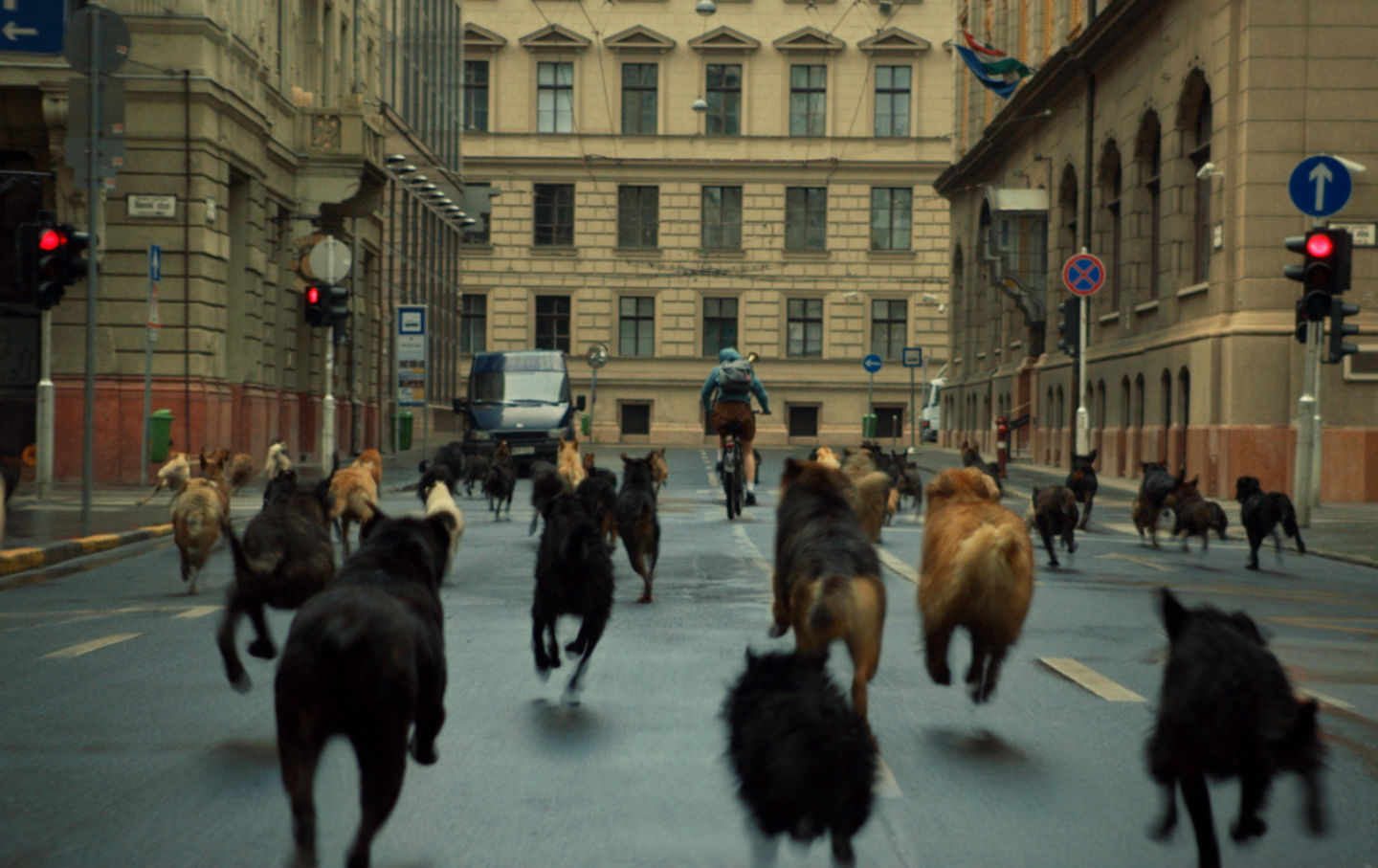
Animal Education Animal Education
War between men and dogs looms in the Budapest of White God; Ethan Hawke pays homage to New York City’s greatest piano teacher in Seymour: An Introduction.
Mar 31, 2015 / Books & the Arts / Stuart Klawans

Inequality and Broken Windows Inequality and Broken Windows
Eric responds to his critics and reviews the best shows of the week in today's Altercation.
Mar 25, 2015 / Books & the Arts / Eric Alterman

From Lenin to Lego From Lenin to Lego
Snowpiercer mocks what The Lego Movie cheers—a happy world of compulsory production.
Mar 24, 2015 / Books & the Arts / Joshua Clover
Tight Rope Tight Rope
July 13, 1963 We live in fragments like speech. Like the fits of wind, shivering against the window. Pieces of meaning, pierced and strung together. The bright bead of the poem, the bright bead of your woman’s laughter. This article is part of The Nation’s 150th Anniversary Special Issue. Download a free PDF of the issue, with articles by James Baldwin, Barbara Ehrenreich, Toni Morrison, Howard Zinn and many more, here. The Nation was one of the first major publications to print LeRoi Jones’s work, including his 1964 essay on the fight between Cassius Clay and Sonny Liston. Jones (1934–2014) later changed his name to Amiri Baraka.
Mar 23, 2015 / Books & the Arts / LeRoi Jones
Parting Parting
December 7, 1963 White morning flows into the mirror. Her eye, still old with sleep, meets itself like a sister. How they slept last night, the dream that caged them back to back, was nothing new. Last words, tears, most often come wrapped as the everyday familiar failure. Now, pulling the comb slowly through her loosened hair, she tries to find the parting; it must come out after all: hidden in all that tangle there is a way. This article is part of The Nation’s 150th Anniversary Special Issue. Download a free PDF of the issue, with articles by James Baldwin, Barbara Ehrenreich, Toni Morrison, Howard Zinn and many more, here. Over a half-century, Adrienne Rich (1929–2012) wrote twenty-two poems for The Nation and several reviews and essays, including a 2002 piece exploring the meaning of “antiwar.”
Mar 23, 2015 / Books & the Arts / Adrienne Rich
The Starry Night The Starry Night
September 2, 1961 “That does not keep me from having a terrible need of—shall I say the word—religion. Then I go out at night to paint the stars.” —Vincent Van Gogh, in a letter to his brother The town does not exist except where one black haired tree slips up like a drowned woman into the hot sky. The town is silent. The night boils with eleven stars. Oh starry starry night! This is how I want to die. It moves. They are all alive. Even the moon bulges in its orange irons to push children, like a god, from its eye. The old unseen serpent swallows up the stars. Oh starry starry night! This is how I want to die: into the rushing beast of the night, sucked up by that great dragon, to split from my life with no flag, no belly, no cry. This article is part of The Nation’s 150th Anniversary Special Issue. Download a free PDF of the issue, with articles by James Baldwin, Barbara Ehrenreich, Toni Morrison, Howard Zinn and many more, here. Anne Sexton (1928–1974) won the Pulitzer Prize for poetry in 1967 for Live or Die.
Mar 23, 2015 / Books & the Arts / Anne Sexton
The Plain Sense of Things The Plain Sense of Things
December 6, 1952 After the leaves have fallen, we return To a plain sense of things. It is as if We had come to an end of the imagination, Inanimate in an inert savoir. It is difficult even to choose the adjective For this blank cold, this sadness without cause. The great structure has become a minor house. No turban walks across the lessened floors. The greenhouse never so badly needed paint. The chimney is fifty years old and slants to one side. A fantastic effort has failed, a repetition In a repetitiousness of men and flies. Yet the absence of the imagination had Itself to be imagined. The great pond, The plain sense of it, without reflections, leaves, Mud, water like dirty glass, expressing silence Of a sort, silence of a rat come out to see, The great pond and its waste of the lilies, all this Had to be imagined as an inevitable knowledge, Required, as a necessity requires. This article is part of The Nation’s 150th Anniversary Special Issue. Download a free PDF of the issue, with articles by James Baldwin, Barbara Ehrenreich, Toni Morrison, Howard Zinn and many more, here. Wallace Stevens (1879–1955) published ten poems in The Nation between 1936 and 1952.
Mar 23, 2015 / Books & the Arts / Wallace Stevens