
The Folly of Netanyahu’s War Against Iran
A minority view from Tel Aviv.
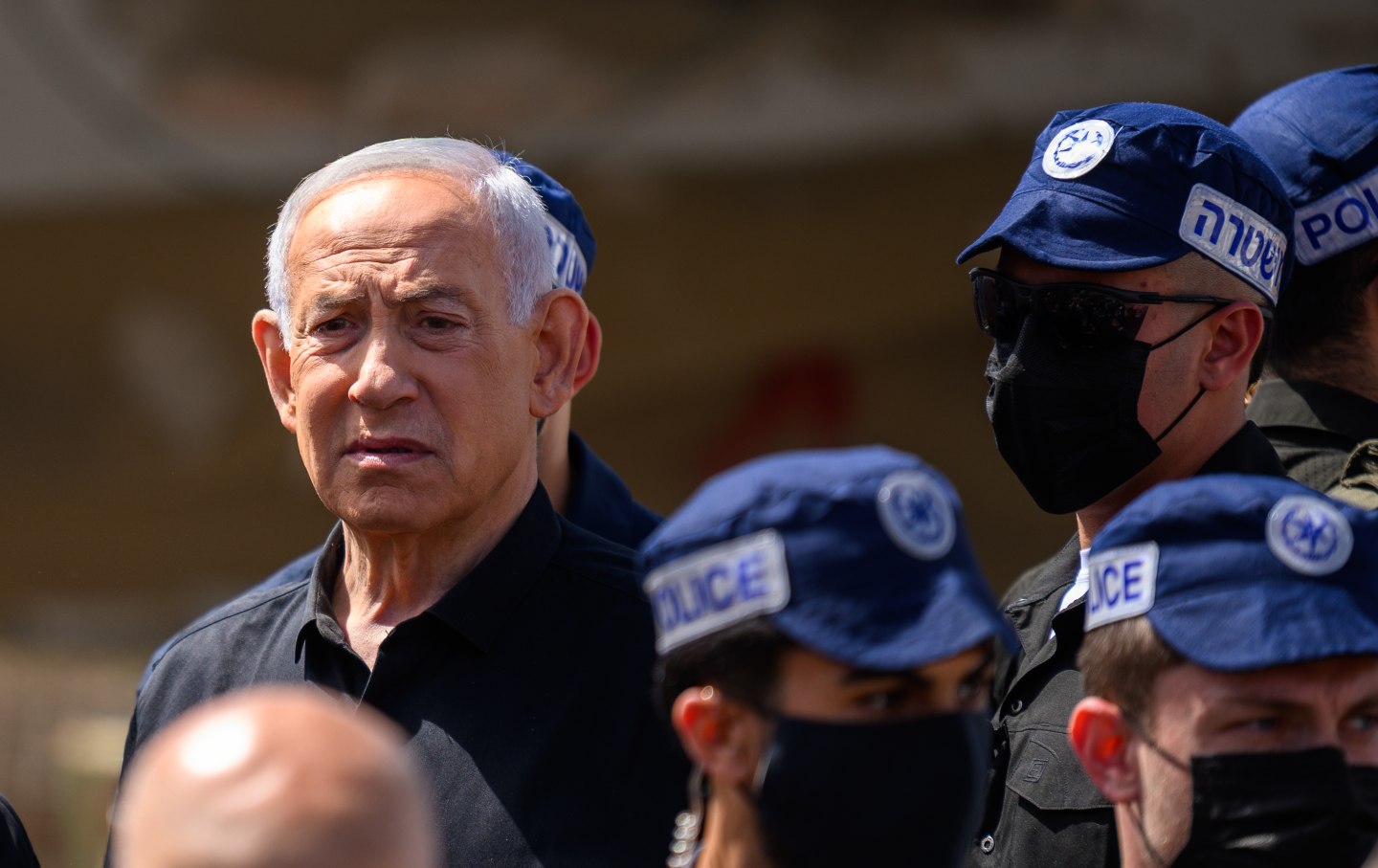
Can we add Netanyahu’s war against Iran to Barbara Tuchman’s list of unwise and counterproductive policy decisions detailed in her book The March of Folly?
Just a little more than a week before the beginning of the latest war, I was one of three Israelis who participated in the public launch of an Iranian-Israeli joint dialogue forum under the title “We Are Not Our Regimes,” hosted by the Bruno Kreisky Forum for International Dialogue in Vienna. The Iranians were all republicans (not the MAGA variety, but supporters of an Iranian republic) who are opposed both to the Islamist Ayatollah regime and to the monarchists represented by Reza Pahlavi, the son of the last Shah of Iran. Since it is impossible under the current circumstances for Iranians who live in Iran to participate in such a joint initiative, the Iranians who participated all live in Europe or the United States, though they all have family and friends who they are in contact with in Iran itself. The Israelis are all opposed to our current extremist, messianic government, led by Prime Minister Netanyahu.
Although both the Iranians and the Israelis would like to see regime change in Iran, they all agreed that a war initiated by external forces was not and could not be the way to achieve that goal (and regime change in both Israel and the United States would also be very welcomed by them). The Iranians emphasized that a desired regime change could only come from an internal struggle by the Iranian people. They listed two possibilities for such a development. One was the fact that Supreme Leader Ayatollah Khamenei was almost 87, and not in good health. It was possible that his successor would be more pragmatic and flexible, creating an opening for a more liberal regime in Iran. The second possibility was a renewed nuclear deal with the US, which would lead to a reduction of sanctions—a key to the development of a potent middle class in Iran that would be the driving force behind a successful popular demand for change in the regime.
Instead, what we got was a renewed war against Iran, this time a joint Israeli-American initiative. Netanyahu apparently convinced Trump that such an attack would galvanize the Iranian people to rise up and demand regime change. As Trump said after the war started, “Now is the time to seize control of your destiny.… America is backing you.… Be brave, be bold.… take back your country. America is with you.”
Well, it hasn’t quite happened that way. Instead, after Ayatollah Khamenei was assassinated by the Israelis, his son Mojtaba Khamenei was chosen to be his successor—the candidate of the extremist Islamic Revolutionary Guard Corps, who have clamped down on any potential popular protest. His father didn’t even designate him as one of his three potential successors! One of the designated potential successors was former Iranian president Hassan Rouhani, the reformist who negotiated the effective JCPOA (Iranian nuclear deal) with President Obama and who, together with his foreign minister, Mohammad Zarif, made overtures to the West. They even made a hint toward the Jews and, by implication, Israel—a greeting on the Rosh Hashanah holiday. Such an appointment as the successor to Khamenei could have led to the realization of both the possibility of a more pragmatic and flexible supreme leader and a nuclear deal that would have led to sanctions relief and the strengthening of key middle-class elements in Iranian society.
And to make matters worse, Israel then assassinated Ali Larijani, secretary of the Supreme National Security Council, who had actively opposed the appointment of Khamenei’s son as the successor.
Our joint forum, now officially called the Iranian-Israeli Peace Forum, issued the following statement after the war began:
The historical context of the present war is complex but highly relevant. The ideologically driven hostility of the Islamic Republic of Iran toward the United States (the “Great Satan”) and the State of Israel (the “Little Satan”) has long contributed to an atmosphere of confrontation and helped create the conditions that made this deadly conflict possible.
At the same time, this hostility has also served as a convenient pretext for successive Israeli governments led by Benjamin Netanyahu to sustain and escalate tensions. Such escalation aligns with the agenda of Israeli fundamentalist forces and coincides with the political imperatives of maintaining his current governing coalition.
As for the United States, President Donald Trump did not seek congressional approval before launching the war, did not exhaust the negotiations track, and has been unclear about the war’s objectives and what outcome would bring it to an end.
The threats and provocations of the Islamic Republic do not justify the launch of a large-scale war. It is a war of choice initiated by two leaders whose unfounded claims that Iran posed an imminent nuclear threat to the United States and Israel were invoked to legitimize military action undertaken in violation of international law.
We therefore condemn this war unequivocally. Military escalation will bring nothing but death, destruction, and suffering to the peoples of Iran, Israel, and the wider region. War will deepen insecurity rather than eliminate it.
There is no doubt that Iran is governed by a repressive, semi-totalitarian regime, yet its overthrow cannot be imposed from outside. The struggle for peace, freedom, democracy, and human rights must ultimately be waged by the citizens of Iran themselves.
Recent history offers sobering lessons. Foreign military interventions have repeatedly failed to deliver liberation or democracy. Instead, they have too often produced devastation, social fragmentation, and the danger of state collapse.
For these reasons, we call for an immediate end to the military hostilities and a renewed commitment to diplomacy, international law, and peaceful political transformation.
Netanyahu clearly wanted this war to distract attention from Gaza, to delay his trial for fraud, bribery, and breach of trust that he is afraid will result in a conviction and jail sentence, and to boost his standing in the polls toward the Israeli elections that must be held by October 2026.
The Ma’ariv daily publishes a poll every Friday indicating what the results would be if elections were held that day. Ever since the Gaza war began on October 7, 2023, and even beforehand during the period of the mass protests against the government’s attempt to undermine the independence of the courts, the results have been that Netanyahu’s extremist government would lose to the right-center-left opposition. Therefore, I was very anxious to see the results of the first Friday poll after the war began the previous Saturday. The result was that Netanyahu’s coalition gained just one seat, from 50 to 51 out of 120 seats in the Knesset (parliament). The combined opposition of the Jewish and predominantly Palestinian-Israeli parties had 69 seats. By the following week, Netanyahu’s coalition had already lost that seat!
It is true that unlike the majority American public opposition to the war, the overwhelming majority of the Jewish Israelis support the war, though as it completes its fourth week, support for continuation of the war has declined from 81 percent to 68 percent. Even many liberal analysts are gung-ho for this “necessary war.” This is primarily because Netanyahu and his associates have convinced the Israeli public that Iran, with its nuclear program, ballistic missiles, and proxies like Hamas and Hezbollah, poses an existential threat to Israel. Statements by Iranian leaders such as Ayatollah Khomeini and President Ahmadinejad that “Israel must be wiped off the map” have reinforced this fear. As the son of a historian, Netanyahu is very concerned with his legacy. He does not want to be remembered as the leader who failed to prevent the murder of 1,200 Israelis by Hamas on October 7 but as the man who successfully dealt with the Iranian threat, an issue that has always been at the top of his agenda.
Yet support for the war has not translated into support for Netanyahu. The majority of the Israeli public still holds him responsible for October 7—for having encouraged Qatar to send $30 million a month to prop up Hamas, which supposedly would be satisfied with just governing Gaza and wouldn’t attack, while ensuring there was no need to negotiate with President Mahmoud Abbas, the head of the PLO and Palestinian Authority, about a political compromise. They hold him responsible for not taking responsibility for this policy and for heavily subsidizing the ultra-Orthodox part of his coalition—about 14 percent of the population—who don’t share in the burden of military service.
Sixty Israeli civil society organizations have twice published an ad in Haaretz calling for an end to the war, and weekly demonstrations have begun in Tel Aviv and other locations calling for an end to the war. The police, under the authority of fascist Minister of National Security Ben-Gvir, attacked and dispersed the demonstrators in Tel Aviv and Haifa for violating wartime crowd regulations, supposedly “for their own safety.”
Popular
“swipe left below to view more authors”Swipe →With the midterm elections drawing near, rising gas prices, and a fear of being dragged into a Vietnam-Afghanistan-Iraq quagmire scenario, my hope is that President Trump will soon declare “we won” and end the war. Netanyahu wouldn’t dare to continue the war against his wishes.
Meanwhile, people are dying and homes are being destroyed in both Tehran and Tel Aviv.
Become a Sustaining Donor This September
Between the reemergence of right-wing red-baiting and Donald Trump’s use of the chilling National Security Presidential Memorandum–7 to criminalize left political organizing, we’re seeing McCarthyism reborn before our eyes.
This assault on democracy cannot be ignored or wished away. Resisting it requires bravery in the face of threats and repression, a steadfast commitment to the truth, and the unwavering belief that we can—and will—overcome this darkness.
We must have an independent media that sets the record straight, unearths corruption and abuses of power, and advances a politics of justice and dignity for all if we’re to win this fight.
That’s why I’m writing to you today. This September, The Nation needs to add 100 monthly donors to sustain our progressive journalism. Your contribution makes the next investigative report, the next truth-speaking column, and the next pathbreaking essay all possible.
I hope you’ll support our work with a recurring donation today. If you donate $10 or more a month, we’ll send you a brand new “Hands Off the Free Press!” sticker to recognise your commitment to our cause. Please, donate today.
Onward,
Katrina vanden Heuvel
Editor and Publisher, The Nation
More from The Nation
The Decades-Old Roots of Trump’s War on Iran The Decades-Old Roots of Trump’s War on Iran
An interview with historian Behrooz Ghamari-Tabrizi about the generations of US presidents who have tried to destroy the Iranian regime.
Emmanuel Macron’s Turbulent Exit Emmanuel Macron’s Turbulent Exit
Between a budget crisis and a cost-of-living squeeze, Macron is leaving a country feeling more insecure than ever—and ready to take to the streets.
Israel’s Election Can’t Fix What Netanyahu Broke Israel’s Election Can’t Fix What Netanyahu Broke
The fundamental problem is not the name of the prime minister, but rather the actions of the Israeli government and the urgent issues that need to be addressed.
The AfD’s Rise Isn’t Just About East Germany The AfD’s Rise Isn’t Just About East Germany
The Alternative für Deutschland has a stable national poll lead, including in the former West Germany. Its rise owes to much more than Eastern grievances.
Chinese Development Is the Betrayal Washington Cannot Forgive Chinese Development Is the Betrayal Washington Cannot Forgive
The prospects for Xi Jinping’s visit are dim because American leaders are blaming China for the failures of globalization.
Pinochet: The Verdict of History in the Letelier-Moffitt Case Pinochet: The Verdict of History in the Letelier-Moffitt Case
An act of international terrorism on the streets of Washington, DC, still reverberates 50 years later.

