
Everything Is Destroyed in Gaza. But I Still Feel the Pulse of Life.
When I am finally able to return to the ruins of what was my house, I will do so, not to weep, but to make a promise to rebuild it.
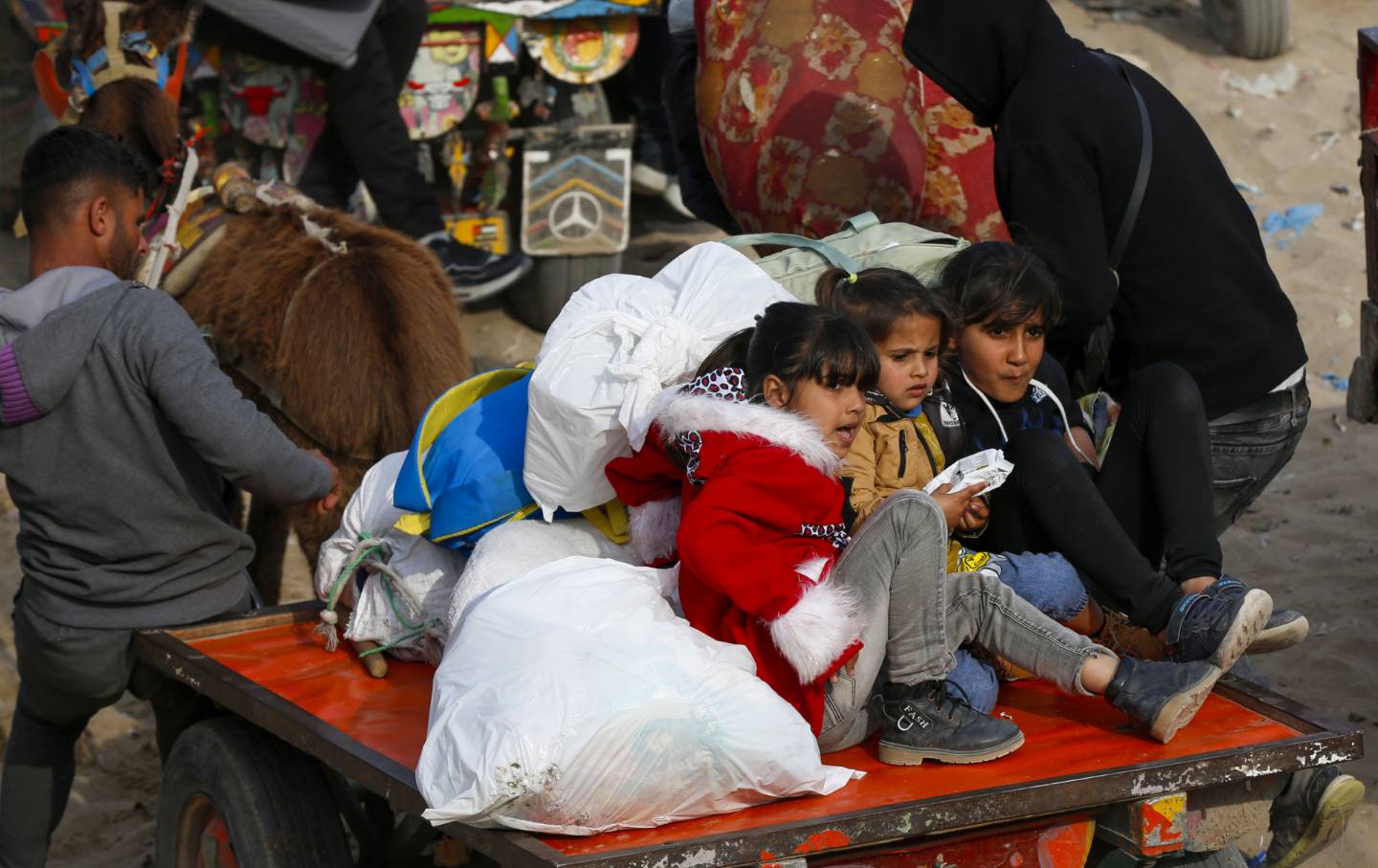
Displaced Palestinians return to their homes in the north of Gaza on February 3, 2025.
(Ashraf Amra / Anadolu via Getty Images)This is the fourth in our series of dispatches from Lujayn, a 14-year-old girl living in Gaza.
As the ceasefire approached on January 19, the machinery of war continued to unleash its fire and target the innocent until the very last second before the agreement came into effect. Indeed, Israeli troops have still not fully withdrawn from Gaza. Yet, despite the darkness of these hours, my hopes soar. My thoughts are consumed with my city, my friends, and my little home.
Lujayn’s Gaza Dispatches
Destruction has touched everything. Many of my friends have either been killed or forced to leave Gaza. Yet I feel the pulse of life beneath my feet. Perhaps it is the heartbeat longing for those who are gone. Like everyone here in Rafah, I know well that devastation has engulfed our small city. No home, school, neighborhood, hospital, or even street remains intact.
Still, I know that we are a people who love life.
Immediately after the ceasefire was agreed, I went to visit the graves of five of my friends who were killed while they were in their shelters in Al Mawasi, Deir Al Balah, and Khan Younis. With the war over, now they can rest in peace. I prayed at their graves and promised them that they would remain forever in my heart.
Since the Israeli army has not completed its withdrawal from Gaza City, I have not yet been able to return home. When I am finally able to return to the ruins of what was my house, I will do so, not to weep, but to make a promise to rebuild it.
In the past few days, I have managed to meet with two of my friends who are still alive: one in Khan Younis and another in Al Bureij. I learned that eight of my friends from school were martyred during the war and I am trying to find out about what happened to my other friends, whose fates I have not been able to track.
We will rebuild our schools, cultivate our fields, restore our hospitals, repair our streets, and reconstruct our mosques and churches. I understand how difficult and long this journey will be, but life is longer still.
I will continue my education and return to school again next year. My mother and I, along with some friends, have decided to establish a center to help children catch up on their studies. I will name it “Malak – Angel,” in memory of my friend Malak, whose name means “angel.” On January 8, Malak was martyred by an Israeli bullet while she was sleeping inside her tent. She was my age, and my closest friend from my now-destroyed school, the Hamama School for Girls in the Sheikh Radwan neighborhood of Gaza City, where we grew up together. If only the ceasefire had come sooner, Malak would be alive today.
If the ceasefire holds, I will be able to complete my nearly finished robotics project and master the embroidery I learned during the war. I will compose and play a melody entitled “True Hero” for my wonderful friend Brenda, and I will play “A Hero’s Song” by Antonin Dvorak for my friend Jack on a new piano my uncle will give me to replace the one that was destroyed. I will compose and play a melody called “Beautiful Angel” for my sister Rebecca. My family, friends, and everyone I love will hear my music. I will write, play, and craft from my heart.
We know that every beginning has an end, and the endings in this war have been difficult. But I also know that this war is neither the first nor the last, so long as occupation persists and we continue to yearn for life. These small dreams are inherited in my homeland, and passed down from generation to generation. We build, and war destroys everything we’ve built. But from beneath the rubble, we rise again and rebuild.
Popular
“swipe left below to view more authors”Swipe →My greatest dream—the dream of every member of my people—is to live in a state recognized by the free people of the world, a place where peace reigns, free from siege, destruction, and occupation. When that dream is realized, my message to you will be an invitation to visit my land, the land of peace.
Until then I send you my love, gratitude, and prayers.
I love you all.
—Lujayn
Rafah, Gaza Strip, Palestine
Become a Sustaining Donor This September
Between the reemergence of right-wing red-baiting and Donald Trump’s use of the chilling National Security Presidential Memorandum–7 to criminalize left political organizing, we’re seeing McCarthyism reborn before our eyes.
This assault on democracy cannot be ignored or wished away. Resisting it requires bravery in the face of threats and repression, a steadfast commitment to the truth, and the unwavering belief that we can—and will—overcome this darkness.
We must have an independent media that sets the record straight, unearths corruption and abuses of power, and advances a politics of justice and dignity for all if we’re to win this fight.
That’s why I’m writing to you today. This September, The Nation needs to add 100 monthly donors to sustain our progressive journalism. Your contribution makes the next investigative report, the next truth-speaking column, and the next pathbreaking essay all possible.
I hope you’ll support our work with a recurring donation today. If you donate $10 or more a month, we’ll send you a brand new “Hands Off the Free Press!” sticker to recognise your commitment to our cause. Please, donate today.
Onward,
Katrina vanden Heuvel
Editor and Publisher, The Nation
More from The Nation
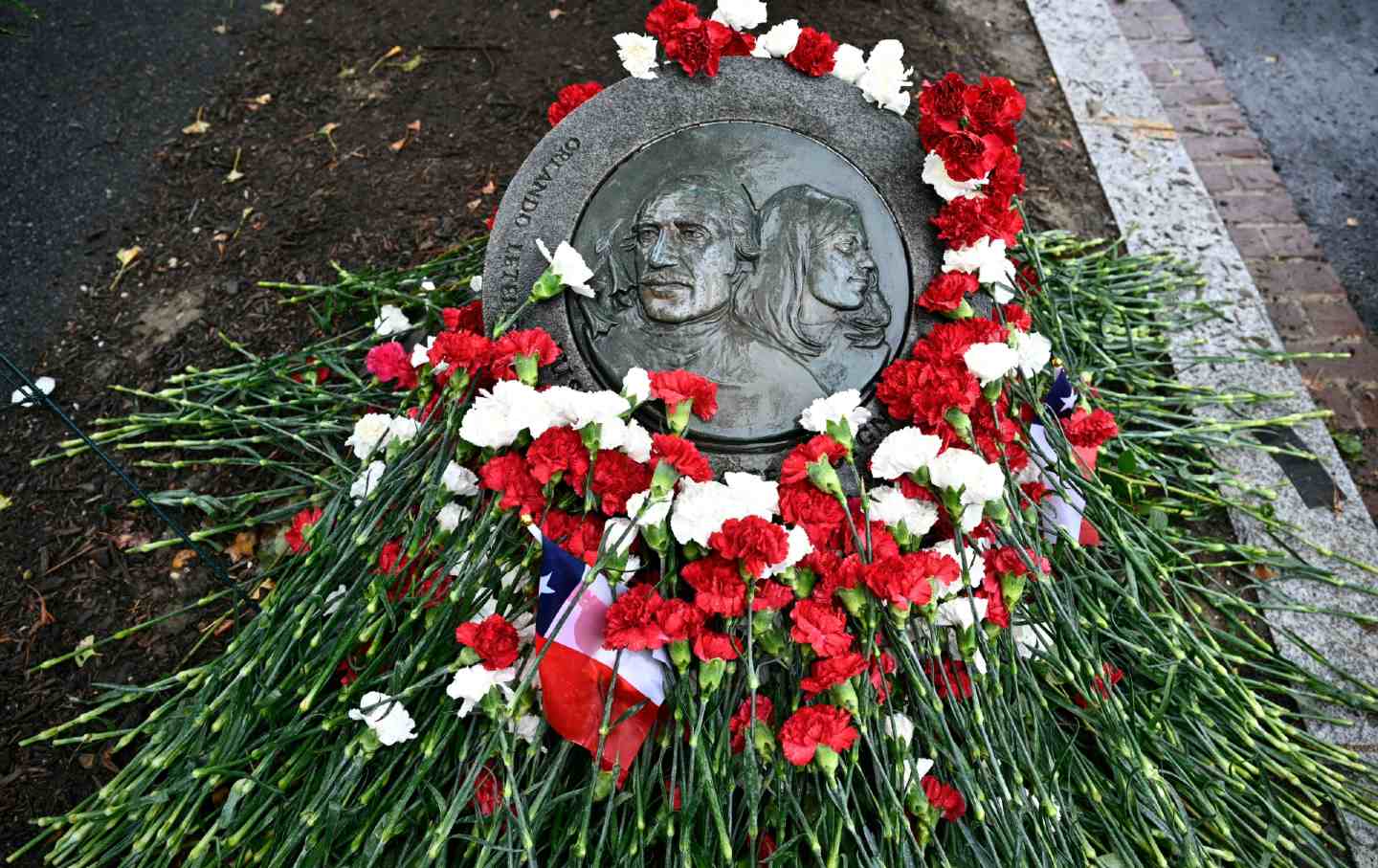
Pinochet: The Verdict of History in the Letelier-Moffitt Case Pinochet: The Verdict of History in the Letelier-Moffitt Case
An act of international terrorism on the streets of Washington, DC, still reverberates 50 years later.
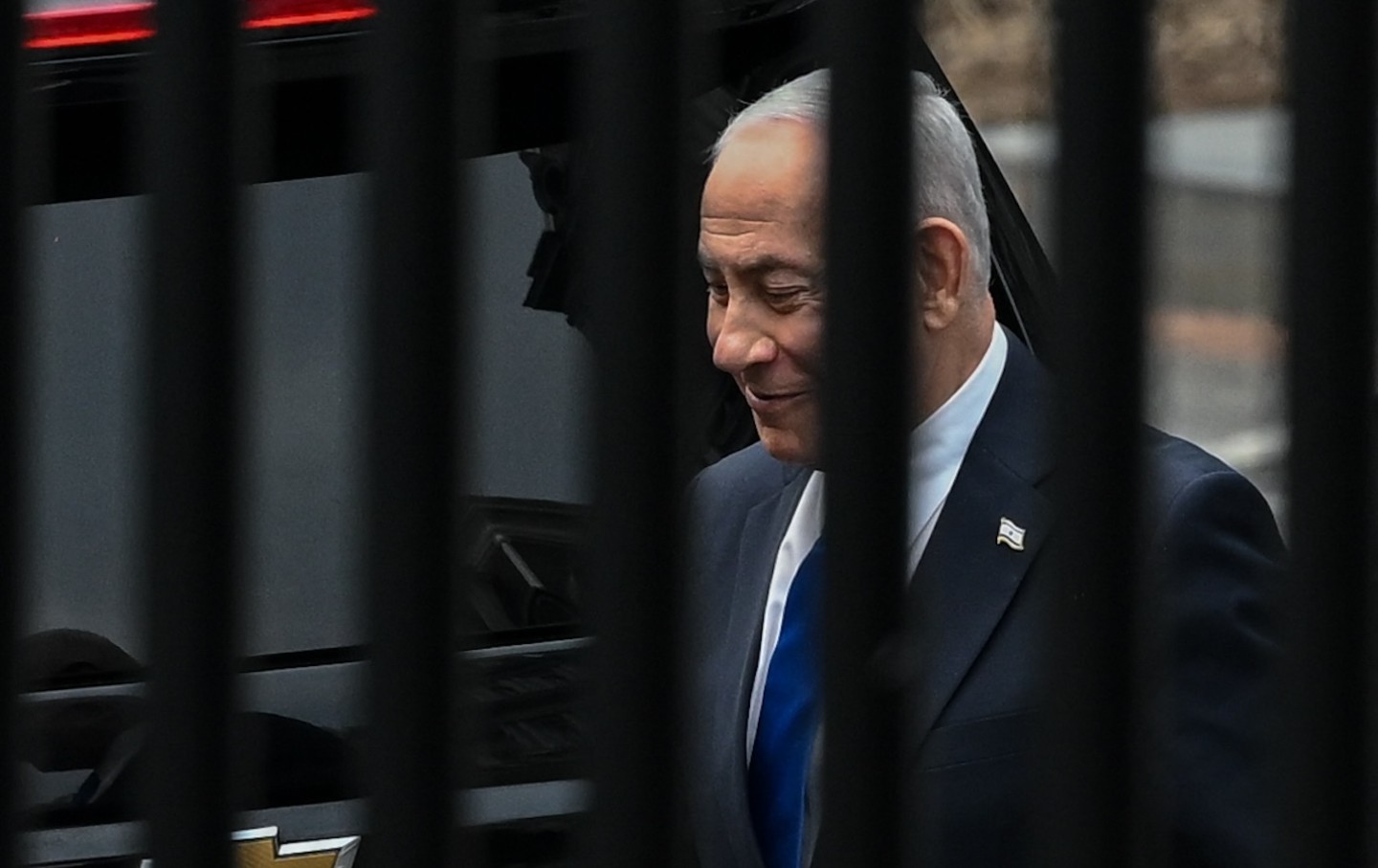
How to Arrest Benjamin Netanyahu How to Arrest Benjamin Netanyahu
Make no mistake: The United States can seize Netanyahu for crimes under US law and prosecute him in US courts when he is in New York City this week.
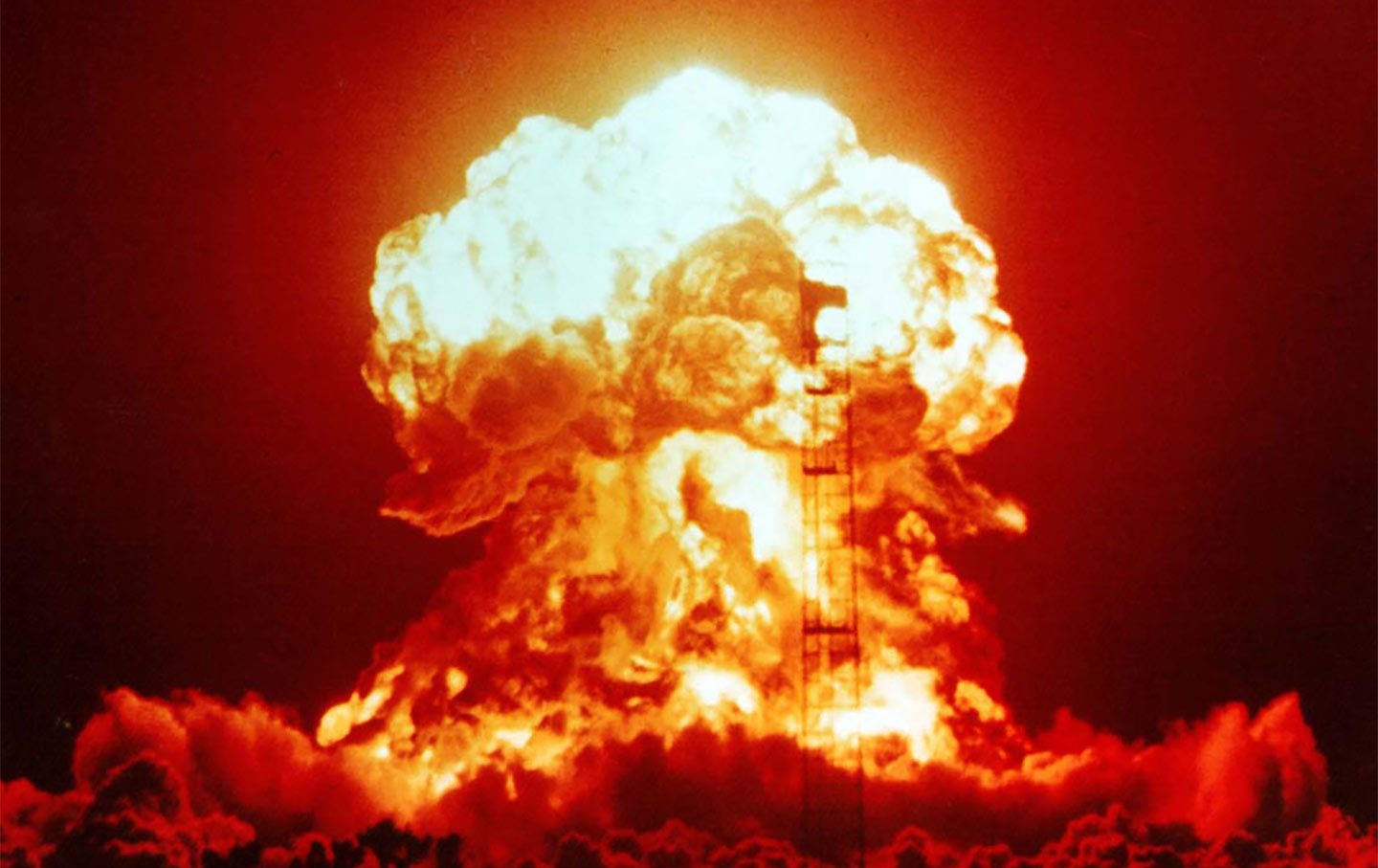
In the Age of AI, Nuclear Weapons Abolition Is a Renewed Imperative In the Age of AI, Nuclear Weapons Abolition Is a Renewed Imperative
As long as we have nuclear weapons, the job of ending humanity will continue to be as easy as the push of a button—or an AI agent hacking into a nuclear command-and-control system...
These Students Are Shaping UN Human Rights Policy These Students Are Shaping UN Human Rights Policy
Princeton undergraduates are helping the organization develop standards for post-mortem digital privacy and death in custody.
The Peril of Trump’s Final Act: Would He Use a Tactical Nuclear Weapon in Iran? The Peril of Trump’s Final Act: Would He Use a Tactical Nuclear Weapon in Iran?
Trump is trapped in a war that has already been lost, a reality that he will never allow himself to admit.
A Spreading War Rattles Global Energy Markets A Spreading War Rattles Global Energy Markets
Analysts say the consequences for energy prices and the world economy may be more serious in this later phase of a war that many had expected to be largely over by now.

