
Israeli Elections: Fanatics, Generals, and the Question of Palestine
The central question is whether defeating Netanyahu would change Israel’s policies or simply change the people managing them.
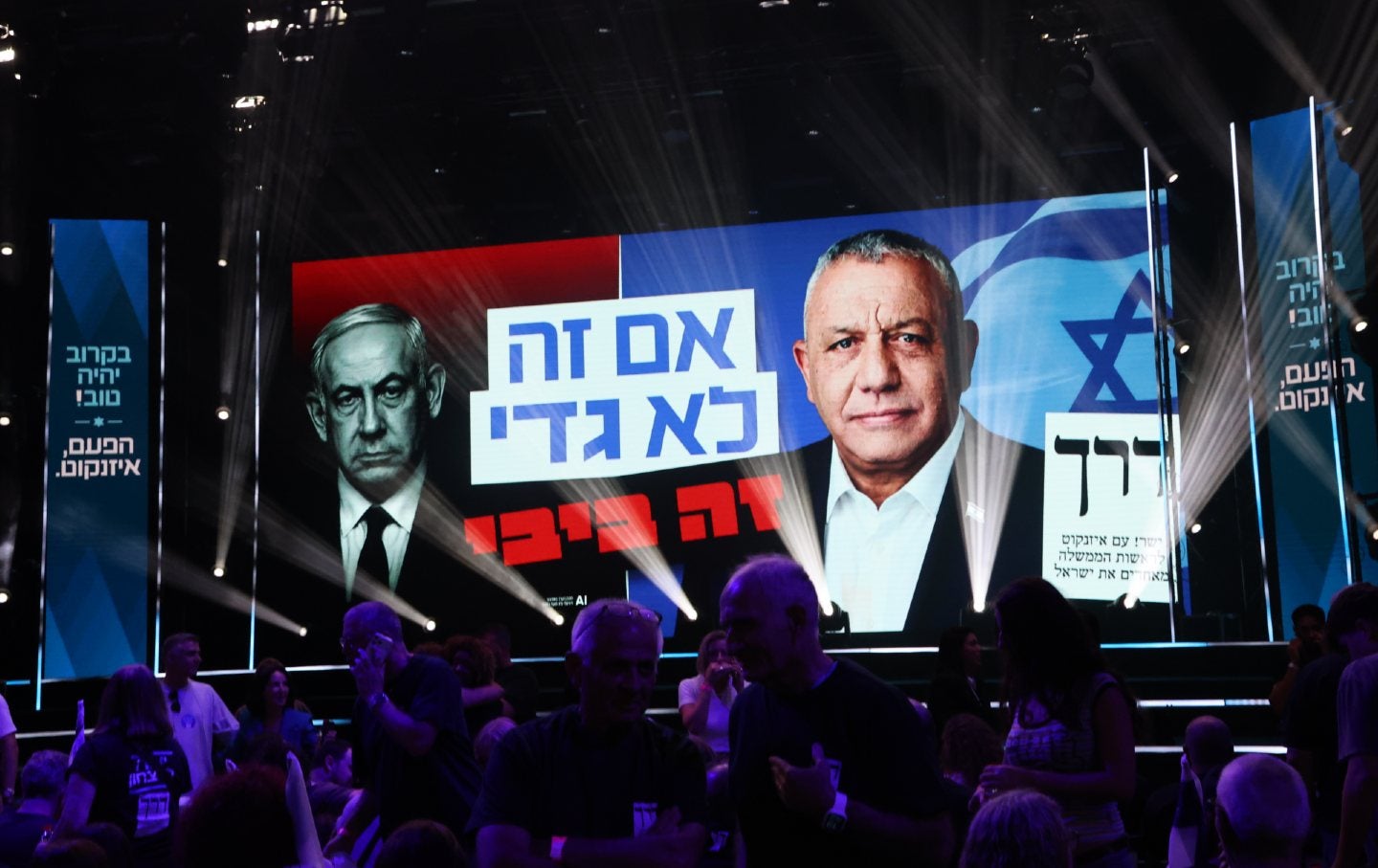
It is déjà vu all over again in Israeli politics.
The upcoming Israeli election on Tuesday, October 27, has been called watershed, pivotal, defining, even fateful. Israel may indeed stand at a historical crossroads. But when it comes to Palestine, it has already turned the corner and is heading toward disaster.
Netanyahu’s political fortunes have weakened in recent years. The October 7 attack, the mishandling of the war, his dependence on the religious far right, and his resistance to an independent state commission of inquiry into the security failures of October 7 have all contributed to the opposition against him. He’s been indicted on corruption charges in Israel and on war crimes in The Hague.
But the central question is whether replacing Netanyahu would change Israel’s policies or simply change the people managing them.
The Generals and the Promise of Competence
Since the 1990s, opposition to Netanyahu has repeatedly rallied around former generals turned politicians. From Yitzhak Rabin and Ehud Barak to Ariel Sharon and Benny Gantz, the pattern has been remarkably consistent. When political leadership loses public confidence, a general appears. He promises to restore order, competence, and security.
Gantz had led the 2014 Gaza war. He later led the Blue and White Party, which beat Likud in the 2019 elections to win the highest number of Knesset seats but went on to form an ill-fated coalition government under Netanyahu.
And still, he joined Netanyahu’s wartime cabinet after October 7, 2023, alongside former IDF chief of staff Gadi Eisenkot. Both lent Netanyahu indispensable political support after his disastrous failure on October 7.
Eisenkot has since emerged as a leading political contender. His recently established party, Yashar, has been polling strongly. He hopes to repeat the familiar pattern: defeat Netanyahu by offering a more competent, disciplined, and credible form of leadership.
But the question is not merely whether Eisenkot can defeat Netanyahu or assemble a governing coalition. It is whether his victory would change Israel’s relationship with the Palestinians or simply change the management of that relationship.
The Israeli military remains a central institution in the country’s political and social life. While Israelis may distrust the government and parliament, they continue to place considerable faith in the military and security establishment. This helps explain why former generals in Israel remain such powerful political figures.
They promise to restore competence and discipline without necessarily challenging the security consensus that underpins the country’s political order. The consequence is a political culture in which strength and deterrence take priority over diplomacy and compromise. Problems become threats; force becomes the response.
Popular
“swipe left below to view more authors”Swipe →General Gantz once put the Israeli mindset bluntly:
“We definitely will live with our sword,” he said. “I don’t think our children or grandchildren won’t be soldiers. We must make efforts to try and not live only by our sword, but we will always be with a sword.”
The question is whether a new general in the prime minister’s office would challenge this mindset or simply manage it more effectively.
Elections in the Shadow of Genocide
Eisenkot has become one of Netanyahu’s fiercest critics since leaving the wartime cabinet in the spring of 2024. He opposes Netanyahu’s dependence on the religious far right, the judicial overhaul, and the prime minister’s resistance to an independent state commission of inquiry into the security failures of October 7.
Like his predecessors among the generals, Eisenkot promises more competent government, institutional accountability, and a less combustible relationship with Israel’s democratic institutions.
Yet on Palestine, Eisenkot is no peacenik. His position is firmly on the right.
As head of Israel’s Northern Command during the 2006 Lebanon war, he became associated with the “Dahiya Doctrine,” named after a Hezbollah stronghold in Beirut. Its logic is to impose overwhelming destruction on areas from which attacks originate, treating civilian infrastructure as part of the enemy’s military capacity. He managed the doctrine’s replication during the Gaza war.
His military record also includes Israel’s use of overwhelming force against Gaza’s largely peaceful Great March of Return protests in 2018–19, during which tens of thousands of Palestinians were injured by live fire.
He opposes Palestinian statehood. He rejects restrictions on settlement expansion. He wants Israel to maintain its military presence in Gaza and elsewhere until Hamas and other enemies are defeated.
He may seek to curb the most violent settler excesses. But he has offered no political horizon for ending Israel’s domination of the Palestinians.
This is the central problem with the prospect of an Eisenkot-led government. His appeal rests on the promise of better leadership, greater accountability, and a more competent security establishment. Yet these promises do not necessarily entail a fundamental change in Israel’s policies toward the Palestinians.
Eisenkot could defeat Netanyahu’s Likud in the race for Knesset seats but fail to assemble a governing coalition. This is particularly likely if he continues to rule out relying on Palestinian Arab parties.
Israel could then be left in political limbo, with neither camp able to secure a majority of seats to form a coalition. Defections from one camp to the other remain a distant possibility because of the deep polarization between them.
A prolonged stalemate could keep Netanyahu in power until another election is called in the coming months, giving him a better chance of winning alongside his coalition of fascists and fanatics. His comeback would be nothing short of catastrophic. Another two years of Netanyahu and Trump? Apocalyptic.
Another possibility is a broad national-unity government built around shared security priorities. Such an arrangement could appeal to many Israelis but would be difficult to negotiate, considering Netanyahu’s long record of lies and betrayals. His decision to renege on his power-sharing agreement with Gantz after the 2019 election offers little reassurance to a potential partner.
Whether Netanyahu would accept Eisenkot at the head of a new national-unity government in return for a deal that ends his corruption trial remains to be seen. Either way, such a national-security government could amount to no more than an expanded version of the October 2023 war cabinet that managed Israel’s devastating war in Gaza.
A disaster.
The political question is therefore not simply who wins the election. It is what kind of leader can emerge from the result and whether his policies would differ in any meaningful way from those of his predecessor.
Fanatics or Generals?
The choice facing Israeli voters may appear to be between Netanyahu and a more disciplined, pragmatic alternative. But the distinction between the two camps on domestic issues should not obscure their shared assumptions about security, military power, and the Palestinians.
Netanyahu’s dependence on the religious far right has helped intensify Israel’s political divisions. His opponents offer a different style of leadership and promise to restore institutional credibility. Yet a government led by Eisenkot will still maintain Israel’s military presence in Gaza, oppose Palestinian statehood, and resist restrictions on illegal settlement expansion.
The danger is that a change of leadership could make these policies more politically palatable without changing their substance.
For years, the generals have been presented as the responsible alternative to Netanyahu’s political excesses. Their credentials, experience, and reputation for competence give them an advantage among voters who want a change of government without abandoning Israel’s expansive security doctrine.
But competence is not the same as a willingness to change course. Let alone for the better.
The election will test whether Israeli voters are prepared to reject Netanyahu. It will not necessarily test whether they are prepared to reconsider the occupation, the settlements, or the use of military force as the principal instrument of policy.
That is the deeper political paradox. Israelis may reject the politician without questioning the military doctrine and national assumptions he represents.
The question is whether replacing the politician with the general will change the country’s policies or simply make their pursuit more disciplined and politically palatable.
And for those of us on the outside looking in, the larger question remains: What can or must be done so that Israelis rethink occupation and war as a way of life?
More from The Nation
“LULA!” Progressives Hail Brazil’s Stunning Election Result “LULA!” Progressives Hail Brazil’s Stunning Election Result
“The people united will never be defeated!” declares Zohran Mamdani.
Israel’s Extremist Election Israel’s Extremist Election
The run-up to the vote on Tuesday is exposing the façade of Israeli democracy—and the fealty of the country's so-called opposition when it comes to matters of Jewish supremacy.

“NAZA” and Israel’s History of Automated Warfare “NAZA” and Israel’s History of Automated Warfare
As violent technologies like spyware, predictive targeting algorithms, and 2,000-pound warheads become ordinary instruments of military rule, once-abhorred practices become routin...
Brazil’s Workers’ Party Is Not Stopping Brazil’s Workers’ Party Is Not Stopping
With just a few days remaining before the runoff election, supporters of Lula’s party are doing everything possible to rally support behind the president.
Brazil’s Decision Brazil’s Decision
The moral compass and basic humanity of political leaders really does matter.

