
This Is Not Solidarity. It Is Predation.
The Iranian people are caught between severe domestic repression and external powers that exploit their suffering.
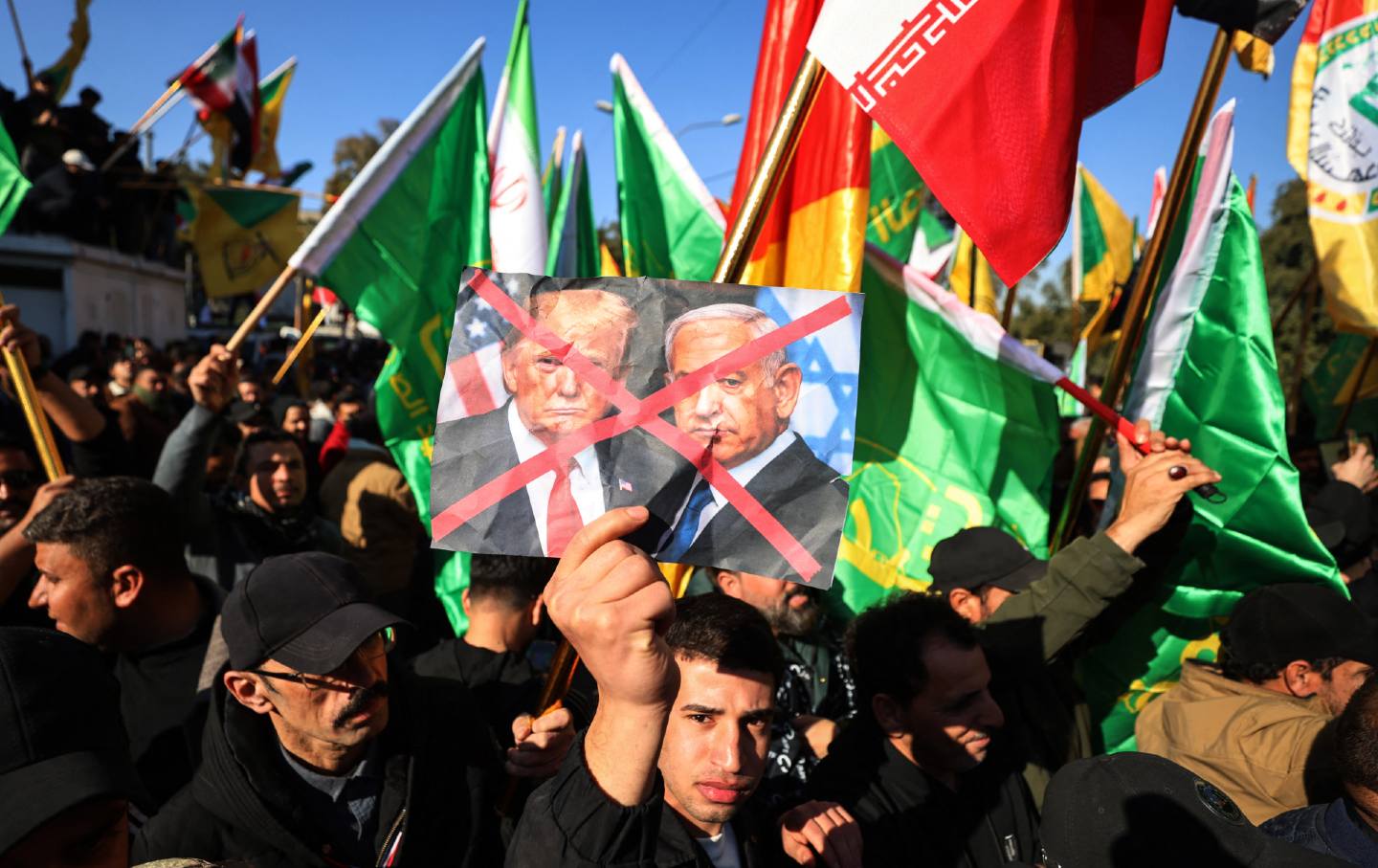
Over the past weeks, security forces of the Islamic Republic have responded to mass protests with live ammunition, mass arrests, executions, and a near-total Internet blackout. As of January 15, the Human Rights Activists News Agency, a well-established Iranian human rights organization, has documented at least 2,615 deaths, including 2,435 protesters, alongside 153 security force fatalities, as well as at least 18,470 arrests nationwide, with hundreds of additional deaths still under investigation.
This violence is neither incidental nor episodic. It reflects a governing approach that has consistently treated mass dissent as a security threat to be crushed rather than a political demand to be addressed.
This brutality must be spoken about plainly and without evasion, neither justified nor minimized. For decades, the Islamic Republic has failed to deliver the political inclusion, economic security, and social rights repeatedly demanded by large segments of its population. While the system contains competing institutions and currents, its dominant response to sustained dissent has been criminalization, the narrowing of pluralistic representation, and the routine use of coercion to manage grievances rather than address their causes. The protesters filling Iran’s streets today are not foreign agents. They are citizens who have exhausted electoral, institutional, and reformist pathways and are now risking their lives to demand change.
But the Iranian people are not only being crushed from within. They are also being exploited from without.
As security forces fired on protesters, Donald Trump publicly warned that if Iran killed protestors, the United States was “locked and loaded” and ready to intervene militarily. Days later, he went further, urging Iranians to keep protesting, to take over state institutions, and promising that “help is on the way.” Then, just as abruptly, he backtracked, claiming that the killing had stopped and echoing the Iranian government’s own framing that protesters were attacking security forces and that lethal force was being used in response.
None of this should surprise anyone familiar with Trump or with the longer history of US foreign policy. The abrupt swings from threats to encouragement to retreat reflect a recurring pattern, not a momentary lapse, in which Iranian lives are treated as expendable instruments and a means to an end. There was never a serious intention to protect protesters or support their political agency. They are being used as instruments in a geopolitical contest, in ways that hand the Iranian state exactly what it needs to justify violence and discredit dissent.
Indeed, for Washington, and for Israel, Iran has never been a human rights issue. What animates US and Israeli policy is not outrage at repression but hostility toward an adversarial state that resists their regional dominance, pursues missile and nuclear capabilities, and challenges Israeli power. Trump makes this shamelessly explicit. His interest is not in how Iranians are governed but in overturning Iranian policies that constrain US and Israeli freedom of action.
This pattern is not new. Israel’s ongoing destruction of Gaza and the genocide of Palestinians has been met with unconditional US political, military, and diplomatic backing. The massacre of more than a thousand protesters at Cairo’s Rabaa Square in 2013 likewise did nothing to interrupt Washington’s support for Abdel Fattah el-Sisi. Such examples are not aberrations but recurring features of US foreign policy. Against this record, the claim that the United States has suddenly discovered a principled concern for Iranian lives is not merely implausible. It is an insult to the intelligence of anyone paying attention.
To suggest that Trump or Benjamin Netanyahu are animated by a deeper love for the Iranian people than for their own citizens, when they routinely disregard or suppress dissent at home, is absurd.
This instrumentalization compounds an already devastating reality. US policy has not merely failed to support democratic change in Iran. It has actively undermined the social foundations required for it.
For decades, sanctions and economic warfare have been central tools of US strategy. Their stated objectives have shifted over time, from altering specific behaviors to inducing broader pressure on the system. In practice, however, their effects have been strikingly consistent. They have imposed the heaviest costs on ordinary Iranians while disproportionately strengthening state-linked and security-sector actors who are insulated from economic pain.
The data is unequivocal. Following the sanctions shocks of 2012 and again after the imposition of “maximum pressure” in 2018, Iran’s middle class collapsed. Roughly 9 million people fell out of middle-class status in less than a decade. Poverty surged. Inflation soared. Real wages declined. The “misery index” rose sharply.
This was not an unintended consequence. It was the point.
The middle class has historically been the backbone of sustained, peaceful political change in Iran. It supplied professionals, educators, entrepreneurs, students, and civil society actors capable of exerting continuous pressure for change. As sanctions destroyed economic security, survival replaced politics. Protest became more explosive and more desperate, but also harder to sustain.
This is not unique to Iran. A broad body of political economy research shows that when a middle class is large and economically secure, it can anchor reformist coalitions and force concessions from entrenched elites. In Iran, the expansion of this stratum in the 1990s and 2000s helped underpin reformist electoral victories and provided critical social and organizational support for mass movements, from the 2009 Green Movement to the 2022 Women, Life, Freedom movement.
Sanctions systematically dismantled that social base. As economic security collapsed, households lost the capacity for sustained civic engagement and shifted toward day-to-day survival. Protest has obviously not disappeared, but it has become more volatile and more desperate, flaring in bursts rather than building durable organization. This pattern is well documented across sanctioned societies. When the middle class contracts, collective action grows riskier and harder to sustain, while security-linked actors consolidate power.
Iran’s economy today has limited capacity to absorb further shocks. The state has maintained basic functioning through subsidies, wage suppression, and alternative trade channels, but at enormous social cost. Millions now live on the brink. Further pressure is unlikely to produce orderly political transformation. It is far more likely to generate chaos, more severe repression, or war.
And war is exactly what Trump’s rhetoric threatens.
Popular
“swipe left below to view more authors”Swipe →By alternately threatening war and exhorting Iranians to escalate, Washington is not empowering democratic change but distorting it. External military pressure will not resolve internal crises but will warp them. It collapses complex social struggles into a security or military confrontation, shifts leverage toward armed institutions, and recasts dissent as treason. In that environment, regimes survive not by reforming but by mobilizing fear and nationalist backlash. The Islamic Republic has repeatedly depended on this logic to restore control. Trump is not challenging it. He is reinforcing it.
The Iranian people are thus caught between severe domestic repression and external powers that exploit their suffering. This is not solidarity. It is predation.
Opposing war is not moral indifference to repression. It is a refusal to accept the fiction that societies can arrive at peace, dignity, and democratic self-rule through devastation. Bombs do not produce accountability, and governments that have long sabotaged democratic possibility cannot credibly midwife it abroad. Iran’s political reckoning will be forged inside its own society, through contested shifts in power, legitimacy, and consent. External force can interrupt that process, but it cannot deliver it without corrupting its outcome.
The Iranian people are not a bargaining chip or a pressure tactic, nor should their suffering be invoked as humanitarian justification for a war that would ultimately fall most heavily on them, as it has in Libya, Iraq, Afghanistan, and numerous other cases.
More from The Nation
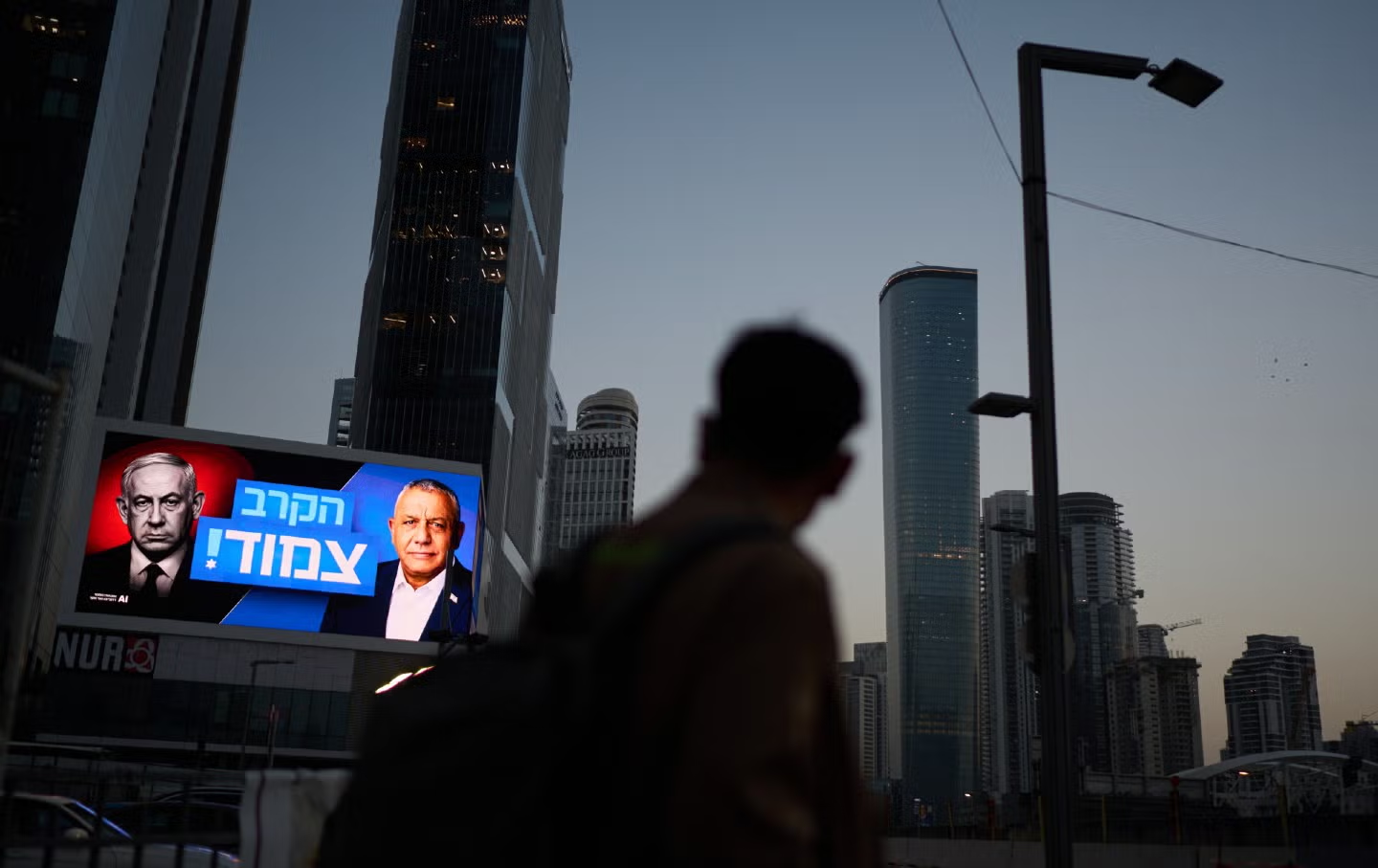
Israel’s Extremist Election Israel’s Extremist Election
The run-up to the vote on Tuesday is exposing the façade of Israeli democracy—and the fealty of the country's so-called opposition when it comes to matters of Jewish supremacy.
“NAZA” and Israel’s History of Automated Warfare “NAZA” and Israel’s History of Automated Warfare
As violent technologies like spyware, predictive targeting algorithms, and 2,000-pound warheads become ordinary instruments of military rule, once-abhorred practices become routin...
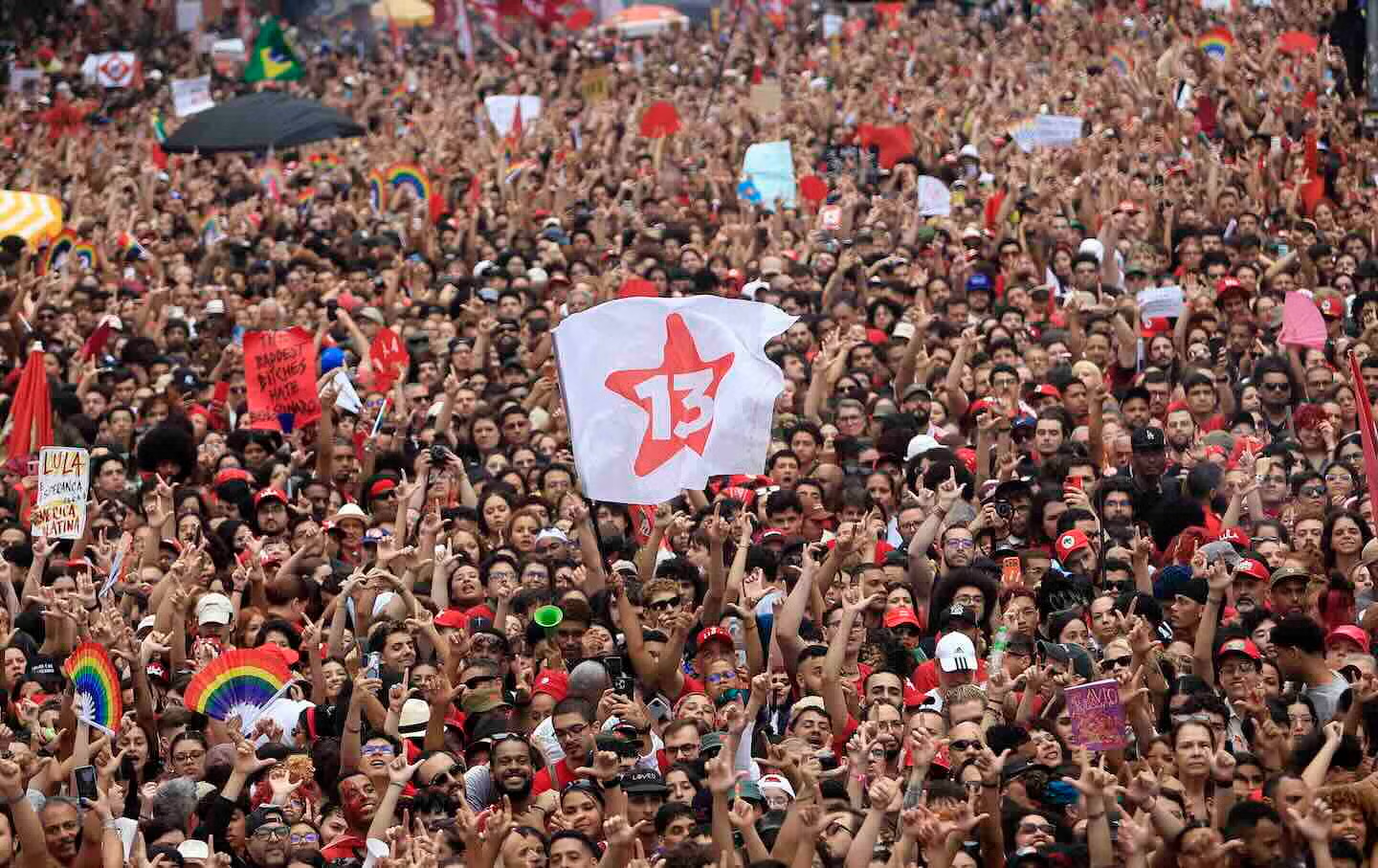
Brazil’s Workers’ Party Is Not Stopping Brazil’s Workers’ Party Is Not Stopping
With just a few days remaining before the runoff election, supporters of Lula’s party are doing everything possible to rally support behind the president.
Brazil’s Decision Brazil’s Decision
The moral compass and basic humanity of political leaders really does matter.
Albanian Student Strikes Spur a Political Crisis Albanian Student Strikes Spur a Political Crisis
A new round of protests against the ruling party’s corruption has Prime Minister Edi Rama giving cops bonuses to crack down on dissent.

