Gloria Steinem: A View From 1990s Moscow
“Keep women’s solidarity in mind: Don’t forget how we empower each other through mutual support,” she reminded us.
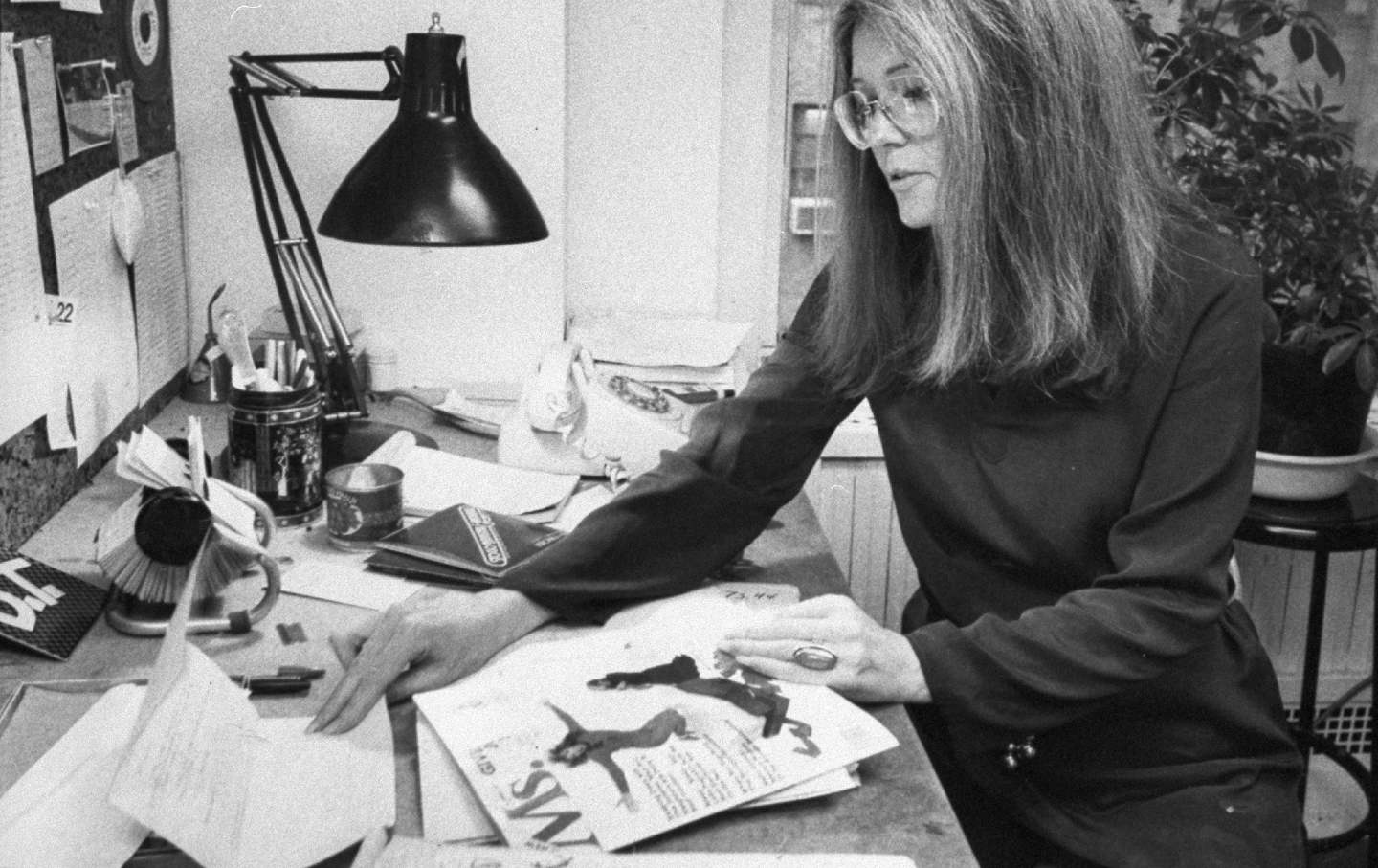
“You and your women friends are doing the same thing that Gloria Steinem did in the US back in the days,” said my American colleague after attending a media event on reproductive health that our Association of Women Journalists had organized. I had just come back from a United Nations conference on population and development, during which its Russian NGO participants set up an alliance in support of reproductive health. Around that time, the Russian government adopted its national family-planning program, which very soon proved to be strikingly effective (not least owing to its extensive coverage by the media). The year was 1994.
Granted, my colleagues and I were delighted by the comparison of our work with Steinem’s. We were familiar with Ms. and read it closely. Steinem’s image, as the founder of the magazine and of the Ms. Foundation for Women, was captivating—especially so due to the recent Russian publication of a book, Profiles of Female Genius: Thirteen Creative Women Who Changed the World, by Gene Landrum, in which she was one of the central figures.
We were inspired by Steinem even though the issues that we had to deal with in Russia differed. For example, in the Soviet Union abortion was not only legal but for many years remained virtually the only method of family planning; for us, it was important to prioritize the topics of contraception and reproductive health, which were novel for the Russian media. But many among Steinem’s concerns were close to our hearts: domestic violence, sexual slavery, and sexism as a type of discrimination. All this sounded unfamiliar in post-Soviet Russia. As its society was sick and tired of the Soviet past and sought to liberate itself from it, a new trend toward patriarchy was shaping up: The media known as liberal were glorifying women’s so-called “natural calling,” while newly emerging tabloids were filled with sexist ads. Playboy was widely viewed as a model of quality media. New women’s magazines were seeking to emulate Good Housekeeping and Cosmopolitan.
In this environment, Ms. magazine was a major guiding star for those who were at odds with blooming sexism. (This was how our Association of Women Journalists came into being; notably, it included both women and men in its ranks.) What we liked about Steinem’s approach was her point that feminism was not directed against men but rather was about the freedom of choice—along with her notion of the personal being political.
These were some of the ideas that nurtured You and We, the magazine that was founded in 1992 by Katrina vanden Heuvel and Colette Schulman as a platform for dialogue between Russian and American women. This magazine became a true voice of the independent women’s movement in the post-Soviet space. And Gloria was one of its authors and its hero.
I met her for the first time in 1995, in New York, at a café on Park Avenue. From there, we went for tea to her elegant apartment. My interview with her had long since ended, and we kept talking about everything under the sun. Gloria’s cat listened to us intently, then unexpectedly showed up in the photo I took of Gloria, making its appearance next to her on the page of our magazine.
In the years that followed, I kept meeting Gloria at the workshops of the “Power of the Word” project, an extraordinary initiative of women writers and journalists launched by Meredith Tax and Grace Paley. We also met at UN conferences. In 1999, I interviewed her once again, this time for my “Women” column in Nezavisimaya Gazeta, Russia’s national daily. The article was titled after one of her main books, Revolution from Within.
During our interview, Gloria, reflecting on the impact of the 20th century on women, noted the shift in perceptions of a woman’s calling in life, the separation of the notion of sexuality from the reproductive function, and the transformation of the views on masculinity and femininity. She also spoke about the interconnection between culture and power. She identified recognition of the value of the personal experience of a woman as one of the most important achievements of the century. “Change is impossible without a change in worldview,” she said, remarking that the new understanding of history offered by women was playing a key role in this process. Gloria also spoke about egalitarian societies and recent research. She discussed the challenges facing feminism and the women’s movement in America, expressing her hope that she would be able to meet Russian women in person and visit Russia.
Frankly, the publication of this interview caused a stir among the paper’s audience (which included quite a few political analysts and influential men). My boss told me that it finally enabled him to understand feminism and realize why he had always been drawn to feminists. At our staff meeting, the paper’s chief editor noted that Russia’s politics would have been different had only Gloria been speaking on Russian TV shows.
It so happened that in 2009, I coordinated a conference titled “Women Journalists as Peace Communicators After Conflicts,” which was hosted in Moscow by UNESCO and the International Federation of Journalists. It was an amazing gathering: two dozen women reporters who had covered conflict zones and originated from different countries, including Israel and Palestine, Sri Lanka, Nepal, Iran, India, countries of the former Yugoslavia, countries in Central Asia, Ukraine, Georgia, Italy, and the UK. Not being familiar with each other, they still spoke of the same things: how women reporters were staying in post-conflict areas after men journalists had left, and how they depicted the arduous process of peace-building while also helping to come up with a language for peaceful interactions.
Gloria was the keynote speaker at that event. She delivered beautiful, intellectually stimulating remarks on women’s experiences and the women’s approach to covering wars and conflicts. She was there on her first-ever trip to Moscow. It was freezing cold, minus-20 degrees Fahrenheit. We had found warm clothes for our guests from southern countries, but Gloria had prepared thoroughly on her own: She arrived in a fur hat, fur boots, and a long sheepskin coat. She relished her walks through frosty Moscow, visiting our friends, checking in at a Russian banya, attending workshops for young journalists, and stopping by a crisis-resolution center.
Throughout all this, she kept repeating, “Keep women’s solidarity in mind: Don’t forget how we empower each other through mutual support.”
Popular
“swipe left below to view more authors”Swipe →Following these meetings, students in our journalism department wrote their papers about Ms. magazine and its role in the emergence of the new women’s journalism. There was even a dissertation in the works addressing this topic.
Fast-forwarding to several years later, Jackie Abramyan, a participant in our dialogue of Russian and American women on opposing nuclear threat, interviewed me for Ms. Our conversation was a sequel to the dialogue with Gloria that began back in the 1990s.
Gloria Steinem will always remain with us.
Become a Sustaining Donor This September
Between the reemergence of right-wing red-baiting and Donald Trump’s use of the chilling National Security Presidential Memorandum–7 to criminalize left political organizing, we’re seeing McCarthyism reborn before our eyes.
This assault on democracy cannot be ignored or wished away. Resisting it requires bravery in the face of threats and repression, a steadfast commitment to the truth, and the unwavering belief that we can—and will—overcome this darkness.
We must have an independent media that sets the record straight, unearths corruption and abuses of power, and advances a politics of justice and dignity for all if we’re to win this fight.
That’s why I’m writing to you today. This September, The Nation needs to add 100 monthly donors to sustain our progressive journalism. Your contribution makes the next investigative report, the next truth-speaking column, and the next pathbreaking essay all possible.
I hope you’ll support our work with a recurring donation today. If you donate $10 or more a month, we’ll send you a brand new “Hands Off the Free Press!” sticker to recognise your commitment to our cause. Please, donate today.
Onward,
Katrina vanden Heuvel
Editor and Publisher, The Nation
More from The Nation

Accountability for the Gaza Genocide Can’t Focus on Netanyahu Alone Accountability for the Gaza Genocide Can’t Focus on Netanyahu Alone
Getting rid of one bad leader won’t bring justice.
How the AfD Benefits Politically From the Ukraine War’s Backlash How the AfD Benefits Politically From the Ukraine War’s Backlash
No election result is monocausal, and there are clearly many factors that have converged to make the AfD Germany’s most popular party.
Cuba: The “Pandora’s Box” of US Humanitarian Assistance Cuba: The “Pandora’s Box” of US Humanitarian Assistance
As the US strangles Cuba economically, Marco Rubio is running a $100 million “hearts and minds” program on the island.
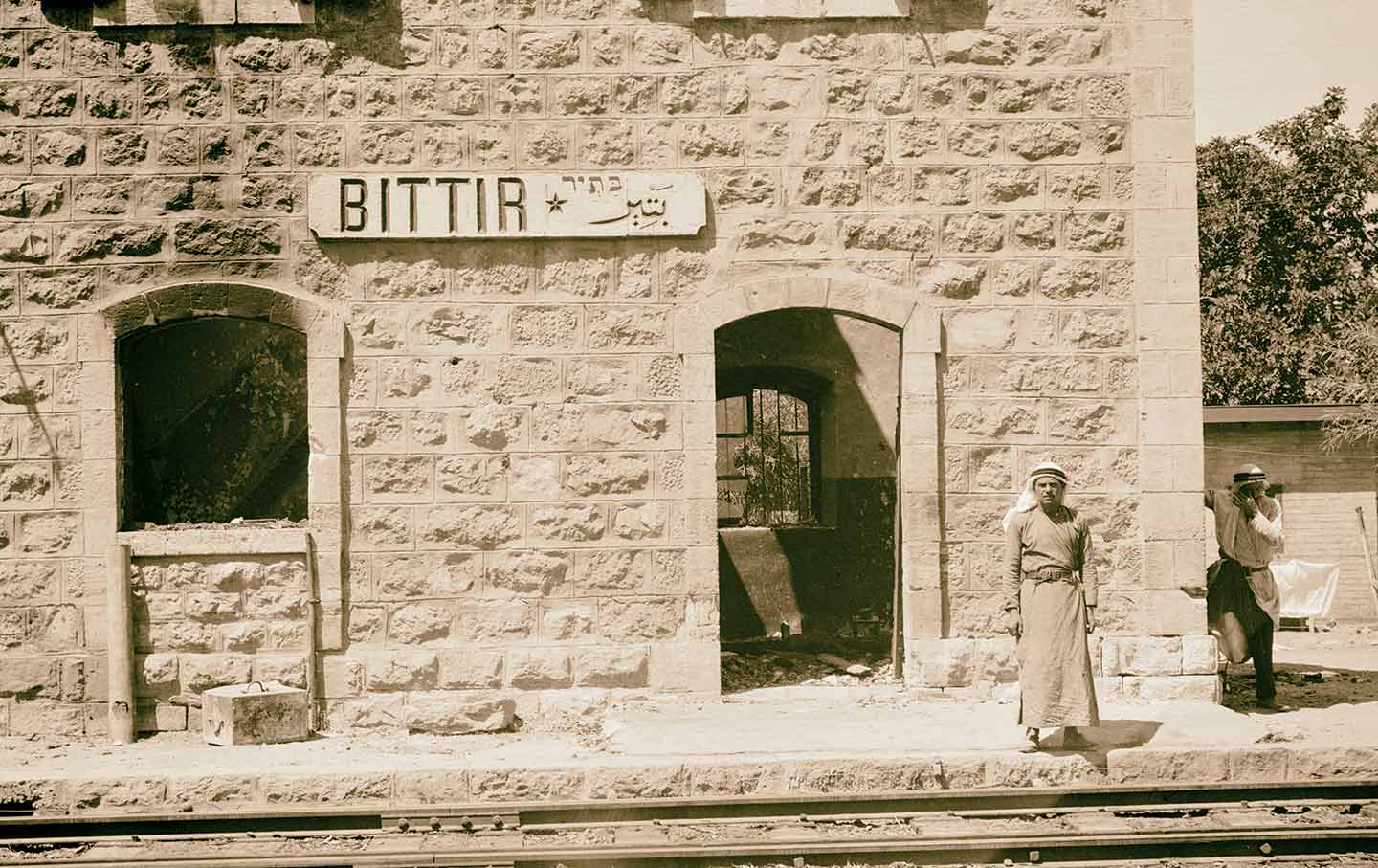
The Palestine of Soraya Antonius and Annemarie Jacir The Palestine of Soraya Antonius and Annemarie Jacir
In The Lord and in Palestine ’36, the story of Mandatory Palestine comes into focus.
Let Them Eat Spreadsheets Let Them Eat Spreadsheets
How the EU is contributing to the rise of Europe’s far right.