
Israel Wants to Destroy My Family’s Way of Life. We’ll Never Give In.
My family’s olive trees have stood in Gaza for decades. Despite genocide, drought, pollution, toxic mines, uprooting, bulldozing, and burning, they’re still here—and so are we.
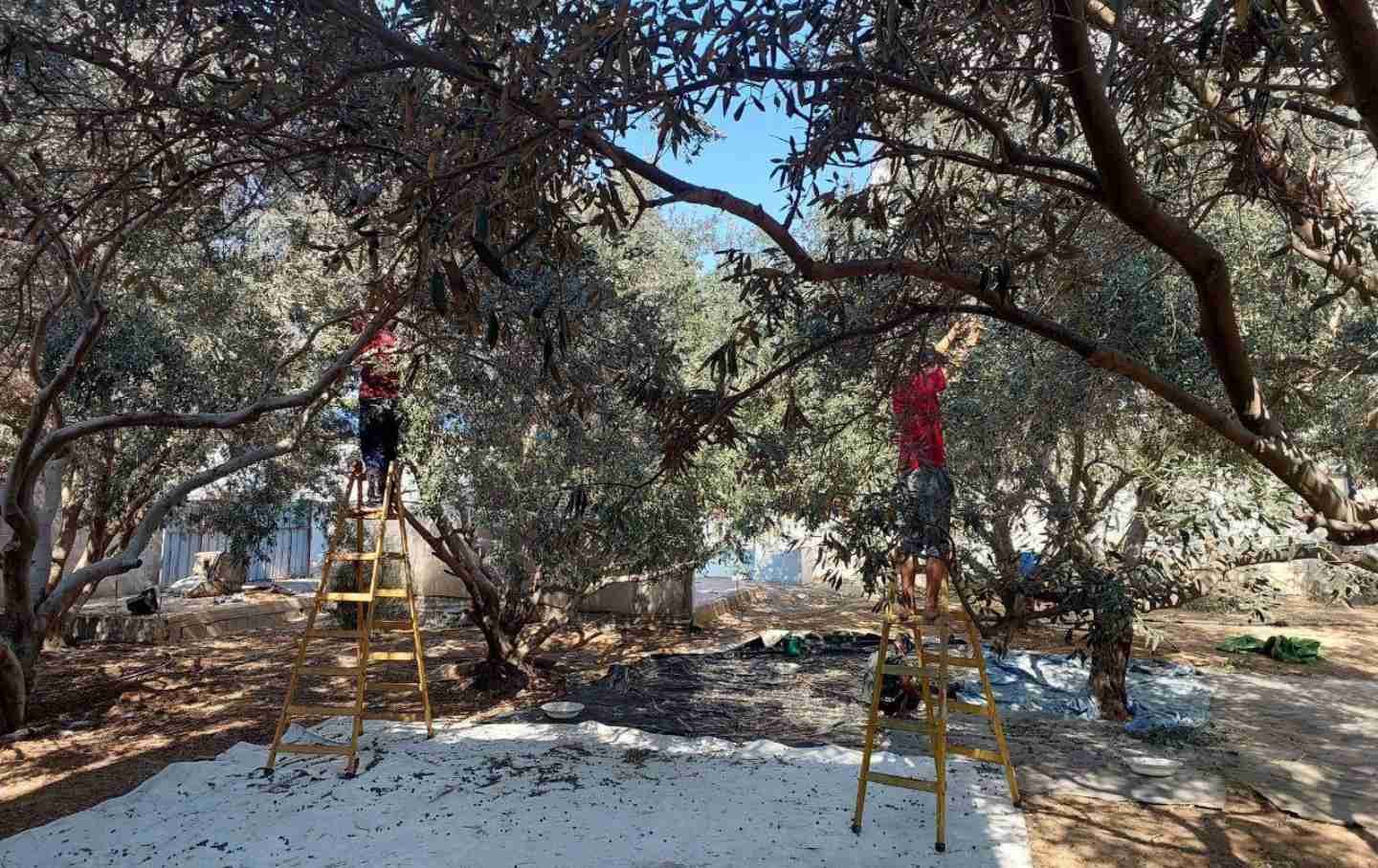
Hend Salama Abo Helow’s family during their olive harvest season in 2024.
(Courtesy of Hend Salama Abo Helow)Each year, my family looks forward to the olive harvest season in Gaza. Over 30 olive trees stand on our land. My father can recognize each one by heart. We have never seen them as mere trees of soil and branches; to us, they are kin and beyond.
The harvest is a sacred ritual for us—one that allows no compromises, no excuses for missing it. Preparations, punctuated with enthusiasm and anticipation, used to begin months before the season arrived.
It marks our only true reunion during a year filled with burdensome responsibilities, a time when we reconnect with our land and with a decades-long history of struggle for liberation. The olive trees stand as living testimony to the Israelis’ relentless attempts to uproot us—and to our endless insistence on existing in our homeland.
My father planted these trees with his parents decades ago. Together with my grandmothers, he raised them as if they were raising one of us—tending to them, caring for them passionately. In my family’s culture, olive oil is the one remedy that has never been rivaled by any medication. It is the standard medicine for all kinds of ailments—those for which no medical textbooks have yet found a cure.
For over 25 years, we never missed a single harvest, working day and night to collect and clear the olives. But then the genocide broke out, in the same month we usually embark on the harvest. That year, we crouched in corners, waiting and anticipating the next bomb to fall.
I vividly recall how gut-wrenching it was to watch the trees left unpicked, not able to reach them, nor to salvage the crops. I watched the olive trees tremble with every bombardment, their fruit falling prematurely, scattered beneath the dust. The olives lay on the ground, unrecognized, uncollected, unembraced—much like the Gazans who were killed.
Until the next season, we had never felt such regret. But in October 2024, we pulled ourselves together and decided to take the risk—no matter the consequences. We couldn’t bear to see the olive trees left abandoned. Deep down, we knew how precarious this step was, beneath skies that rained bombs more often than rain.
The harvesting lasted 20 grueling days—days that tested us not only physically but mentally as well. Each attempt to flee the quadcopters, the explosive arsenals, and the artillery shelling left imprints on our souls. Yet amid all this, the warmth of our neighbors and the displaced people around us made the weight easier to bear. Together, we shared our unspoken fears, spilled our untold stories, and carried our intangible grief during the harvest. We breathed in the fragile hope of a possible ceasefire, even as we were stripped of the safety, tranquility, and joy we once knew. Still, this experience connected us in ways we had never imagined.
For the first time in my life, I came to realize that shared pain—when carried together—becomes a little more bearable.
The harvesting was utterly challenging—from the shortage of electric tools used to clean the yield to the skyrocketing costs for every part of the process, which ultimately reached over $1,780. But the losses were not measured in money. They were measured in the life-threatening injuries my brothers sustained.
During one of the harvest days, my brother Montaser was climbing high among the branches when a heinous air strike flattened a house in our neighborhood. The impact hurled him to the ground with immense force, fracturing his nose and facial bones. Another brother, Mohamed, misstepped as the earth trembled beneath him; the branches tore into his head. Olive trees and their branches were never meant to harm—but Israeli forces have turned even our warmest rituals into danger, maiming even the fleeting moment of peace we hold.
When my brother finally gathered the cleaned olives and took them to the local mill—a place that, in previous harvests, would overflow with farmers and fresh yields—he was staggered by how hollow and silent it had become.
Apart from the portion we sent to the mill, we kept some olives to press and pickle ourselves. The oil yield was deeply satisfying—worthy of the tremendous effort we had poured into cultivation. From three dunams of olive-planted land, we produced 16 jars of oil.
Olives and olive oil have always been the pride of our tables, in times of both famine and abundance. My grandmother often said, “If you have wheat and oil in your home, you will never fall into hunger.” As we have endured the brutal stages of starvation, I realize that my grandmother was never wrong. Olive oil remains our ever-present lifeline.
Our gratitude toward the olive trees would not have been complete without sharing their blessing as widely as possible. We wanted everyone to taste what had survived. We distributed more than 10 jars among relatives, friends, and those in need, keeping only five for our own family.
When my father was handing out the bottles, he said, “May the next harvest season find us safe, healed, and in peace.” But things haven’t gotten any better. For the third year in a row, we have been cautiously performing this rite, fearing to be targeted at any moment.
My grandmother once said, “The olive tree is a silent soul; it feels you. It dries up from neglect and flourishes with care.” But what we are witnessing now is not our own doing—it is a systematic environmental collapse caused by phosphorus bombs, toxic waste, and suffocating gases.
When I look at the olive tree, I see us—Palestinians from Gaza.
This year, when I noticed it bearing fewer fruits, its branches beginning to dry, shivers ran down my spine. This cannot be our shared fate—to wither and die in the end.
Popular
“swipe left below to view more authors”Swipe →We nourished the trees with filters and care, and they survived, though carrying only a few crops. The military operations have expanded in Gaza City, with aerial and naval shelling more intense than ever before—worse than any time since the genocide began. This time, my father thanked the neighbors who offered to help and excused them, as the genocide was worsening and the yield was scarce. The risk was immense, so my family went to the groves alone.
We awakened the season in early October, fearing for any further escalations. My parents, siblings, nephews, nieces, and I all took part in the harvest—a scene that lasted no more than five days, yielding less than one jar: seventy-five kilos of olives. The amount fell below 10 percent of the annual average. My father told me this was the smallest harvest in decades. The trees had never borne so little.
The ceasefire came into effect on October 9, 2025. While people were jubilant—whistling and cheering out of joy—we were cleaning the olives. My mother said that this act, harvesting olives, reflected our unalloyed happiness that the bloodshed had finally stopped. “Now,” she said, “we can do it with relief, not with gutting fear.”
Despite the yield being scarce—barely enough to meet our needs—we kept the habit of sharing.
During famine and gas shortages, many landowners were forced to cut the branches of their trees to make fires for cooking. Many farmers—driven by desperation—ended up cutting their own trees with their own hands, the very hands that once cared for them. This was one of the untold atrocities imposed on us—to kill our spirit before the land and soul. My father said then, “We are willing to die of hunger, but not cut a single olive branch.”
These olive trees have endured drought, pollution, and toxic mines, in addition to uprooting, bulldozing, and being burned alive—much like what has been inflicted upon the people of Gaza. Yet we are fortunate that our trees fought to survive. They withstood the harrowing air strikes that struck the homes in our neighborhood. Flames reached our trees and scorched our space, but they stood tall. They lost some of their charred branches, yet sprouted new ones in defiance.
The peace has prevailed again, even if it’s fragile, and the olive trees will flourish evergreen once more. So will we. Many seasons have passed, and many more will come—waiting for us to open our hearts and embrace them.
Support independent journalism that does not fall in line
Even before February 28, the reasons for Donald Trump’s imploding approval rating were abundantly clear: untrammeled corruption and personal enrichment to the tune of billions of dollars during an affordability crisis, a foreign policy guided only by his own derelict sense of morality, and the deployment of a murderous campaign of occupation, detention, and deportation on American streets.
Now an undeclared, unauthorized, unpopular, and unconstitutional war of aggression against Iran has spread like wildfire through the region and into Europe. A new “forever war”—with an ever-increasing likelihood of American troops on the ground—may very well be upon us.
As we’ve seen over and over, this administration uses lies, misdirection, and attempts to flood the zone to justify its abuses of power at home and abroad. Just as Trump, Marco Rubio, and Pete Hegseth offer erratic and contradictory rationales for the attacks on Iran, the administration is also spreading the lie that the upcoming midterm elections are under threat from noncitizens on voter rolls. When these lies go unchecked, they become the basis for further authoritarian encroachment and war.
In these dark times, independent journalism is uniquely able to uncover the falsehoods that threaten our republic—and civilians around the world—and shine a bright light on the truth.
The Nation’s experienced team of writers, editors, and fact-checkers understands the scale of what we’re up against and the urgency with which we have to act. That’s why we’re publishing critical reporting and analysis of the war on Iran, ICE violence at home, new forms of voter suppression emerging in the courts, and much more.
But this journalism is possible only with your support.
This March, The Nation needs to raise $50,000 to ensure that we have the resources for reporting and analysis that sets the record straight and empowers people of conscience to organize. Will you donate today?
More from The Nation

Welcome to the Era of the AI-Powered War Machine Welcome to the Era of the AI-Powered War Machine
How a clique of unhinged techno-optimists is putting humanity at risk.
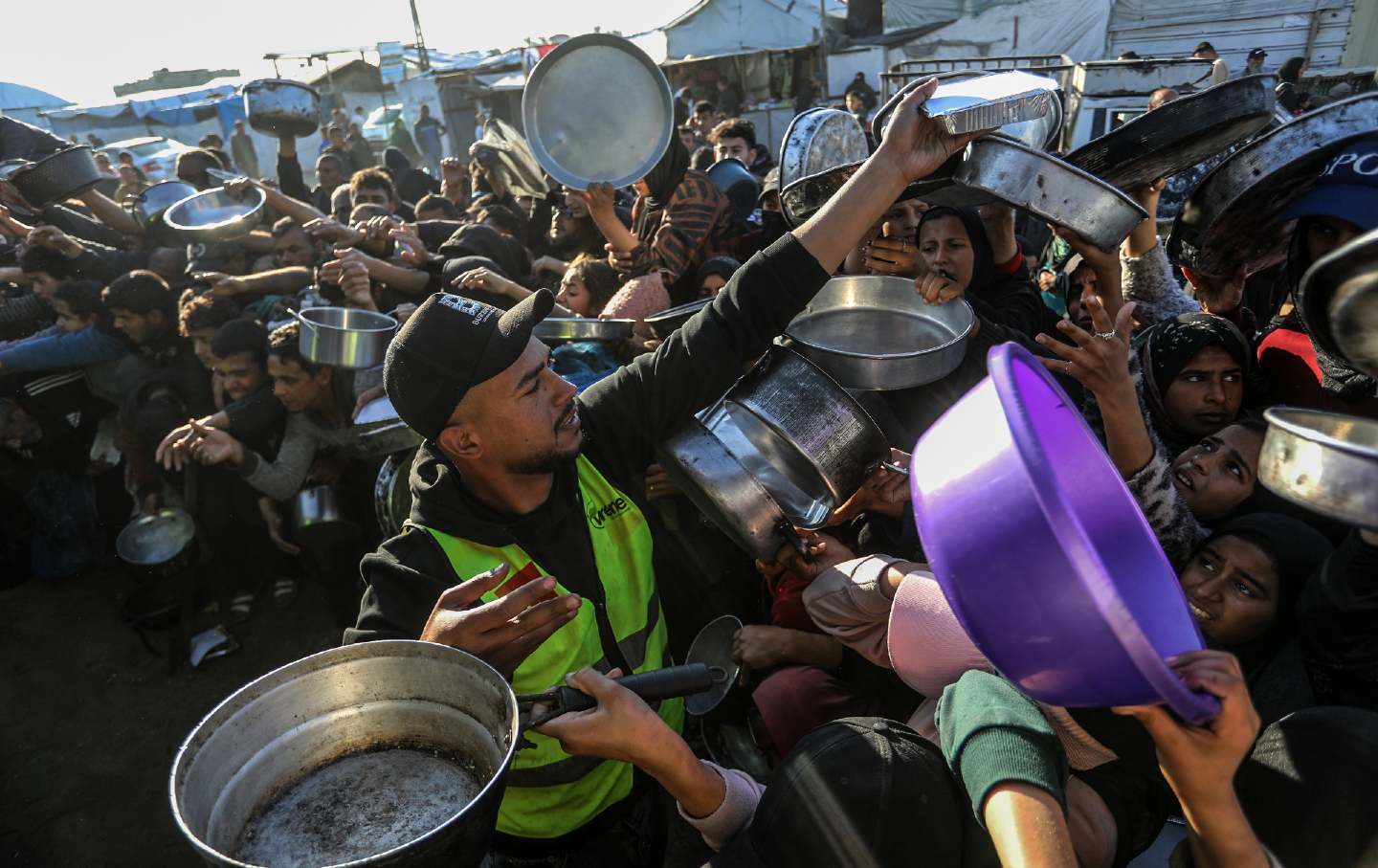
How a Rocket in Iran Reverberates in Gaza How a Rocket in Iran Reverberates in Gaza
As Israel bombards Iran with rockets, it is sealing off borders across Gaza and the West Bank, halting the flow of food, aid, and bodies.
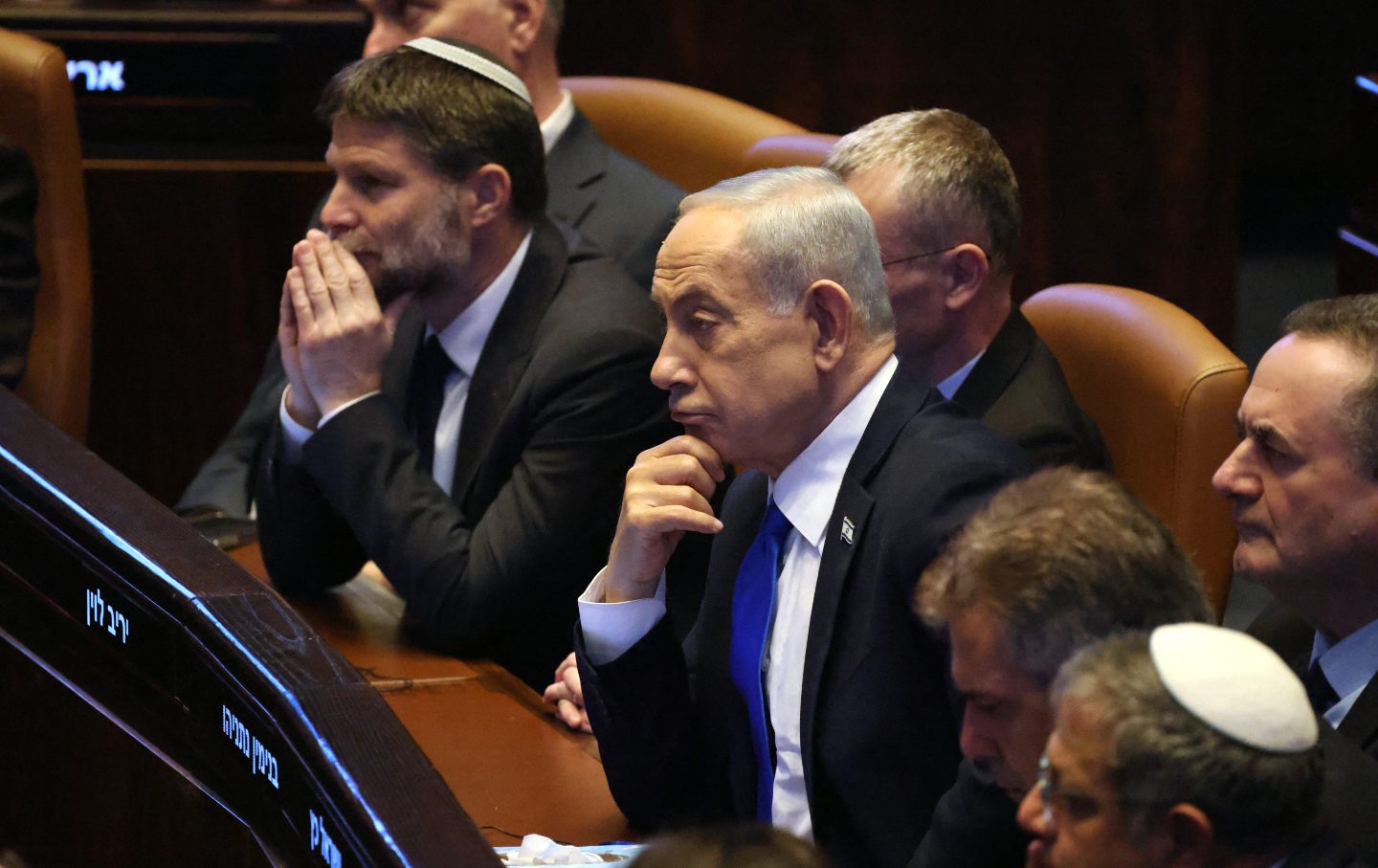
How the Israeli Tail Wags the American Dog How the Israeli Tail Wags the American Dog
The US attack on Iran may be less about American security than about the priorities of Israel’s government.

What to Expect From a Mammoth Disruption of Global Oil and Gas Supplies What to Expect From a Mammoth Disruption of Global Oil and Gas Supplies
And why was the Trump team so unprepared for shock waves?
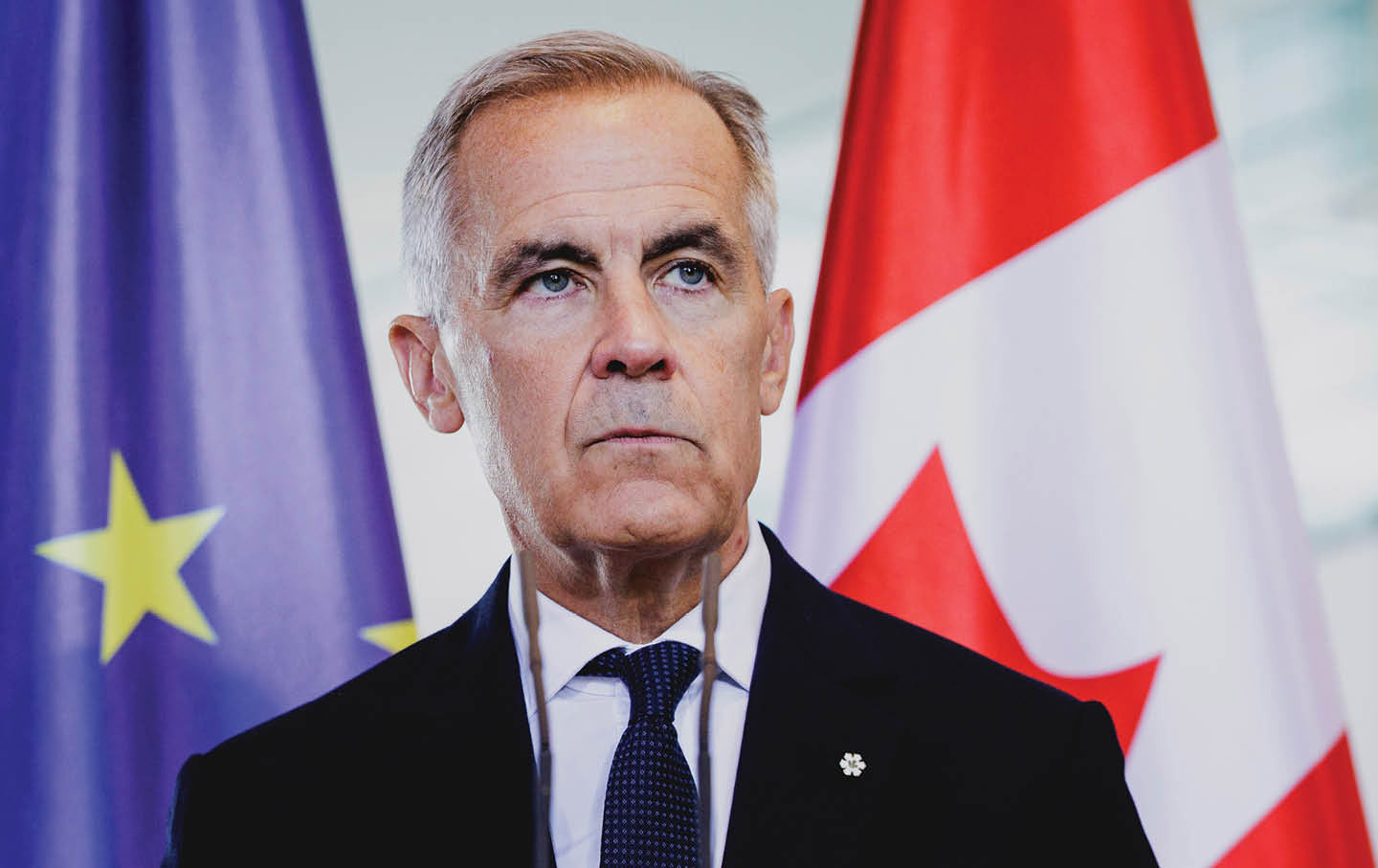
The Man Who Would Be the Face of the Anti-Trump West The Man Who Would Be the Face of the Anti-Trump West
Mark Carney has put himself forward as one of the sharpest Western critics of Trump’s neo-imperial order. What’s less clear is what he’s offering in its stead.
The “Rules-Based Order” Is Gone. Let’s Not Bring It Back. The “Rules-Based Order” Is Gone. Let’s Not Bring It Back.
Trump has destroyed a global system that mostly benefited the rich and powerful. We need to create something completely different in its wake.

