
“There Was a Woman Lying On the Floor. 15 Minutes Later, She Had Died.”
What a medical aid worker saw in Rafah.
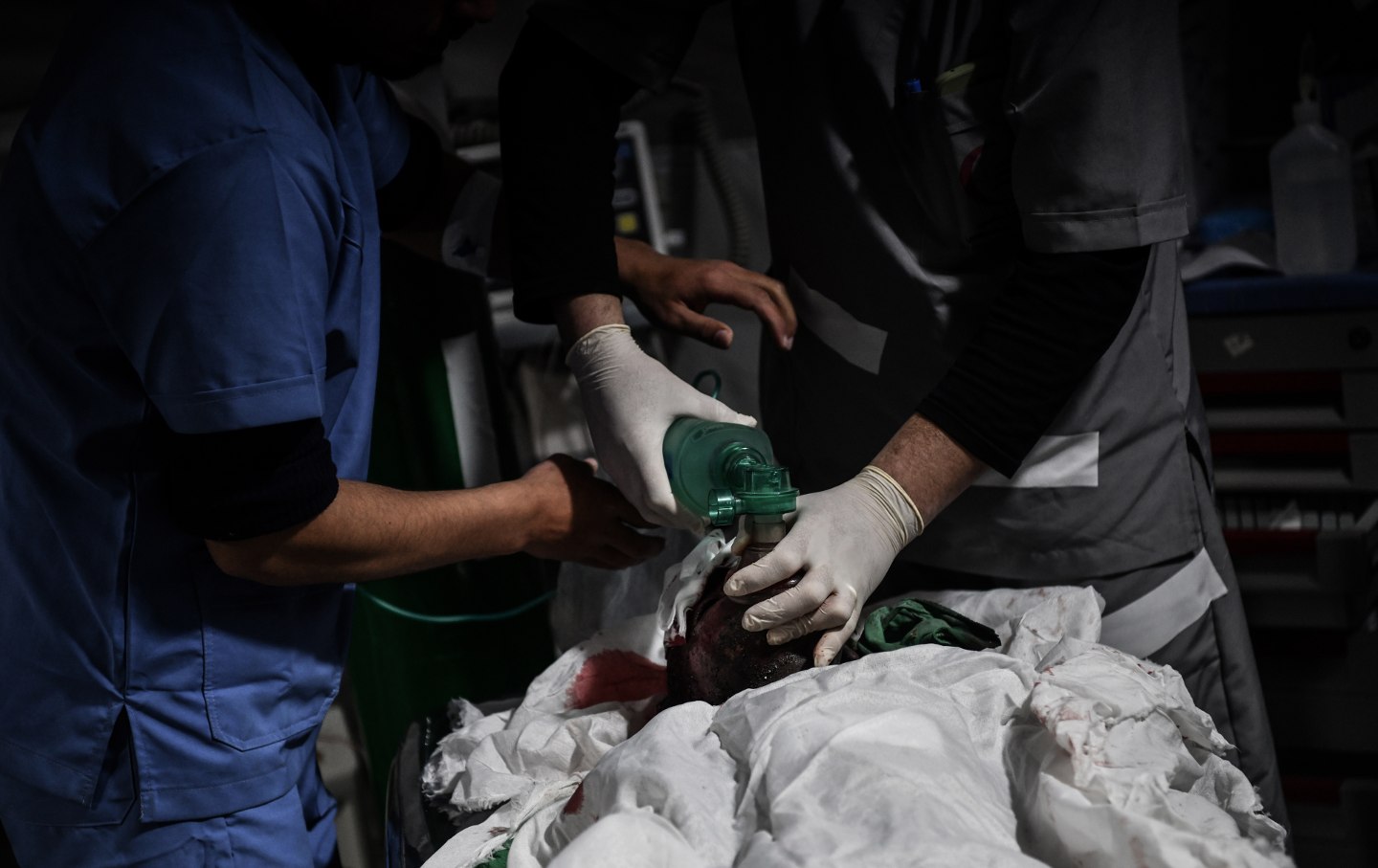
An injured man pulled from the rubble of a collapsed building receives medical treatment after an Israeli airstrike hit a residential building in Rafah on February 26, 2024.
(Abed Zagout / Anadolu via Getty Images)Karin Huster is a medical coordinator with Doctors Without Borders (Médecins Sans Frontières, MSF). MSF helps hospitals handle trauma, surgical capacity, maternity services, and post-delivery support.
From January 16 to February 17, Huster was based in Rafah, at the southernmost end of the Gaza Strip. Around 1.5 million people are currently living in Rafah amid the threat of an Israeli ground invasion.
Huster’s responsibilities included surveying Gaza’s medical needs and working with partners on the ground to assess which parts of the area’s catastrophic healthcare situation could be addressed. She spoke to me on February 23 about what she witnessed in Rafah. This interview has been lightly edited.
Hadas Thier: Can you start by describing what you saw on the ground in Rafah?
Karin Huster: When my team arrived in Rafah, there were already 1.5 million people there. It was as if the entirety of Gaza was in the streets. You couldn’t move amidst the people and the plastic tents and the vendors. A drive that would normally be 10 minutes would take two hours.
The beach side on the west side of Rafah, where our guest house is, was [initially] pretty empty. You could see the sand and the sea. But as Israel started talking about invading Rafah, I saw more and more tents being put up. Even though they haven’t invaded Rafah yet, we had quite a few air strikes. Khan Younis, which has been invaded, is very close by too. And that has meant that people are very scared. They are all in the south. They were told that this is the place you need to go, this is the place where it’s safe for you to be. And now they’re being bombarded.
People are saying, where am I going to go? They’re moving west towards the sea, because a lot of the international NGOs have their houses there. And then some of them are going to the middle area—to Deir al Balah and Nuseirat. But as we’ve learned, there is no safe place to go. Even our guest house where our Palestinian colleagues were staying was attacked last week by a tank shell and rounds of ground fire. So nowhere is safe in Rafah, nor in Gaza. That’s a fact now.
Several people have told me, “I’m going back to my house that’s completely destroyed. But I prefer to put my tents there, because at least if I die, I will die in my home.”
HT: What is the state of the hospitals that are still operating?
KH: First of all, I want to say that it’s extraordinary what Palestinian colleagues and staff are able to do given the conditions that they’re in. It’s a testament to their dedication to their people that those facilities that are still standing.
Just north of Rafah in Khan Yunis, Nasser Hospital is a huge hospital that was rendered pretty much unusable because the Israeli army invaded it. Nasser was an important place to refer patients from small hospitals, and [now] it can’t fill that role. Then there’s the smaller European Hospital, which is still functioning, but really is at its limit.
Within Rafah, you have El Najjar which, by some miracle is still standing—crumbling, but standing. It used to be a provincial hospital because Rafah used to be a town of 250,000 people, not 1.5 million. So this hospital [had] 50 to 60 beds, two operating rooms, nothing more than that. Now everybody is brought there and they do what they can. Every time I’ve been there, it’s in a state of indescribable chaos. In every nook and cranny that is possible to put a tent in, there is a tent with a few beds for more trauma patients, or beds for more outpatient care. They just try to fill the space as much as they can.
It’s the same in the other hospitals, Al-Helal Emirati Hospital is completely overwhelmed, because today it is the only hospital for the south and for [central Gaza] with a maternity ward that can do deliveries and C-sections, and provide obstetric surgeries. With so many women needing to deliver, they send women back home after just a few hours of having delivered a baby, and for C-sections after 12 hours.
The only reason the system is standing at all is because of its people. But they’re overwhelmed and they are working with very few supplies. Supplies are still not getting in, and when they do it’s a trickle, little by little, and it’s just not sufficient for the needs that exist.
HT: Can you describe what you’ve seen in terms of the patients coming through the hospitals that you support?
KH: The victims of Israel’s campaign have been civilians. The patients that I’ve seen come through the emergency rooms are [by] such a large majority children. [I saw] very young women, adolescents, and older people all the time. Over 28,000 civilians have been killed, and when they invade Rafah, the civilian casualties will be exponentially larger.
The last time that I entered the Al-Aqsa hospital, north of Rafah, the IDF had just struck two houses. Several survivors were brought in. One was a 12-year-old boy. He had a massive head injury. He was just on the floor, because there were no beds in the ER available for him. When the bed came, there was no mattress for him. He never received any pain medicine. He should have received pain medicine, and been quickly attended to because he was in critical condition. But here they had to attend to a lot of other people while he lay on the floor.
Popular
“swipe left below to view more authors”Swipe →There was another woman lying on the floor between two beds, intubated. Clearly she was dying. And when I came back 15 minutes later, she had died. Can you imagine, your loved one being brought into the hospital and just put on the floor?
There are just not enough beds. And they don’t have drugs to relieve pain, or antibiotics to minimize the risks of amputation. It’s on and on and on. They asked me for supplies all the time. We tried, but we don’t have supplies either because it’s impossible to bring supplies inside of Gaza. Critical items are being blocked—things like oxygen bottles and glucometers. Palestinians have amazing medical know-how, and they do have facilities that work. But they have nothing that they need to properly carry out medical procedures.
Only a cease-fire will allow us to bring in the critically needed help, to start providing a proper humanitarian response. Right now what we’re doing is a joke. Not just MSF, but all humanitarian organizations. What we’re trying to do is pitiful. If people think we’re being allowed to do good or meaningful work, they’re wrong.
We need a cease-fire so that we can bring things in, so we can move, so we can have communications—all these things are essential for us. We need access to the north. Nobody has been able to go to the north. We don’t know what’s happening there and we’re incredibly worried about what we’ll find when we eventually get there. A cease-fire is the first thing that needs to happen.
HT: What happens with the medical supplies that are trying to get through?
KH: Israel controls everything. Every truck that comes in at the Rafah [crossing] needs to get X-rayed and have all the contents checked. And because there are thousands of trucks waiting, they need to prioritize which trucks come in first, versus second, versus 500th. That prioritization system is broken. There are items that are getting through that make no sense. For example, PPE, like the white suits that you saw during Covid. What do we need PPE for?
There is a war going on. We need gauze. We need external fixators. We need drugs for anesthesia. We need supplies for surgery. We need supplies for burns. We need drugs for chronic diseases that are not being treated because people don’t have their medications anymore.
HT: What is it like for you and your colleagues to see people that are in desperate need of care, while your ability to help is so limited?
KH:: This is what hurts the most—to know that we completely have the capacity to help, we completely have the supplies, but they’re just waiting on the other side of the border. That our hands are tied because one country is making decisions on our behalf, and on every humanitarian responder’s behalf, to authorize or not authorize what we can do, where we can move, whether we can communicate.
We move at a snail’s pace and even that is being generous. So I feel I’m letting people down. And I’m not the only one feeling this way. All humanitarian workers in Gaza talk to each other every day about how frustrated we are that we can do so little, when the needs are so great. And it’s not because we don’t know how to do it, or because we don’t have enough healthcare workers. We have everything, but we have one country that is making sure that we cannot operate.
HT: I know you’ve spent a lot of time in many challenging places and circumstances—in the Democratic Republic of Congo as it battled Ebola, in Mosul, Iraq, during wartime, in refugee camps in Lebanon and Bangladesh. How does operating in Gaza compare to other places where you’ve been assigned?
KH: This is the most challenging. The Palestinian people and the people in Gaza don’t have the choice to get out. They don’t have a voice, or representation to speak up for them. And they are being pounded upon relentlessly. Civilians are paying the price every day. And mostly women, mostly children, because 47 percent of the population of Gaza is less than 18 years old. It hurts so much to see an innocent civilian population paying the price.
And it feels that the rest of the world is just watching, and talking, and making speeches, but nobody has the backbone and the moral compass to stand up. And the biggest culprit of this complicity is the United States. For the third time they’ve vetoed a UN Security Council resolution for a cease-fire. So that’s why it’s been the hardest of all.
HT: And even while our political leaders are letting this go on, most Americans are for a cease-fire, and there have been tremendous protests since October. Is there a message you want to convey to those people who calling for a cease-fire?
KH: I’m proud of what people have stood up for. I remember when it wasn’t even possible to disagree with what Israel was doing. And now I see the shift. And it’s because most people are good humans. When they understand what is going on, it’s not possible to do anything but vehemently disagree with the violence and the destruction that’s being wrought on Gaza.
I recently saw Ken Loach’s statement where he said that the strongest weapon we have as ordinary people is solidarity. And I think [we should] convey that message to the American people—that what they need to do is act in solidarity, and continue, and be relentless with it. We at MSF can take care of the medical side of things, but we do need the voice of the people, and we need that solidarity to be unflinching and relentless and to not stop.
Support independent journalism that does not fall in line
Even before February 28, the reasons for Donald Trump’s imploding approval rating were abundantly clear: untrammeled corruption and personal enrichment to the tune of billions of dollars during an affordability crisis, a foreign policy guided only by his own derelict sense of morality, and the deployment of a murderous campaign of occupation, detention, and deportation on American streets.
Now an undeclared, unauthorized, unpopular, and unconstitutional war of aggression against Iran has spread like wildfire through the region and into Europe. A new “forever war”—with an ever-increasing likelihood of American troops on the ground—may very well be upon us.
As we’ve seen over and over, this administration uses lies, misdirection, and attempts to flood the zone to justify its abuses of power at home and abroad. Just as Trump, Marco Rubio, and Pete Hegseth offer erratic and contradictory rationales for the attacks on Iran, the administration is also spreading the lie that the upcoming midterm elections are under threat from noncitizens on voter rolls. When these lies go unchecked, they become the basis for further authoritarian encroachment and war.
In these dark times, independent journalism is uniquely able to uncover the falsehoods that threaten our republic—and civilians around the world—and shine a bright light on the truth.
The Nation’s experienced team of writers, editors, and fact-checkers understands the scale of what we’re up against and the urgency with which we have to act. That’s why we’re publishing critical reporting and analysis of the war on Iran, ICE violence at home, new forms of voter suppression emerging in the courts, and much more.
But this journalism is possible only with your support.
This March, The Nation needs to raise $50,000 to ensure that we have the resources for reporting and analysis that sets the record straight and empowers people of conscience to organize. Will you donate today?
More from The Nation
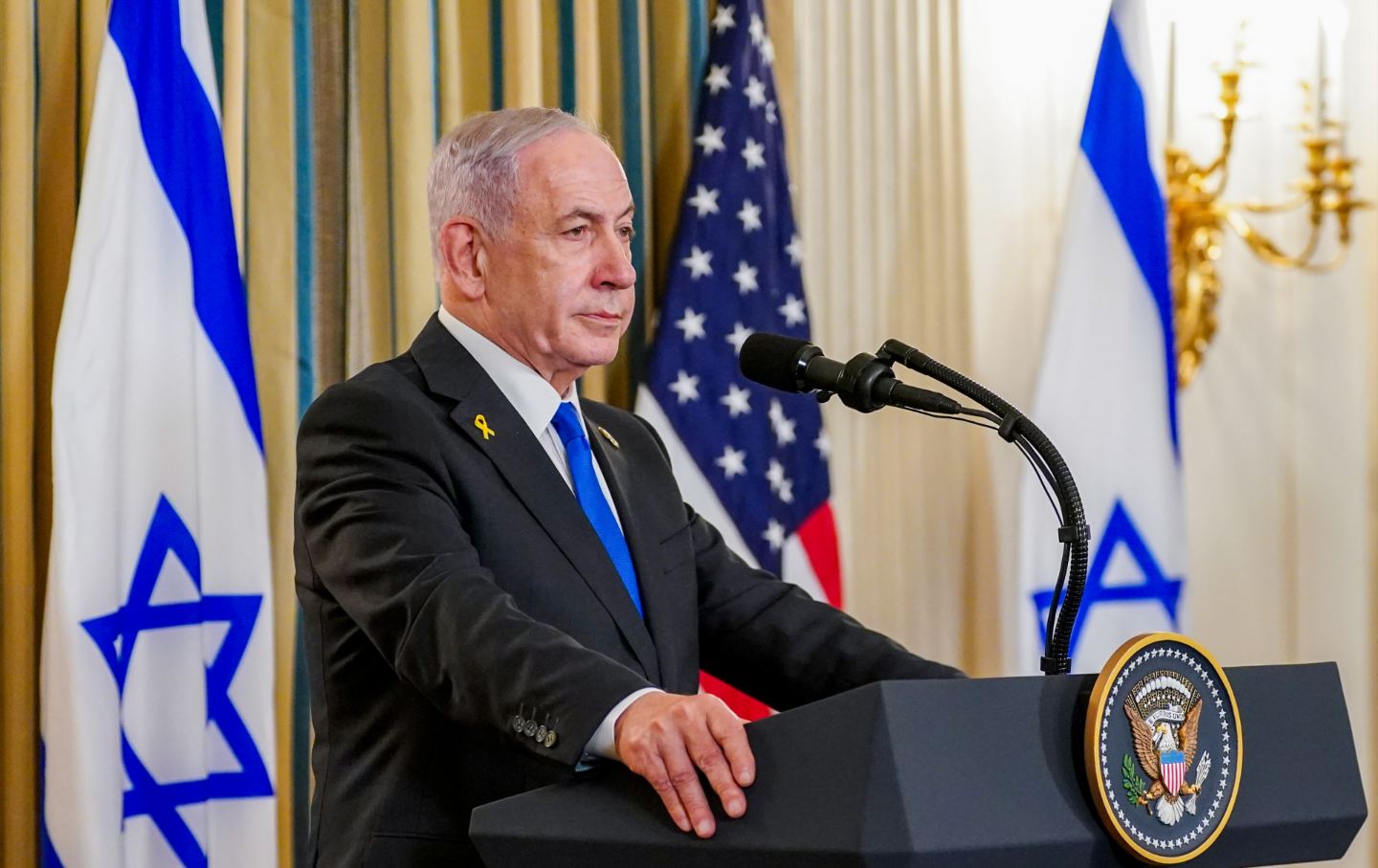
Israel Is Using Its Genocidal Gaza Playbook on Iran Israel Is Using Its Genocidal Gaza Playbook on Iran
Just as in Palestine, the Israeli government is framing its latest conflict as a holy war of extermination.

Trump and His Soulless Cronies Have Managed to Suck the Joy Out of the World Cup Trump and His Soulless Cronies Have Managed to Suck the Joy Out of the World Cup
Not even soccer is immune from Trump’s reverse Midas touch.

Garbage In, Carnage Out Garbage In, Carnage Out
The harrowing lessons of the Pentagon’s recently dissolved partnership with Anthropic.
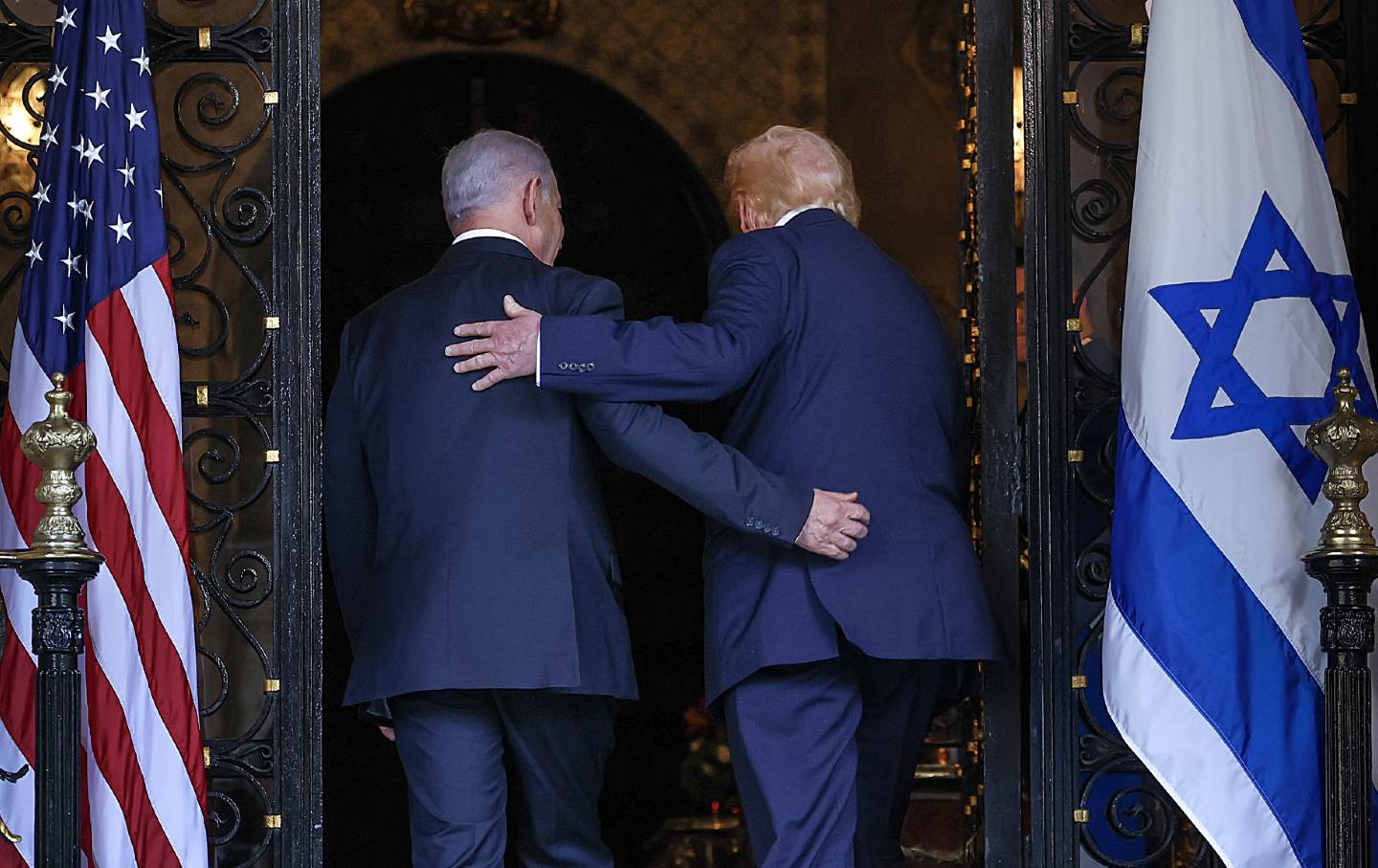
The Iran War Could Be Catastrophic for the US-Israel Alliance. Good. The Iran War Could Be Catastrophic for the US-Israel Alliance. Good.
As Israel’s role in pushing the war with Iran comes into ever sharper focus, it’s up to us to turn outrage into change.

An Unlawful War An Unlawful War
The precedent being set by the US in launching this war of aggression against Iran will long live in infamy.
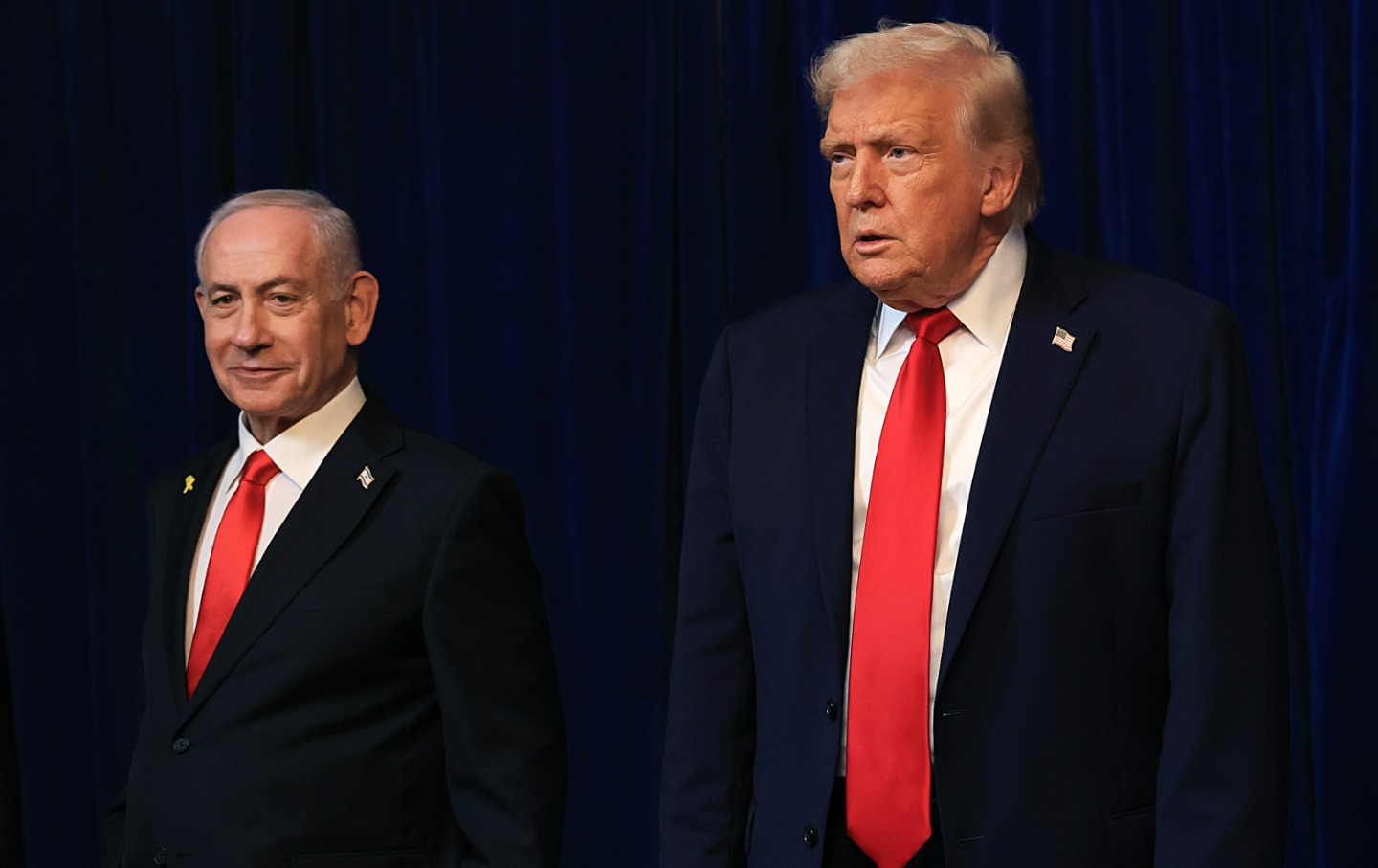
Trump and Netanyahu Want to Turn Iran Into a Failed State Trump and Netanyahu Want to Turn Iran Into a Failed State
This war looks designed to cause maximum chaos and instability. The world will pay a high price.

