
Cuba Hunkers Down as a US Oil Blockade Threatens a Humanitarian Crisis
Fear but no panic on the streets.
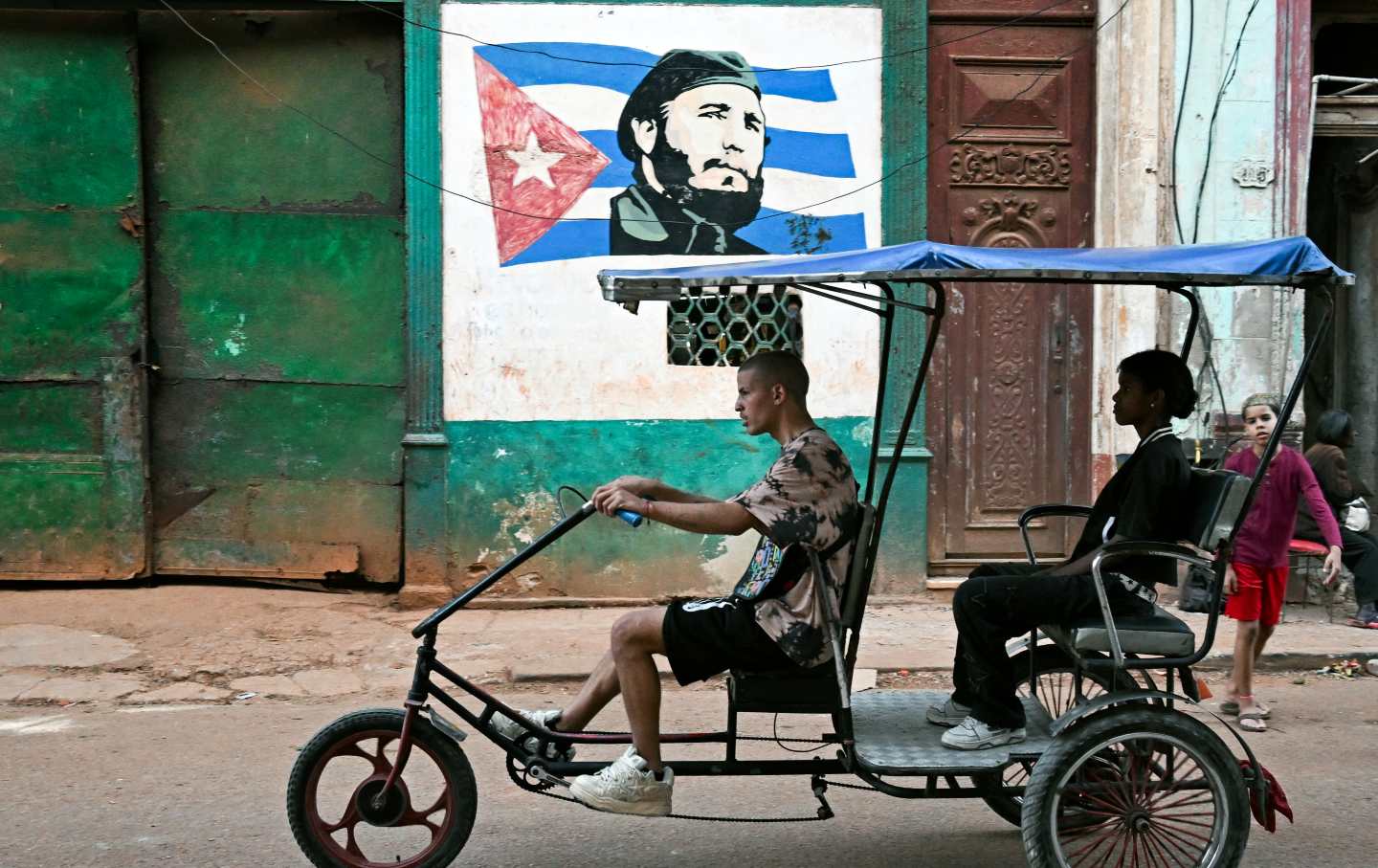
The Cuban government has drastically cut energy and fuel consumption and is downsizing and decentralizing most activity to the local level, where people can walk and use non-fossil-fuel-driven transportation, as the Trump administration blocks oil from reaching the import-dependent country, sparking concerns of a pending humanitarian crisis.
Early last month, the United States cut off all oil and money going to Cuba from Venezuela, the Caribbean island’s most important economic partner, and a few weeks ago threatened to slap tariffs on any country exporting oil to Cuba, a threat aimed mainly at Mexico, its second-most-important oil provider.
Last year, Cuba survived on an estimated 100,000 barrels of oil and derivatives per day, 65 percent of what the country needs to stabilize the economy, which is down 16 percent since 2019. Around 40 percent of the oil and gas equivalent was produced at home, a poor-quality oil used mainly in thermoelectric plants. Venezuela exported 30 percent to the island, 20 percent came from Mexico, and the rest from Russia and the spot market.
Cuban oil cannot be refined, so the country needs to import oil and derivatives for diesel and gasoline or most everything will simply stop.
“There is a lot of fear, and there is a lot of psychological impact on ship owners, shipping companies, and countries that can supply us with fuel,” President Miguel Díaz-Canel said during a press conference earlier this month as he announced almost no fuel had arrived this year and outlined a series of emergency measures.
At an open-air farmers market in Havana, vendor after vendor said they had no idea how business could continue for much longer and food reach the capital of 1.5 million people. They said there were fewer stalls open every day.
“I have worked here for more than 20 years, and this is the worst situation I have faced. It is worse even than the pandemic when we could not open, because then there was fuel,” María Fernández said as the market came to life the other morning and she arranged vegetables and fruit on her stand, one of around 50 also offering some meat and spices.
“Now there is no diesel fuel for the trucks that bring the merchandise from outside the city and other provinces. They are using what they had stored up,” María said as she placed cucumbers, bell peppers, and tomatoes in neat rows.
“The providers, who are mainly from other provinces, will not have fuel, and if it happens to appear it will be very expensive, raising prices. There is produce out there; the problem is how to move it here,” she said, arms now crossed and shaking her head.
UN Secretary General António Guterres and a number of governments and human rights agencies have warned of a humanitarian crisis if oil does not get through.
“The secretary general is extremely concerned about the humanitarian situation in Cuba,” Guterres’s spokesperson, Stéphane Dujarric, told the press.
Fear but No Panic on the Streets
Prices are soaring, power outages are increasing, and gas lines are growing. Public and private transportation are disappearing. Produce at markets is dwindling, and all but emergency surgeries have been canceled. The fear that the quality of life will quickly deteriorate is palpable.
The population was already struggling with the pernicious results of the sanctions put in place in Trump’s first term to gut foreign-currency revenues needed to purchase abroad most of the food, fuel, and inputs for agriculture and manufacture Cuba consumes. That came on top of the consequences of the pandemic and the longest and broadest US sanctions regime in history. Blackouts, deteriorating social services and infrastructure, runaway inflation, and shortages of food, medicine, fuel, and other basic goods and services are nothing new here. But now the Trump administration believes the moment has arrived for a final push to bring the rebellious land back into the imperial fold, no matter the human cost.
“Recent years have been very hard in every way. Everything is scarce and very expensive, and I have no family abroad to help,” Lucía Izquierda, a 40-year-old single mother of two daughters, one 17 and the other 6, said.
Experts estimate at least 40 percent of the population is in a similar situation, and a much higher percentage receives just a little help from family and friends abroad.
Lucía, a former biology teacher who turned part-time house cleaner, said blackouts were getting longer and disrupting her life “They are still not as bad as in Ciego de Ávila, where my aunt lives,” she said. “They used to have four or five hours of electricity per day, but now it’s like an hour. My aunt’s community has water problems too and relies on tanker trucks sent by the government. They are thinking of using donkeys to bring water in.”
Lucía’s older child’s high school has cut afternoon classes “because there is no more transportation to bring food to the cafeteria.”
Like everyone these days, she fears the future.
“Everything is going to get worse, especially the food and health services. My little girl has asthma. There is no medicine. I had to go to the hospital to get help.”
Díaz-Canel charged that the “energy blockade” was designed to make life unbearable. What does it mean to block and not allow a drop of fuel to reach a country?” he asked.
The Cuban president called for calm, unity, and discipline. “I am not an idealist. I know we are going to face difficult times. We have done it before, but we will overcome them together.”
Emergency Measures
The government announced that power generation will depend on local oil and gas production, renewable energy, and efforts to import oil. Scarce fuel will go to essential services and priority economic sectors.
Popular
“swipe left below to view more authors”Swipe →Diesel fuel was taken off the market, and gasoline went on sale only for dollars through an online reservation system with a maximum purchase of 20 liters per turn.
Rail and bus transportation was cut, factories and hotels temporarily closed, and education and health services reorganized toward municipalities and internet-based systems.
Private taxi driver Alberto González said the crisis had hit him hard. “The hospital notified me they were no longer operating until further notice. I can’t work if there is no gas.”
Gasoline on the black market, he said, had become prohibitively expensive. “The fuel situation is a problem not only for work but the family.”
More from The Nation
Is This Viktor Orbán’s Last Stand? Is This Viktor Orbán’s Last Stand?
After 16 years in power in Hungary, his Fidesz party is trailing in the polls by double digits behind a new opposition party.
The Long Shadow of the “Jewish Question” The Long Shadow of the “Jewish Question”
After the Holocaust, Israel was hailed as the solution to an essentially antisemitic debate. Now, as another genocide unfolds—in Gaza—Jews are once again questioning the question....

The UK’s Epstein Crisis The UK’s Epstein Crisis
If Keir Starmer is safe for now, it’s only for lack of alternatives within his party.
The Ghosts of Colonialism Haunt Our Batteries The Ghosts of Colonialism Haunt Our Batteries
With its cobalt and lithium mines, Congo is powering an energy revolution. It contains both the worst horrors of modern metal extraction—and the seeds of a more moral economics.
The Repeating History of US Intervention in Venezuela The Repeating History of US Intervention in Venezuela
A look back at The Nation’s 130 years of articles about Venezuela reveals that the more things change, the more they stay the same.
JD Vance: A Prisoner of the Caucasus JD Vance: A Prisoner of the Caucasus
The vice president’s trip adds fuel to regional fires.

