At around 7:30 in the morning on December 7, 2023, my son’s tiny footsteps echoed down the hallway as I reached for my cup of tea. After a week of reporting away from home, I had decided to return the night before to be with my family. I was trying to create a sense of calm within our walls, away from the chaos and terror outside. It lasted only seconds.
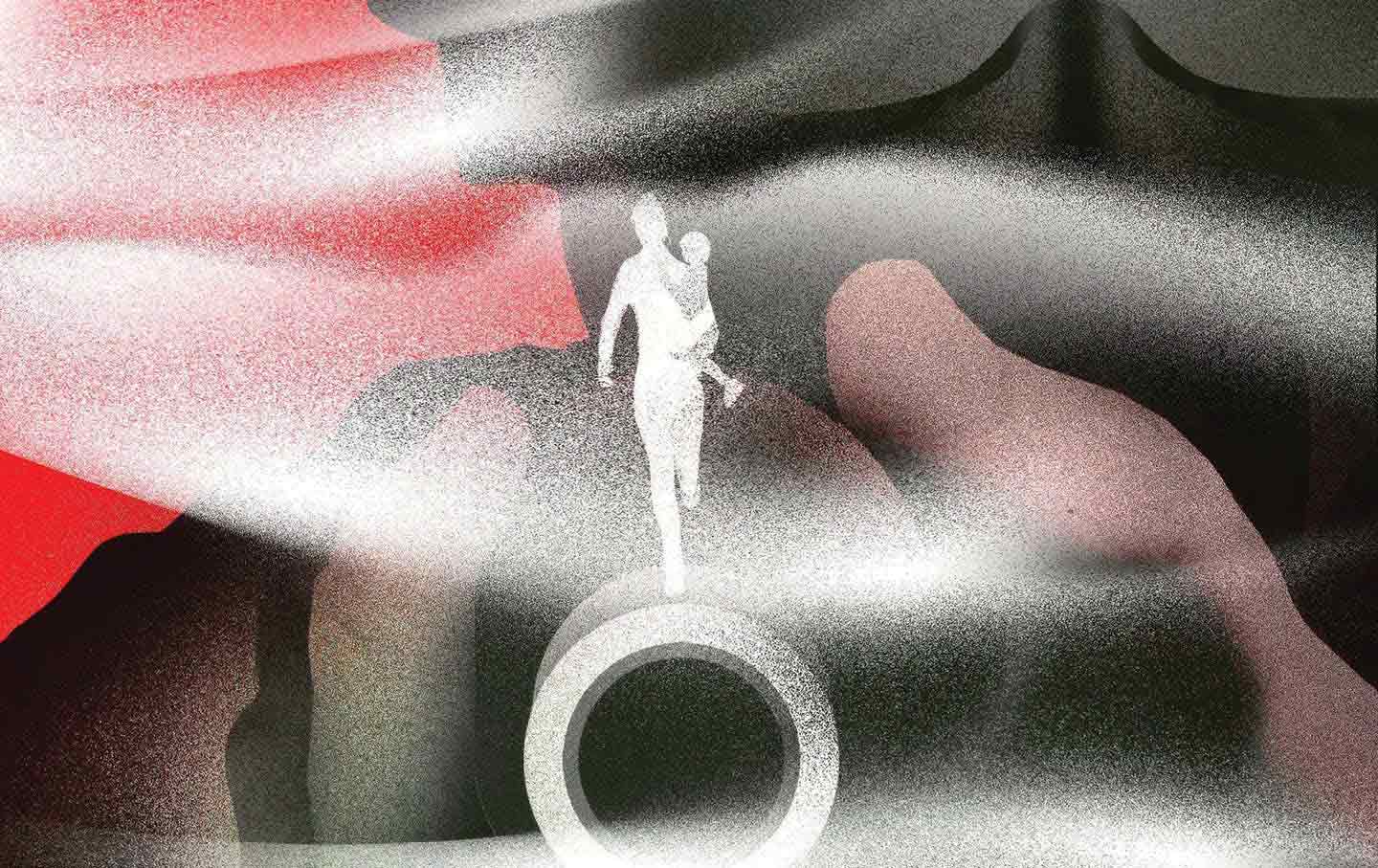
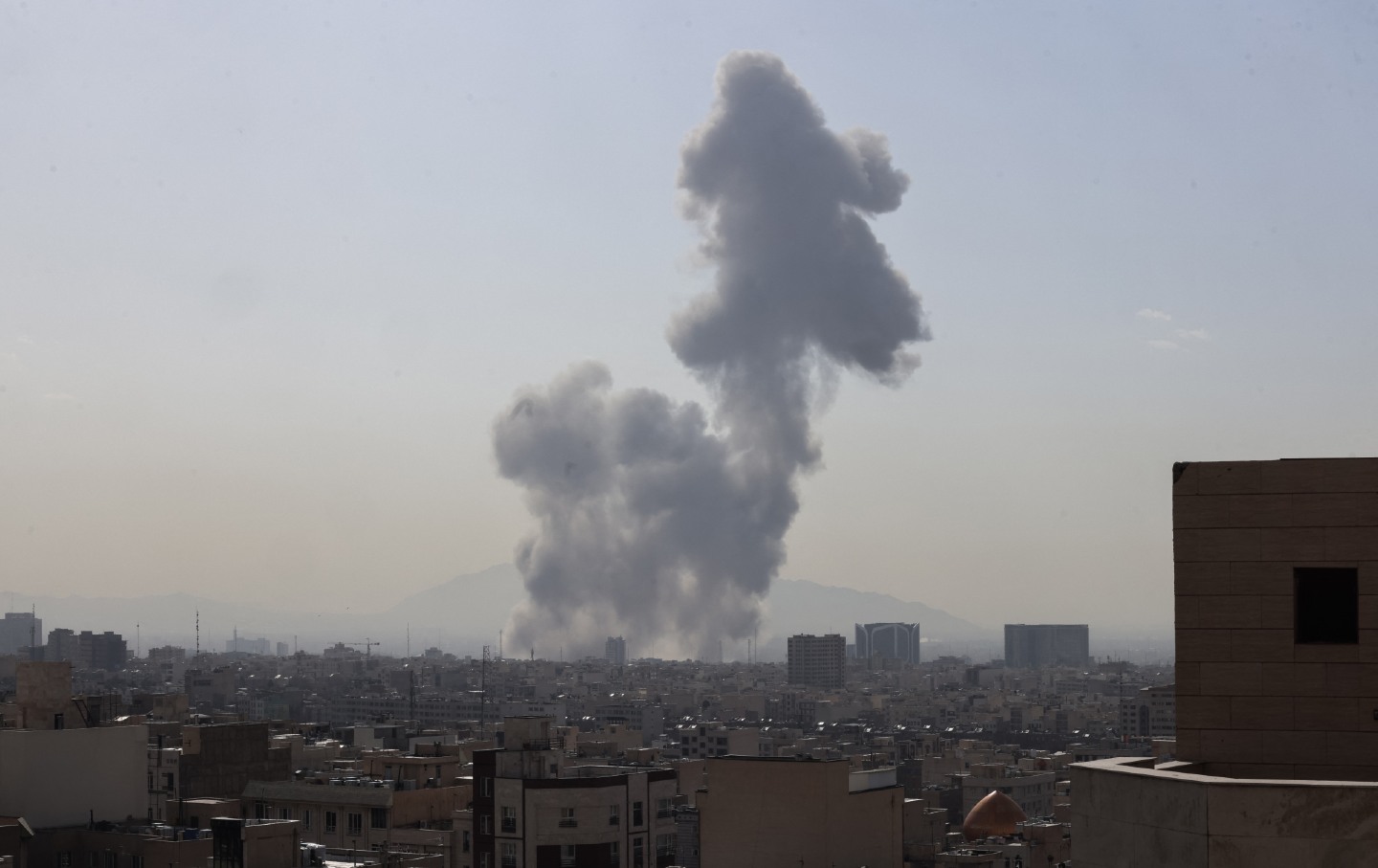
The sound was like nothing I had ever heard—a tearing, howling explosion that collapsed everything in milliseconds. I didn’t see the ceiling crack or the walls crumble. I only felt the sudden, crushing weight as the world above me came down, and I tumbled with it. It wasn’t like falling but like being smothered into the earth. My body folded awkwardly beneath the debris—arms pinned, legs trapped, ribs crushing against sharp edges.
I tried to scream, but the noise came out as a rasp, a pathetic, choking gasp swallowed by the dark. My chest burned from the effort, but I screamed again anyway—calling out for my wife, my 2-year-old son, my parents. Their names ricocheted inside my skull as both the layers of cement and the silence pressed in harder.
Then came the smell: scorched concrete, metallic blood, something acrid I couldn’t place. I shifted my hand, scraping it against broken glass, and tried to feel for anything alive in the void around me. My fingertips found rubble, sharp and cold. Beneath it, nothing.
“Rafik!” I called again to my son, and this time I thought I heard him. Faint, so faint, a small voice piercing the blackness: “Baba.” Relief and terror collided in my chest. He was alive, but somewhere out of reach, buried as deeply as I was. I tried to move, but the pain, raw and unrelenting, ripped through me. My legs were useless. My arms wouldn’t obey me.
Time blurred into a haze of pain and exhaustion. Minutes stretched into hours, or maybe it was the other way around. The air thinned, and the dust settled into my lungs like cement. My head throbbed with each shallow breath. I wanted to cry, to scream, to claw my way to my son, but my body was locked in the torturous stillness.
Somewhere above, I could hear faint noises—crumbling rocks, muffled voices. I thought they might be rescuers, or maybe neighbors trying to dig us out. But I wasn’t sure. They felt impossibly far away. Each sound brought hope and despair in equal measure. What if they reached us too late? What if they didn’t reach us at all? My mind raced with terrible images: my son’s small body crushed under the weight, my wife trapped alone, all of us forgotten beneath the ruins.
I passed out.
When rescuers finally broke through, the light was blinding, stabbing into the darkness where I had been entombed for hours. Hands reached for me, rough but certain, and I felt the rubble peel away from my body like layers of skin. The pain was excruciating.
After I was pulled free, the first thing I saw was my son’s face. His wide, tear-streaked eyes locked on mine, filled with a terror I had never seen before. His small body was wrapped in dust, his hair matted with sweat and grime. He wasn’t crying anymore—he was too scared and in so much pain that he was unable to do even that.
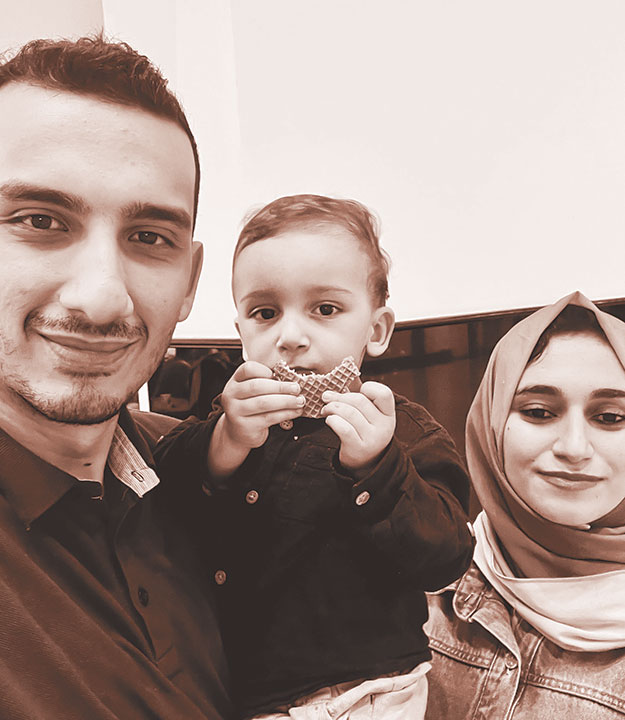
I wanted to pull him into my arms, to hold him so tight that neither of us would ever feel afraid again. But I couldn’t. My arms, my legs, my entire body had already given up.
They carried him to me and placed him on my arm, and I could feel his tiny heart racing like a trapped bird’s. I whispered his name over and over, trying to reassure him. “Baba’s here,” I said, though my voice was broken.
The truth was, I wasn’t there. Not entirely. Part of me was still under the rubble, still suffocating in that endless dark.
I looked around for my wife. She was being carried by rescuers, clutching her stomach, her face streaked with blood. She was alive, but her eyes stared unblinkingly—at the home that had held our laughter, our arguments, our plans for the future. Now it was nothing but shattered concrete and bent steel. I knew she was searching for the same thing I was: a sense of safety.
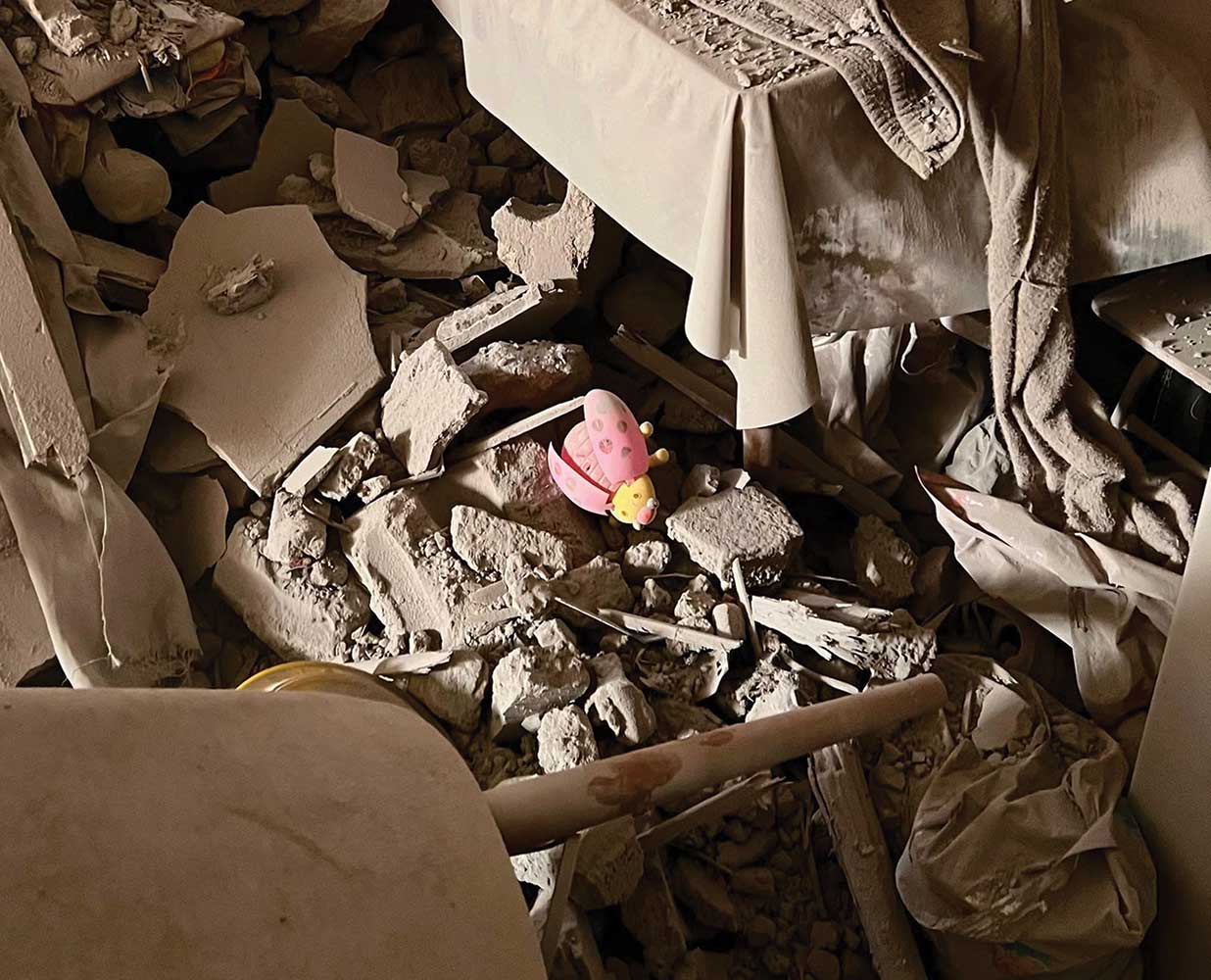
The medics tried to carry me away on a stretcher, to do first aid, but I refused to go until I knew they had found everyone. They promised me they would, but their faces told a different story. For hours after, I sat on the ground, unable to move, watching as they dug through the rubble, pulling out lifeless bodies, bloodied toys, torn pieces of furniture. Each item they found felt like another piece of me being stripped away.
Eventually, they took us to the hospital. I remember the faint lights, the cold metal of the stretcher, the hurried whispers of the doctors. They poked and prodded me. Their faces were grim as they cataloged the fractures, the internal bleeding, the bruises that would take months to fade. But the real damage wasn’t something they could see or treat.
In the days that followed, I struggled to speak, to eat, to sleep. Every time I closed my eyes, I was back under the rubble, choking on dust, hearing my son’s faint cries, and wondering if this time I wouldn’t wake up. I stopped speaking altogether, not because I didn’t have words but because none of them felt big enough to hold what I was feeling. How do you describe the way it feels to watch everything you love reduced to nothing?
Now, a year later, I am no longer in Gaza. I am in Cairo, away from the bombs. But I still hear the explosion in my dreams. I still wake up in a cold sweat, reaching out to make sure my son is breathing beside me. The physical scars have mostly healed, but the emotional ones remain as fresh as the day it happened. People tell me I should be grateful we survived, and I am. But survival isn’t the same as living.
That morning, we were lucky—if you can call it that. But many others were not. Members of my extended family who had come to find refuge with us; neighbors who had lived on our street for decades; passersby who happened to be near: All were crushed in the blast. People we shared meals with, stories with, laughter with—they didn’t make it. Their bodies were pulled from the rubble hours later, broken and lifeless. Their names, their faces, their voices are with me every day. They haunt every corner of my mind.
Popular
“swipe left below to view more authors”Swipe →The world around me now isn’t scarred by war, yet I am trapped in the ruins of that morning. The air is cleaner, the streets quieter, but I still wake up panting as if I’m back under the rubble. People here don’t flinch at loud sounds, but I do. They don’t have to explain to their children why the sky rains fire or why homes turn to graves. Still, survival here feels like its own torment—I check the news every morning, afraid to see familiar faces or read familiar names.
This past December 7 marked one year since Israel bombed my home, but the day wasn’t an anniversary. It was a wound, one that still bleeds a little more each time I remember that morning. The world expects us to move on, to rebuild, to be resilient. But it doesn’t understand that some things can’t be rebuilt. Some losses are too great, some pain too deep.
I survived, yes—but part of me is still buried under that rubble. And I don’t know if I’ll ever find it again.