
Pain and Pleasure
Zora Neale Hurston’s lost epic.
Zora Neale Hurston’s Lost Roman Epic
In The Life of Herod the Great, we get a novel full of intrigue, betrayal, and revolution.
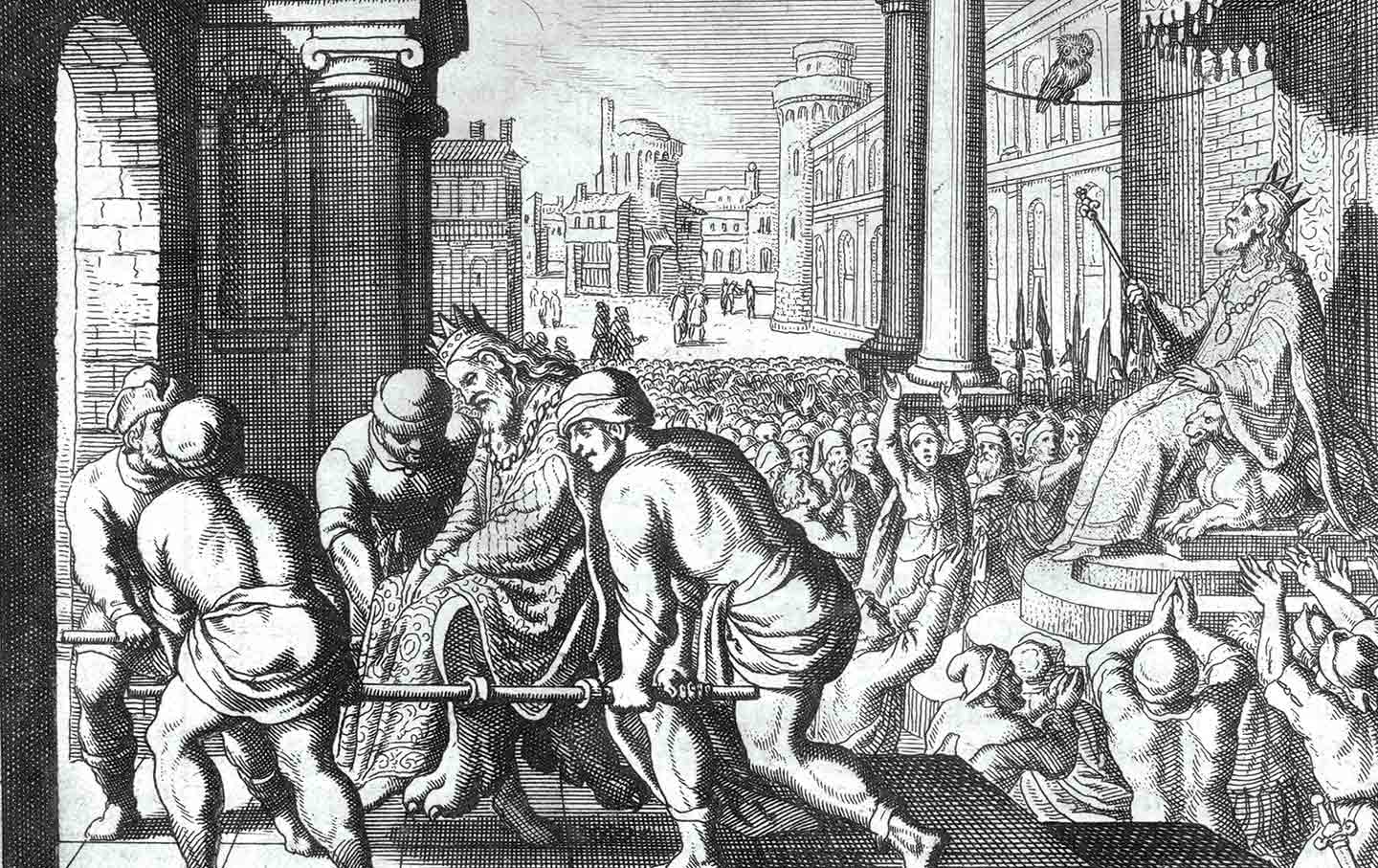
A depiction of Herod the Great.
(Getty)
The first time I felt betrayed was when I was 11. The culprit: my younger sister. The secret she had divulged: the unspeakable act of devouring sweets—part of a litany of processed foods my mother had forbidden us to eat. One day, I gathered some coins that my aunts had given me and ventured on my own to the corner store to get what I was entitled to: low-grade chocolate with nuts, heavily sugared gummies, and chocolate bars with caramel. Everything appeared to be going as planned. After purchasing the contraband, I went home and made a fatal mistake: I shared them with my sister. As we sat there in a state of sugary exhaustion, my mother discovered us, grew suspicious, and quickly found the evidence of our transgression—a candy wrapper. I maintained a confident air of denial, but my sister, who was at the innocent age of 7, told the truth. I felt doubled-crossed and wary of any future excursions to get those unhealthy and addictive snacks. From that point on, I decided, they would have to enjoyed alone, as my sister could not be trusted to keep her silence.
Books in review
The Life of Herod the Great: A Novel
Buy this bookThis was a minor detail in my life, and an even less significant one for my sister. I forgave her, of course, and moved on. My acts of duplicity, from then on, would have to be conducted on my own. And yet her treason always lingered in another way: No one’s loyalty can be assumed; one had to constantly develop and cultivate trust.
How one navigates and deals with perfidy is one of the questions that Zora Neale Hurston raises in her posthumously published novel, The Life of Herod the Great. A work of historical fiction focused on the story of King Herod and his ties with Sextus Caesar and Marc Antony in the first century bce, the novel required more than 14 years of research and is a text of considerable and sublime genius: a study of how ancient military empires were able to engulf a series of territories through puissance and deceit. But at the root of the novel is something far less grand and more commonplace: What does one do when one is betrayed? How does one gauge and handle treachery?
Zora Neale Hurston was always many things at once: a novelist, a trained anthropologist, and a brilliant essayist. But one element remained constant in her varied work: She was as determined to redeem controversial figures from the past as she was to celebrate those who were marginalized in the present. Langston Hughes once described her as “full of sidesplitting anecdotes, humorous tales, and tragicomic stories, remembered out of her life in the South as a daughter of a traveling minister of God.” His words were not mere flattery, but rather a tribute to her historical prowess: Past and present, fact and fiction, all fell under the purview of a mind curious about the sloven edges of provincial rule.
Hurston developed her interest in the past both in school and outside of it. While studying anthropology with Franz Boas at Barnard College and Columbia University, she learned how to extract the great dramas of human history from archives and folklore. Later, traveling in the South, she interviewed hoodoo practitioners, tenant farmers, and a survivor of the transatlantic slave trade. Raised in Alabama and Florida, she held on to the idea that Black vernacular culture was every bit as literary as anything written by the modernists. When it came to her own literary works, she made this world of folk culture and folklore a center of her writing. In her novel Their Eyes Were Watching God, published in 1937, she told the story of Janie Crawford, an African American woman who sought to establish her autonomy while engaged in a series of turbulent relationships with irascible men. Set in Florida, it conveys the pride, cohesion, and antipathy that resounded through the streets and homes of Eatonville, the all-Black town where Hurston was raised. History, as always, hovered over her prose.
Self-aware and confident, Hurston also approached history with a sense of humor, stating:
Someone is always at my elbow reminding me that I am the granddaughter of slaves. It fails to register depression with me. Slavery is sixty years in the past. The operation was successful and the patient is doing well, thank you.
Hurston wasn’t drowning in the pelagic waters of tragedy; instead, she was refining the stories that ethnic groups had created, revised, and transmitted. She surely would have agreed with William Faulkner that, as he famously put it in Requiem for a Nun, “The past is never dead. It’s not even past.”
The Life of Herod the Great is distinct in one way from Hurston’s other historical inquiries: The past being examined here is that of ancient Rome in the first century bce instead of the United States in the early 20th century. But as with almost all of her historical investigations, the novel is a work motivated by not only scholarly but personal curiosity—and, in particular, a set of questions prompted by her Christian upbringing.
Who was Herod, a man depicted in two of the Gospels and in Jewish prophecy as capable of murdering his immediate family, his in-laws, and his nemesis and allegedly ordering the mass murder of male babies in Bethlehem? He betrayed his relatives by prematurely ending their lives, and he betrayed his religious community by ordering the murder of fellow Jews. But as important, how can we look past his historical and biblical characterizations and see him as another human—a tragic figure caught up in the course of history and the ambiguities of political alliances?
Herod was born in 73 bce in Idumea. He grew up in what was then called Judea and in 47 bce was appointed as the governor of Galilee. With this assignment, coordinated by his father, Herod moved among the priestly Hasmonean rulers, but also dined with the Romans, who were expanding their rule over the region.
Hurston may have been writing a work of fiction, but as with almost all of her literary projects, she was interested in the historical facts. To answer some of these questions, she turned to Flavius Joseph and to Herod’s friend and adviser, Nicolas of Damascus, and his Commentaries of Herod the Great, which sought to tell the story of Herod’s governance, his family life, and his quirks.
With these ancient chronicles at her thumb, Hurston presents Herod’s story, one oozing with internecine strife between friends and relatives, elites and their subjects. Discussing Herod’s marital woes with his first wife, Doris, Hurston writes: “The pairing seemed like a lion yoked with a sheep. Well, his parents were wise and correct; perhaps all would be well, but he seriously doubted their conclusion in this matter. He required ecstasy, not calm.” When talking about politics with Doris, Herod found her “beautiful but lacking stimulation.”
A powerful man in his time, Herod might also be a powerful man of our own. Brash and rageful, he could be punitive, unforgiving, and belligerent—a despot. When someone challenged him, they often faced demotion or recrimination; when someone betrayed him, even worse. For Hurston, Herod’s prickly soul was shaped by his experiences as much as his temperament. It was also defined by a destiny that he could not entirely escape. His life, she writes, reached “the very summit of triumph and the utmost depth of tragedy. He was fated to have the pain and pleasure of a profound love affair and a most celebrated friendship. In fact, the man who became known to history as Herod the Great appears to have been singled out and especially endowed to attract the lightning of fate.”
Herod may have been a contemptible person, but he was also worthy of our sympathy. He was just like so many of us: insecure, intemperate, vulnerable, and sometimes wrathful. He may have tormented some people, but he also protected others. He may have been the architect of the Massacre of the Innocents, but he was also a sympathizer of the Essenes. He was suspicious of the Hasmoneans, the priestly lineage who ruled Judea before he did, but he was also respectful of his fellow Romanized Jews, who had assimilated into the empire. Herod was an antihero—not a monolithic villain but a complicated man of competing loyalties.
Hurston begins with Herod’s father, Antipater, a high-ranking official in Judea who eventually lays the groundwork for his first two sons to rule. The narrative arc is linear in a literal sense: Hurston tracks Herod’s ascension and outlines the later struggle between the Romanized and the religious and sectarian elements living in Judea. From the moment the battle between the priestly and the reformed classes begins, Herod makes alliances with the former by marrying Mariamne, the daughter of one of their leaders, Hyrcanus, and abandoning Doris and their first-born son. But in many ways, the story doesn’t only cover Herod’s marital and paternal disloyalties, or his schemes inside and outside the court; Hurston’s story is as much about who will rule Judea and become Rome’s intermediary.
This is an enthralling storyline. Herod was not merely an aimless warrior searching for adventure but a determined warrior whose enemies were frequently poisoned, imprisoned, or murdered. He plowed through Galilee, driving out Hezekiah, a bandit whose bared, “under-bred body and face, unkempt beard, and rotting teeth, repelled [him].” Herod was also deeply involved in the machinations and turmoil of imperial politics, but what makes the story jump is that he is constantly being betrayed by his relatives and tempted by beautiful women.
But The Life of Herod the Great is not just about its titular protagonist. In the background, we also follow how Rome and its empire evolved over half a century. We witness the fate of Mark Antony and Cleopatra, both of whom committed suicide. We learn about the transformation of the Roman Empire during the civil war of 31 bce, as it shifted from being a constitutional republic to an authoritarian regime. We track the rise and fall of Roman governors, imperial leaders, military figures, and dissenting subjects as they engage in salacious affairs and betray one another. We also become aware of those far from the halls of power. Along with Herod’s court intrigues, we watch a set of new political subjects emerge in Judea. Refusing to be dominated by Rome or by the petty familial strife of Herod, they organize a revolt.
As a novel about life, Herod the Great is also about death: of Roman elites, of semi-independent states, of those rebelling Judeans who valiantly but often unsuccessfully attempted to avoid famine or persecution. Hurston’s novel is a story of revolution—of “lower Asia” as it “exploded like a gasoline drum.”
Hurston shows how Herod’s often ruthless but always calculated approach to politics keeps him alive and in power. For Herod, the attempts on his life are many, as are the conspiracies trying to overthrow his rule, and so he must respond in kind: executing and imprisoning all who oppose him, even those who are members of his family.
Popular
“swipe left below to view more authors”Swipe →Political intrigues abound in The Life of Herod the Great. We get a theatrical portrayal of the tensions between the ancient religious order of Judea and the secular republicanism of Rome (at least for some). We also watch as a loosely self-governing province turns into an authoritarian state. But there are more-personal betrayals, too: When Mariamne, Herod’s second wife, is accused of conspiring to murder him, she stands trial and then is executed. Attempted murder is sufficient for a death sentence, even if—or perhaps especially if—your husband is Herod the Great.
Unbeknownst to Hurston, The Life of Herod the Great would be among the many works by her that would not be published during her lifetime. She’d started the novel in 1945, it would take six and a half decades and her own posthumous fame before it finally appeared in print. During her lifetime, Hurston repeatedly attempted to find a publisher for it. When she submitted the novel in 1958 to David McKay Publications, it was rejected. When she submitted it the following year to Harper Brothers, it was again rebuffed. This would continue until she died in 1960 in St. Lucie, Florida, where Hurston—one of the great American writers of her generation—did not leave behind enough money even to pay for her tombstone.
The Life of Herod the Great, in fact, was not the only book of hers that languished in obscurity. Much of Hurston’s work might have been forgotten after her death had it not been for Alice Walker, who helped revive interest in her novels and writings. For Walker, the effort to save Hurston’s legacy from effacement was personal as well as political. “There are times—and finding Zora Hurston’s grave was one of them—when normal responses of grief, horror, and so on, do not make sense,” Walker recalled in 1975, “because they bear no real relation to the depth of the emotion one feels. It was impossible for me to cry when I saw the field full of weeds where Zora was. Partly, this is because I have come to know Zora through her books, and she was not a teary sort of person herself.”
Walker’s statement was more than a lament; it was an acknowledgment that Hurston’s final days, which she spent in a state welfare home, so penniless that she could not afford a funeral, were bitter and unjust. After her death, when no one came forward to claim her possessions, the state began burning them. If not for a local deputy sheriff, many of the letters and manuscripts of the two-time Guggenheim Fellowship recipient—including The Life of Herod the Great—would have perished in the flames. For Walker, this was emblematic of the plight of many Black writers—to save Hurston and her work from the oblivion of her later years was also an act of restorative justice.
Walker sought to resurrect something else as well. In both her fiction and her nonfiction, Hurston stretched the moral imagination, helping her readers to find the highbrow in the folkloric, the art in the vernacular, and the humanity in everyone… even Herod the Great.
Become a Sustaining Donor This September
Between the reemergence of right-wing red-baiting and Donald Trump’s use of the chilling National Security Presidential Memorandum–7 to criminalize left political organizing, we’re seeing McCarthyism reborn before our eyes.
This assault on democracy cannot be ignored or wished away. Resisting it requires bravery in the face of threats and repression, a steadfast commitment to the truth, and the unwavering belief that we can—and will—overcome this darkness.
We must have an independent media that sets the record straight, unearths corruption and abuses of power, and advances a politics of justice and dignity for all if we’re to win this fight.
That’s why I’m writing to you today. This September, The Nation needs to add 100 monthly donors to sustain our progressive journalism. Your contribution makes the next investigative report, the next truth-speaking column, and the next pathbreaking essay all possible.
I hope you’ll support our work with a recurring donation today. If you donate $10 or more a month, we’ll send you a brand new “Hands Off the Free Press!” sticker to recognise your commitment to our cause. Please, donate today.
Onward,
Katrina vanden Heuvel
Editor and Publisher, The Nation
More from The Nation

How Trump’s Crackdown on Speech Has Damaged the Student Press How Trump’s Crackdown on Speech Has Damaged the Student Press
I serve as editor in chief and president of The Stanford Daily. Our newsroom has keenly felt the effects of Trump’s campus crackdown, which is why we sued the federal government.

Treat Spotify Like a Public Utility Treat Spotify Like a Public Utility
Music streaming platforms have way too much control over musicians and music lovers. It’s time to rein them in.

What’s the Matter With Effective Altruism? What’s the Matter With Effective Altruism?
President Trump has decried the techbro creed for indulging in AI doomerism, but its excesses are far worse than that.
As Morale Sags, More Military Service Members Are Having a Crisis of Conscience As Morale Sags, More Military Service Members Are Having a Crisis of Conscience
According to multiple GI rights organizations, service members are inquiring in unprecedented numbers about seeking conscientious objector status.
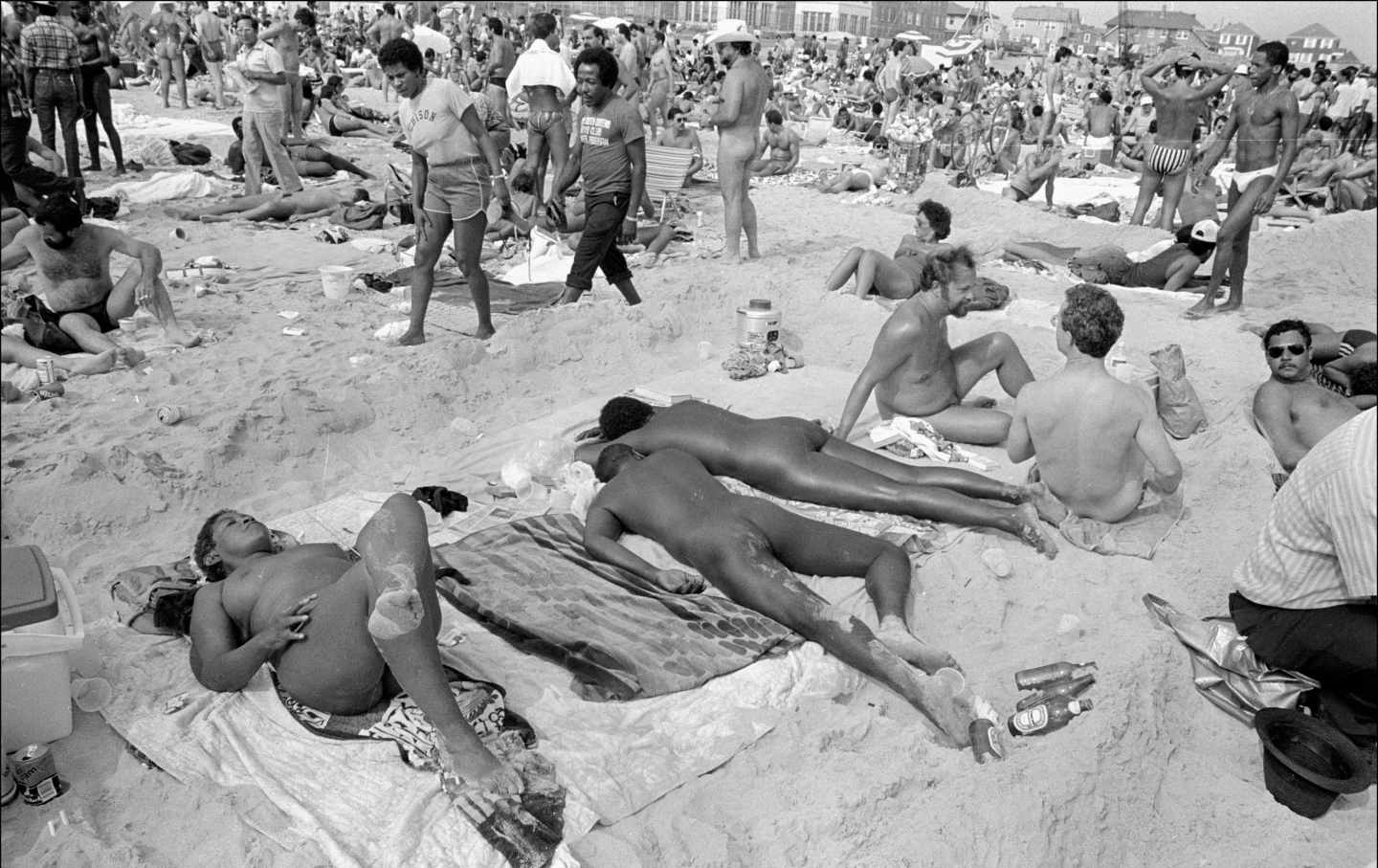
What Remains of Riis? What Remains of Riis?
A new members’ club has revived Riis Park’s long-vacant bathhouse, reopening old questions about whom the People’s Beach is really for.

When Texas Sex Ed Falls Short, Gen Z Women Turn to Social Media When Texas Sex Ed Falls Short, Gen Z Women Turn to Social Media
A 2025 study found that 70 percent of adolescents sought reproductive health information through social media platforms.

