WNBA Players Should Have Picketed, Not Attended, the Met Gala
At the Bezos ball, WNBA stars chose celebrity over solidarity.
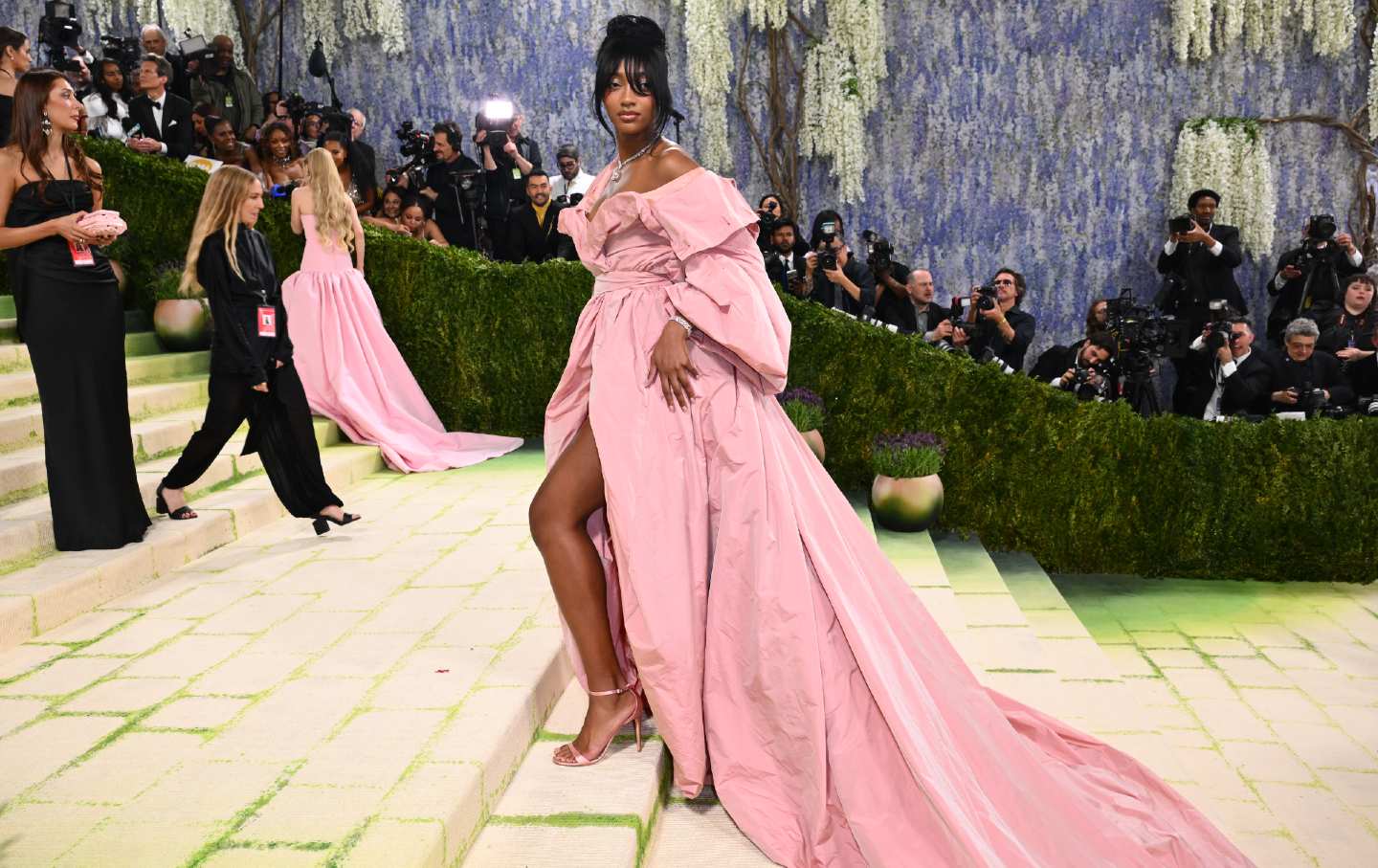
WNBA’s Angel Reese attending the Met Gala in New York City on May 4, 2026.
(Matt Crossick / PA Images via Getty Images)Twenty twenty was only six years ago, but it feels like 60. It was the height of the Covid-19 pandemic—which both political parties have decided to memory-hole despite over a million deaths in the United States. It was also the year of the largest demonstrations in US history: the Black Lives Matter protests that followed the police murder of George Floyd.
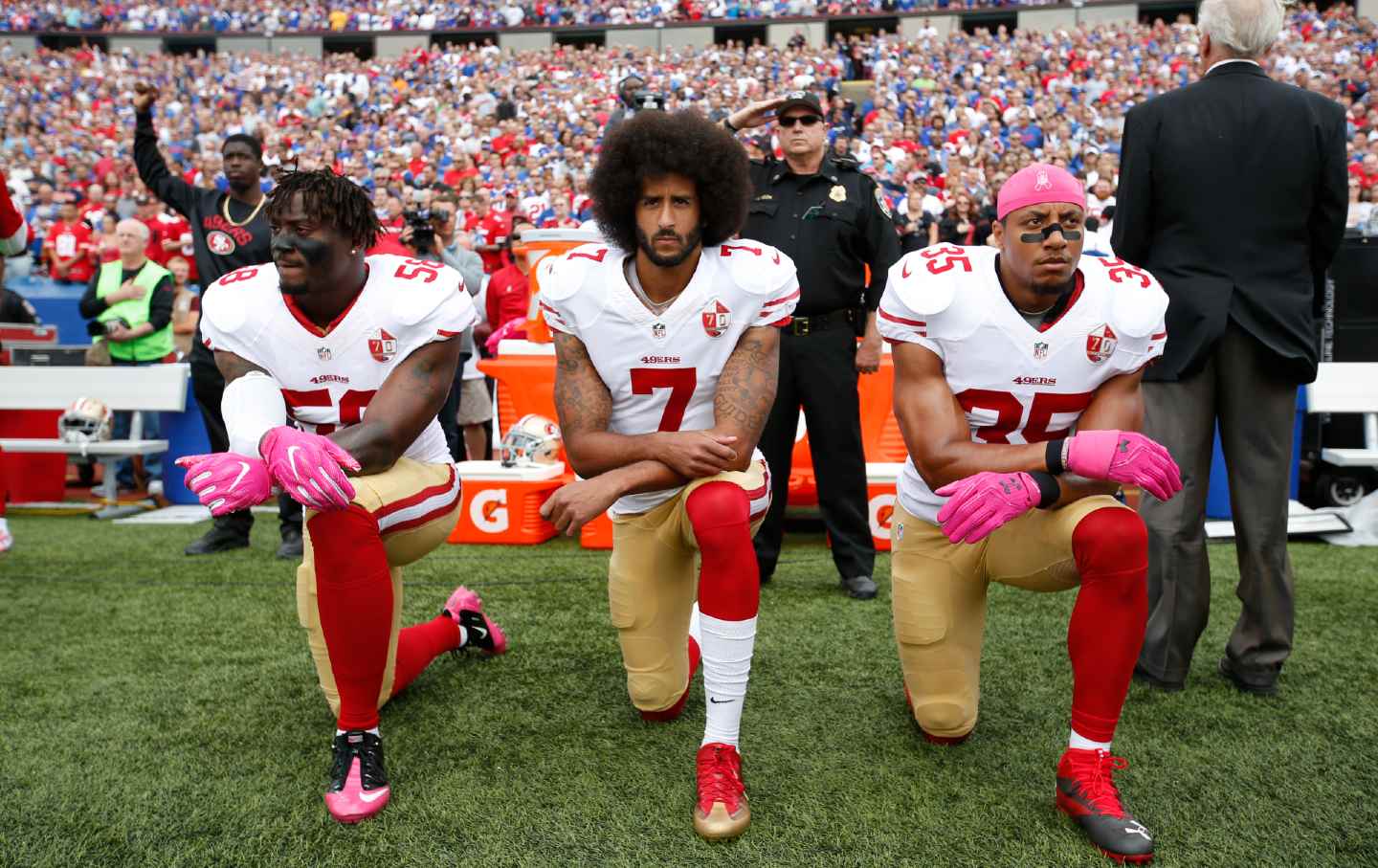
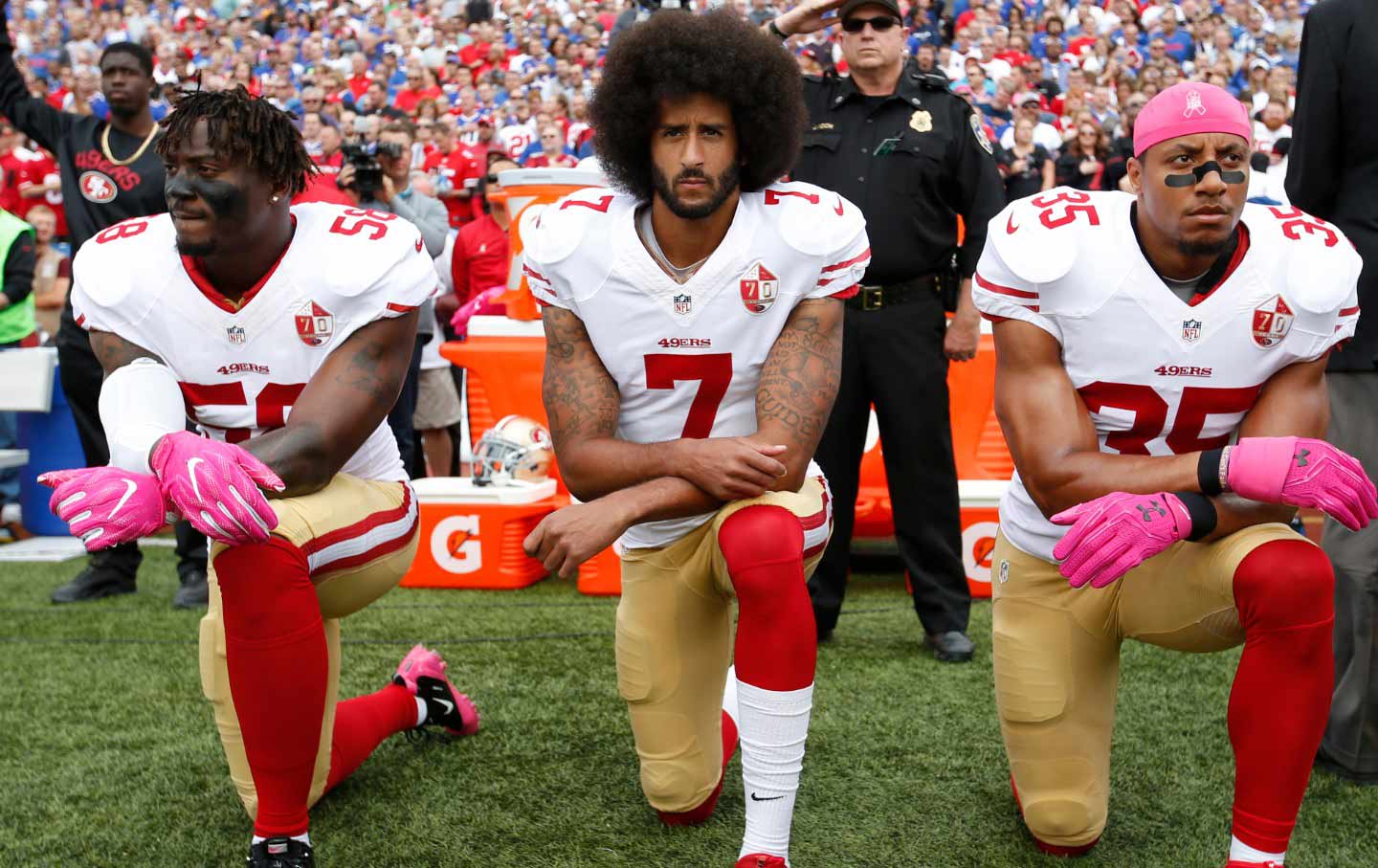
Athletes were at the heart of the 2020 fight, none more so than the brave coaches and athletes of the Women’s National Basketball Association. The players in the W had spent years claiming their place as the conscience of the sports world. In summer 2016, after the killings of Alton Sterling and Philando Castile, they protested police violence during the national anthem—months before Colin Kaepernick took his knee. They not only forced Georgia’s MAGA wannabe-Senator Kelly Loeffler out as owner of the Atlanta Dream but stymied her political future by supporting Loeffler’s opponent, the Rev. Raphael Warnock. In 2023, one the league’s brightest stars, Maya Moore, even retired early to fight the racial injustices in the criminal justice system. Others like Natasha Cloud took significant time off to join the struggle for the idea that Black lives do matter.
Today, the WNBA is in a far different place than in 2020. Ratings are way up, franchise values skyrocketing, and home games packed with devoted fans eager to watch a new generation of stars. A second-year expansion team, the Golden State Valkyries, just became the first women’s squad in any sport to surpass a $1 billion valuation. Players, thanks to their union’s fight for a new collective bargaining agreement, have seen their paychecks begin to reflect this growth with massive raises to both the minimum and maximum salaries. For a league that sports podcast bros discussed only as a sexist punchline, the WNBA’s ascent is a satisfying counterpunch to every asshole who mocked these incredible athletes. But success comes with its own strings, and those strings can quickly become chains.
It was difficult to not hear the clanking of those chains at the Met Gala this past week. Three of the W’s brightest stars, A’ja Wilson, Angel Reese, and Paige Bueckers, strutted alongside the entertainers, billionaires, and reality-show parasites. What was especially dispiriting was that this wasn’t your typical Met Gala—which even in normal times is, to quote Tina Fey, a “jerk parade.” There were widespread calls to protest and boycott this year’s Gala—a boycott observed by people like Meryl Streep and Bella Hadid.
The boycott call was made because the honorary chairs and underwriters of the event were Amazon founder Jeff Bezos and his wife, Lauren Sanchez Bezos. On top of his obscene wealth, Jeff Bezos is an anti-labor goon whose company has extensive ties to the Israeli military. For the many who care about worker and social justice, this made the Met Gala a celebration of his genocide-enablism and avarice, and it demanded a response.
In the days leading up to the events, activists held several demonstrations. And as the gliterrati strode past, protesters raised signs with slogans such as “Tax the Rich” and “Billionaires for a Dead Planet.” Videos about the amorality of this year’s Bezos Ball were projected on the side of buildings. A widely attended Ball Against Billionaires was held nearby, cohosted by actor Lisa Ann Walter from Abbott Elementary. Small vials of fake urine were placed around the Met, as a symbol of the Bezos policy against bathroom breaks for warehouse workers. While the wealthy preened, former Amazon union leader Chris Smalls was violently arrested outside.
In such a climate, attending the Met Gala was akin to crossing a picket line—not to mention crossing Meryl Streep, which is almost as bad! And people who cross picket lines are scabs. To see WNBA stars, fresh off their own labor victory, scab on these protests was disheartening. It was also a sign that athletes like Bueckers are now more concerned with the commerce they advertise on Instagram—her page hawks more product than QVC—than the humanitarian concerns of years past. It raises a question: Is a league now awash in riches sidelining social justice for commercialism?
Those reading might ask why call out three WNBA athletes among the throngs of wastrels, scoundrels, and finks that attended the Gala to pay homage to Bezos’s America? It’s because the lionhearted actions of WNBA players have led us to believe that the league stands for something more. No one expects anything from a Kardashian or a Bieber, but the WNBA athletes used to be more than brands. That’s the thing about standing for something. If you do it once, people expect you to do it again. To scab for Jeff Bezos has never been what this league is about. But as the WNBA grows in popularity, we see more of it going forward. Women’s basketball and its growing popularity is an incredible phenomenon. Lending its new cachet to the Bezos Ball was a shame and a sin.
Become a Sustaining Donor This September
Between the reemergence of right-wing red-baiting and Donald Trump’s use of the chilling National Security Presidential Memorandum–7 to criminalize left political organizing, we’re seeing McCarthyism reborn before our eyes.
This assault on democracy cannot be ignored or wished away. Resisting it requires bravery in the face of threats and repression, a steadfast commitment to the truth, and the unwavering belief that we can—and will—overcome this darkness.
We must have an independent media that sets the record straight, unearths corruption and abuses of power, and advances a politics of justice and dignity for all if we’re to win this fight.
That’s why I’m writing to you today. This September, The Nation needs to add 100 monthly donors to sustain our progressive journalism. Your contribution makes the next investigative report, the next truth-speaking column, and the next pathbreaking essay all possible.
I hope you’ll support our work with a recurring donation today. If you donate $10 or more a month, we’ll send you a brand new “Hands Off the Free Press!” sticker to recognise your commitment to our cause. Please, donate today.
Onward,
Katrina vanden Heuvel
Editor and Publisher, The Nation