
The Invisible Labor of Women Who Love Incarcerated People
There are few things more important for people in prison than keeping links with the outside world. That task falls overwhelmingly to women.
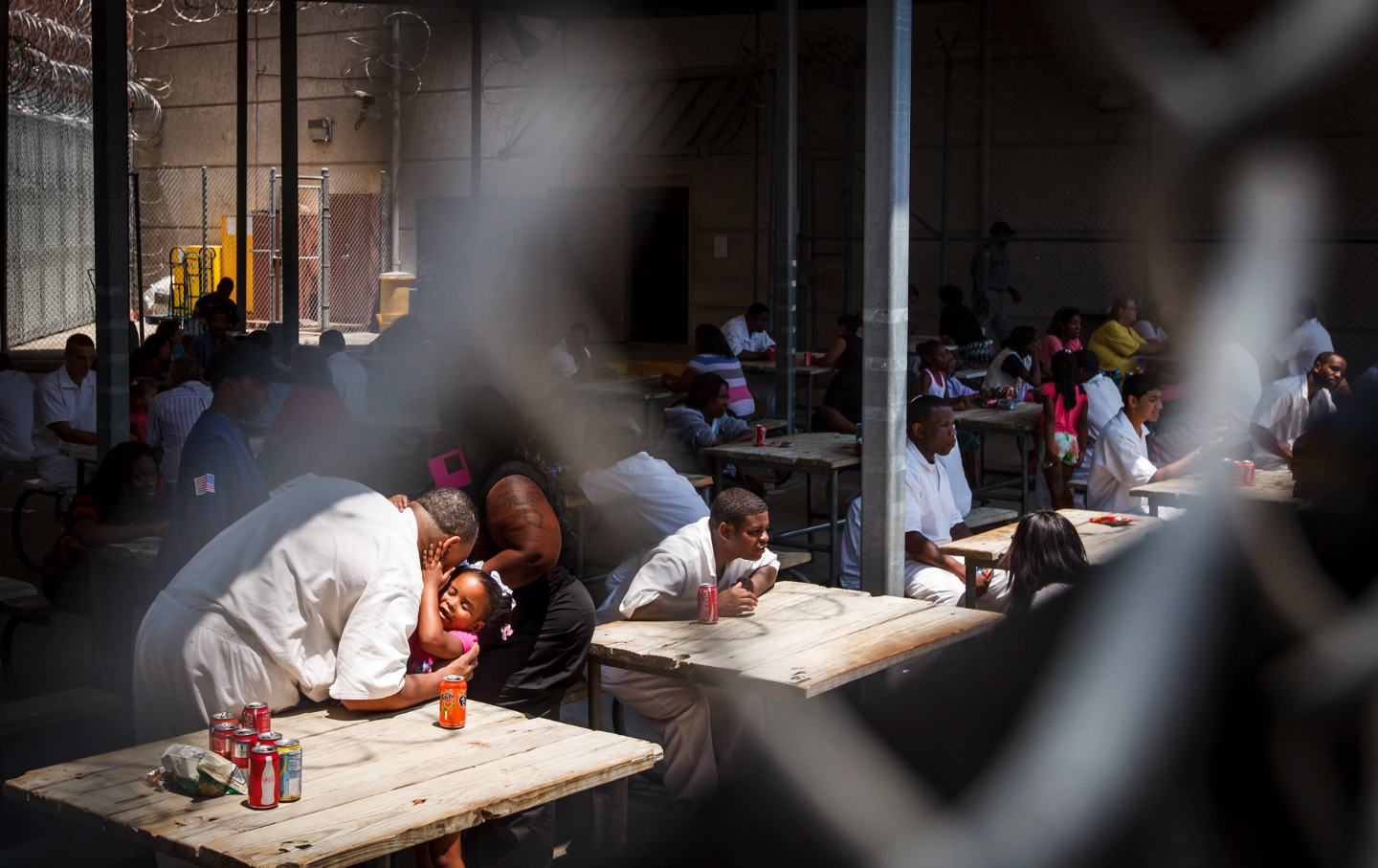
A Father’s Day visit to the Joe Kegans State Jail, Sunday, June 17, 2012, in Houston, Tex.
(Michael Paulsen / Houston Chronicle via Getty Images)Cassandra Butler, 43, starts her day at five in the morning, the only time when it’s quiet at her house in Puyallup, Washington. As she sips her first cup of coffee, she prepares for a long day ahead. She meditates, then reads over the schedule she wrote in her planner the night before.
By 10 AM, she has already logged a few hours at one of her two mostly remote full-time jobs. She’ll spend the day going back and forth between this job, a government role, and her other job at a restorative justice organization.
Her whiteboarded schedule includes everything from meetings at work to cases that have to be cleared at one job to grocery shopping to a vet appointment for her dog. This part of her schedule usually lasts until 9 or 10 pm. On top of all this, Butler spends every spare moment she can pursuing a PhD in transformative social change at Saybrook University. Her dissertation topic is something she understands firsthand, the very issue that necessitates her working two full-time jobs in the first place: the invisibilized labor of Black women who are supporting incarcerated people.
Butler has been caring for loved ones in prison for nearly two decades, ever since she was in her early twenties and her brother, Thomas, then 17, went to prison for the first time. When he was pending trial for a third sentence, he discovered that he had two children on the way, and Butler has been caring for his two children, her niece and nephew, in different capacities ever since. Her nephew, now 14, has lived with her on and off during this time.
Butler also raised two children on her own. Then she married a man who moved in with one of his step-daughters (they are now divorced). At the time, all of Butler’s income went toward supporting her family, leaving virtually nothing for savings. The expenses were endless: school supplies, groceries for multiple teenagers and two adults that added up to $1,600 a month, copays on medical procedures, haircuts, car payments, school clothes. Because she earns the income of someone working two full-time jobs, Butler does not qualify for government assistance.
There are few things more important for incarcerated people than keeping links with the outside world. According to a report from a coalition of 23 different social justice organizations, not only does family contact improve the likelihood of successful reentry to society, “maintaining contact with family during incarceration has been shown to significantly reduce chances of recidivism.”
Even so, governments often seemingly work as hard as they can to place barrier after barrier between incarcerated people and those who love them on the outside. And research shows that these burdens fall most heavily on women, particularly women of color. According to the Ella Baker Center’s findings, “women bear the brunt of the costs—both financial and emotional—of their loved one’s incarceration.”
But the problems don’t end when the prison sentence does. Just as they are tasked with holding their families together before and during their loved one’s imprisonment, women frequently have to take the lead in picking up the pieces—and helping navigate the many indignities placed on formerly incarcerated people—when someone comes home. In a society riven by both racial and economic segregation, it is this common challenge that winds up uniting women from all walks of life through a shared experience of hardship.
“One of the things that is extremely true in America is that women are the reentry system,” Jo Kreiter, a San Francisco-based choreographer whose husband was incarcerated, says. “And we’re not just the reentry system or the pre-entry system. We’re the pretrial system.”
For the first two years of Butler’s brother’s current sentence, he was in Walla Walla, and the drive to visit him took about two hours. When her brother was transferred to Clallam Bay around 2010, Butler’s journey grew to eight and a half hours each direction. Now, Butler lives in Puyallup and her brother has since been moved across the state to Coyote Ridge Corrections Center, still over 200 miles, or three and a half hours, away. The long distance requires Butler to get a hotel for the entire weekend so she can visit on consecutive days and make the most of the long drive.
In addition to travel time, these visits come with exceptional financial burdens. Butler must take a half day of work on Friday to make the trip, there’s the cost of a hotel for two nights, gas to drive across the entire state, and price-gouged food from the prison vending machines. To feed three people—Butler, her brother, and one of his children—during a visit, she spends at least $80 per day. Essentially, one weekend’s visit costs around $800-$1000. Butler’s expenses don’t end there; she spends around $600 annually to fly her niece who lives in Texas to Washington to visit her father, Butler’s brother, at least once a year.
In addition to the costs associated with visits, for years Butler spent hundreds of dollars a month on other prison-related expenses—sending her loved ones quarterly packages to help ensure edible food in their cells, keeping money on the prison phone accounts, and paying to send digital messages. Digital messages, essentially e-mails, cost about 20 cents each, and phone calls cost over a dollar for just 20 minutes.
Popular
“swipe left below to view more authors”Swipe →And the costs don’t stop with prison commissary and communications; loved ones are often fighting appeals and paying legal bills that may start small but can quickly balloon to hundreds of thousands of dollars.
“I think people just think that people are fortunate to get out of prison and then they never actually think about what it means to be free,” Butler says. “If you’ve done 10 or 20 years, are you ever fully free? I haven’t done time, but I’m not even financially free.”
But Butler notes that it’s more than just financial labor. It’s caregiving. “My dissertation really was drawn out of just the invisibilized pieces of labor, not just financial labor, but emotional labor,” she says. Butler’s research for her Ph.D. focuses on the economic, mental, and emotional pieces “of welcoming people home when the world isn’t actually ready to welcome them home.”
It’s true that working-class women of color like Butler are more likely to be caught up in the web of the carceral state. But it’s also true that the job of keeping families together falls disproportionately on women regardless of background or class position—and that applies just as much when it comes to mass incarceration as it does to anything else.
“When I got married, I was like, ‘OK, what are all the things that could happen?’ My partner could get sick and die. Oh, my God, we could get a divorce… that could happen. I never put it in a lane that my partner would go to prison. It just wasn’t on the map.”
This is how Jo Kreiter reflects on the life she had imagined for herself before her husband was incarcerated. Kreiter recalls making the difficult decision to stay with her husband through his time in prison.
“My lead in all of my thinking was, “What is best for my son?” And what was best for my son, who was seven when my partner was arrested, was a healed father. And everything I did was towards that goal.”
While her husband was away, Kreiter found herself in the position of sole breadwinner, raising their 7-year-old in what functioned, logistically, like a single parent household in which she wasn’t only responsible for her and her child’s needs, but also for those of her incarcerated husband. Though she worked as many gigs as she could, Kreiter believes that she wouldn’t have made it through that period without financial support, a privilege she owes to being born into a white, middle class family.
She describes the support she received from her inlaws, her family, and in particular her mother as lifelines. “I feel a lot of pride in my family for the way we managed the trauma.”
Though her husband has been home for more than six years now, the experience continues to reverberate. Several years ago, her son was accepted to a private high school, only to have his admission revoked before the school year started, due to his father’s record. “There is always, always the shadow of choices that I make based on my family situation. And those choices are almost daily,” Kreiter says. More recently, Kreiter and her husband reached out to an attorney so that they could update their wills. The lawyer e-mailed back saying she couldn’t work with them due to her husband’s record.
“It was about the 15th time the trauma cycle came barreling back into my body since my husband’s arrest,” Kreiter recalls of reading the lawyer’s e-mail. She describes experiences such as these as “completely retraumatizing,” moments in which she feels like a tumbleweed, like the ground has been taken away. At times like these, she says, she feels “very unwelcome in the world.”
Kreiter explores this destabilization, as well as the dehumanization of incarceration, through her art. As an aerial choreographer for her dance company, Flyaway Productions, Kreiter aims to explore the range and power of female physicality. Even before her husband’s incarceration, her work existed at the intersection of social justice and acrobatic spectacle, yet her family’s experience with the criminal justice system affected her work, as it transformed her into someone who was “inside the lens,” as she puts it.
In her 2019 performance, The Wait Room, Kreiter explored the emotional territory of visiting a loved one in prison. The set pieces included a motorized tilt-a-whirl type platform that resembled a giant clock and metal chairs. She produced this dance with Essie Justice Group, a nonprofit organization with the mission of harnessing “the collective power of women with incarcerated loved ones to end mass incarceration’s harm to women and communities.”
As a member of Essie Justice Group, Kreiter participated in the organization’s Healing to Advocacy Program, a nine-week program that brings together women and gender nonconforming people with incarcerated loved ones or who have experienced incarceration themselves.
Kreiter would advise any woman with an incarcerated loved one to join Essie Justice group. She believes that community support can help combat the isolation and shame that come with a loved one’s incarceration. Through Essie Justice, Kreiter has found a community that she describes as “unconditionally supportive,” a sisterhood she finds “very personal and very political, too.”
Kreiter’s most recent production, If I Give You My Sorrows, is another apparatus-based dance that explores the experiences of women who are incarcerated, using the bed as a metaphor. All of the show’s performances sold out, and the set involves custom-fabricated pieces that resemble beds hanging from the ceiling. Dancers in rigging fly through the air, dancing in gravity-defying relation to their beds. At times, the bars of the beds’ headboard and footboard resemble the bars of prison cages.
The accompanying musical composition, at times haunting, is by Carla Kihlstedt, Pamela Z, and Kalyn Harewood, and includes recorded voices of three activists—Betty McKay, a formerly incarcerated woman and organizer for Essie Justice Group, Lisa Strawn, an activist who spent decades of her life as a trans woman confined inside men’s prisons, and Tomiekia Johnson, a writer at Central California Women’s Facility in Chowchilla.
Over the speakers, McKay details her memories from inside. “I don’t ever remember being comfortable on that bed. 27 years. It was hard, very hard every day,” she says. “It never felt like my bed.”
When Butler lived in Spokane and her brother was first incarcerated, Butler found a lifeline in the organization, The Village of Hope. Yet as she helped her now ex-husband navigate reentry, she found that certain services simply don’t exist, in particular services that provide emotional and mental health support for people who are coming home from prison and for the loved ones who are welcoming them home.
She notes that most organizations focus on basic needs first— rates of unemployment, poverty, and homelessness are higher among formerly-incarcerated people than they are among the general population—but that there is a dearth of organizations and resources focusing on the mental, emotional, and relational issues that can arise during incarceration and reentry.
The need for these services is acute; Essie Justice Group’s 2018 report “Because She’s Powerful” surveyed 2,281 women and found that 86 percent of female survey respondents noted that the strain of a loved one’s incarceration had a “significant or extreme” impact on their emotional and mental health. The figure was 94 percent if the loved one was the respondent’s partner.
As Butler sees it, “You can address those primary needs, but if you don’t address the things that people are unraveling from beneath, then all those basic needs will no longer be met.” She sees it as “a basic-needs Band-Aid,” with nobody following up to treat what’s underneath it.
Support independent journalism that does not fall in line
Even before February 28, the reasons for Donald Trump’s imploding approval rating were abundantly clear: untrammeled corruption and personal enrichment to the tune of billions of dollars during an affordability crisis, a foreign policy guided only by his own derelict sense of morality, and the deployment of a murderous campaign of occupation, detention, and deportation on American streets.
Now an undeclared, unauthorized, unpopular, and unconstitutional war of aggression against Iran has spread like wildfire through the region and into Europe. A new “forever war”—with an ever-increasing likelihood of American troops on the ground—may very well be upon us.
As we’ve seen over and over, this administration uses lies, misdirection, and attempts to flood the zone to justify its abuses of power at home and abroad. Just as Trump, Marco Rubio, and Pete Hegseth offer erratic and contradictory rationales for the attacks on Iran, the administration is also spreading the lie that the upcoming midterm elections are under threat from noncitizens on voter rolls. When these lies go unchecked, they become the basis for further authoritarian encroachment and war.
In these dark times, independent journalism is uniquely able to uncover the falsehoods that threaten our republic—and civilians around the world—and shine a bright light on the truth.
The Nation’s experienced team of writers, editors, and fact-checkers understands the scale of what we’re up against and the urgency with which we have to act. That’s why we’re publishing critical reporting and analysis of the war on Iran, ICE violence at home, new forms of voter suppression emerging in the courts, and much more.
But this journalism is possible only with your support.
This March, The Nation needs to raise $50,000 to ensure that we have the resources for reporting and analysis that sets the record straight and empowers people of conscience to organize. Will you donate today?
More from The Nation

The Real Reason Americans Love Guns The Real Reason Americans Love Guns
With a weak social safety net, a gun offers a false sense of personal power and security.

The Endless Hypocrisy of Bari Weiss The Endless Hypocrisy of Bari Weiss
She claims to be a free speech champion. But as her actions at CBS News keep showing, she seems to think free speech should run only in a rightward direction.

What Will Be Left After the University of Texas Destroys Itself? What Will Be Left After the University of Texas Destroys Itself?
UT-Austin has collapsed its race, ethnic, and gender studies into a single program while a new policy asks faculty to avoid “controversial” topics. But the attacks won’t end there...
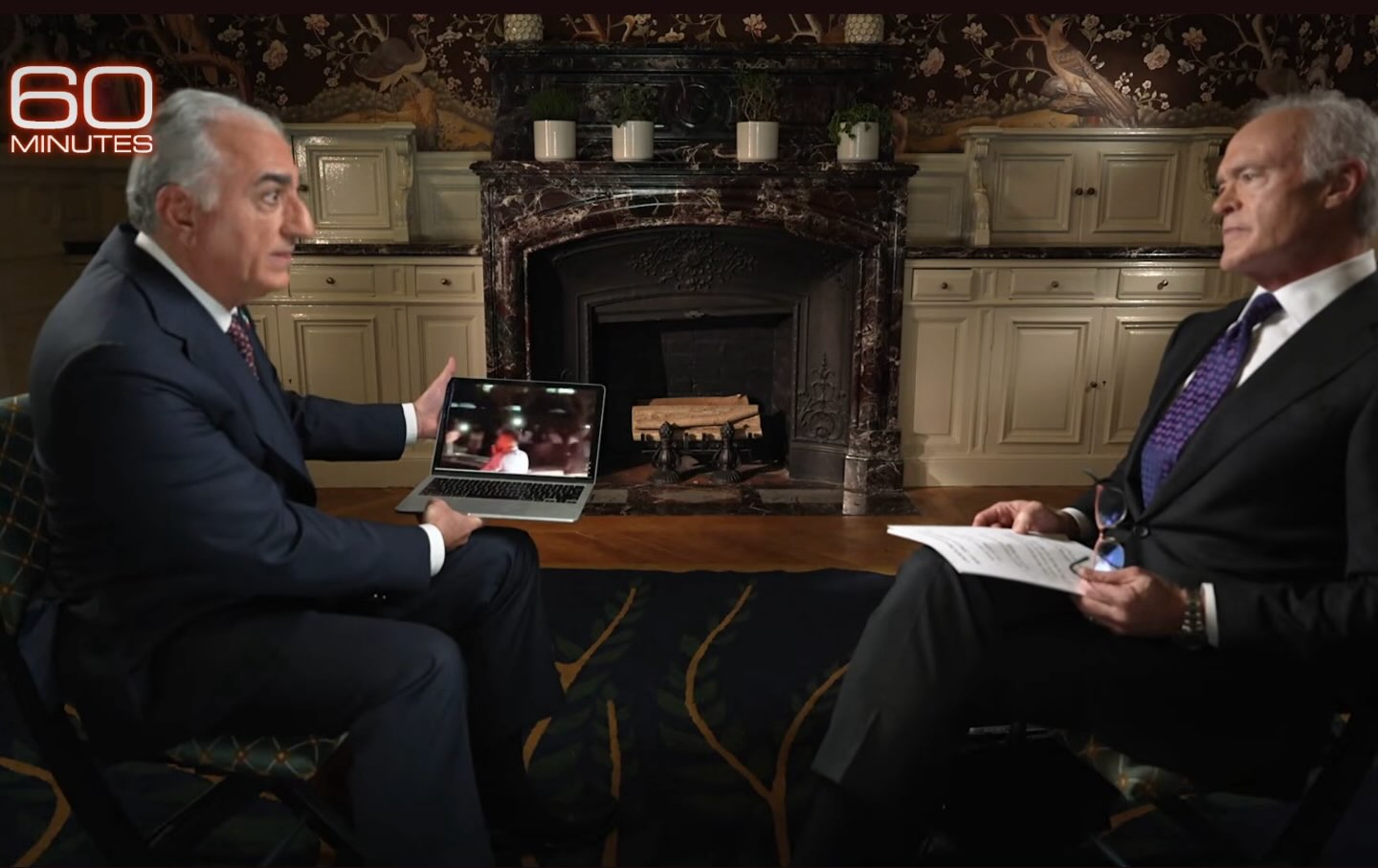
The Corporate Media Is Head Over Heels for the Iran War The Corporate Media Is Head Over Heels for the Iran War
Donald Trump’s attack may be surreal, unjustified, and illegal. But that’s not stopping the press from turning the propaganda dial way up.

The Disturbing History of ICE’s “Death Cards” The Disturbing History of ICE’s “Death Cards”
The Vietnam-era practice is yet another example of ICE agents thrilling to the brutality they have been encouraged to cultivate.
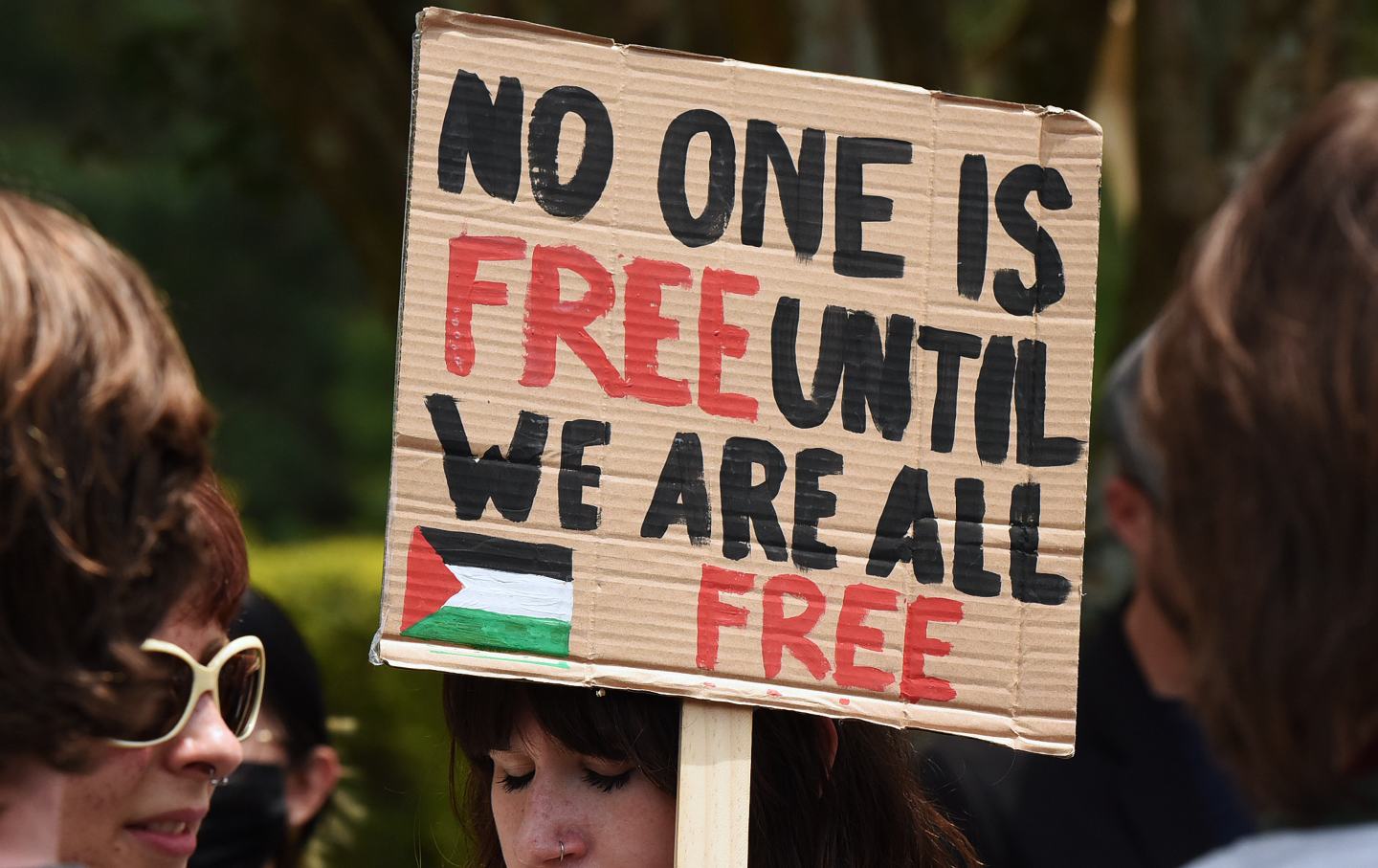
The American Universities Programming Israel’s Killer Drones The American Universities Programming Israel’s Killer Drones
Industry partnerships in higher education are pushing STEM graduates into the business of weapons manufacturing and genocide profiteering.

