American Dream, American Nightmare
This nation’s DNA is a double helix of beauty and brutality.
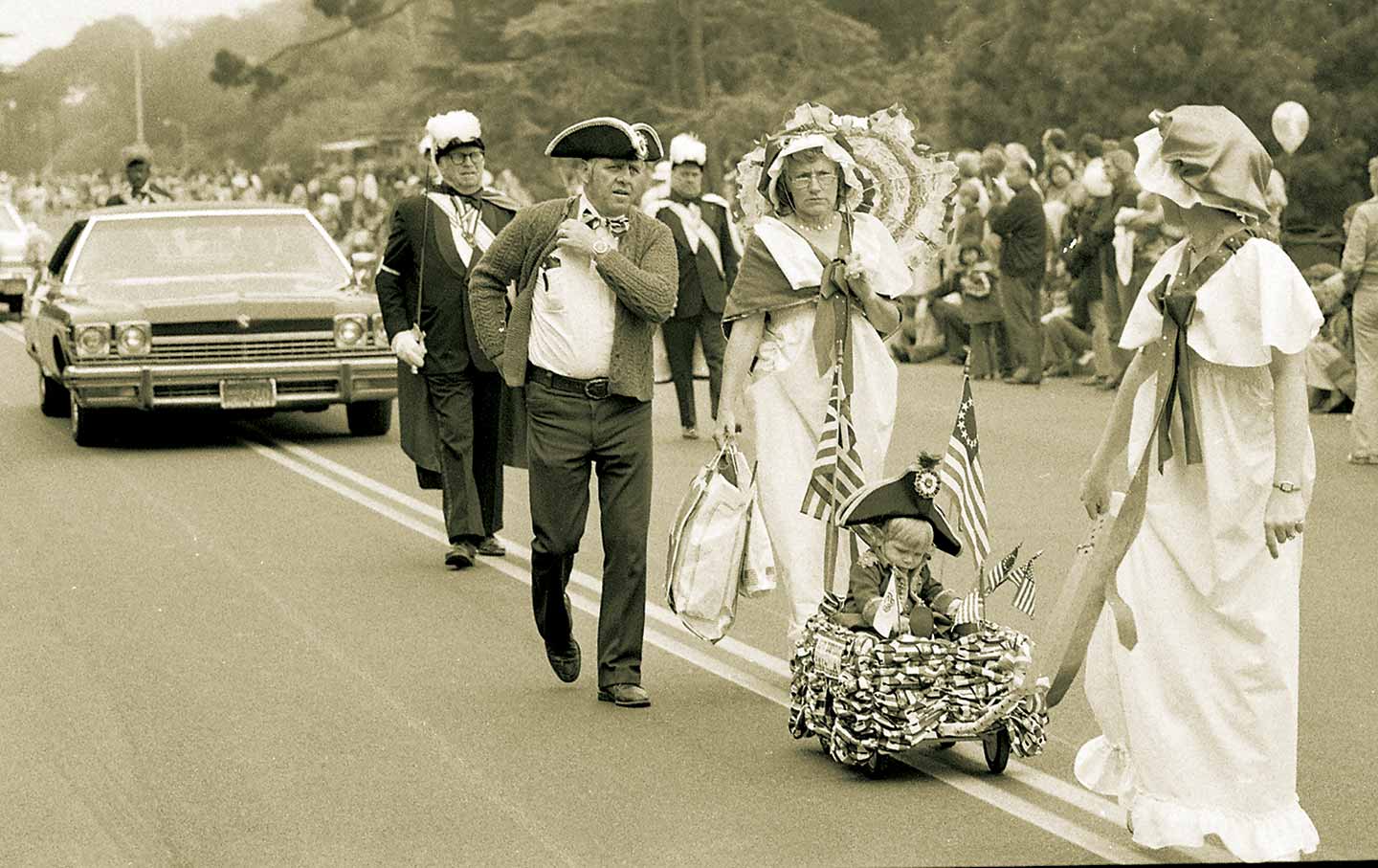
I arrived in the United States as a refugee in the summer of 1975. We had settled in Harrisburg, Pennsylvania, one of the original 13 colonies of what I call AMERICA™, the brand name of the United States. The Bicentennial occurred the next year, an event that was simultaneously novel and quaint, coming dressed in old-fashioned clothes and wigs. Perhaps Americans looked at the Bicentennial and saw their own history, but to me as a newcomer and a child, it was not only history but a story, and even more so a mythology that Americans enjoyed telling themselves.
I participated in the patriotism because, as a child, I had no other choice, performing the Pledge of Allegiance every morning at school and going on a field trip a few years later to watch the movie 1776. The movie seemed strange even back then, as if my slightly skeptical refugee self intuitively knew that my school was engaging in the kind of patriotic inculcation that would make the current presidential administration proud. A musical about the founding fathers did not prove, however, to be an effective means of ideological indoctrination for an 11-year-old.
250 Years of Searching for a More Perfect Union
By then we had moved to San Jose, California, with its own mythology about missions and padres and grateful Indians. In the Golden West, we were the grateful refugees, and we had found the answer to the question “Do You Know the Way to San Jose?” An hour from the Pacific coast, San Jose was one of the places where the AMERICAN DREAM™ came to rest. Here, my parents ran a Vietnamese grocery store, while I was hired for my first job at the age of 16 in California’s Great America amusement park. I operated roller coasters in Yankee Harbor, my uniform consisting of bell-bottom slacks, a shirt with a ruffled collar, and a tricorn hat. Half the adolescent crew, myself included, were fired before summer’s end for recklessly endangering our lives while riding the roller coaster without safety restraints. What do you expect from adolescents paid the minimum wage?
Many decades later, it is safe to say that I achieved the AMERICAN DREAM™. This came with a cost, paid in the coin of amnesia. It took me decades to reflect on how my family’s arrival in Pennsylvania occurred at Fort Indiantown Gap, an Army base with roots in the white-settler fight against the Indigenous peoples of the region. By 1700, most of the Susquehannock, also known as the Conestoga, had been wiped out by warfare and disease. In 1763, a white-vigilante gang called the Paxton Boys massacred at least 20 of the Conestoga. A few years ago, I looked at the deed of my parents’ first house, bought after we’d left the refugee camp at Fort Indiantown Gap, and discovered that it was located in Lower Paxton Township. We had put down roots on land cleared by genocide, part of the conquest that the poet William Carlos Williams, in his history of our country, In the American Grain, called an “orgy of blood.”
It is a fantasy to believe that we can separate the dream from the nightmare, destiny from orgy, liberation from conquest, the openness of the frontier from the enclosures of reservations and slave-labor camps and detention centers like Angel Island, where Chinese immigrants committed suicide and carved poems into the walls. To comprehend the rage and despair of these immigrants, expressed more than a century before the concentration camps of ICE, an American would have to read Chinese or seek out the translations. An American would have to do work in order to recognize how our American DNA is a double helix of beauty and brutality, a weave that binds our present to our past.
To weave a different future than what the past has knitted for us requires work. This work calls for maturity, wisdom, courage, responsibility, shame, humility, and knowledge. These virtues, along with a willingness to call for reconciliation, redistribution, and reparations, are needed if we are ever to achieve justice. But so long as our ostensible leaders prefer the cosplay of liberty rather than its reality, so long as many Americans continue to pay the price of the ticket for the thrill rides of Great America, we will remain very far from our moment of truth.