
The Higher Education Revolution We Need to Have
Our universities are selling us out. If we want that to change, we have to change the way they’re run.
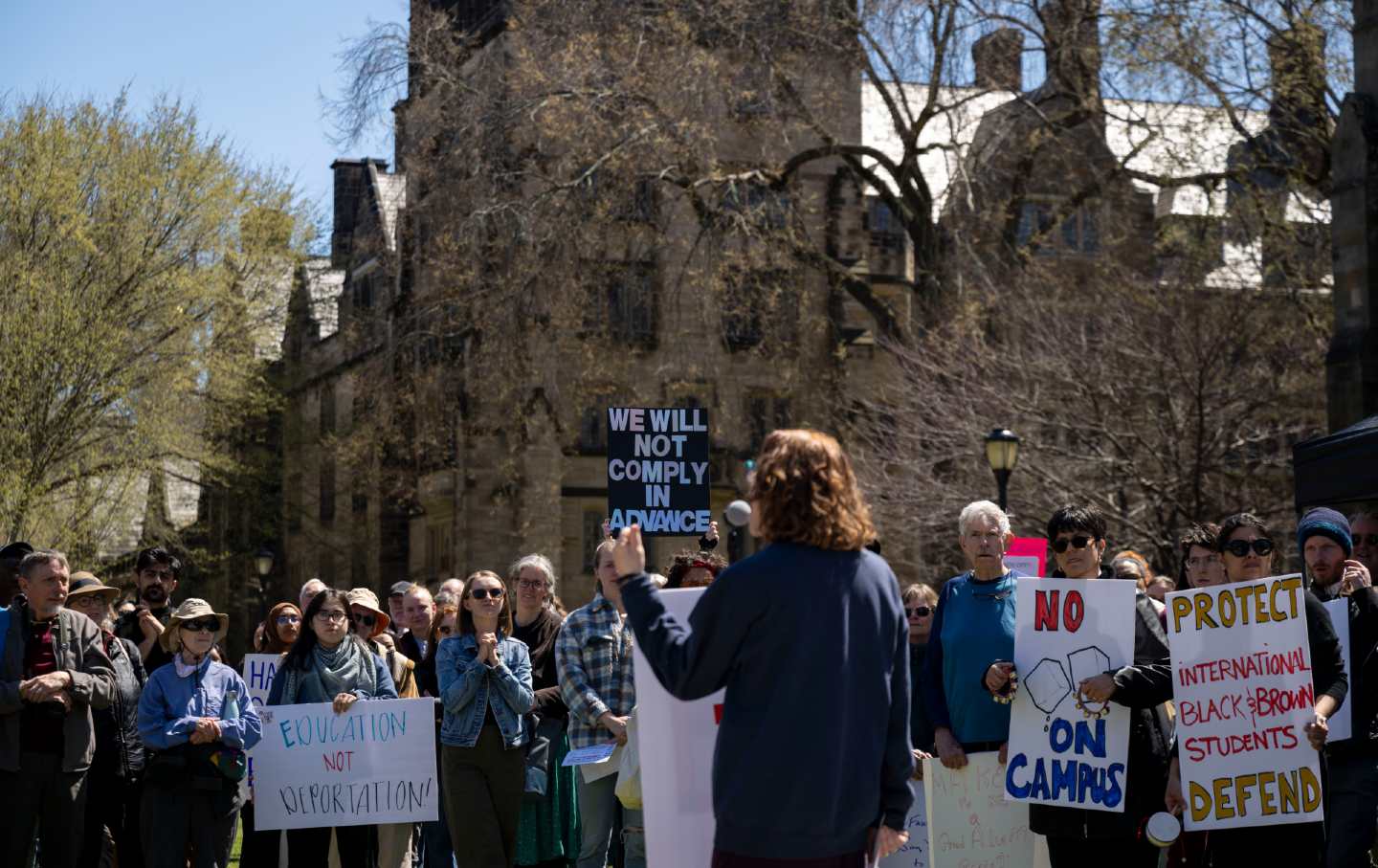
Yale University faculty members rally on campus on April 17. 2025, to call on administrators to protect academic freedom at the university against pressures from the federal government.
(Tyler Russell / Connecticut Public via Getty Images)In May, two law professors, Daniel Hemel at NYU and David Pozen at Columbia, posted a pre-print of a paper soon to be published in the University of Pennsylvania Law Review, titled “In Search of University Democracy. ”After reading the article, I realized how cheeky the title actually was. In fact, the modern American university is anything but democratic, and searching for “university democracy” is like a game of Where’s Waldo, except that Waldo really isn’t anywhere to be found.
For Hemel and Pozen, universities are “liberal autocracies” run by trustees and the senior administrators they install. In private institutions, current trustees appoint new trustees; in public institutions, politicians often select them. The people who actually keep the university humming—the faculty, the staff, and the students—generally have little real say in the direction of their school, even if there are advisory bodies such as university senates to offer a veneer of consultation to the masses.
This model of university governance is peculiarly American. Hemel and Pozen contrast how things work in the US with a stakeholderism in university governance that is far older than any American institution of higher learning. At Oxford and Cambridge, for instance, “[t]housands of academic staff (professors, lecturers, readers, librarians, and so forth) sit on the ‘sovereign body’ that has ultimate legal authority over the institution.”
Hemel and Pozen also postulate that the unaccountability of trustees in American institutions of higher learning makes them more vulnerable to intimidation and acquiescence:
As the game theorist Thomas Schelling observes, “the power of a negotiator often rests on a manifest inability to make concessions.” Applying this insight to international diplomacy, political scientist Robert Putnam has argued that when the leader of a nation-state faces only loose domestic political constraints, “the more he can be ‘pushed around’ by other leaders in interstate bargaining. A leader gains a ‘bargaining advantage’ vis-à-vis foreign counterparts when she can credibly say: ‘I’d like to accept your proposal, but I could never get it accepted at home.’”
This paragraph leapt out at me given that my own university, Yale, has reportedly been working to strike a deal with the US Department of Justice to resolve trumped-up charges of impropriety in admissions at the medical school and other academic units. Over the past two weeks, alumni, faculty and students have spoken out against Yale’s imminent capitulation to the Trump administration and Justice Department, but the trustees don’t have to listen. They have spurned advice even from distinguished members of their own law faculty.
This is a pattern. All last year, alumni, faculty, and students tried twice to meet with the board of trustees. They were rebuffed. It’s not surprising that liberal autocrats would disdain meeting with their subjects, but Hemel and Pozen, like Schelling and Putnam, highlight how Yale and other universities’ governance structures make them weaker in this era of attacks on higher education. The trustees are unconstrained in making expedient but foolish choices because those who offer critiques and counter-proposals simply don’t matter.
While faculty, students, staff, and concerned alumni from schools across the country have their hands full right now trying to push back on the authoritarian threat against higher education, our trustees are playing the game of appeasement. As Zachary Clifton noted last week in The Nation, Yale’s attempts to avoid the wrath of Trump and his minions have failed. Instead, trustees have to negotiate over bogus charges, opening up Yale to broad and sweeping demands they will have a hard time resisting, as the way universities work makes them easy targets, easy to be “pushed around.”
The truly radical nature of Hemel and Pozen’s piece emerges in its final pages—in the words of Tracy Chapman, they’re “talking about a revolution,” though, in the couched language of a law review article, it “sounds like a whisper.” Re-creating the governance of modern American universities on a stakeholder model means overthrowing the liberal autocrats who govern us now.
I mean, who really thinks that hedge-fund managers, corporate titans, and the doyens and doyennes of high finance that dominate our boards of trustees ever had our best interests at heart? If it wasn’t clear before 2025, it sure is now. Trustees are willing to sacrifice key values for institutional survival, however diminished. Not to be too crude about it, but as long as Yale’s endowment can be protected, academic freedom is an afterthought. When the Yale chapter of the American Association of University Professors recently reported on the decline in academic freedom at the university, the Yale administration ignored it. This is all par for the course.
So it is indeed time for a revolution. Yale’s and other institutions of higher learning’s governance models have to change. As Hemel and Pozen say, “Stakeholderism at U.S. universities could similarly arise through internal unrest or through legislatively initiated changes, such as state constitutional amendments or local laws conditioning property tax exemptions or other fiscal privileges on maintaining a broad-based voting membership.”
Thus, faculty, students, alums, and staff need to organize, unionize where possible, come together in solidarity to push for democratic reforms on campus, real representation in decision-making over the future of the university. And we have to build a legal case and political strategy for reform at the same time, changing the university charter if we must and bringing all requisite pressure to bear on these unaccountable systems. We should not treat liberal autocracy as a given.
Popular
“swipe left below to view more authors”Swipe →If we are to save higher education in America, it will not come through submission to the autocrats in DC, the self-flagellation of our institutions confessing our sins in public, vigorously nodding our heads, saying we are fully at fault for our own predicament. It will come through pushing back against the politicians.
Yes, reforms on campus are needed in many areas. If you work at a university like mine you see this place, warts and all, every day. Change is necessary—but not handed down by fiat or based on fear.
We’ve ignored university governance for far too long. Now that we’re being sold out by our trustees and presidents, opening up a campaign on stakeholder governance is more urgent than ever across higher education. The faculty, students, staff, and alumni of places like Yale have a deep commitment to the university, and creating a new model in which these groups assume leadership in a more democratic, accountable structure than we have now should be our goal. The liberal autocrats won’t like it. They’ll fight it. But we will win. After all, once people believed in the divine right of kings.
More from The Nation
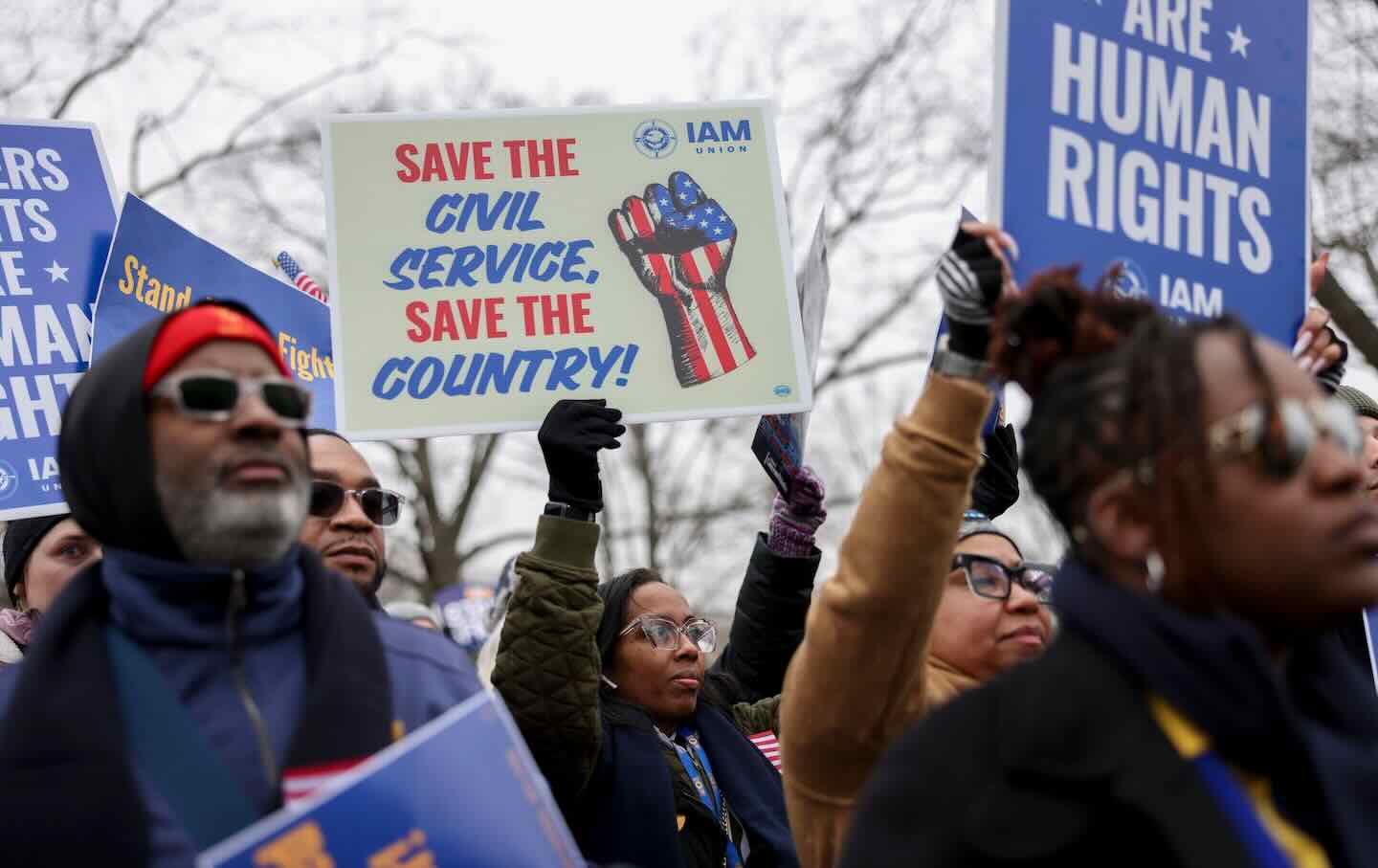
The Unseen Toll: Depression, Anxiety Plague Black Women a Year After Being Fired by DOGE The Unseen Toll: Depression, Anxiety Plague Black Women a Year After Being Fired by DOGE
Trump’s federal workforce cuts dismantled a job pipeline for Washington, DC’s Black community and gutted the well-being of the women who hold up that community.
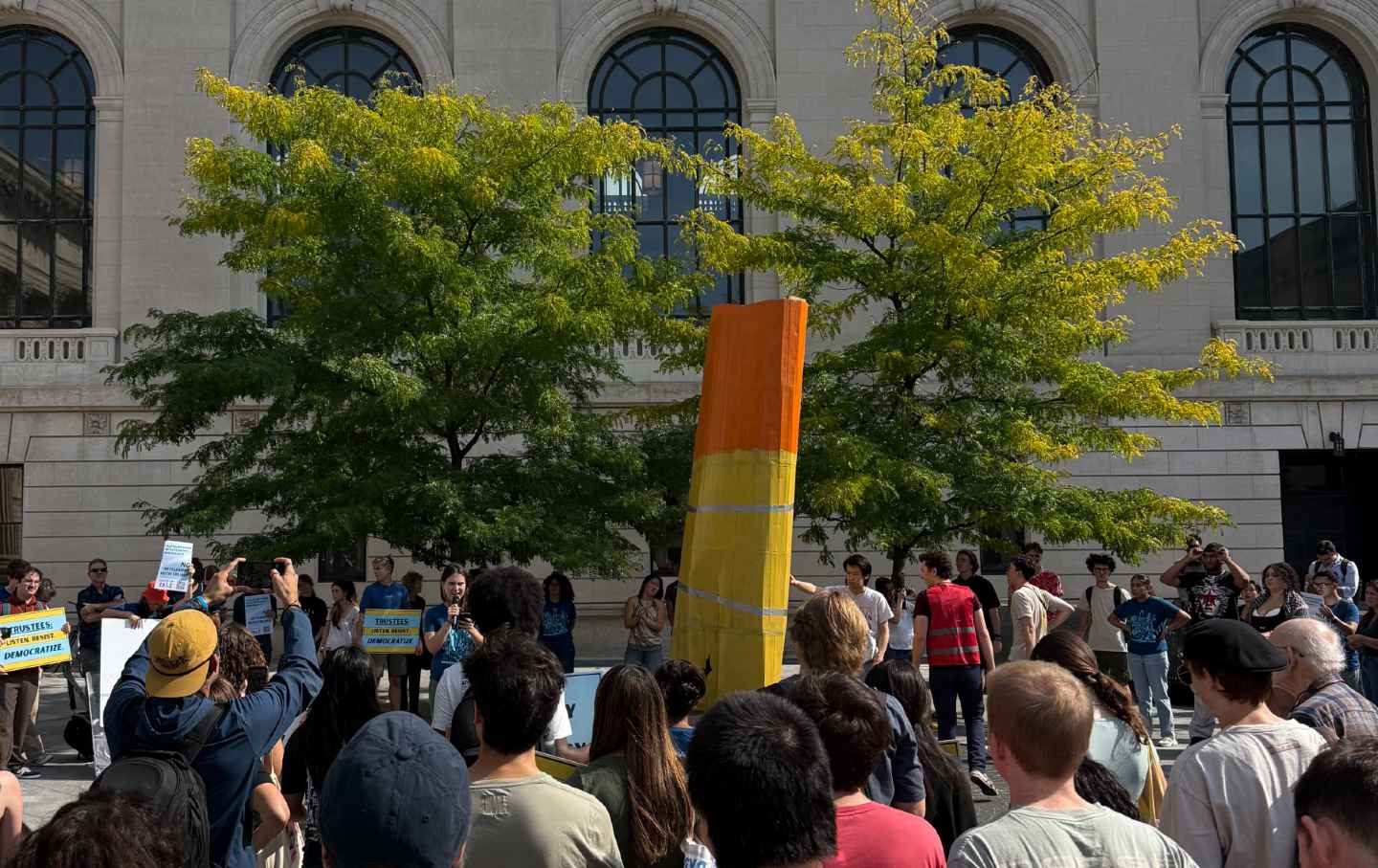
Yale’s Protest Tradition Is Back Yale’s Protest Tradition Is Back
For the first time in more than 50 years, Yale students gathered around an iconic sculpture to protest their university and their government.
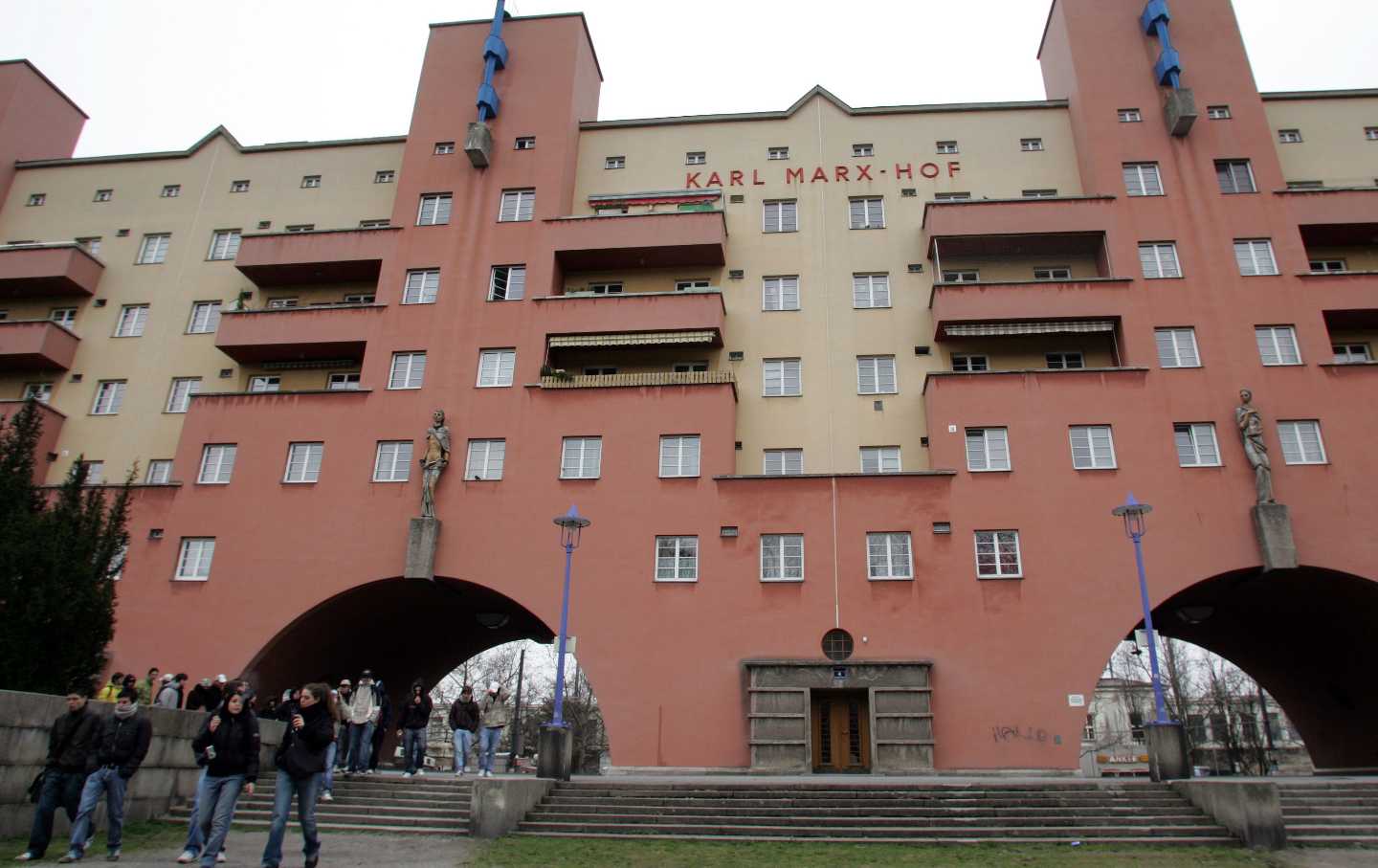
Red Vienna Is Still Alive Red Vienna Is Still Alive
The Austrian capital chose not to privatize the commons, and it shows.

How Mexico Proved Mainstream Economics Wrong How Mexico Proved Mainstream Economics Wrong
American analysts have long viewed inequality as a byproduct of technological causes. But Claudia Sheinbaum’s Morena Party has boosted workers’ income without any technological tr...
My Rape, the Cornell Case—and Why We Need Better Approaches to Teaching How Consent Works My Rape, the Cornell Case—and Why We Need Better Approaches to Teaching How Consent Works
I tried to process the experience of being raped by disassociating. We have to show our kids a better way.
The Death Penalty Has Become a Torture Machine The Death Penalty Has Become a Torture Machine
Christa Pike's botched lethal injection proves there is no humane form of execution.

