
Donald Trump’s Next Diversity Target: People With Disabilities
The president’s disdain for disabled people—and obsession with genetic superiority—harks back to a grim past.
President Trump’s suggestion last month that the tragic Potomac air crash was somehow the fault of disabled federal air traffic controllers was appalling—but it should have come as no surprise. Trump’s contempt for people with disabilities has been well documented, and it’s that animus, combined with the accelerating MAGA assault on diversity throughout the United States, that has disability rights advocates preparing to defend decades worth of hard-won protections.
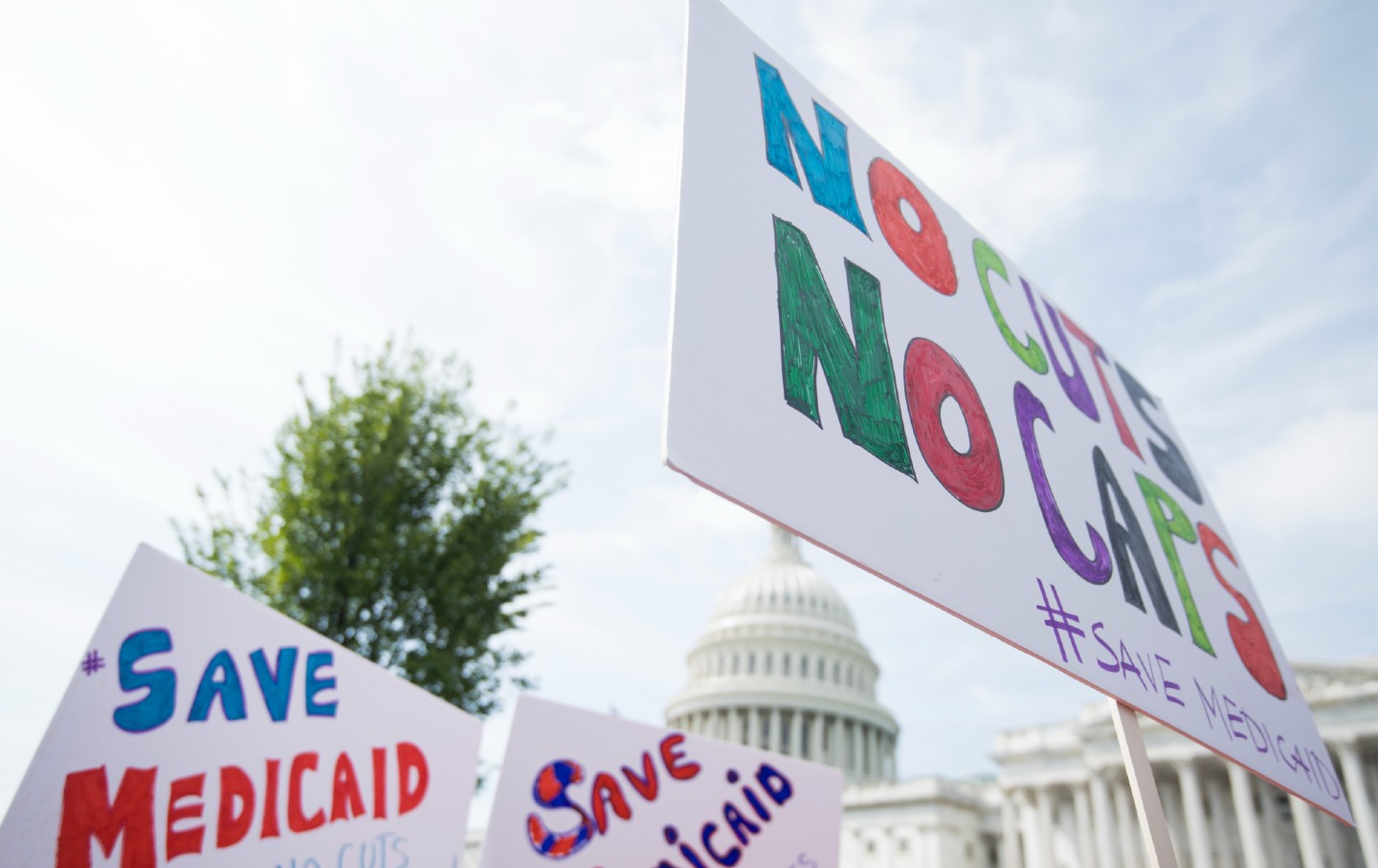
One month into his presidency, Trump has unleashed a government-wide attack on people with disabilities, from anti-diversity executive orders to proposed special-education rollbacks to threats to slash programs like Medicaid that are lifelines for disabled people across the country. If successful, these actions could have catastrophic consequences for millions of Americans, according to disability rights experts.
“This is a crisis for the disability community, and the threat is extremely serious,” Maria Town, president and CEO of the American Association of People with Disabilities, told The Nation. “These changes have the potential to erode decades of progress that the disability community has fought tooth and nail to achieve.”
Within 48 hours of taking office, Trump signed two executive orders targeting what he called “illegal” diversity programs—commonly referred to as DEI or DEIA—in both the federal government and the private sector. Trump and his MAGA minions claim that these programs, which promote the worthy goals of diversity, equity, inclusion, and accessibility throughout American society, discriminate against, well, them, and so they should be abolished.
At a time when Elon Musk and his DOGE henchmen are racing to “delete” entire federal agencies and fire thousands of government workers, diversity programs have become a convenient target for the drastic budget reductions that Trump seeks—under the bogus guise of “waste, fraud, and abuse”—in order to cut more taxes for rich people and corporations. Hence the MAGA/DOGE crusade to demonize and scapegoat diversity programs for all kinds of calamities, from plane crashes to wildfires to train derailments. Thus far, most of the focus on Trump’s diversity rollback has been on “DEI,” but it’s the “A”—for “accessibility”—that has alarmed disability rights advocates.
“The hard-fought-for acceptance of people with disabilities in society is compromised every time Trump uses DEIA as a bogeyman for everything that’s wrong in society,” said Michael Rembis, a professor of history at the University of Buffalo and director of its Center for Disability Studies. “This purge of federal employees is in part designed to remove people who are perceived to be unproductive for both racist and ableist reasons from the federal government.”
The Americans with Disabilities Act was signed into law by President George H.W. Bush in 1990. Trump’s anti-diversity executive orders roll back more than three decades of US policy since then——including executive orders signed by Clinton, Obama, George W. Bush and Biden—aimed at bringing more people with disabilities into the federal workforce and the private sector. From hiring and job training to career development and workplace accommodation, these policies have given many disabled people new opportunities to thrive, and a new sense of dignity after generations of mistreatment in American society, from ostracization to institutionalization to forced sterilization.
Those advances are now at risk, and the impacts are already being felt nationwide, as funding cuts loom for community organizations that provide crucial services and support systems for disabled people, from home modification to job coaching to transportation and personal attendant services. “We’ve heard from many organizations across the country that are having to think about cutting their staff, reducing their services, or even closing their doors,” said Town.
Disability rights advocates warn that Trump’s anti-diversity executive orders are just a prelude to even more draconian attacks. For example, Trump’s avowed goal to eliminate the Department of Education could jeopardize special-education programs for roughly 7.5 million students—15 percent of the US student population. Trump’s plan to cut billions in grants issued by the National Institutes of Health threatens long-term research and development focused on life-saving—and life-improving—treatments for millions of Americans. And, of course, any cuts to Social Security, Medicare, and particularly Medicaid—and let’s face it, the GOP wants to eliminate or privatize these programs altogether—will disproportionately affect millions of disabled people who rely on the programs to survive.
“It would be catastrophic,” Rembis said of potential cuts to Medicaid. “For many people, Medicaid is literally their lifeline. It’s what sustains them. People who depend on these services to live wouldn’t have the medical equipment, the prescriptions, the healthcare, or the daily supports they need if these programs were limited, let alone cut. Thousands of people would die.”
The Trump administration’s assault on government policies and programs that benefit disabled people is not just a scheme hatched in the bowels of The Heritage Foundation’s Project 2025 anti-government boiler room—although it is that, too. It’s also the natural evolution of Trump’s long-standing prejudice against people with disabilities. Trump’s disdain for disabled people is well known, from mocking reporter Serge Kovaleski and insulting wounded veterans to reportedly telling a relative with a disabled son that “maybe those kinds of people should just die.”
Rembis said he was “shocked and appalled” by Trump’s baseless accusation mere hours after the Potomac air crash that diversity hiring programs generally—and disabled air traffic controllers specifically—were to blame for the tragedy. Trump presented zero evidence to back up his claim, as usual, but his goal wasn’t to present the facts to the public but once again to demonize and scapegoat marginalized communities any time something bad happens in America.
Popular
“swipe left below to view more authors”Swipe →Joseph A. Stramondo, a professor of philosophy and an expert on bioethics and disability at San Diego State University, said Trump’s contempt for people with disabilities appears to be rooted in a binary worldview in which the so-called “makers” who build things are to be celebrated, while the so-called “takers” who supposedly leech off society are to be shunned—or removed entirely. This Manichean view, Stramondo said, owes much to eugenics, the discredited early-20th-century pseudo-scientific theory that ostensibly aimed to “improve” human genetics, but in practice targeted tens of thousands of “undesirable” members of American society, including poor, non-white, disabled, and “mentally defective” people, for institutionalization and forced sterilization.
“Trump uses eugenic rhetoric and plays on stereotypes around disability, race, and gender for political gain,” said Stramondo. “The idea that there are some folks who draw more than their fair share of the public good and are therefore parasitic on the social fabric goes back hundreds of years, and it’s just as dangerous and toxic today.”
It’s no secret that Trump is obsessed with genetics, as demonstrated by his preoccupation with bloodlines and frequent comments about “good” genes, “bad” genes, “low IQ individuals,” immigrants “poisoning the blood” of America, and other bigoted remarks. In 1988, Trump famously told Oprah Winfrey that people must have “the right genes” to become rich. Since then, he has repeatedly compared his family to purebred “racehorses.” In 2020, Trump again invoked the “racehorse” theory to assure a mostly white Midwestern audience that “you have good genes in Minnesota.” And just last year, he intimated—outrageously—that immigrants commit murder because “it’s in their genes.”
Rembis, the University of Buffalo history professor, stopped short of calling Trump a eugenicist—“bigoted, racist, ableist, narcissist” were the words he used—but he said that Trump’s rhetoric about genetic superiority harks back to 1930s Germany. “Passing judgment and wanting to exclude people from society based on disabilities or perceived disabilities is certainly part of the legacy of eugenics.”
It’s worth noting that disabled people were among the earliest victims of the Holocaust, condemned to death by a Nazi program called Aktion T4, which involved the systematic murder of some 300,000 people in psychiatric hospitals in Germany, Austria, and elsewhere in Europe. Stramondo doesn’t expect anything remotely like that to happen in the United States, but he pointed out that sterilization and murder aren’t the only ways to advance eugenic goals. “You can practice and enforce eugenic ideologies that result in lots of people suffering and even dying just by doing something like eliminating Medicaid,” he said.
During a phone interview last week for this article, Rosemarie Garland-Thomson, the bioethicist, disability scholar, and senior adviser at The Hastings Center, reminded me that “all of us will become disabled if we live long enough.” It’s equally true, if less elegantly phrased, that most of us know someone with a disability—a friend, a family member, a coworker. That’s why disability advocates expect an outpouring of protest as the full scope of Trump’s anti-disability agenda becomes clear. The resistance will take many forms: lawsuits, marches, advocacy, and, of course, that most American form of dissent—direct-action civil disobedience.
“During the last Trump administration, we faced a serious threat to Medicaid, and so we came out in force, and we fought back,” said Stramondo, referring to the successful 2017 grassroots campaign to defeat the GOP plan to slash Medicaid and kill Obamacare. “We were fighting for our lives in the halls of Washington with nonviolent direct-action protests, and I’m sure we’re going to have to do it again. Whatever it takes.”
More from The Nation
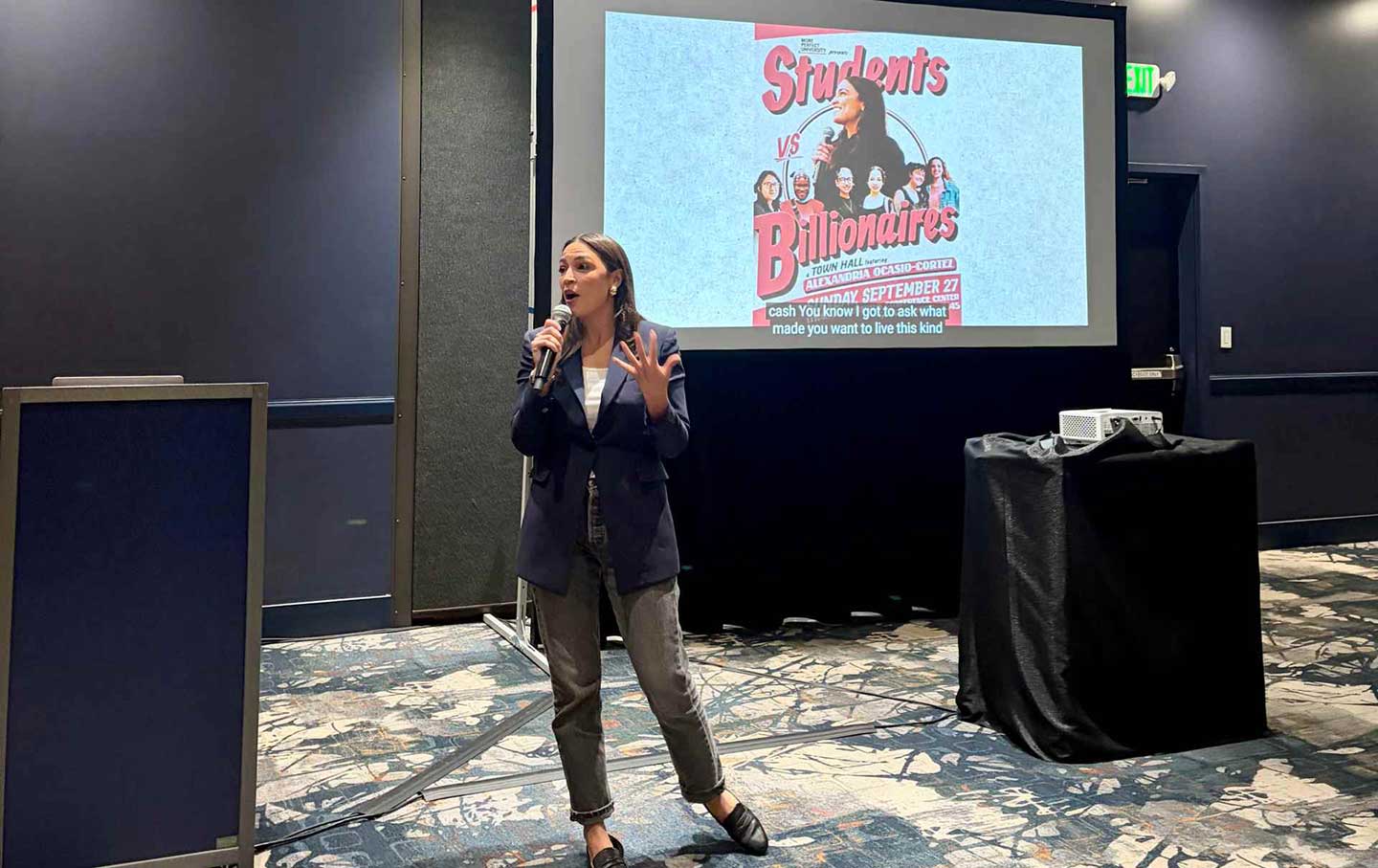
Cornell Students Challenge University Power at a “Students vs. Billionaires” Town Hall Cornell Students Challenge University Power at a “Students vs. Billionaires” Town Hall
Representative Alexandria Ocasio-Cortez spoke to Ithaca students about tuition hikes, sexual violence, free speech, and university governance.

Trump Has Made it Legal to Destroy Endangered Species’ Habitats Trump Has Made it Legal to Destroy Endangered Species’ Habitats
By redefining the meaning of “harm” in the Endangered Species Act, the administration is giving big corporations a gift they have long demanded.
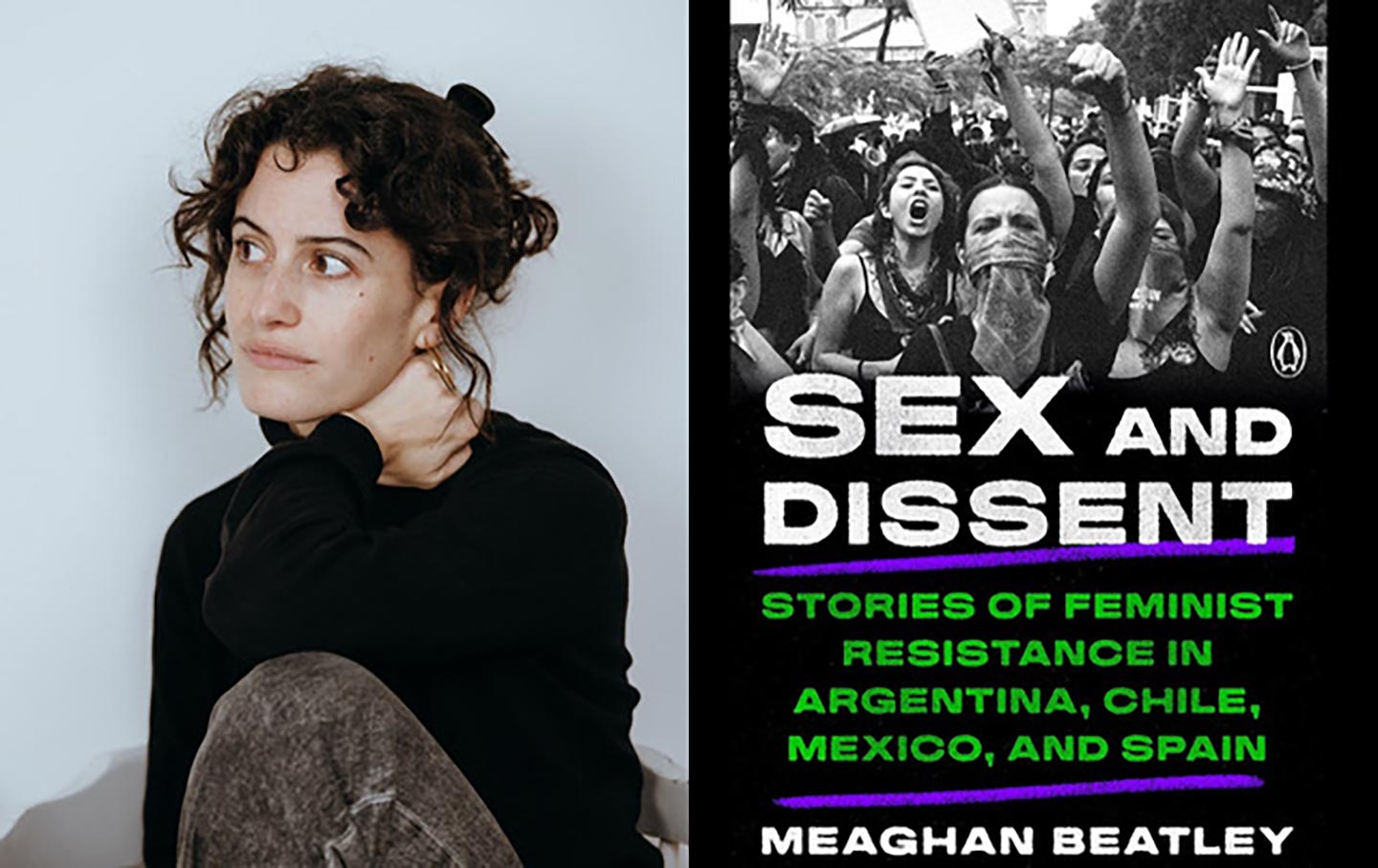
Journalist Meaghan Beatley on Latin America’s Feminist Resistance Journalist Meaghan Beatley on Latin America’s Feminist Resistance
A conversation with the author of Sex and Dissent about what American feminists can learn from the Green Wave movement.

As Cornell’s Rape Case Draws National Attention, Students Want Accountability As Cornell’s Rape Case Draws National Attention, Students Want Accountability
A new lawsuit alleging that a former student was drugged and gang-raped by Chi Phi fraternity members is sparking outrage in the Cornell community.

Irish Goalkeeper Gavin Bazunu’s Refusal to Play Against Israel Puts Him on the Right Side of History Irish Goalkeeper Gavin Bazunu’s Refusal to Play Against Israel Puts Him on the Right Side of History
Bazunu’s decision raises the perennial question: Why is a country that is currently committing a genocide allowed to compete in the first place?

