
Trump and His Crypto Cronies Have Big Plans. Be Afraid.
The incoming president and his Bitcoin-loving acolytes want to turn the government into their personal ATM.
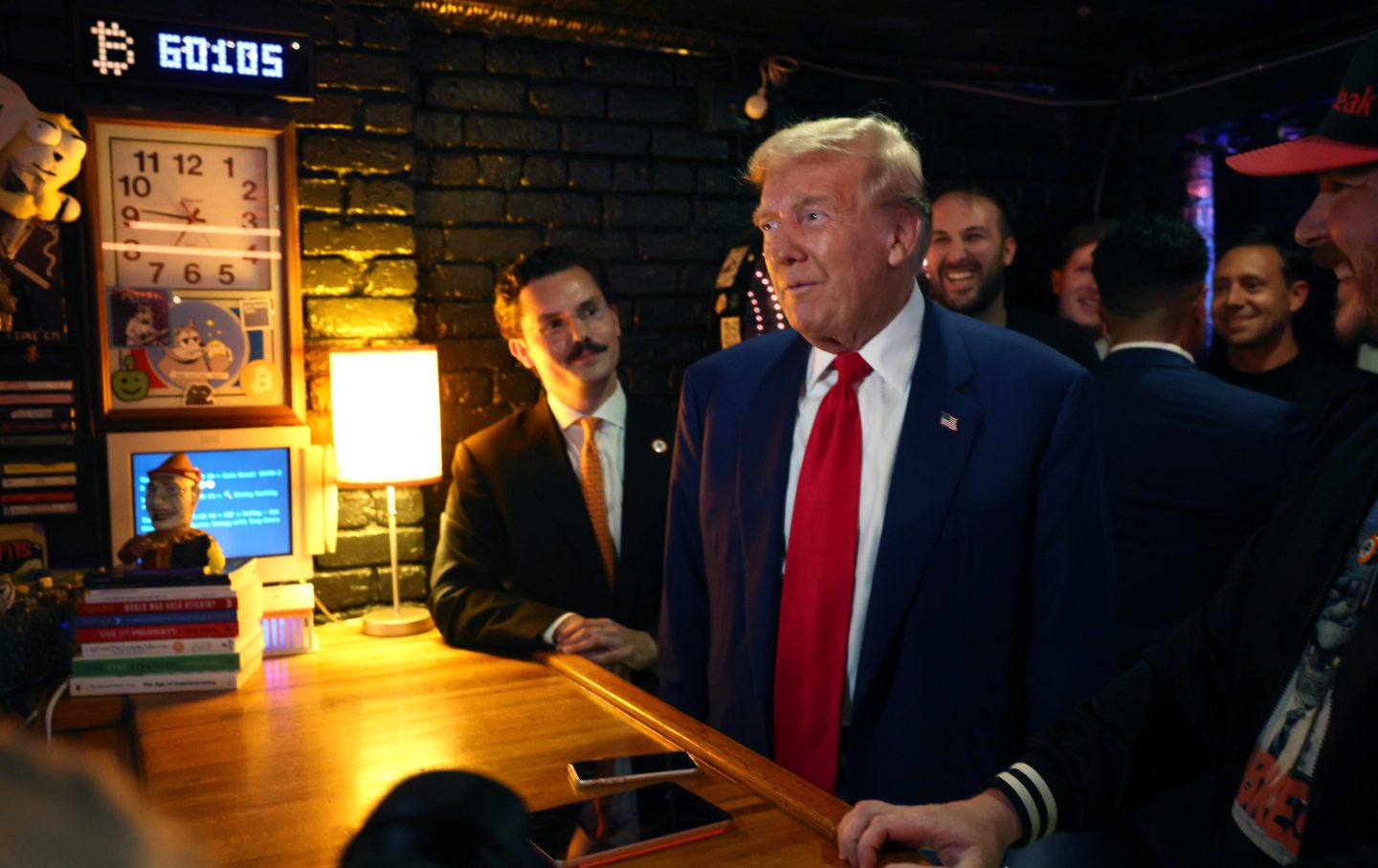
Donald Trump visits a cryptocurrency-themed bar called Pubkey in the West Village on September 18, 2024, in New York City.
(Spencer Platt / Getty Images)
Donald Trump hasn’t yet been sworn in as president, but one aspect of his second term is already coming into focus: self-dealing, patronage, and corruption on a scale that will dwarf that of his first stint in the Oval Office. From tax cuts to tariffs to digital currencies, Trump is building a government designed to redistribute wealth from working people to rich people in ways not seen since the Gilded Age. The result, experts say, will be higher prices, reduced consumer protections, and deeper economic inequality in the United States.
The danger of graft is real. The incoming Trump administration has the potential to be the most corrupt in more than a century, Joseph Stiglitz, the Nobel Prize–winning economist and professor at Columbia University, told The Nation.
“There’s an enormous risk of self-dealing here,” Stiglitz said. “The danger is not only conflicts of interest, but a mindset among Trump and his cronies in which they don’t even understand the concept of conflicts of interest. The irony is that here you have a president who was elected on an allegedly ‘populist’ platform engaging in the most massive pro-billionaire, pro-wealth redistribution in US history.”
Trump has tapped no less than half a dozen of his fellow billionaires to serve in and around his administration, including Elon Musk, who spent more than $250 million to elect Trump. Many of these oligarchs, who boast a combined net worth north of $450 billion, have no government experience. Their only qualifications appear to be huge Republican campaign contributions and, of course, slavish fealty to Trump.
Many of these latter-day plutocrats are peddling cryptocurrency, the highly volatile, speculative digital “money” that’s not backed by any physical asset but rather “mined” by expensive, energy-intensive computer servers and then traded largely based on Internet rumors. Wealthy crypto executives and investors supported Trump and other Republicans with millions of dollars in campaign donations. Now, they aim to cash in.
Newly emboldened crypto bros are hawking a Senate proposal to establish a federal crypto reserve fund, in which the US government would buy $100 billion worth of Bitcoin and then hold it in a “strategic reserve,” like a digital version of gold or oil. The bros insist that crypto will soar in coming years—Bitcoin recently hit a record $100,000, presumably in anticipation of the favors that Trump and GOP lawmakers will shower on the industry—and so they claim a US crypto reserve will help the federal government pay down the deficit without costing taxpayers a dime.
Dean Baker, senior economist at the Center for Economic and Policy Research, says that’s nonsense. In fact, the Trump plan appears to be a brazen scheme to artificially pump up the price of crypto at taxpayers’ expense, allowing wealthy crypto holders, including the Trump family, to cash out into US dollars, according to Baker. In the process, the US government—really, US taxpayers—will inflate the price of this otherwise worthless digital asset by creating artificial demand. In other words, US taxpayers will be artificially subsidizing an industry-based-on-nothing whose financial gains flow disproportionally to wealthy asset holders.
“Crypto has no inherent value, so why would the government want to buy it?” Baker told The Nation. “There is literally no rationale other than to give money to Trump and Musk and their crypto buddies. If they can tap into the government, they’ve found the ultimate sucker. And very soon, they will control the government.”
Meanwhile, Musk says his new nongovernmental Department of Government Efficiency (DOGE) will cut $2 trillion in “waste” from the $6.75 trillion federal budget. It’s a fairly shameless project for a billionaire whose companies over the last decade received more than $15 billion in federal contracts from the Department of Defense, NASA, and other agencies. Now, the unelected tech mogul wants to slash trillions in spending, beggaring the concept of conflicts of interest.
Musk’s “DOGE” plan to make the government more “efficient” is just a new spin on the decades-long Republican crusade to eliminate or privatize government agencies and cripple consumer protections to pay for tax cuts for the wealthy. Economists call it the “starve the beast” strategy, and by now, the playbook is familiar: Step One: Create a budget crisis by passing tax cuts for the wealthy. Step Two: Declare that the budget crisis requires massive cuts to government programs because they’re unaffordable. Step Three: Shut down the government. Or try to, anyway.
“I don’t think Elon Musk is going to propose cuts to the billions of dollars he receives in government contracts,” said Stiglitz. The Tesla CEO may benefit from other regulatory rollbacks, however, such as the recent proposal by Trump’s transition team to eliminate autonomous vehicle safety reporting rules opposed by Tesla, whose electric vehicles are the deadliest cars on the road, according to a recent study.
The main driver of economic inequality moving forward, of course, will be Trump’s plan to extend his $2 trillion 2017 tax cut, which disproportionately favored rich people and corporations. Expect more of the same in 2025—only at a much greater cost—perhaps $5 trillion or more, according to the Bipartisan Policy Center. Despite what Trump administration economic officials insisted at the time, the 2017 tax cut did not, in fact, pay for itself. Instead, it was “skewed to the rich, expensive, and failed to deliver on its promises,” according to a recent report by the nonpartisan Center for Budget Priorities. “Like the Bush tax cuts before it, the 2017 Trump tax cut was a trickle-down failure,” the report’s authors concluded.
Popular
“swipe left below to view more authors”Swipe →Meanwhile, Trump’s proposed tariffs could cost the average US family $2,600 per year, according to UCLA economist Kimberly Clausing. That’s because US importers, not foreign countries, will bear the costs of the tariffs and transfer most of those costs to consumers, despite Trump’s bogus claims to the contrary. Clausing and her colleagues argue that Trump’s plan to impose new tariffs will amount to a regressive tax that will “cost jobs, ignite inflation, increase federal deficits, and cause a recession. It would also shift the tax burden away from the well off, substantially increasing the tax burden on the poor and middle class.”
There’s also a serious risk of self-dealing and patronage in US tariff policy. Trump’s first administration granted tariff exemptions to companies “associated with greater campaign contributions to Republican politicians and with smaller contributions to Democrats,” according to a recent paper in the Journal of Financial and Quantitative Analysis. The study’s authors concluded that this process “worked—at least partly—as a very effective spoils system allowing the administration of the day to reward its political friends and punish its enemies.”
It’s a stark warning about cronyism and corruption heading into Trump’s second term. If past is prologue, Trump’s tax cuts will favor the rich, his tariffs will hurt the poor, his crypto policies will help his friends, and his trade policies will benefit the highest bidder—this time on a scale that will make his first term’s ill-gotten gains look like chump change. “I don’t think there’s been a period in my lifetime with more potential for a massive government role in increasing inequality than what Trump is proposing,” said Stiglitz. “I think you’d have to go back a century or more to find anything like this.”
More from The Nation

The White Man Can Always Take What You Have The White Man Can Always Take What You Have
In this week's Elie v. US, our justice correspondent breaks down the real message of the attacks on Ilhan Omar. Plus: the anti-trans case that will come for us all.

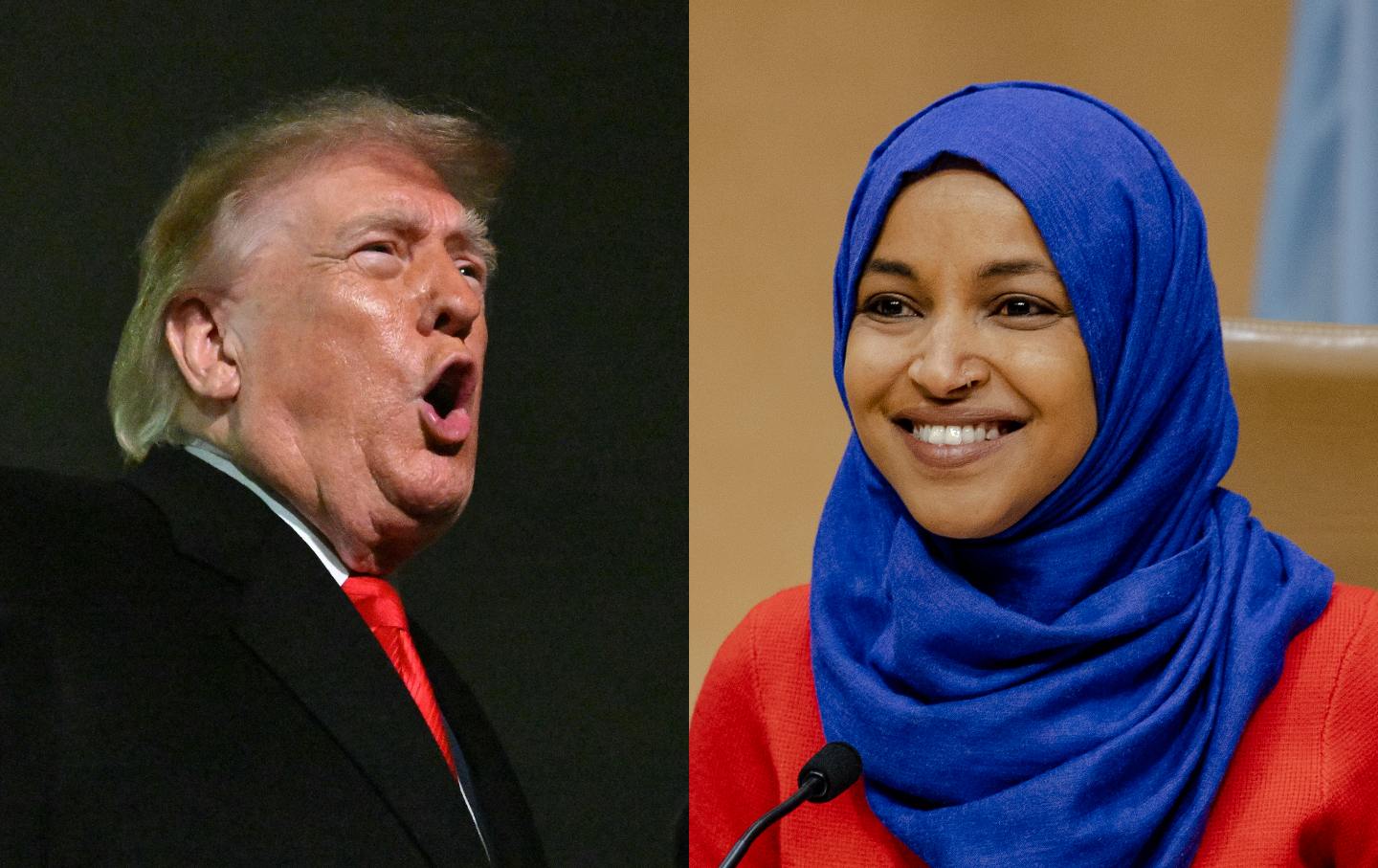
Where Is the Outrage Over Trump’s Racist Targeting of Ilhan Omar? Where Is the Outrage Over Trump’s Racist Targeting of Ilhan Omar?
The establishment press and some Democrats are strangely mute over the president’s flagrant abuse of the legal system.
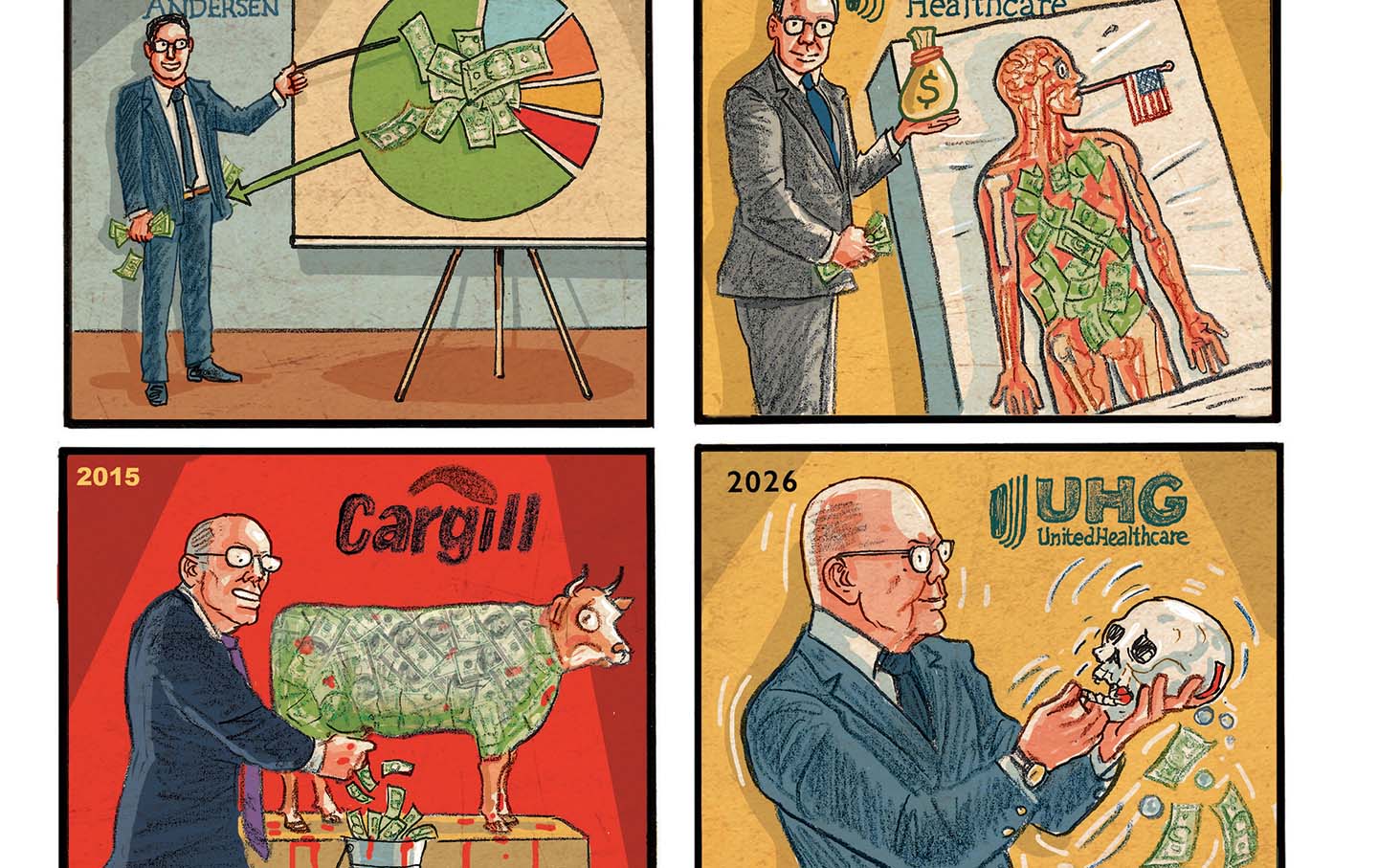
America’s UN-Healthcare Treatment America’s UN-Healthcare Treatment
The UnitedHealth group CEO’s savings plan.
Gina Hinojosa Is Showing Democrats How to Run Against Republican Grifters Gina Hinojosa Is Showing Democrats How to Run Against Republican Grifters
The Democratic gubernatorial candidate has closed the gap in Texas by focusing relentlessly on Greg Abbott’s corruption.

