
The EEOC Is No Longer Protecting Federal Workers From Gender Identity Discrimination
Recent decisions mean the agency will no longer process claims regarding harassment, the denial of bathroom use, or discrimination in hiring, firing, or promotion on the basis of gender identity.
When Cam, a federal worker who has worked for the government for eight years, came out as nonbinary to their colleagues, it was “nerve-racking,” they said. But their federal coworkers were supportive, and the environment felt accepting. After coming out, Cam used whatever bathrooms felt right for them. Being able to be open with their coworkers, Cam said, felt like making it to the top of “a mountain.”
Now everything has changed. Cam—a pseudonym to protect them from retaliation—still works for the same federal agency, but the reality for trans and nonbinary federal workers has been completely turned upside down. In the first days of his second administration, President Donald Trump signed an executive order directing federal agencies to “protect men and women as biologically distinct sexes.” Shortly after, the Office of Personnel Management sent a memo to all agencies telling them to implement the order by, among other things, ensuring that bathrooms and are “designated by biological sex and not gender identity.”
Now the Equal Employment Opportunity Commission, the federal agency charged with protecting federal and private-sector workers alike from illegal discrimination, has issued a decision that reverses its previous, decade-old stance that federal employees are protected from gender identity discrimination by Title VII of the Civil Rights Act. At the end of February, it found that law’s prohibitions against discrimination based on sex do not prevent a federal agency from forcing trans employees to use bathrooms that don’t align with their gender identity. The decision “is consistent with the plain meaning of ‘sex’ as understood by Congress at the time Title VII was enacted,” EEOC Chair Andrea Lucas said in a statement. “Biology is not bigotry.” It gives federal agencies official permission to deny access to bathrooms that align with people’s gender identities.
Related Articles
Today, Cam has started avoiding the men’s bathroom at work. Most of the time, they leave their workplace entirely to use gender-neutral bathrooms at a nearby building, which takes a half hour. “I just hope that nobody keeps an eye on it because I am away from my work computer,” they said. If the need is more urgent, they’ll use a bathroom on the first floor that doesn’t get used as frequently. “I am getting used to it, unfortunately,” they said. Still, they added, “I’m frustrated each and every time.”
“Before there were stepping stones and clear steps” Cam felt they could take to be accepted as themselves at work, they said. “Now I feel like those steps are not there and I’m on a hill of gravel.”
Former EEOC chair Chai Feldblum echoed how massive the shift was. “For 10 years, federal transgender employees had an absolute guarantee that they could use the restrooms and facilities consistent with their gender identity,” Feldblum told me. “That guarantee has now been pulled out from under them and then reversed completely.” After this decision, trans and nonbinary federal employees who find access to bathrooms that align with their identities at work cut off have no recourse. “What do these workers do on a day-to-day basis?” said an EEOC employee. “Where should they simply go to meet their basic biological needs?”
The evidence is that they will incur physical costs to avoid using the bathroom as much as possible. In a 2015 survey of transgender people, over half of respondents reported not using the bathroom when they needed it, while a third avoided eating or drinking so that they had to use it less. The health consequences were clear: Eight percent had experienced a urinary tract or kidney problem due to bathroom avoidance over the previous year. In a 2008 survey of transgender people in Washington, DC, who had problems using restrooms at work, 13 percent said it affected their employment by having to change or quit their jobs, negatively affecting their performance, or leading to excessive absences. In a pending class-action lawsuit brought by federal employees, the lead plaintiff, transgender Illinois National Guard employee LeAnne Withrow, says she regularly starves herself by skipping breakfast every day and often lunch and dehydrates herself by drinking a single cup of coffee and as little water as possible to avoid using the bathroom.
The EEOC decision was approved by a two to one vote; Kalpana Kotagal, the sole remaining Democratic commissioner after President Trump fired two others before their terms were up, dissented. “No one should have to risk harassment or health issues just to be able to provide for themselves and their families,” Kotagal said in a statement about her vote.
“Really we just want to go about our day like anybody else,” Cam said. “We are humans just like everybody else.”
Besides defending private-sector workers against violations of Title VII of the Civil Rights Act, the EEOC fields discrimination complaints from federal workers. But unlike in the private sector, where it can bring litigation but can’t issue decisions that set legal precedent, its Office of Federal Operations has a quasi-judicial power to issue decisions that affect the entire federal workforce. It was under those exact powers that, in 2015, the agency found that federal employees must be allowed to use bathrooms that align with their identities or they would be subjected to a hostile work environment. That came after a 2012 EEOC decision finding that Title VII’s ban on sex discrimination prohibits firing a federal employee based on their gender identity because such discrimination is based on sex. “You were fine when she was a man working for you,” Feldblum, the commissioner at the time who wrote those decisions, explained. “When she’s a woman, you fire her—the only thing that has changed is sex.”
Before the decisions Feldblum authored, the agency’s approach notably had acknowledged the existence of trans people but held that Congress hadn’t meant to cover them when it passed the Civil Rights Act. “We were correcting a legal mistake that had been made,” she said. “Legal logic caught up with social change.”
By contrast, the EEOC’s recent decision calls trans people “trans-identifying” and claims that a trans woman is “still a man” and a trans man is “still a woman,” while calling the trans woman who brought the case a male and using he and his pronouns. “Apparently, the Commission is best positioned to tell transgender workers who they are,” Kotagal said in her statement.
The EEOC’s decision doesn’t have any legal binding in the private sector, similarly to those Feldblum authored over a decade ago. Transgender employees in the private sector are still protected by the Supreme Court’s 2020 decision in Bostock v. Clayton County, in which the court held that Title VII’s ban on sex discrimination does in fact protect against gender identity discrimination. Federal-sector employees can take their claims to the courts outside of the EEOC.
But it will guide how EEOC investigators evaluate claims of discrimination that come to the agency from private sector workers. Lucas has already put a total pause on processing gender identity claims that don’t have to do with getting hired, fired, or promoted, such as harassment or the denial of bathroom use, and withdrew the agency from its own lawsuits against employers accused of gender identity discrimination. Now, because the agency holds that Title VII doesn’t protect workers from gender identity discrimination, even the few kinds of charges that had previously been allowed to proceed “will be dismissed as finding no cause,” Feldblum said.
Popular
“swipe left below to view more authors”Swipe →“I thought that I had rights before November 2025,” a gender-nonconforming former EEOC employee told me. “And then, after November 2025, I more and more realized I didn’t have those rights.” They filed a gender identity discrimination complaint through the EEOC’s federal-sector process, which felt like it had “significance,” they said; now such a complaint will get dismissed. They have since left the federal government and work in the private sector, but even that is not necessarily a safe haven. “I feel like it’s just a matter of time before the agency’s positions follow me into the private sector,” they said.
Indeed, Lucas is clearly not done. In late March, she issued another federal-sector decision finding that it isn’t a violation of Title VII’s protections for the Office of Personnel Management, which handles health insurance for federal workers, to refuse to cover gender-affirming care. Lucas has also recently urged women to file claims with the EEOC if a trans person uses the women’s restroom, signaling an appetite to find a case that could broaden this view to the private sector.
To Cam, it feels like “the progress that had been made” for trans and nonbinary people “is on pause.” A year ago, everything was “frightening, uncertain.” Today the uncertainty has dissipated; in its place is the actual rolling back of legal rights. The EEOC’s decision has become a “permission slip,” they said, to federal agencies to discriminate against trans and nonbinary employees. It’s “trying to flip back to keeping trans people from being trans.”
But Cam is confident this regression is temporary. “This is not the end. It’s just a significant bump in the road and we are going to win those rights back.”
“We know ourselves best,” they said. “Law doesn’t determine that for us.”
More from The Nation
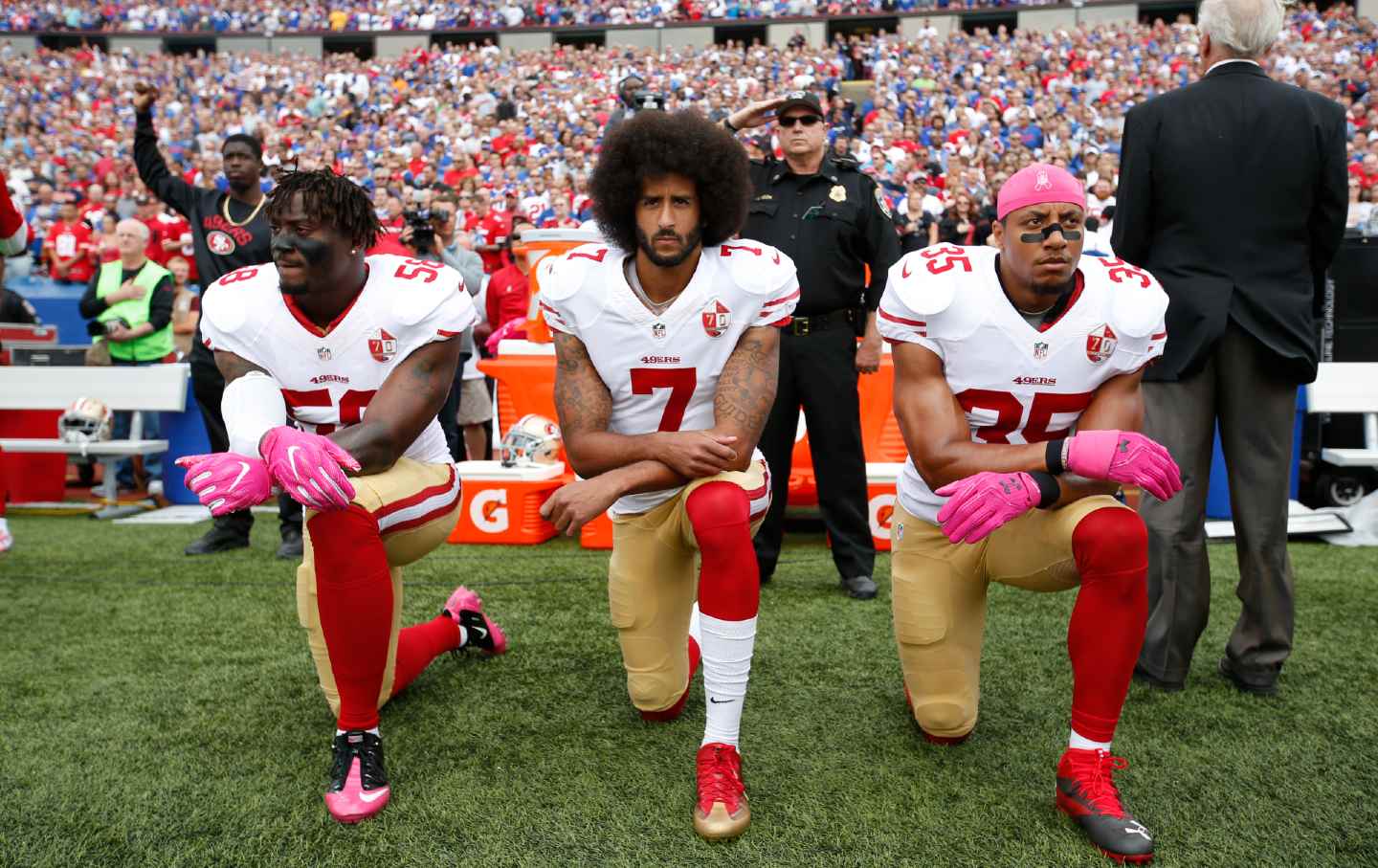
We Can’t Let the Kaepernick Era Be Erased From History We Can’t Let the Kaepernick Era Be Erased From History
Critics say the Black Lives Matter movement in sports went too far. In reality, it didn’t go far enough, and the backlash to it has been brutal.
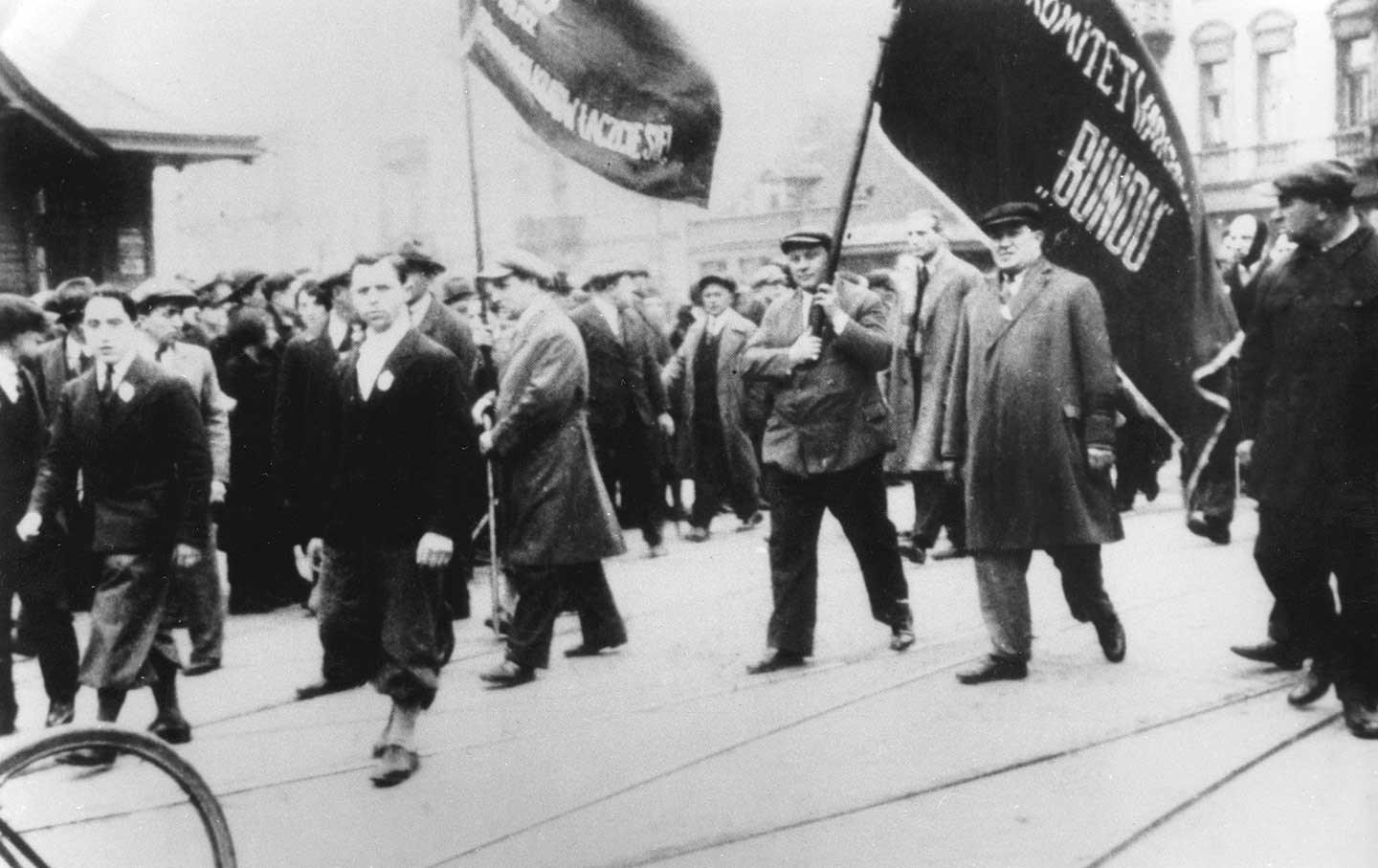
The Bund and the Radical History of Jewish Anti-Zionism The Bund and the Radical History of Jewish Anti-Zionism
Molly Crabapple’s Here Where We Live Is Our Country revisits the past of the Jewish Labor Bund and considers what it might mean for our future.
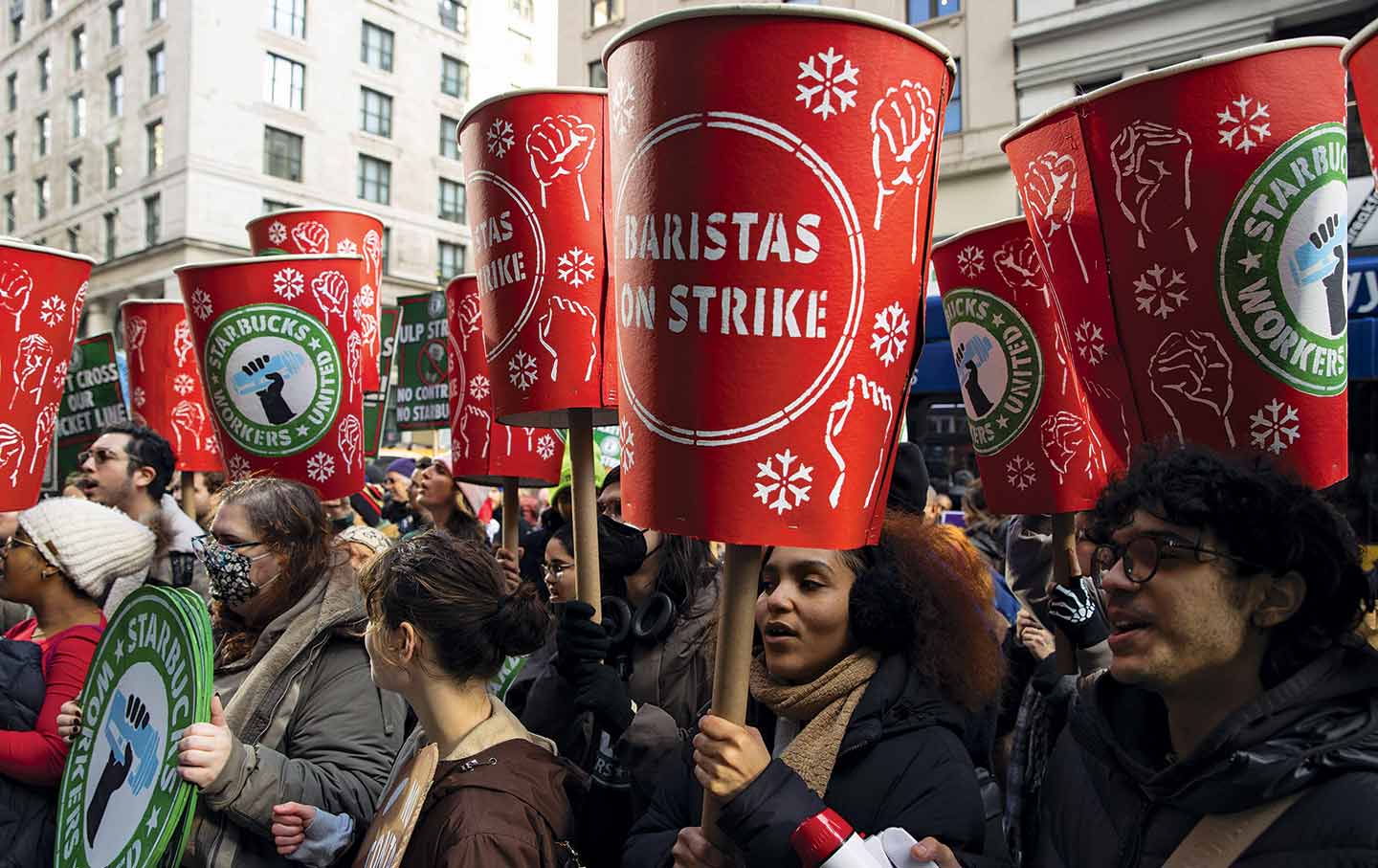
The Making of the Millennial Working Class The Making of the Millennial Working Class
A new book follows a rising generation of labor organizers as they attempt to unionize their workplaces.

Can We Save Democracy? Can We Save Democracy?
Hélène Landemore’s case for an alternative system of popular government.
The Fissures and Fractures Behind the Right’s Pink Facade The Fissures and Fractures Behind the Right’s Pink Facade
After Roe was overturned, some young women are turning more hard-line on abortion—but others are fleeing conservatism altogether.
Letters From the October 2026 Issue Letters From the October 2026 Issue
The long shadow of AIPAC… The AI revolution will not be televised… Speaking of taxes… Reporting on abortion… (online only)

