Stigma Makes Abortion Criminalization Possible
A Nebraska mother and daughter were put behind bars for self-managing an abortion, but not because of what the law says is illegal.
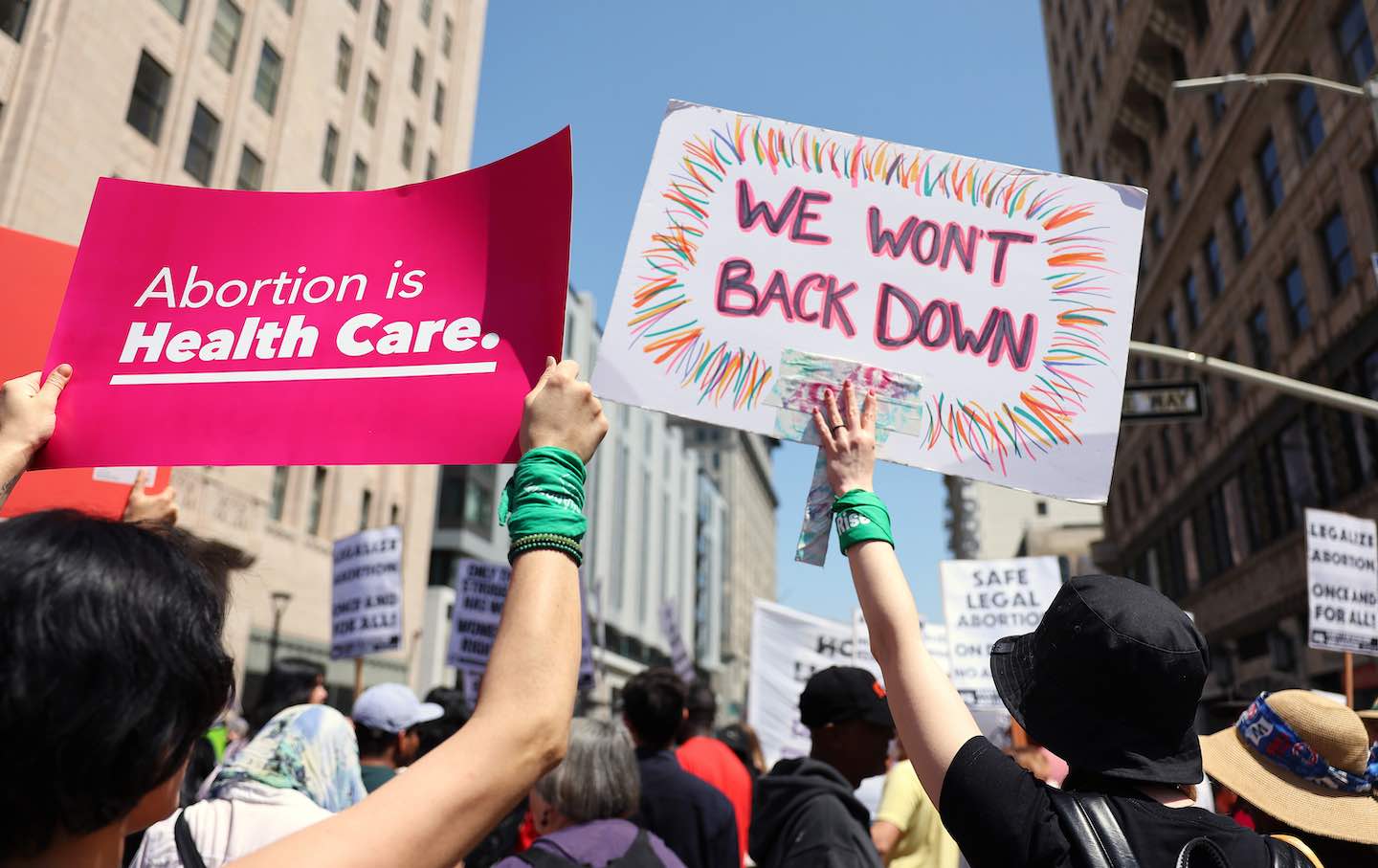
Protestors demonstrate at the March for Reproductive Rights organized by Women’s March LA on April 15, 2023, in Los Angeles, Calif.
(Photo by Mario Tama / Getty Images)Self-managed abortion is not a crime in Nebraska, and yet a teenager in Nebraska was recently sentenced to three months in jail and two years of probation for self-managing her own abortion when she was 17 to escape parenting with an abusive partner. In September, her mom was sentenced to two years in prison for supporting her with ending her pregnancy.
I work on If/When/How’s Repro Legal Helpline, and every day I talk to people who are worried that their decision to end a pregnancy might put them or their loved ones at legal risk. Many are terrified, and all are confused. Not because their actions are necessarily illegal, but because the anti-abortion stigma that seems to be everywhere—even in ourselves—is fueling an atmosphere of mistrust and surveillance. And their fears aren’t unfounded. People have been criminalized for self-managing their own abortion for decades, often without much needed supportive public attention or outrage.
Horrifyingly, we found 61 cases across 26 states from 2000 to 2020 in which people were criminally investigated or arrested for self-managing their own abortion or helping someone else do so. And most of these cases didn’t happen because of what the law says is illegal. Instead, prosecutors twisted the law and piled on charges to punish people for managing their own abortion. Through the media, prosecutors also have perpetuated and relied on abortion stigma to demonize people for their self-determination in an impossible situation and to further a climate of illegality around self-managed abortion.
For example, following the sentencing of the young person in Nebraska, many outlets ran stories with click-bait headlines that focused on how far along the pregnancy was and how the fetal remains were disposed of. These narratives fed into the abortion stigma people may have internalized and opened up the actions of a mother and daughter navigating a crisis to the judgment of people who will never be in their shoes. And police and prosecutors, through their statements in those articles, only served to vilify a young person for not wanting to have a child with her abuser and be tied to him for life.
When taken together, the media’s framing and this rhetoric from state law enforcement officials painted people criminalized for their abortion as deserving of punishment—by both the law and society. The people in these situations were depicted as if their circumstance were separate from the fight for bodily autonomy, and not a clear example of exactly what’s at stake.
Even people who see themselves as avid supporters of abortion access have minimized the widespread impact of these cases by focusing on what they consider to be a small number of people facing jail time for their abortion or the circumstances of their cases—because, in a country that cages millions of people and forcibly takes children away from their families every day, it is easier to reduce people to another data point than confront the inhumanity of our legal systems. But even a singular instance of someone being criminalized for their abortion is unacceptable and creates an air of fear around abortion.
That’s because state violence is not a single prosecution; it is grounded in the pervasive and insidious belief that certain people are disposable, and their bodies deserve to be surveilled, controlled, and punished by the state. This notion that some people shouldn’t have bodily autonomy allows anti-abortion stigma to fester and grow, because it convinces us that we have the right to tell other people what they can do with their own bodies. And state violence thrives on everyday people being willing to downplay the power of the state in instilling fear and harm in communities that drives people to make choices not based on what they know to be best for themselves and their loved ones but to reduce the risk of punishment or incarceration.
To put it plainly, people become targets of the state and are criminalized when their lives or decisions are stigmatized. And this country has a long history of criminalizing people for their choices. Parents who receive treatment for addiction have their children taken away temporarily or permanently. When people are poor and can’t afford food for their families, they are criminalized for “neglect.” And people who self-manage their abortion—and those who help them—are sometimes criminalized for taking their health care and their futures into their own hands and outside of the control of the state.
Like the mother and daughter in Nebraska, everyday people make decisions because they are crushed by the power of the state. And while abortion criminalization and the fear of state violence aren’t new, the fear of one another that abortion bans and anti-abortion rhetoric has created is. Every time someone is criminalized and punished for their abortion, more people are reluctant to seek help from their communities and other support systems. Others are scared to help those dearest to them because their care and assistance could be used against them. And in the end, that is the goal of anti-abortion policy makers: to keep us scared, isolated, and weighing the risk of criminalization against the future we hope to live.
We should all be outraged that a parent is being punished for loving her daughter and supporting her when the state denied her her bodily autonomy. No one should have to fear state violence for making the best decision for themself, or helping a loved one do so, including when they decide to self-manage their abortion.