
As the Threat of War Looms, Some Students Regret Joining ROTC
Often priced out of college, those in the Army ROTC can earn hefty scholarships. But reservists can’t always be guaranteed safety. “I don’t think I would’ve made the same decision.”
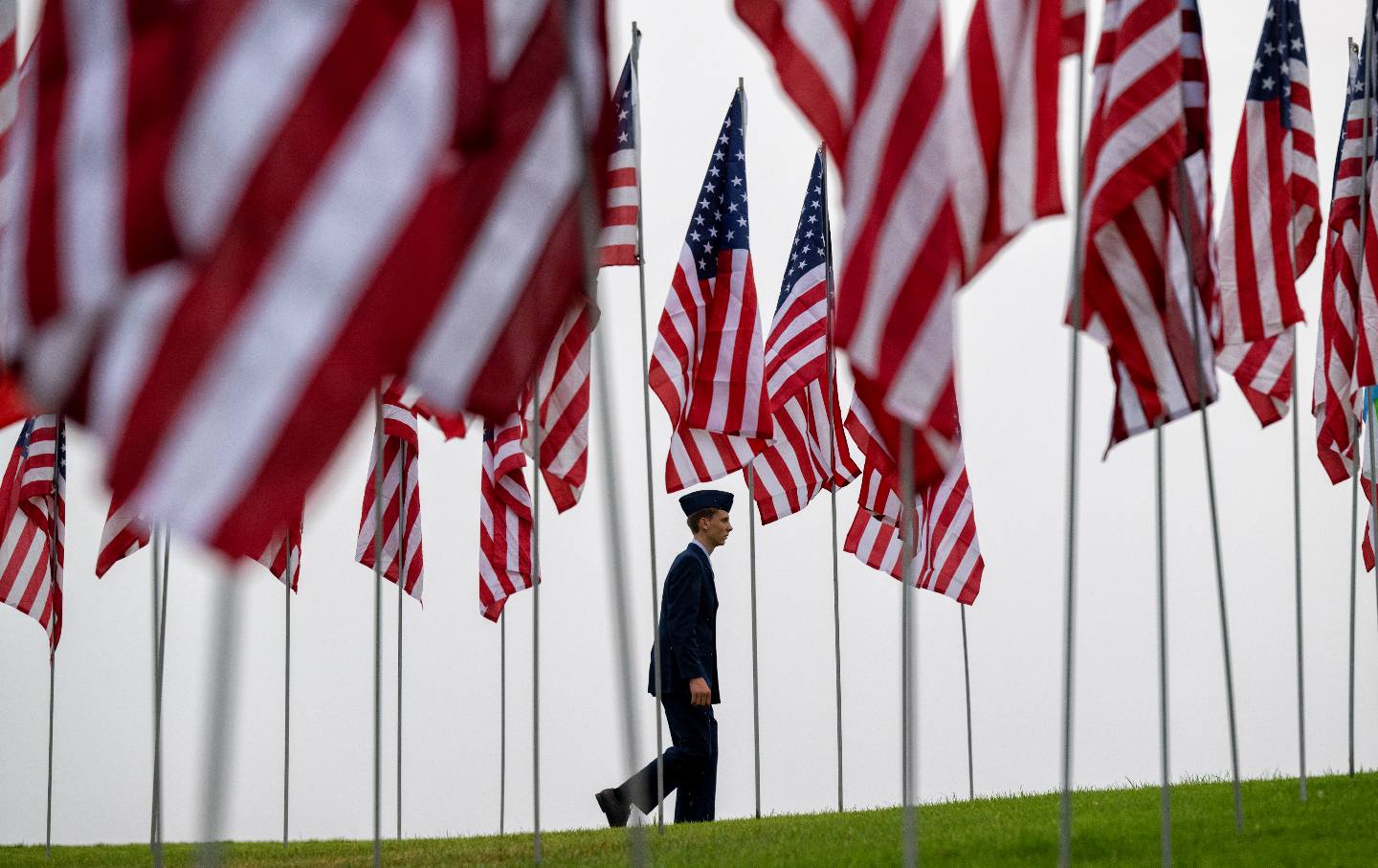
“We definitely couldn’t have paid for it all out of pocket,” said Jonathan Buckley, a junior at Cornell University, of his college expenses. Buckley lived in a rural town in the Midwest, and the cost of higher education was simply more than he and his family could take on. So while still in high school, Buckley did what many other college hopefuls do: He signed up for the Army.
Going to college isn’t cheap. The cost to attend some of America’s most elite universities is now north of $90,000 annually, with the average private four-year college charging more than $40,000 a year.
Priced out, young adults like Buckley are joining the armed forces to help afford a college education. As long as they pledge to serve up to eight years postgraduation, those in the Army Reserve Officers’ Training Corps (ROTC) can earn three- or four-year scholarships. Roughly 3,000 were given out last year.
Lower- and middle-income recruits often want the upward mobility that comes with a bachelor’s degree—and without the financial burden on themselves and their families. But enrolling in the Army to cut down on the staggering price of higher education comes with a catch. As the Russia-Ukraine and Israel-Hamas wars rage and the threat of Taiwan’s invasion looms, many young Americans who joined the military to avoid crippling student loan debt are wondering whether the decision to go to college could end up placing their lives in jeopardy.
“I joined because [the Army was] going to pay for my college,” Buckley said. But he likely wouldn’t have signed up if the world was as dangerous when he was in high school as it is today. “I don’t think I would’ve made the same decision, to be honest,” he admitted.
Looking back, Buckley questioned why his parents weren’t more worried about the possibility of war, which has begun to weigh on him. “Now, I kind of wonder why they weren’t more concerned about me joining the military.”
The risk of global conflict seems unsettlingly real for most Americans. According to a YouGov survey from March, 61 percent say that World War III is likely to come in the next five to 10 years. Of course, a second Donald Trump presidency could further aggravate hostilities abroad. The former commander in chief has said he would encourage Russia to attack NATO allies that are behind on their bills and refused to take a clear position on Taiwan.
Under President Joe Biden, as Iran and the militias it backs have violently defied American interests in the Mideast, it’s unclear how strong the United States’s power to deter actually is. “We don’t want to see a war with Iran. We don’t want to see a broader regional conflict,” said National Security Council spokesman John Kirby at a press briefing on Monday. But the US “will do what we have to do to defend Israel,” he said.
To make matters more complicated, only 23 percent of American young adults are eligible to serve, and in today’s strong economy, fewer are willing. Last fiscal year, the military fell short on its recruitment goals by around 41,000. The recruitment crisis is dire enough, but if college were free or affordable, there would be a far greater struggle to get young people to join. “The military totally benefits from runaway college expenses,” said Steve Beynon, a journalist for Military.com who covers difficulties facing military recruiters.
Beynon, an Afghanistan war veteran, described the educational benefits as “the most powerful recruitment tool the military has.” One of the biggest hurdles to getting would-be recruits to sign up, he said, is winning over their parents. Playing on families’ anxieties about the cost of college is a draw like no other. “Do [teenagers] really understand the concept of taking out a $100,000 loan? I don’t think so,” Beynon said. “But the parents do.”
Broadcast on cable television, the Army’s latest ad campaign revives a slogan from the 1980s and ’90s appealing to parents’ nostalgia. To parents, “Be All You Can Be” might sound reassuring, and the scholarship money might seem like a compelling incentive. The Army is promoting an optimistic message to new recruits and their families, bolstering that with expensive checks for college. But as geopolitical tensions run alarmingly high, experts aren’t sold on the idea that serving in the military is at all safe.
“There’s going to be no cozy positions in a conflict with China or if something broke out in Europe [beyond the current war in Ukraine],” Beynon said. Already, the norms of battle are shifting in unpredictable directions, giving a preview of how wars could play out in the near future. Troops today face a more complex defense landscape than perhaps ever before: understaffing, highly sophisticated weapons, an international community nearing a tipping point, and political turmoil at home in a historic election year.
With the rise of remote-controlled drone warfare and precision-guided munitions, front lines are disappearing, meaning more and more that nobody—not even reservists who are supposedly insulated from fighting—can be guaranteed safety. In January, for instance, three Army reservists were killed and dozens more service members wounded when a surprise drone strike by an Iran-backed militia hit a US outpost in northern Jordan. “Those [who were killed] were non-combat arms people in a non-combat environment,” Beynon noted.
“The unknown is obviously scary,” Jane Stewart, an Army cadet on a full scholarship at Harvard University, said of the uncertainties of being in the Army. “It doesn’t seem very tangible to me right now because I’m in college, just living a college life with a side of ROTC,” she said. “But it will become a lot more real after I graduate.”
Stewart, who was raised in a military family and said she wouldn’t have been able to attend Harvard without an Army scholarship, told The Nation that she wants to become a mother one day. “I love America, and I’m passionate about serving, but I think becoming a mom…is more important than that,” she said, reflecting on the bleak possibility of being killed in a war.
American defense planners, too, are bracing for a deadly war—this time with Beijing. In the event that a full-scale clash with China breaks out over Taiwan, “all bets are off,” said David Silbey, a professor of military history at Cornell University. He described what would be “another great-power war,” the likes of which the world hasn’t witnessed since 1945. “That’s all hands on deck. That’s everybody’s fighting—everybody’s involved,” he explained. With so many adversaries and allies caught up in battle, the only safe position in the military, Silbey said, would be “under one’s desk.”
If the risks of deployment due to jockeying superpowers weren’t enough, myriad skirmishes threatening to drag the US in are sweeping the world. The London-based International Institute for Strategic Studies reported that last year there were at least 183 local and regional armed conflicts globally, breaking records going back three decades.
Popular
“swipe left below to view more authors”Swipe →The hazards aren’t always top of mind for those considering an Army scholarship. The fact that the unemployment rate strongly correlates to military recruitment numbers suggests that, speaking broadly, “people sign up for economic reasons,” Silbey said. “Going into the military is a way to break out of their allotted sector in life.”
The question progressive policymakers have been grappling with is how to break down barriers to upward mobility, like the ones that are funneling college students into the Army. Biden’s ambitious effort to cancel student loan debt is one strategy. The Biden administration recently announced a wide-ranging program to provide relief for tens of millions of student loan borrowers, after the Supreme Court struck down his previous plan to eliminate up to $400 billion in unpaid student loans last year.
To James Pearl, a cadet on a full scholarship at New York University, the problem isn’t so much the military’s enticing benefits themselves—it’s society’s singular emphasis on higher education; it’s the steep cost of attending college; it’s how the government, through FAFSA, pushes federal loans on students; it’s how young Americans are discouraged from going into the trades. “That’s the larger issue,” Pearl said.
He told The Nation that joining the Army ROTC hadn’t occurred to him until high school, when he and his parents realized just how much debt college would bring. Pearl, now years into training, is ready for any eventuality. After all, that’s what he’s been preparing for: the unexpected. “If there does come in the future another [war], then, you know, that’s what I signed up for,” he said simply.
But Pearl’s willingness to put his life on the line doesn’t mean he isn’t worried about a global war that he could be wrapped up in, especially if Trump retakes the Oval Office. “Do I think [Trump] would press the nuclear button because he thinks he could get a small win?” Pearl asked himself. “Yeah, I do.”
Note: The names of the service members have been changed to protect their identities.
Support independent journalism that does not fall in line
Even before February 28, the reasons for Donald Trump’s imploding approval rating were abundantly clear: untrammeled corruption and personal enrichment to the tune of billions of dollars during an affordability crisis, a foreign policy guided only by his own derelict sense of morality, and the deployment of a murderous campaign of occupation, detention, and deportation on American streets.
Now an undeclared, unauthorized, unpopular, and unconstitutional war of aggression against Iran has spread like wildfire through the region and into Europe. A new “forever war”—with an ever-increasing likelihood of American troops on the ground—may very well be upon us.
As we’ve seen over and over, this administration uses lies, misdirection, and attempts to flood the zone to justify its abuses of power at home and abroad. Just as Trump, Marco Rubio, and Pete Hegseth offer erratic and contradictory rationales for the attacks on Iran, the administration is also spreading the lie that the upcoming midterm elections are under threat from noncitizens on voter rolls. When these lies go unchecked, they become the basis for further authoritarian encroachment and war.
In these dark times, independent journalism is uniquely able to uncover the falsehoods that threaten our republic—and civilians around the world—and shine a bright light on the truth.
The Nation’s experienced team of writers, editors, and fact-checkers understands the scale of what we’re up against and the urgency with which we have to act. That’s why we’re publishing critical reporting and analysis of the war on Iran, ICE violence at home, new forms of voter suppression emerging in the courts, and much more.
But this journalism is possible only with your support.
This March, The Nation needs to raise $50,000 to ensure that we have the resources for reporting and analysis that sets the record straight and empowers people of conscience to organize. Will you donate today?
More from The Nation

The Real Reason Americans Love Guns The Real Reason Americans Love Guns
With a weak social safety net, a gun offers a false sense of personal power and security.

The Endless Hypocrisy of Bari Weiss The Endless Hypocrisy of Bari Weiss
She claims to be a free speech champion. But as her actions at CBS News keep showing, she seems to think free speech should run only in a rightward direction.
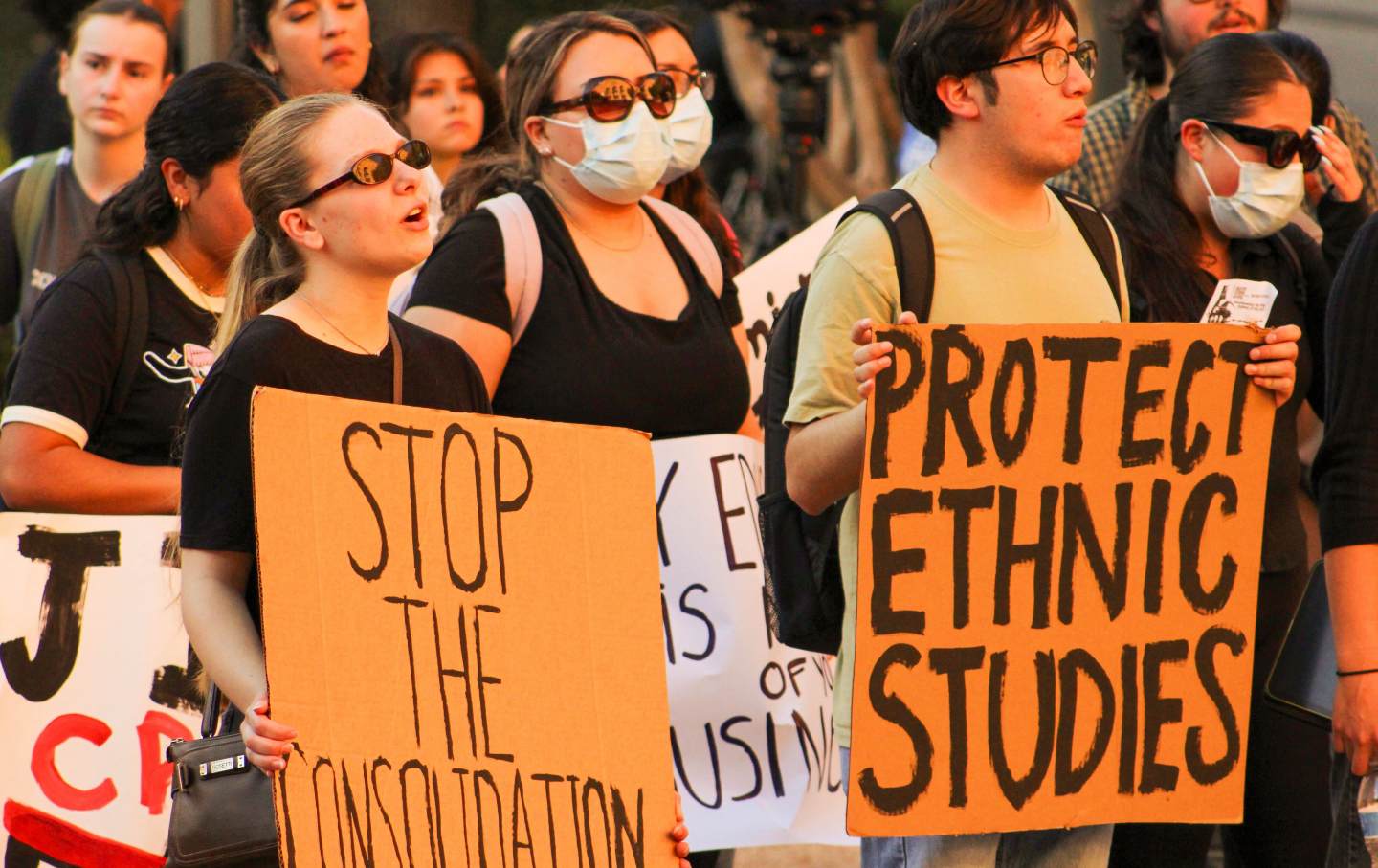
What Will Be Left After the University of Texas Destroys Itself? What Will Be Left After the University of Texas Destroys Itself?
UT-Austin has collapsed its race, ethnic, and gender studies into a single program while a new policy asks faculty to avoid “controversial” topics. But the attacks won’t end there...

The Corporate Media Is Head Over Heels for the Iran War The Corporate Media Is Head Over Heels for the Iran War
Donald Trump’s attack may be surreal, unjustified, and illegal. But that’s not stopping the press from turning the propaganda dial way up.
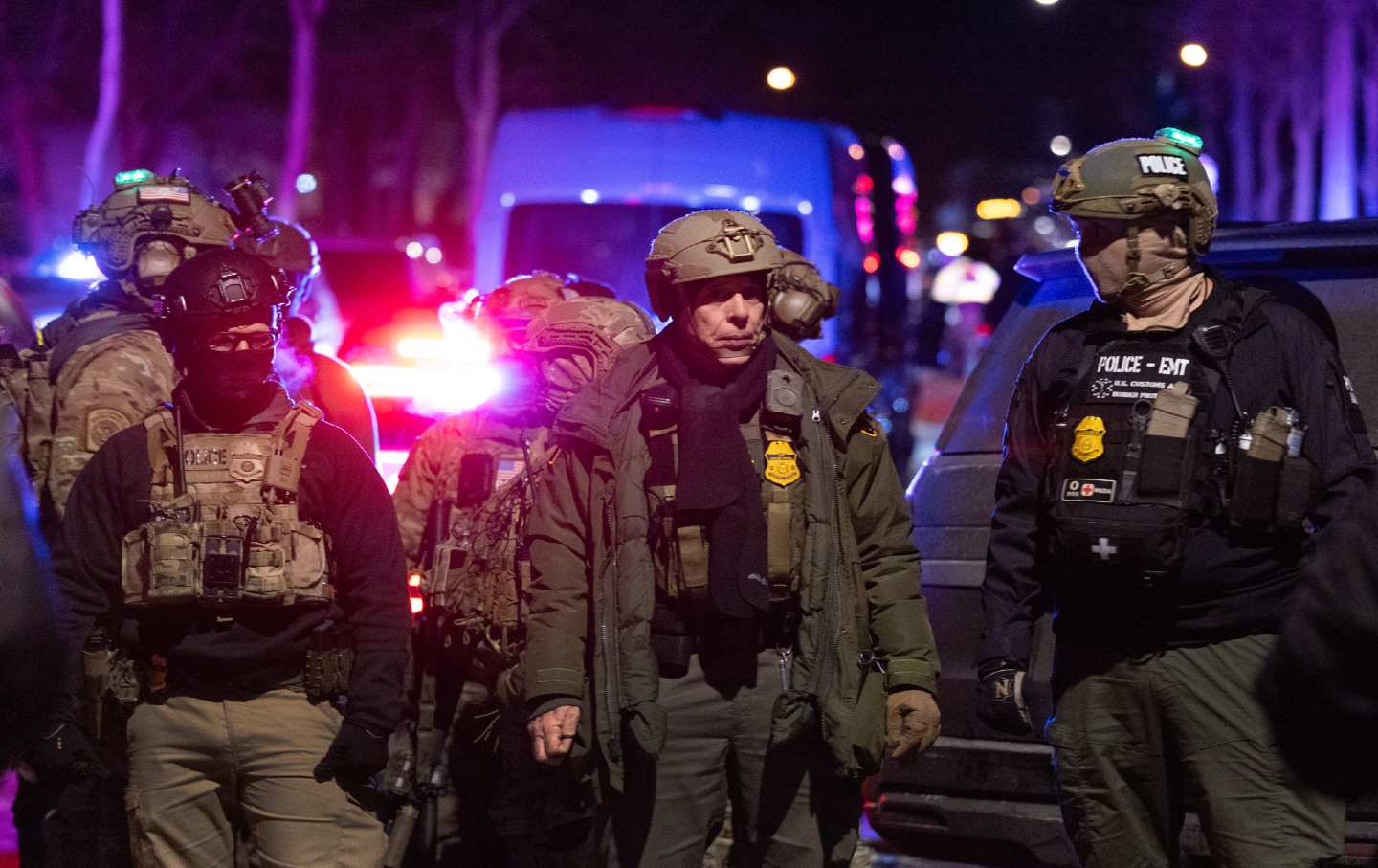
The Disturbing History of ICE’s “Death Cards” The Disturbing History of ICE’s “Death Cards”
The Vietnam-era practice is yet another example of ICE agents thrilling to the brutality they have been encouraged to cultivate.

The Red State–Blue State Healthcare Divide Is Dangerous for Everyone The Red State–Blue State Healthcare Divide Is Dangerous for Everyone
Whether or not you have access to independent, scientifically sound public health guidance may depend on how your state voted for governor.

