
We Must Save Public Media to Change It
We need public media more than ever—it’s too precious to let Trump defund it. But to live up to its democratic promise, we must support public media to serve our needs.
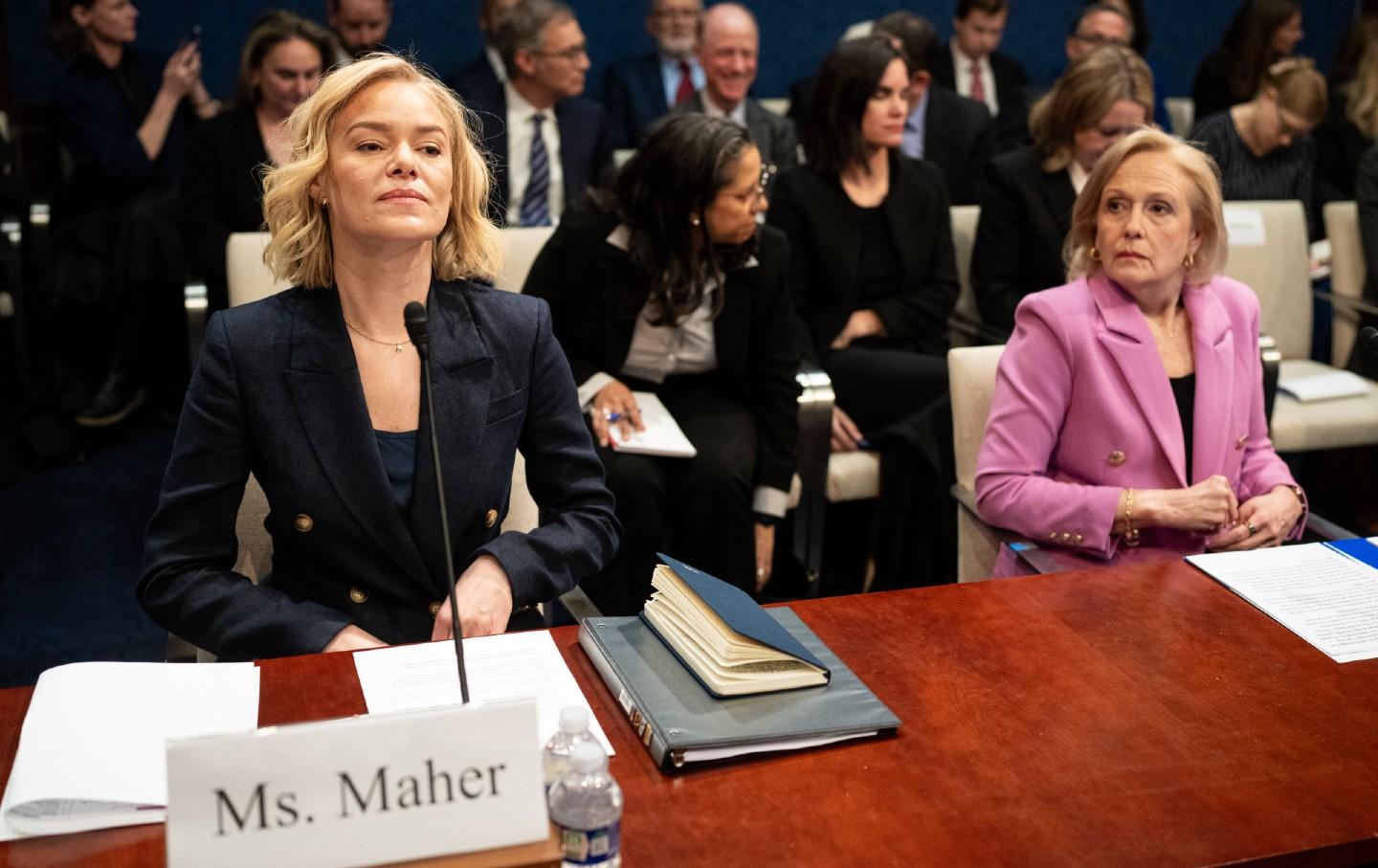
The US public media system is under a multi-pronged attack from a hostile government. It’s under investigation by the Federal Communications Commission (FCC) for purportedly airing commercials, and by Congresswoman Marjorie Taylor Greene, who recently led a congressional hearing—dubbed the “Anti-American Airwaves”—to target what she claims is public media’s liberal bias. Meanwhile, rumors and threats abound that the Department of Government Efficiency (DOGE) has put funding for public broadcasting squarely in its crosshairs.
Government attacks on public media are as old as Big Bird. Ever since Richard Nixon feuded with public broadcasting during its earliest days, every Republican administration, except Gerald Ford’s, has tried to cut public media funding. But the severity of today’s attacks is different. The ruthless savagery that Donald Trump and Elon Musk are inflicting against what’s left of the US public sector suggests that this time they might succeed where previous efforts fell short.
With these existential threats looming, now is an opportune moment to reflect on why we created public media in the first place—and why it’s still needed today. Interrogating the history of US public media also brings into focus the structural problems that were present since its inception: Because we never provided it with adequate, permanent, and insulated funding, the US public media system has always been politically and economically vulnerable. This is a fixable problem that we must confront—after defending what we still have against trumped-up charges.
US Public Media’s Little-Known History
American broadcasting developed very differently from that of most democracies. Instead of building a public system, the US decided in the early 1930s to cede the public airwaves to commercial broadcasters, especially NBC and CBS, which aimed to maximize profit via advertising revenues. Although this decision wasn’t without controversy, attempts to carve out a viable public sector in the early days of radio were defeated by corporate interests and their allies.
Yet, media reformers—especially educators who believed that rampant commercialism would squander radio’s democratic potential—didn’t give up. They knew that a profit-driven broadcast media system could never provide for all of America’s informational and cultural needs. After decades of advocacy and activism—as well as support from major foundations—reformers incubated an alternative system devoted to educational broadcasting to provide what commercial media couldn’t.
Congress formalized this alternative network by passing the Public Broadcasting Act of 1967, signed into law by President Johnson, which stated that it’s “in the public interest to encourage the development of programming that involves creative risks and that addresses the needs of unserved and underserved audiences, particularly children and minorities.” To ensure a buffer between the government and individual stations, the Act created the Corporation for Public Broadcasting (CPB), whose Board of Directors was made up of members from both major political parties. Congress funded the CPB which, in turn, funded individual member stations.
Strikingly, US public broadcasting’s revenue model differs from most of its global counterparts. Its original blueprint, based on an earlier Carnegie Commission report, called for an excise tax of up to 5 percent on television sets to generate a steady stream of revenue into a politically insulated trust fund. But that critical detail didn’t make it into the final 1967 Act. Despite President Johnson’s assurances that he’d provide public broadcasting with a plan for more long-term funding, that promise never materialized. Instead, we’ve inherited public media’s current funding model: an annual appropriations process subject to constant budget fights and political jostling.
Insufficient public subsidies have forced stations to seek out various forms of underwriting from private sources, including corporations, to fund their programming. During the Reagan administration, Congress incentivized this reliance on corporate support by directing public broadcasters to seek out nonfederal funding in place of public subsidies. Soon after, the FCC loosened restrictions on on-air advertisements, creating a slippery pathway toward “enhanced underwriting.” Although prevented from directly promoting product purchases, such messages can resemble commercials to casual listeners and viewers.
The growing dependence on corporate underwriting—comprising more than a third of NPR’s funding in recent years—makes public media more reliant on the market and less easily distinguishable from commercial outlets. This predicament underscores a fundamental flaw in the US public media model: The US government starves the system of public financing while pressuring it to operate like a business.
In the final analysis, only a permanent and secure source of federal funding can shelter public broadcasting from political attacks and economic precarity—and empower it to become the truly democratic media system that we need. But conservatives wish to further subject public media to the discipline of market logics, internalizing the very commercial values the system was meant to oppose.
The Democratic Benefits of Public Media Around the World
By any measure, US government support for public media is paltry. The $535 million that Congress currently allocates to the CPB covers roughly 1 percent of NPR’s and 15 percent of PBS’s budget. To even call this a public system is a misnomer; most funding for public media comes from private sources in the form of individual donations, philanthropic grants, and corporate sponsorships.
The US public media system is a global outlier in how little federal funding it receives. Comparative research shows that the US is almost literally off the chart relative to most democratic nations. US federal expenditures of less than $1.60 per capita pale in comparison to countries such as Norway, Sweden, and the United Kingdom, which devote nearly $100 or more per capita to fund strong public media systems such as the BBC.
Why does this matter? Research shows that access to public media correlates with increased political knowledge and civic engagement and lower levels of extremist views. Public media are also more likely to provide diverse and critical media coverage of important social issues. Moreover, unlike commercial media that must privilege returns on investments, public media are more likely to cover stories and engage audiences that aren’t profitable, thus reducing inequalities in news provision.
In these countries, public broadcasters are treated as vital democratic infrastructures, providing essential services that a commercial system will not. Indeed, research shows a positive correlation between the strength of public media systems and the health of democracies. Conversely, “flawed democracies” such as the US tend to have weaker public media systems that rely more on commercial support.
Popular
“swipe left below to view more authors”Swipe →This universal service mission is a key feature of all public media systems, distinguishing them from their commercial counterparts. In the US, public media reach more than 98 percent of the US population. Moreover, public broadcasters offer their programming to all members of society without the barrier of paywalls.
Public media’s commitment to the public interest over commercial gain helps explain its relatively high levels of public trust. Survey data consistently demonstrate that public media are highly trusted across the political spectrum—a fact that’s especially remarkable at a time when most media institutions are facing historically low levels of trust.
Public Media’s Necessary Future
Beyond measurable democratic benefits, public media outlets are uniquely positioned to offer a source of human connection and solidarity in an otherwise vast wasteland of corporate media fluff, clickbait, pink slime journalism, and news deserts. The sad irony is that defunding the CPB will disproportionately hurt individual stations in rural and conservative areas in states such as Alaska, Wyoming, Idaho, and Texas. Some of these stations depend on the CPB for as much as 25–50 percent of their funding.
These stations provide emergency communications and public safety alerts. During natural disasters, they are often the lone source of potentially life-saving information. As the climate crisis intensifies, the need for timely news about natural disasters will become only more urgent.
Indeed, the collapse of local commercial journalism illustrates the desperate need for a public alternative. With commercial media markets failing, public media can serve as a ready-made infrastructure to provide information and communication services in areas that aren’t only news deserts, but also often lack reliable broadband services. The local journalism crisis is an opportunity to redefine public media’s democratic role in society to serve critical information needs, perhaps even combining local news gathering with municipal broadband services in multi-media hubs that I term “public media centers.”
Thus far, we’ve barely begun to tap public media’s potential. With better financial support, public media outlets could ensure that dedicated journalists report on vitally important issues that have been abandoned as the newspaper industry collapses. This includes covering statehouses and school boards, investigating how the climate crisis is affecting local communities, and articulating policy solutions to pressing social problems.
While public media’s benefits to democracy are well-established, it’s also true that the US model is far from ideal. Ensuring that public media are truly publicly owned and controlled will require radical democratization from the ground up. But before we can reimagine and revitalize public media for the long term, we must defend what we have now.
Fortunately, increasing numbers of people are rallying to public media’s defense. While a recent Pew Research Center poll shows that more Americans support than oppose federal funding for public media, advocacy campaigns and activist groups are mobilizing to protect public investments in public media. Strengthening public media should be a core pillar of a pro-democracy movement that aims to ultimately transform our entire media landscape. But for public media to serve as a bulwark against fascism, we must first fund it in accordance with global norms. Only then can we restructure the entire system—making it more resilient, democratic, and independent—to gradually replace failing commercial outlets and media oligarchs. This won’t happen tomorrow, but it must be firmly centered on our political horizon.
More from The Nation

The Endless Hypocrisy of Bari Weiss The Endless Hypocrisy of Bari Weiss
She claims to be a free speech champion. But as her actions at CBS News keep showing, she seems to think free speech should run only in a rightward direction.
What Will Be Left After the University of Texas Destroys Itself? What Will Be Left After the University of Texas Destroys Itself?
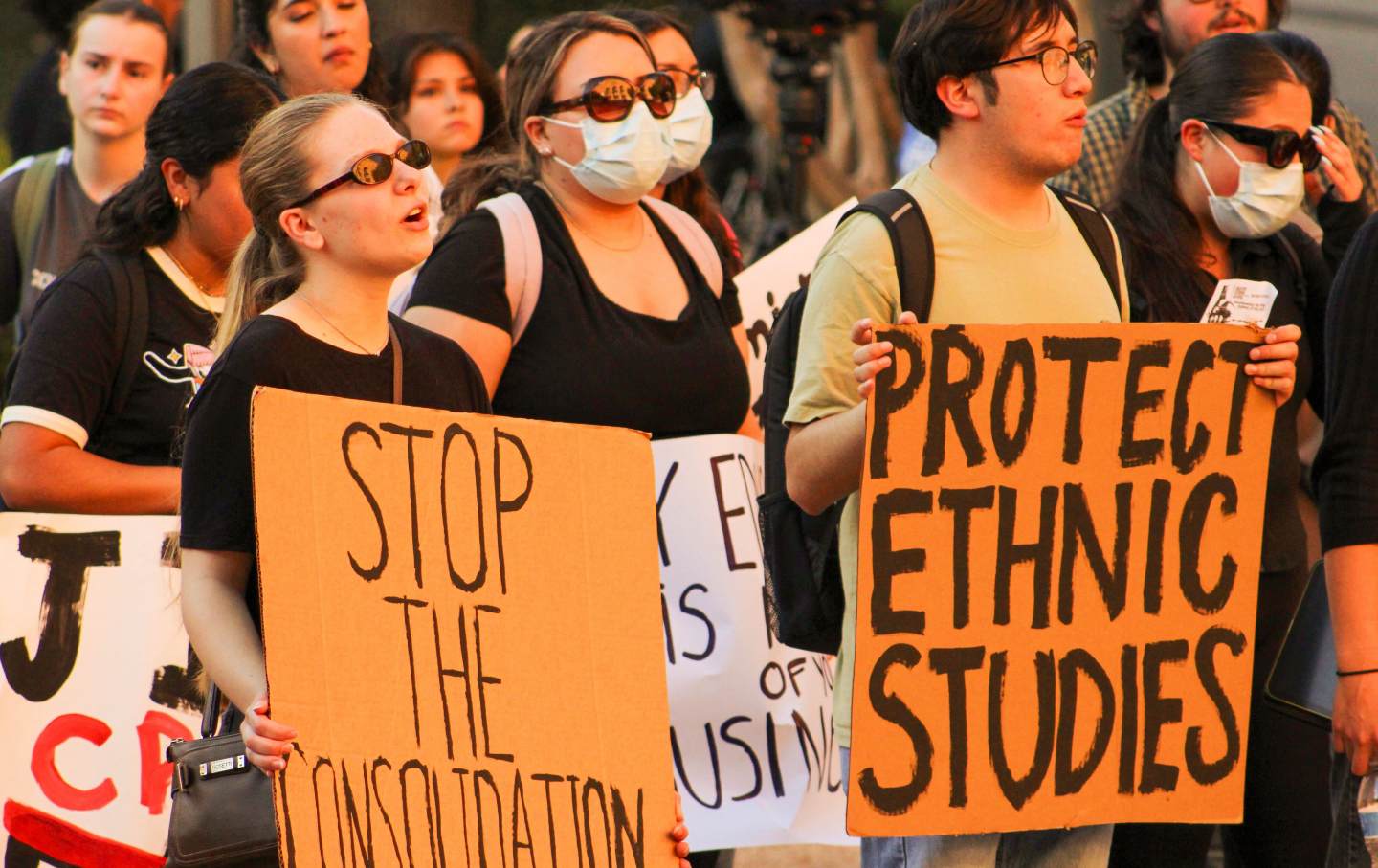
UT-Austin has collapsed its race, ethnic, and gender studies into a single program while a new policy asks faculty to avoid “controversial” topics. But the attacks won’t end there...
The Corporate Media Is Head Over Heels for the Iran War The Corporate Media Is Head Over Heels for the Iran War
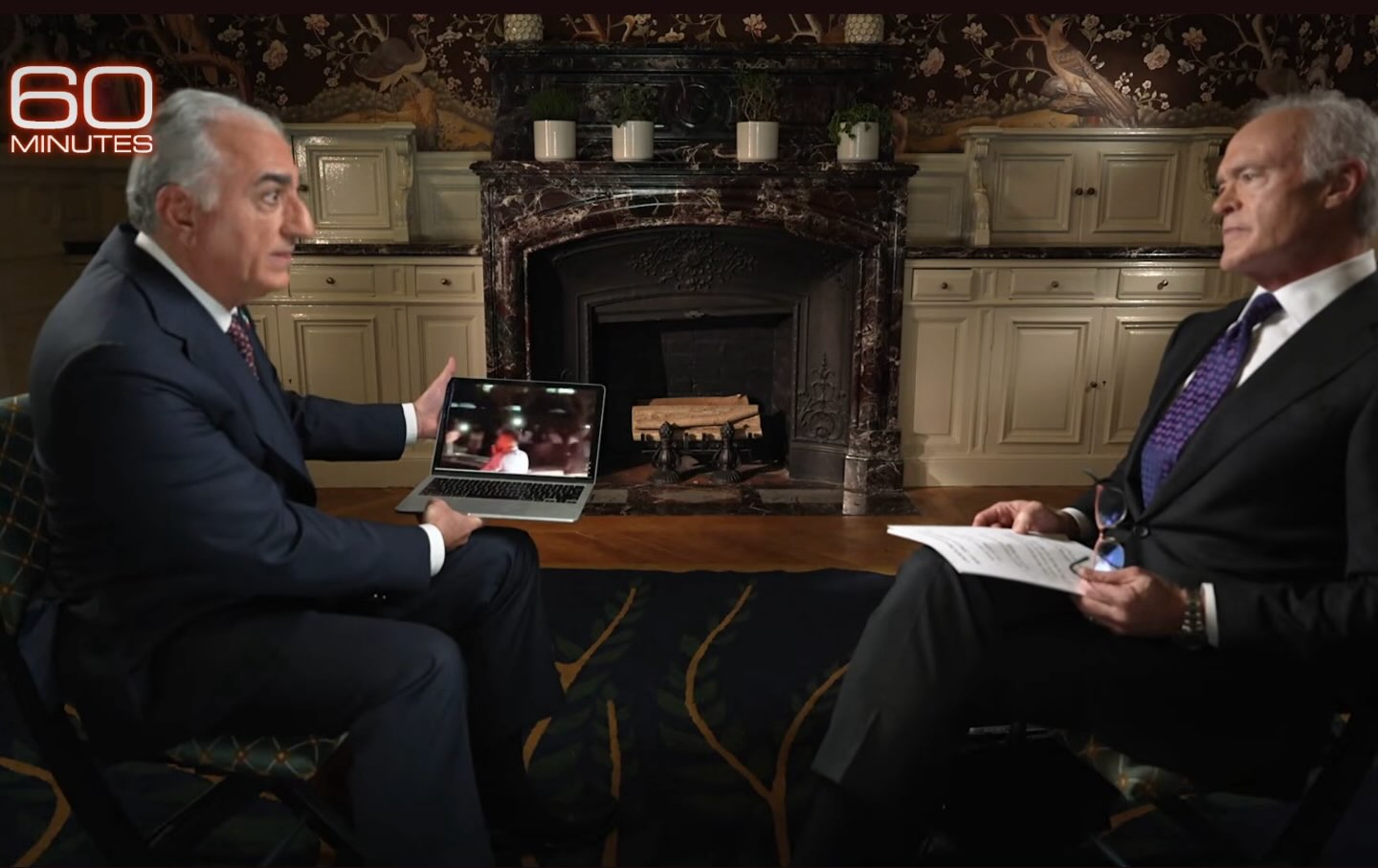
Donald Trump’s attack may be surreal, unjustified, and illegal. But that’s not stopping the press from turning the propaganda dial way up.

The Disturbing History of ICE’s “Death Cards” The Disturbing History of ICE’s “Death Cards”
The Vietnam-era practice is yet another example of ICE agents thrilling to the brutality they have been encouraged to cultivate.

The American Universities Programming Israel’s Killer Drones The American Universities Programming Israel’s Killer Drones
Industry partnerships in higher education are pushing STEM graduates into the business of weapons manufacturing and genocide profiteering.

The Red State–Blue State Healthcare Divide Is Dangerous for Everyone The Red State–Blue State Healthcare Divide Is Dangerous for Everyone
Whether or not you have access to independent, scientifically sound public health guidance may depend on how your state voted for governor.

