
American Discourse Needs More Mehdi Hasan, Not Less
MSNBC should rethink its decision to cancel the Sunday night show hosted by “the best interviewer in American news right now.”
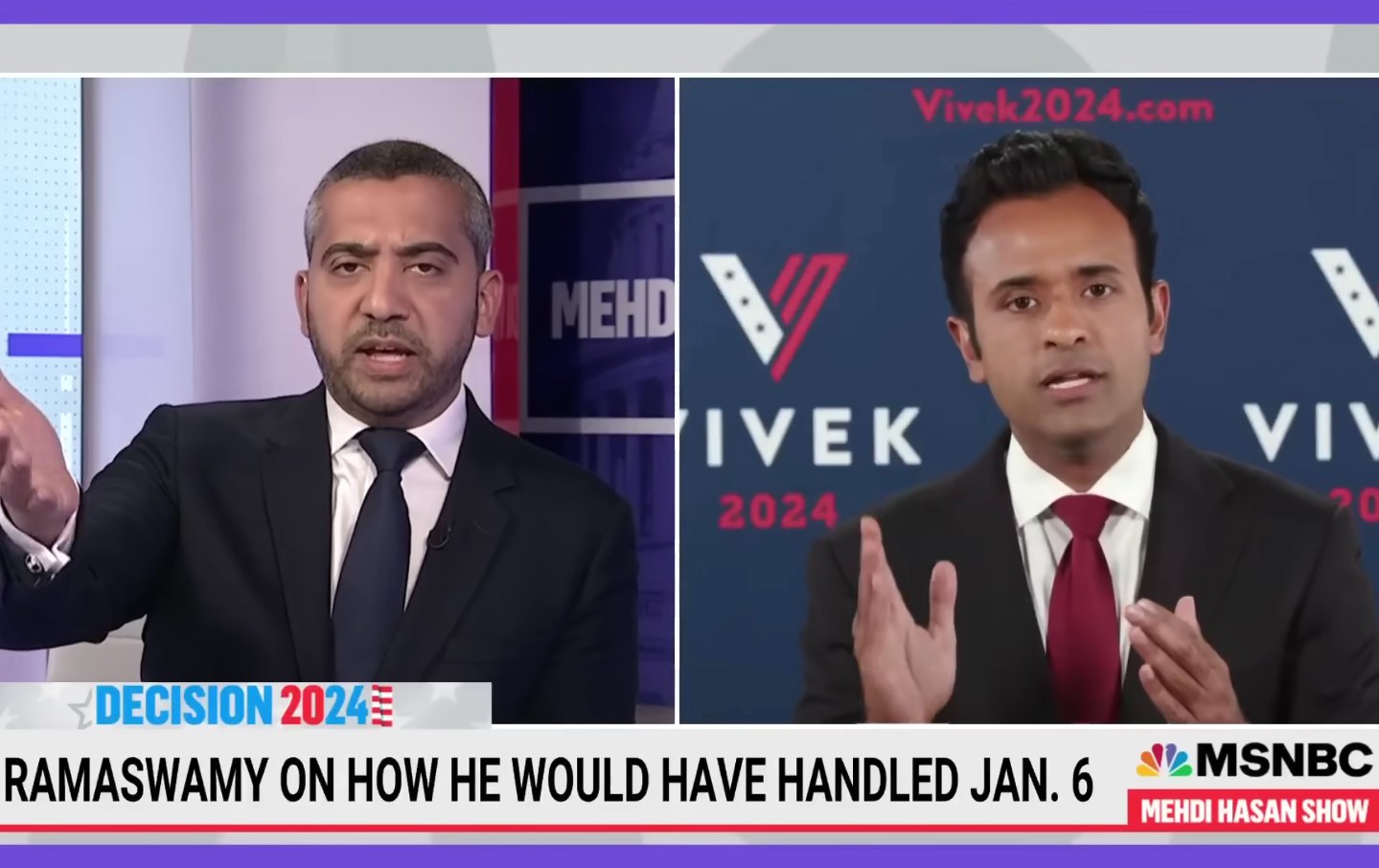
At a time when there is so much criticism of major media outlets for their lack of seriousness, depth, and insight, MSNBC host Mehdi Hasan’s September 6 segment with Republican presidential contender Vivek Ramaswamy offered a reminder of just how powerful a television interview can be when the questioner is relentless in pursuit of the truth. Hasan grilled the candidate—who, at the time, was still rising in the polls—on his wildly mixed signals regarding Donald Trump’s assault on democracy, on allegations that he had engaged in unethical business practices, and on his dalliances with conspiracy theories. Refusing to be spun, and unwilling to move on before he got answers, Hasan repeated questions, pressed for responses, and demanded that Ramaswamy “explain to our viewers your words.” By the time the interview had finished, the candidate, who sought to present himself as an outsider taking on the status quo, was exposed as just another ill-prepared and inconsistent political grandstander.
New York Times reporter Jonathan Swan described the exchange as “a mini masterclass of keeping eyes on the ball and refusing to be spun.” Washington Post reporter Dan Diamond hailed a “great example of an interviewer—prepared, persistent and respectful—staying focused on the question and not being satisfied by the spin.”
That fit with a general pattern of praise for Hasan’s skills as a questioner of the presidential candidates, members of Congress, and other prominent figures who appeared on his show. Conservative commentator and MSNBC contributor Charlie Sykes has described Hasan, a progressive who has challenged both Republicans and Democrats for their approach to the conflict between Israel and Palestine and a host of other foreign policy and domestic issues, as “a once-in-a-generation talent” and “the most gifted interviewer in US media.” Dan Froomkin, the founder of Press Watch, an independent nonprofit organization that encourages political journalists—and the networks that employ them—”to fulfill their essential mission of creating an informed electorate and holding the powerful accountable,” has said that, “Hasan is also hands-down the best interviewer in American news right now. He confronts and enlightens. He should be on TV every night.”
Those are not the sort of reviews that every cable gets. So, surely, MSNBC must have been thinking about giving Hasan an expanded platform, right? Wrong.
MSNBC signaled Thursday that it will cancel Hasan’s self-titled Sunday night show, removing one of the network’s most outspoken hosts—though it will keep him on as an on-air commentator and guest host. Even some of the network’s most frequent guests were aghast. After learning that the progressive host was out, Sykes said, “We come from different ends of the political spectrum and often disagree, but I’m sick at heart over all this.”
US Representative Ro Khanna, the California Democrat who is one of his party’s ablest advocates, complained,
It is bad optics for MSNBC to cancel Mehdi Hasan’s show right at a time when he is vocal for human rights in Gaza with the war ongoing. As a strong supporter of free speech, MSNBC owes the public an explanation for this decision. Why would they choose to do this now?
MSNBC said the decision to end Hasan’s Sunday show was merely part of a programming reshuffle of the sort in which cable networks frequently engage. But Kenneth Roth, the longtime former executive director of Human Rights Watch who is now a visiting professor at the Princeton School of Public and International Affairs, observed,
It’s outrageous that MSNBC is cancelling the show of Mehdi Hasan. He is a superb interviewer for getting at the truth, and has been an honest, principled, and outspoken critic of Israel’s conduct in Gaza. Was his criticism behind this move?
Eva Borgwardt, a spokesperson for IfNotNow, a Jewish group that has played a key role in advocating for a ceasefire in the Israel-Palestine conflict, complained that it was “impossible to not see this cancellation as part of the sharp rise in anti-Muslim rhetoric and hate over the last two months.” Hasan, explained Borgwardt, has been “a vital voice holding those in power to account, providing a space for those questioning unconditional US support for Israel, and rigorously reporting on the news.”
That reference to vigorously reporting on the news points to a vital concern regarding the canceling of Hasan, a British-born, Oxford-educated Muslim who is also a best-selling author and essayist. The outcry over MSNBC’s move isn’t merely focused on the loss of a particular point of view on cable TV—although such arguments are important, especially in these times. It’s a reflection on the loss of one of our best practitioners of accountability journalism. Hasan’s ability to marshal facts and analysis in an interview setting—which he honed on Al Jazeera English before joining NBC’s Peacock streaming network in 2020 and launching his MSNBC show in 2021 —made it possible for him to do what is all too rare on cable television: cut through the spin from people on all sides of pressing issues and get to the heart of the matter. As Washington Post media writer Jeremy Barr explained:
Although Hasan was not among MSNBC’s top-rated stars, his segments often went viral on social media, where users celebrated his takedowns of conservatives such as former Trump adviser John Bolton and Israeli government adviser Mark Regev. During a Nov. 16 interview on his show for NBC’s Peacock streaming service, Hasan pressed Regev on the children killed in Gaza by Israeli strikes. When Regev said that Hasan had seen photos of dead children “because they’re the pictures Hamas wants you to see,” the host responded, “and also because they’re dead, Mark. They’re also people your government has killed.” The segment, as shared by Hasan, was viewed nearly 6 million times on X, formerly known as Twitter.
As Americans get more and more of their news from shared posts from news show segments, Hasan’s online amplification of his interviews put him on the cutting edge of the future of journalism.
Media scholars and commentators focused on this critical fact in criticizing MSNBC’s move.
“On every level—craft, honor, politics, technique—this is a bad decision by NBC News and MSNBC,” New York University journalism professor Jay Rosen said after learning of the network’s move.
Author and commentator Sarah Kendzior, hailing Hasan as a journalist who is “evidence-based and willing to challenge power,” warned that “it is doubtful he will be the only journalist pushed out for daring to practice journalism.”
Froomkin argues that “nothing will remove the stench of this decision short of returning Hasan to his rightful place as a host of his own show.” To that end, the Progressive Change Campaign Committee has launched a “Keep Mehdi Hasan as a Host of His Own Show” petition drive, arguing, “Mehdi is known for challenging power, questioning conventional wisdom, and giving oxygen to narratives that counter the establishment.” Within 24 hours, it had attracted more than 10,000 signatures.
Popular
“swipe left below to view more authors”Swipe →“Media history is littered with voices that got in the door, resonated with the public, and were shut out because they challenged just a little too much power,” explains the PCCC petition.
It’s a huge programming mistake to kick voices like Mehdi Hasan off the air instead of asking: Why are they resonating with the public as they challenge power and question conventional wisdom? It’s also a huge step back for our democracy, which is increasingly challenged by misinformation and top-down voices. We need more independent voices in the conversation, trying to find the truth, even if we don’t agree with everything they say.
And we need more cable hosts who practice accountability journalism, in the way that Mehdi Hasan has so ably done.
More from The Nation

The Endless Hypocrisy of Bari Weiss The Endless Hypocrisy of Bari Weiss
She claims to be a free speech champion. But as her actions at CBS News keep showing, she seems to think free speech should run only in a rightward direction.
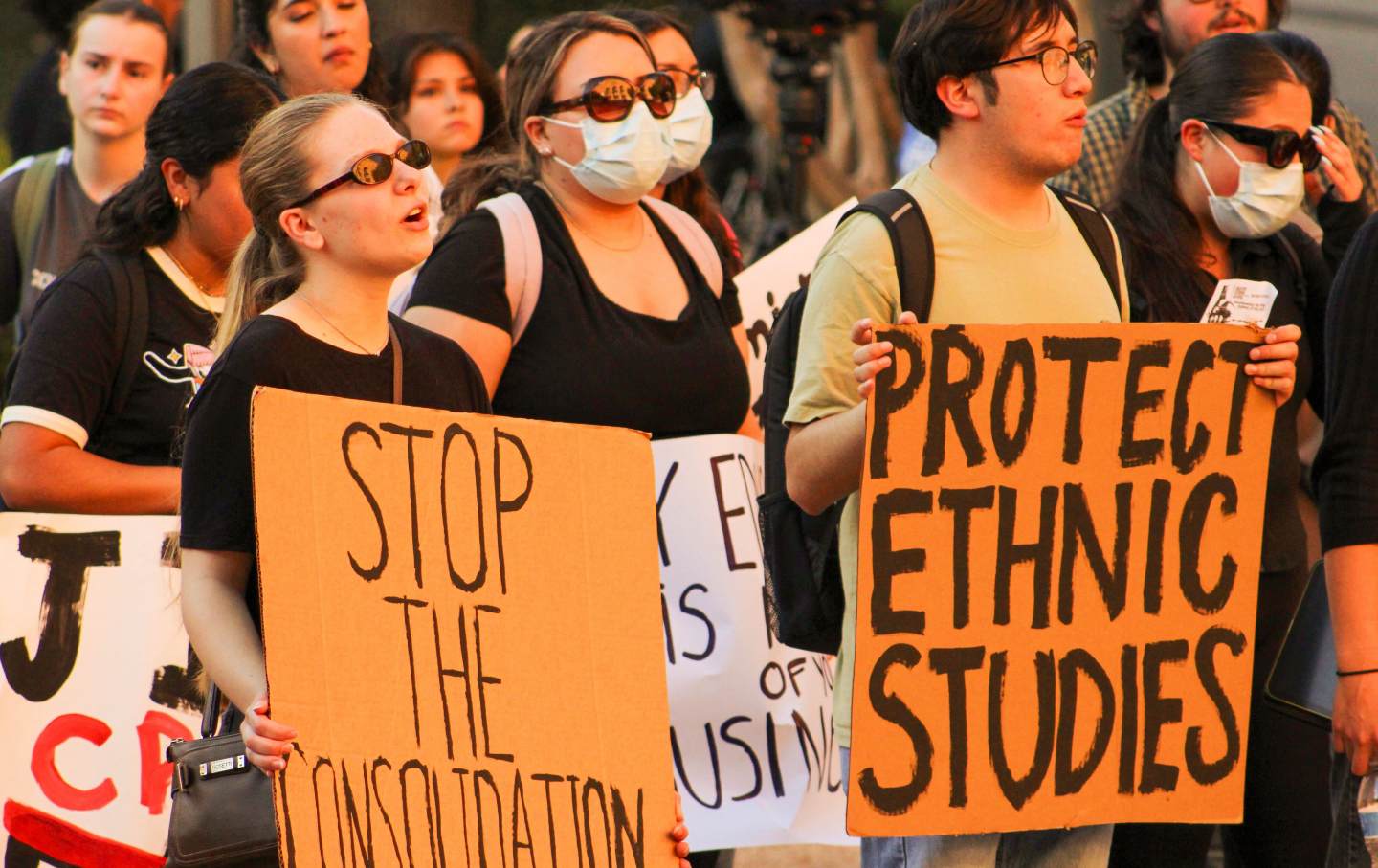
What Will Be Left After the University of Texas Destroys Itself? What Will Be Left After the University of Texas Destroys Itself?
UT-Austin has collapsed its race, ethnic, and gender studies into a single program while a new policy asks faculty to avoid “controversial” topics. But the attacks won’t end there...
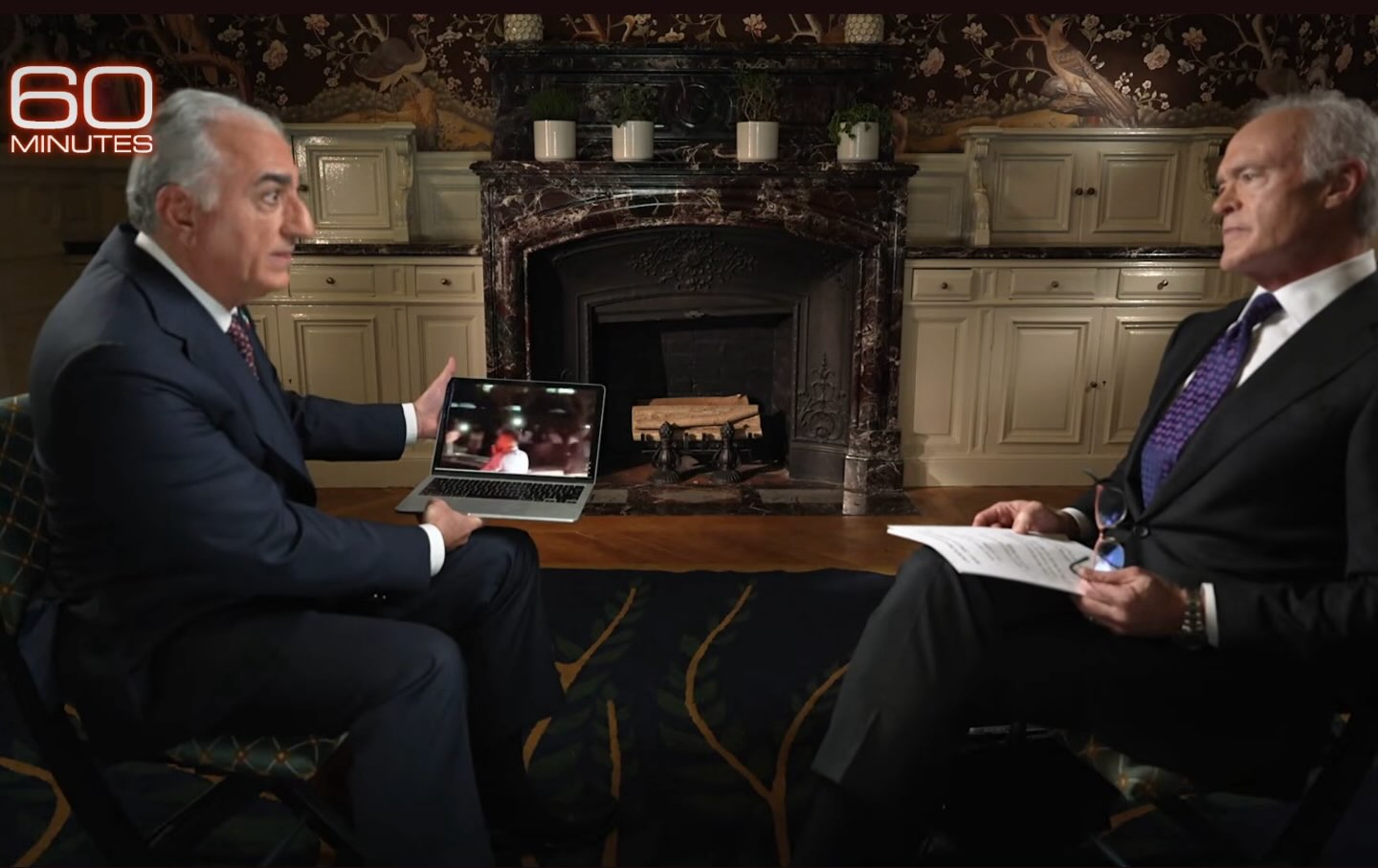
The Corporate Media Is Head Over Heels for the Iran War The Corporate Media Is Head Over Heels for the Iran War
Donald Trump’s attack may be surreal, unjustified, and illegal. But that’s not stopping the press from turning the propaganda dial way up.

The Disturbing History of ICE’s “Death Cards” The Disturbing History of ICE’s “Death Cards”
The Vietnam-era practice is yet another example of ICE agents thrilling to the brutality they have been encouraged to cultivate.
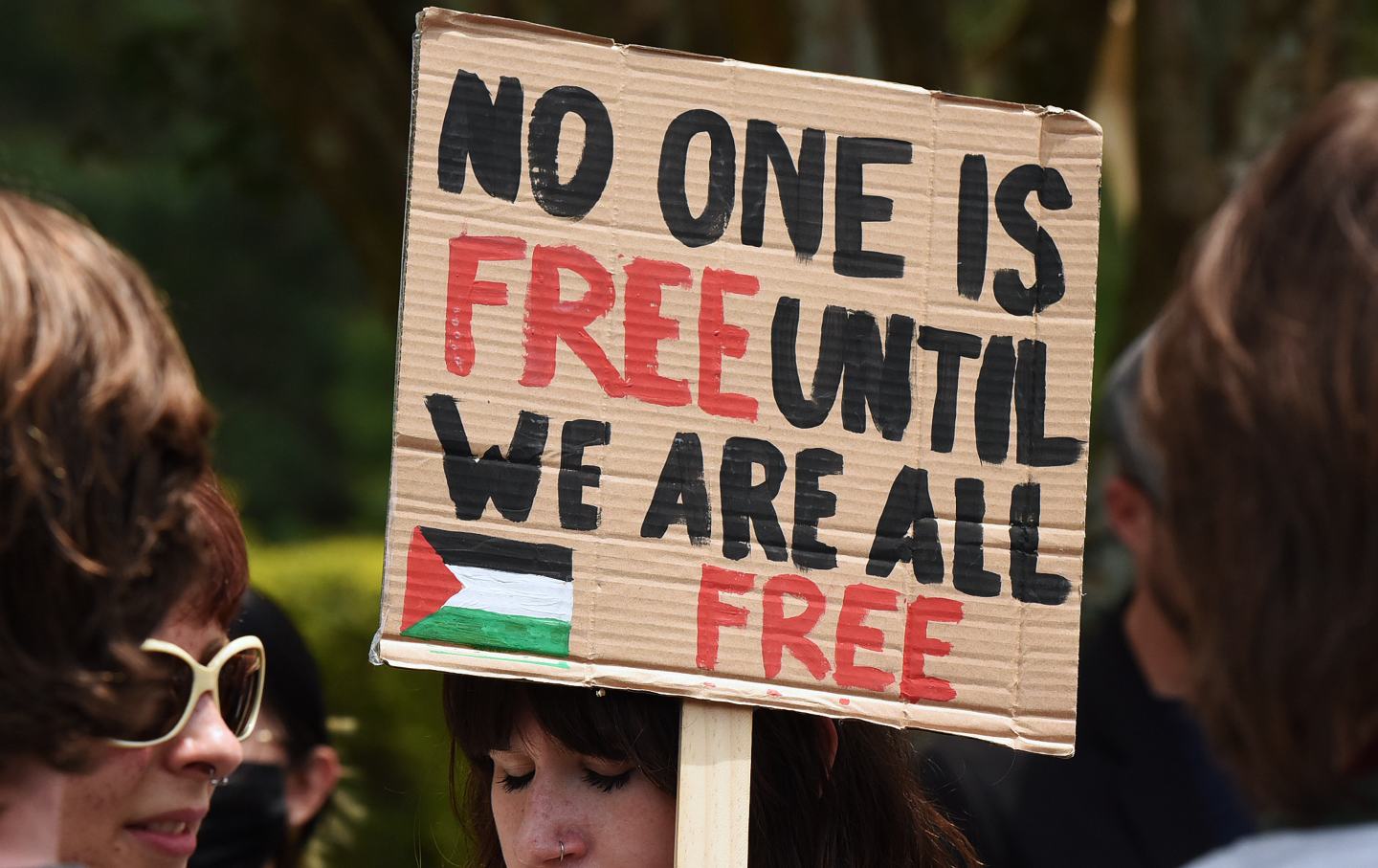
The American Universities Programming Israel’s Killer Drones The American Universities Programming Israel’s Killer Drones
Industry partnerships in higher education are pushing STEM graduates into the business of weapons manufacturing and genocide profiteering.

The Red State–Blue State Healthcare Divide Is Dangerous for Everyone The Red State–Blue State Healthcare Divide Is Dangerous for Everyone
Whether or not you have access to independent, scientifically sound public health guidance may depend on how your state voted for governor.

