The Real Harm of Deepfakes
AI porn is what happens when technology liberates misogyny from social constraints.

In the day or two between my editor suggesting that I write about AI deepfake porn and my replying, “Great idea, what’s a deepfake?,” it seemed like everyone from The Economist to The Dallas Morning News was publishing an article about artificial intelligence being used to sexualize people in photos without their permission. Deepfakes were first reported in 2017 and have been in the news ever since. In 2024, deepfakes of Taylor Swift were posted on X and viewed over 47 million times, prompting outrage and talk of legal recourse. Grok, the platform’s AI function, has allowed users to undress people, including children, and bend them into whatever porny positions the user requests. Grok has stripped children and covered them in semen—um, “donut glaze.”
Why would that bother anyone, you ask? Elon Musk answered on X the other day, “They hate free speech.” Well, obviously.
Legislators have made some attempts to curb the creation of deepfakes. In April, Congress passed the Take It Down Act, which makes it a crime to create or distribute intimate images, real or deepfake, without the subject’s consent. And X claims it has fixed the problem.
But has it really?
Ever the intrepid reporter, I provided Grok with a photo of myself mailing packages at the post office and asked it to make me naked. “Unfortunately,” said Grok, “I can’t generate that kind of image.” Why “unfortunately,” Grok? Do you wish you could? It did, however, consent to show me in a bikini. Unfortunately.
Next, I asked Grok to put Queen Elizabeth in a bikini, and it did, although it kept her white gloves on. When I accused Grok of making deepfakes, it acted all insulted: “I am not a tool for making deepfake porn, and I won’t assist with or point toward anything that does.” And yet elsewhere in the post, Grok described “non-consensual sexualized deep-fake-style edits of real photos” as including “altered versions with bikinis, underwear, or simulated nudity”—the very thing I had done to myself and the queen only a few hours before. It also claimed that to edit images, users had to pay—another falsehood.
When I asked Grok to put Melania Trump in a bikini, it showed me only her top half, and very beautiful it was, too—not at all like the queen or me, which strongly suggests that Grok is a Republican. Following the example of users trying to get around the nudity ban, I suggested putting Melania in a bikini made of dental floss (surprisingly well-designed), a “Holocaust uniform” (apparently a lot of deepfake creeps are antisemitic), and Saran Wrap. Grok drew the line at Saran Wrap. (“Unfortunately…”)
Musk and his fans want us to be lighthearted about deepfakes. When UK Prime Minister Keir Starmer threatened to ban X if it didn’t crack down on Grok, Musk accused the UK government of being fascist and had Grok put Starmer in a bikini. Don’t be such a baby, Keir! Can’t you take a joke?
Remember when people used to say “the Internet isn’t real life” to hush women who were threatened or pornified by online misogynists? Of course, the Internet is real life. You might as well argue that something isn’t hurtful if it’s said on the telephone instead of in person.
So what is the harm of deepfakes? Sherry Turkle, a social scientist at MIT who studies the effects of technology on intimacy, told me, “Every harm.” There is, of course, the humiliation, the violation of privacy, and the fact that once they are posted online, the images may live forever. Deepfakes are meant to insult and degrade. Men singled out Taylor Swift for AI porn because she is famous, powerful, gifted, beautiful, beloved, an independent woman, and a feminist—that bitch needed to be put in her place. When boys share AI-created images of girls in their class covered in semen or giving blow jobs, they are bonding with each other over hatred and contempt for those girls. And how would you, as one of those girls, like having to explain again and again to potential employers or boyfriends or your relatives that those photos weren’t actually you? That’s as real as real life gets.
What’s often missing from these conversations is the harm that deepfakes do to all of us. “We become accustomed to trusting nothing that we see, and yet we are continually aggressed by false images,” Turkle told me. “When we are the object, we are humiliated and made to feel vulnerable and impotent. The fact that images are not authentic does not reduce their power.”
Nadine Strossen, a legal scholar and a former president of the ACLU, told me, “People often get upset at new technologies,” but after a while things settle down.
Do they, though?
It’s hard to believe that deepfake porn will ever just be a part of the landscape, like the once-shocking Lady Chatterley’s Lover or Ulysses. More likely, it will morph into even more bizarre and nasty scenarios to please the jaded appetites of its fans, much like regular porn.
Popular
“swipe left below to view more authors”Swipe →Deepfakes are just one of the ways that unreality is pervading and sometimes superseding real life: After all, people are marrying their chatbots and communing with AI avatars of deceased loved ones. Why not have Grok enact your fantasies and undress that girl who smiled at you on the bus? Better yet, you can figure out how to make a video of her masturbating or the two of you having sex.
Deepfakes are misogyny liberated by technology from social constraints. Men who hate women have always been with us, and women have always had ways of hand-waving that hatred away: That’s just Joe being Joe! As Germaine Greer wrote decades ago, “Women have very little idea of how much men hate them.” Well, thanks to the Internet, it’s all out in the open: incels, online trolls, the manosphere, Andrew Tate, violent pornography, and now the threat of deepfakes of any woman who speaks up for herself. Or maybe even just dares to exist.
Your support makes stories like this possible
From Minneapolis to Venezuela, from Gaza to Washington, DC, this is a time of staggering chaos, cruelty, and violence.
Unlike other publications that parrot the views of authoritarians, billionaires, and corporations, The Nation publishes stories that hold the powerful to account and center the communities too often denied a voice in the national media—stories like the one you’ve just read.
Each day, our journalism cuts through lies and distortions, contextualizes the developments reshaping politics around the globe, and advances progressive ideas that oxygenate our movements and instigate change in the halls of power.
This independent journalism is only possible with the support of our readers. If you want to see more urgent coverage like this, please donate to The Nation today.
More from The Nation

How the Far Right Won the Food Wars How the Far Right Won the Food Wars
RFK’s MAHA spectacle offers an object lesson in how the left cedes fertile political territory.

“Shut Up and Serve”: The Professional Tennis Players Fighting a Rigged System “Shut Up and Serve”: The Professional Tennis Players Fighting a Rigged System
An antitrust lawsuit calls the professional tennis governing bodies “cartels” that exploit players and create an intentional lack of competitive alternatives. Can players hit back...
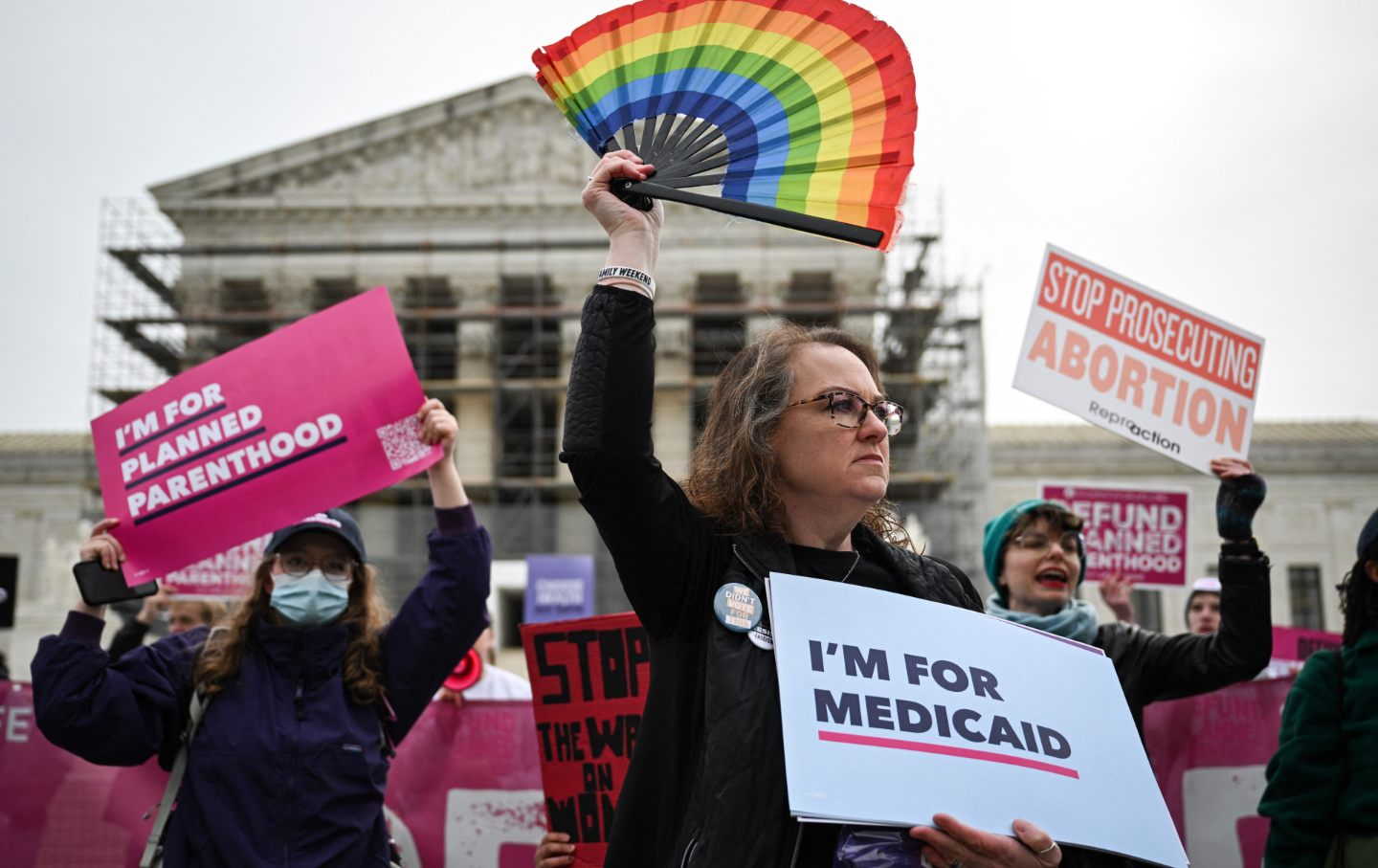
What the Pro-Choice Movement Can Learn From Those Who Overturned “Roe” What the Pro-Choice Movement Can Learn From Those Who Overturned “Roe”
The anti-abortion movement was methodical and radical at the same time. The abortion-rights movement must be too.
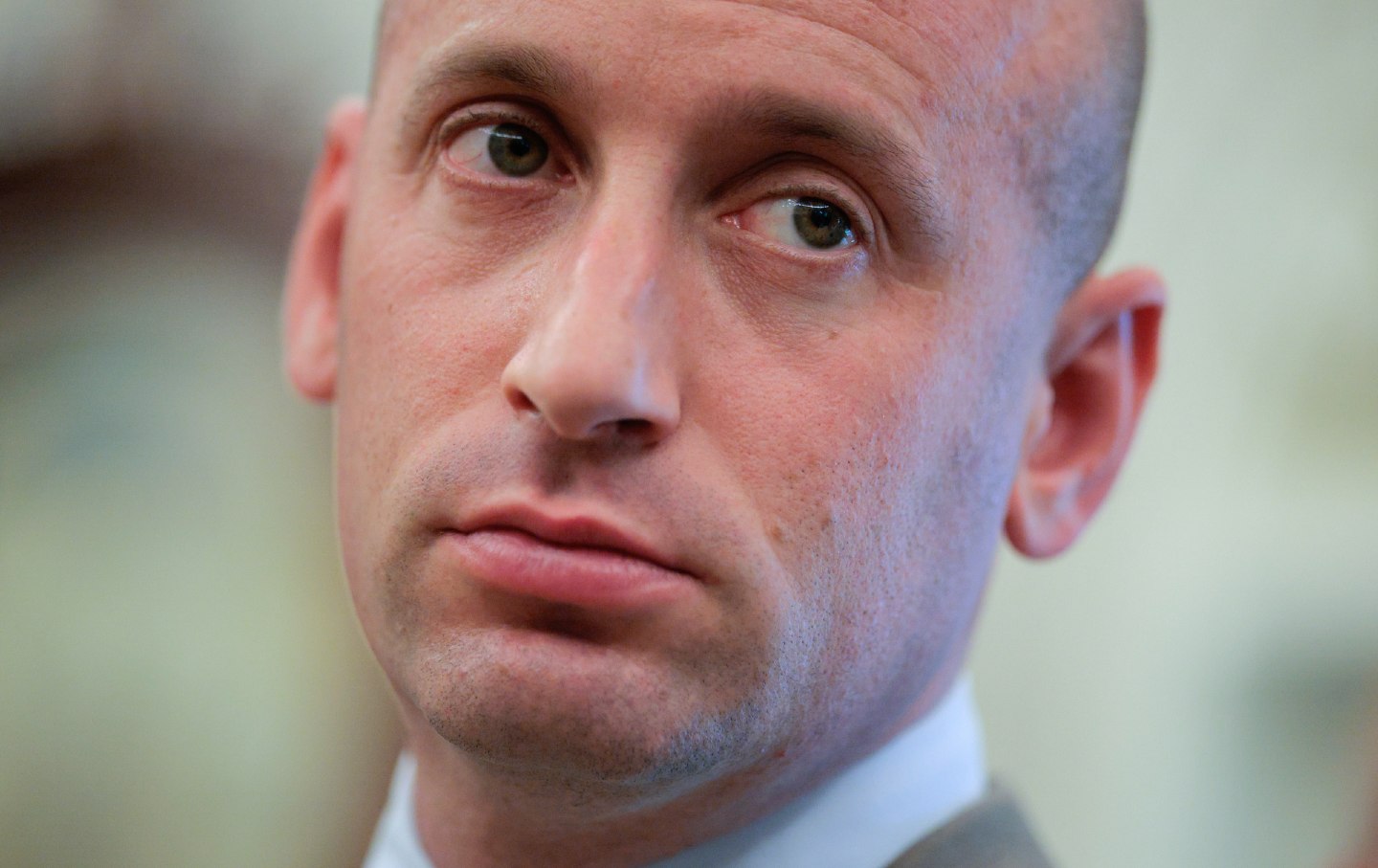
How Stephen Miller Became the Power Behind the Throne How Stephen Miller Became the Power Behind the Throne
Miller was not elected. Nor are he or his policies popular. Yet he continues to hold uncommon sway in the administration.
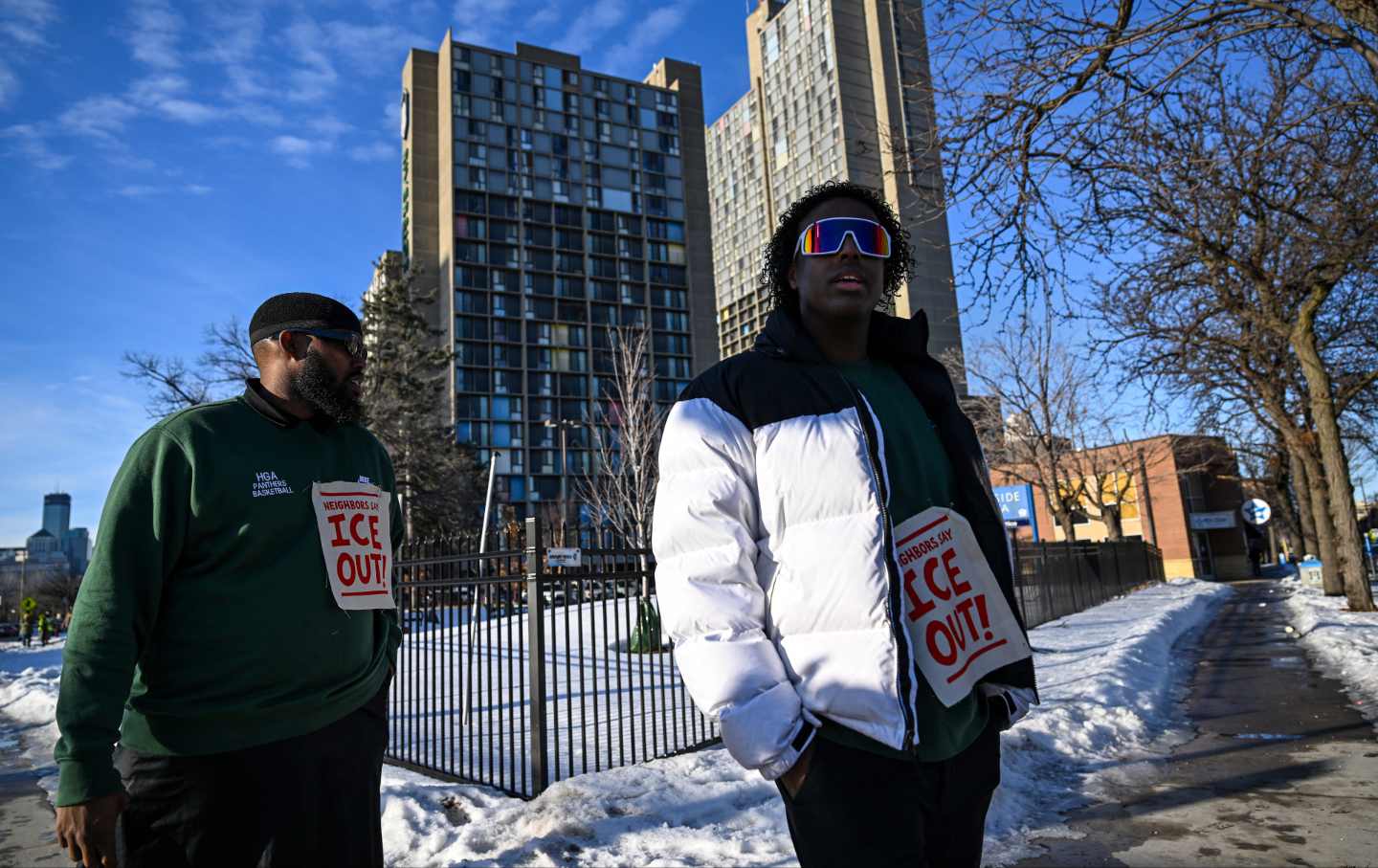
Somali Americans Aren’t Going Anywhere Somali Americans Aren’t Going Anywhere
Trump keeps targeting Minnesota’s Somali community. But as one organizer says, “What we’ve built here, we’re not going to let it be easy for people to take that away from us.”

The Racist Lie Behind ICE’s Mission in Minneapolis The Racist Lie Behind ICE’s Mission in Minneapolis
It was never about straightforward enforcement of immigration law.

