
We’re Facing a Potential Bird Flu Catastrophe
H5N1 is spreading across the US, targeting some of our most vulnerable communities, and exposing our tattered public health system. We need bold action, and we need it now.
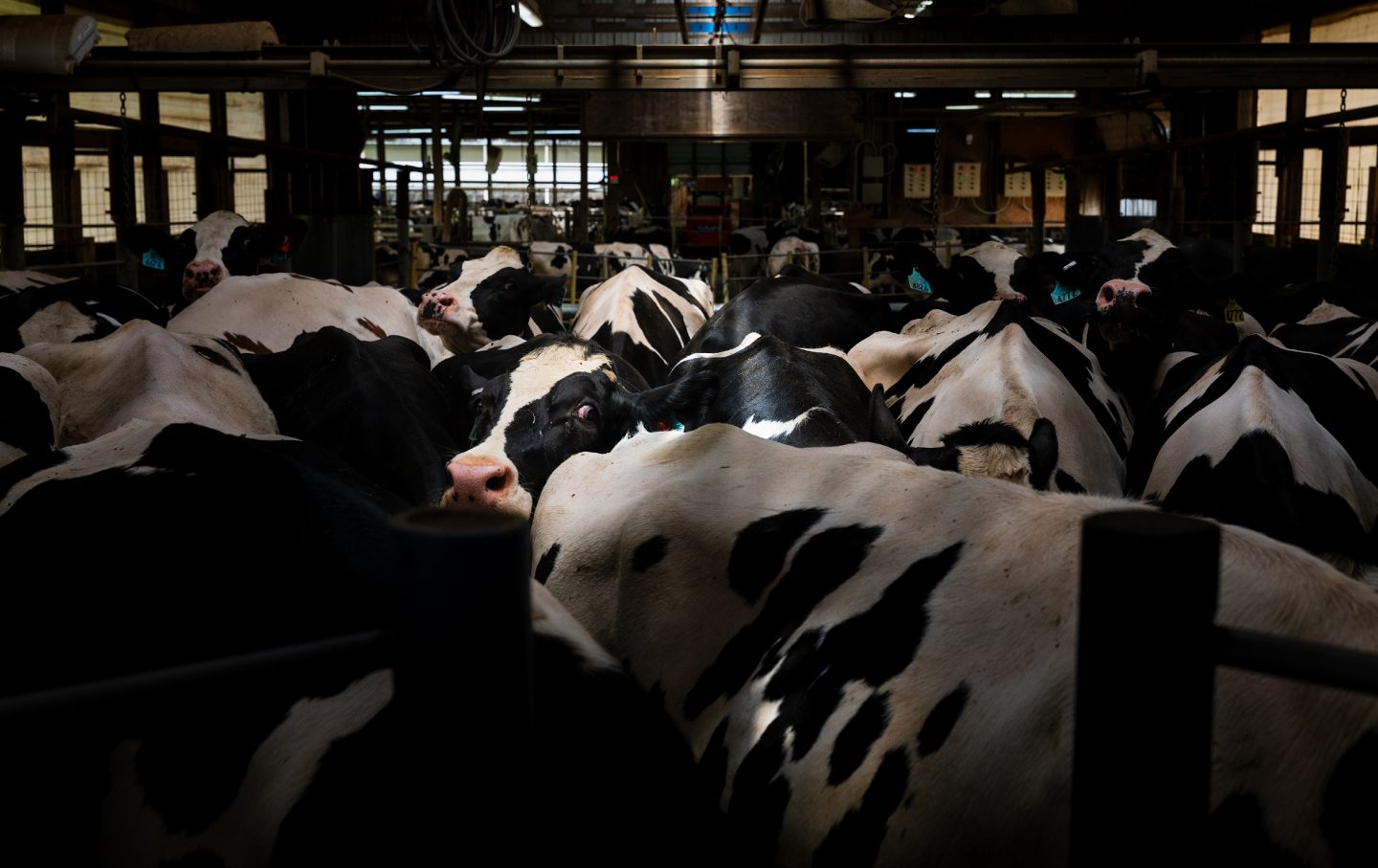
Cows queuing for milking at United Dreams Dairy, in North Freedom, Wisconsin, on May 8, 2024.
(Matthew Ludak / The Washington Post via Getty Images)Whether it was wealthy Londoners fleeing to the countryside to avoid the bubonic plague in the early 17th century or Manhattanites heading for upstate and seaside retreats to do the same to avoid SARS-CoV-2 in the early 21st, urban elites have rarely stuck around for pandemics. As Troy Tassier says in his new book The Rich Flee and the Poor Take the Bus, “the most physical and financial harm from epidemics falls upon the people who are least privileged and most marginalized,” while those with the most resources seek out the best security and safety money can buy.
Yet the notion of rural communities as refuges from disease, then and now, doesn’t match up with reality. Those rich Londoners brought the plague with them to the small villages and hamlets nearby, and, far from their being a safe haven, the mortality rate from Covid was 20 percent higher in rural America than in urban enclaves. This misconception is grounded in a refusal to recognize that, rather than an unspoiled oasis, our rural counties are home to some of our most marginalized populations, from the meat and poultry workers that keep us fed to the upstate prisons where cities lock up those they would rather ignore and forget. The virus raced through these areas, amplifying the pandemic across the landscape with deadly consequences.
Everything that made rural America uniquely vulnerable to Covid-19 still exists. And now, a new threat from a well-known pathogen, influenza, is brewing in America’s rural heartland. An outbreak of H5N1 started months ago and is spreading across dairy farms in the United States. This strain of bird flu looks like it is “well entrenched and has been in cattle for a long time and…probably very, very, very widespread,” as Stat News reported. While there are only two documented human cases thus far, given the poor surveillance effort to date, there are likely other people infected as well.
While this strain of H5N1 has not (yet) acquired the ability to spread through the air or person to person, the virus presents potentially serious health risks to those who work with cattle on dairy operations in rural areas. The vast majority of those working on the front lines are immigrants, many of them undocumented. Anthropologist Thurka Sangaramoorthy has talked about the precarity of the lives of these workers, from not having “rights within the workspace, not having access to good housing or being really scared to speak up when they’re being exploited or when they feel like they’re being discriminated against.”
Agricultural workers also face an increasingly threadbare rural health system that is ill-equipped to respond to their needs. Over the past 30 years, rural America has lost hospitals, primary care providers, and public health infrastructure. Many farmworkers lack insurance and have tenuous connections to healthcare and other services. Without robust health systems and formal safety nets, many farmworkers and their families turn to “Band-Aid care”—as in “Putting Band-Aids on Things That Need Stitches”—rather than care that would help them over the long term.
Now add a new pathogen into the mix. We know the US public health system is weak, social protections are inadequate, and healthcare is tilted towards expensive, tertiary, specialized practices. Rural America is ground zero for this structural, human-made disaster, which makes rural farming communities desperately vulnerable to H5N1. For all the bluster of the current response to H5N1, with the CDC, the FDA, and the USDA all out with their plans to address the virus and its spread, no one is acknowledging that a crisis already existed in these places.
Dealing with this new outbreak will undoubtedly expose the long-standing political failures to address the public health needs of these communities. “Band-Aid” care is no match for H5N1 if it acquires the mutations it needs to transmit efficiently among humans. And if the outbreak takes off in these settings, there is simply no firewall to stop it from making the trip from its rural origins into the rest of the country.
The instinct of those in Atlanta or DC is to deal with the current emergency and ignore the rest—except that is not how the world works. We tried it with Covid in the US, and the fundamental weaknesses in American public health, welfare, and healthcare ensured that we did worse than our G-7 peers in Covid deaths and excess deaths per capita. H5N1 is not (yet) a human epidemic, but the widespread nature of its grip on livestock in rural communities means it gets to bide its time.
As with Covid-19, we are offering false assurances with the ubiquitous refrain of “we have the tools,” suggesting that a technical fix, the mere existence of vaccines, tests, and treatments for influenza, will be our salvation. Yet, we know that this is a vastly insufficient response. We still have the time to address structural issues plaguing rural America, to give those living in rural agricultural counties and the rest of us, a leg up on H5N1, though it’s admittedly a race against the clock and would require a massive investment of resources and political will.
There are signs that President Biden and Congress want to invest in rural America to lift up economic opportunity. But investing in rural health is vital to these economic strategies; they must go hand in hand. There are encouraging moves here as well, but we need something akin to a Marshall Plan for rural America—and there might be bipartisan support for such bold efforts, particularly in health.
Finally, the revival and survival of rural America depends on immigrants—over 70 percent of farmworkers are foreign-born—and so the economic and health initiatives we surely need will be for naught unless we safeguard the future of these workers and their families from xenophobic policies from county seats, state houses and from DC.
H5N1 reminds us that when it comes to infectious diseases, there is no place to hide, no refuge or safety, except what we build together, systems and infrastructures to protect all of us. Perhaps this time around, we’ll do better and chalk up a victory against an old foe.
Support independent journalism that does not fall in line
Even before February 28, the reasons for Donald Trump’s imploding approval rating were abundantly clear: untrammeled corruption and personal enrichment to the tune of billions of dollars during an affordability crisis, a foreign policy guided only by his own derelict sense of morality, and the deployment of a murderous campaign of occupation, detention, and deportation on American streets.
Now an undeclared, unauthorized, unpopular, and unconstitutional war of aggression against Iran has spread like wildfire through the region and into Europe. A new “forever war”—with an ever-increasing likelihood of American troops on the ground—may very well be upon us.
As we’ve seen over and over, this administration uses lies, misdirection, and attempts to flood the zone to justify its abuses of power at home and abroad. Just as Trump, Marco Rubio, and Pete Hegseth offer erratic and contradictory rationales for the attacks on Iran, the administration is also spreading the lie that the upcoming midterm elections are under threat from noncitizens on voter rolls. When these lies go unchecked, they become the basis for further authoritarian encroachment and war.
In these dark times, independent journalism is uniquely able to uncover the falsehoods that threaten our republic—and civilians around the world—and shine a bright light on the truth.
The Nation’s experienced team of writers, editors, and fact-checkers understands the scale of what we’re up against and the urgency with which we have to act. That’s why we’re publishing critical reporting and analysis of the war on Iran, ICE violence at home, new forms of voter suppression emerging in the courts, and much more.
But this journalism is possible only with your support.
This March, The Nation needs to raise $50,000 to ensure that we have the resources for reporting and analysis that sets the record straight and empowers people of conscience to organize. Will you donate today?
More from The Nation

The Real Reason Americans Love Guns The Real Reason Americans Love Guns
With a weak social safety net, a gun offers a false sense of personal power and security.

The Endless Hypocrisy of Bari Weiss The Endless Hypocrisy of Bari Weiss
She claims to be a free speech champion. But as her actions at CBS News keep showing, she seems to think free speech should run only in a rightward direction.
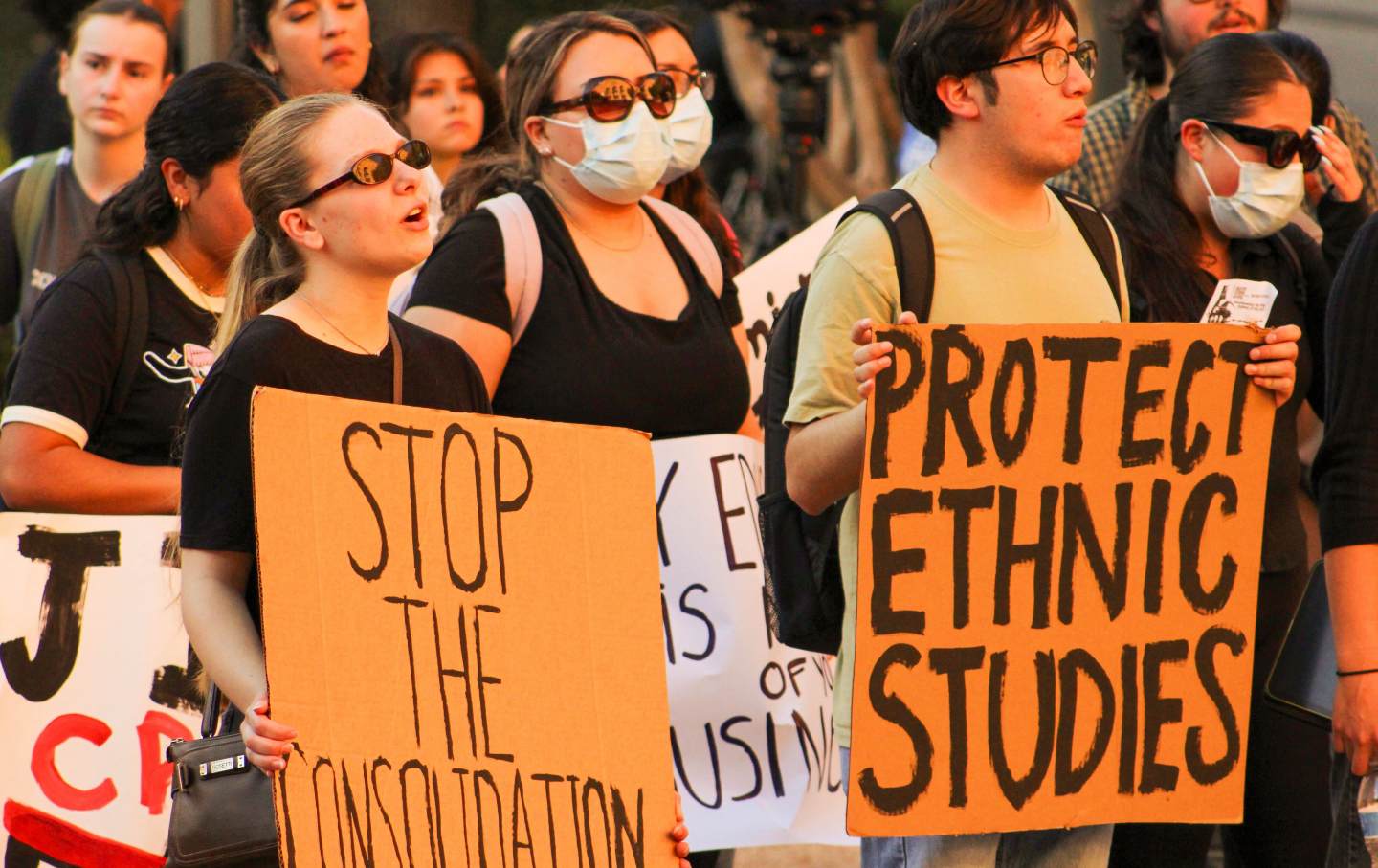
What Will Be Left After the University of Texas Destroys Itself? What Will Be Left After the University of Texas Destroys Itself?
UT-Austin has collapsed its race, ethnic, and gender studies into a single program while a new policy asks faculty to avoid “controversial” topics. But the attacks won’t end there...

The Corporate Media Is Head Over Heels for the Iran War The Corporate Media Is Head Over Heels for the Iran War
Donald Trump’s attack may be surreal, unjustified, and illegal. But that’s not stopping the press from turning the propaganda dial way up.
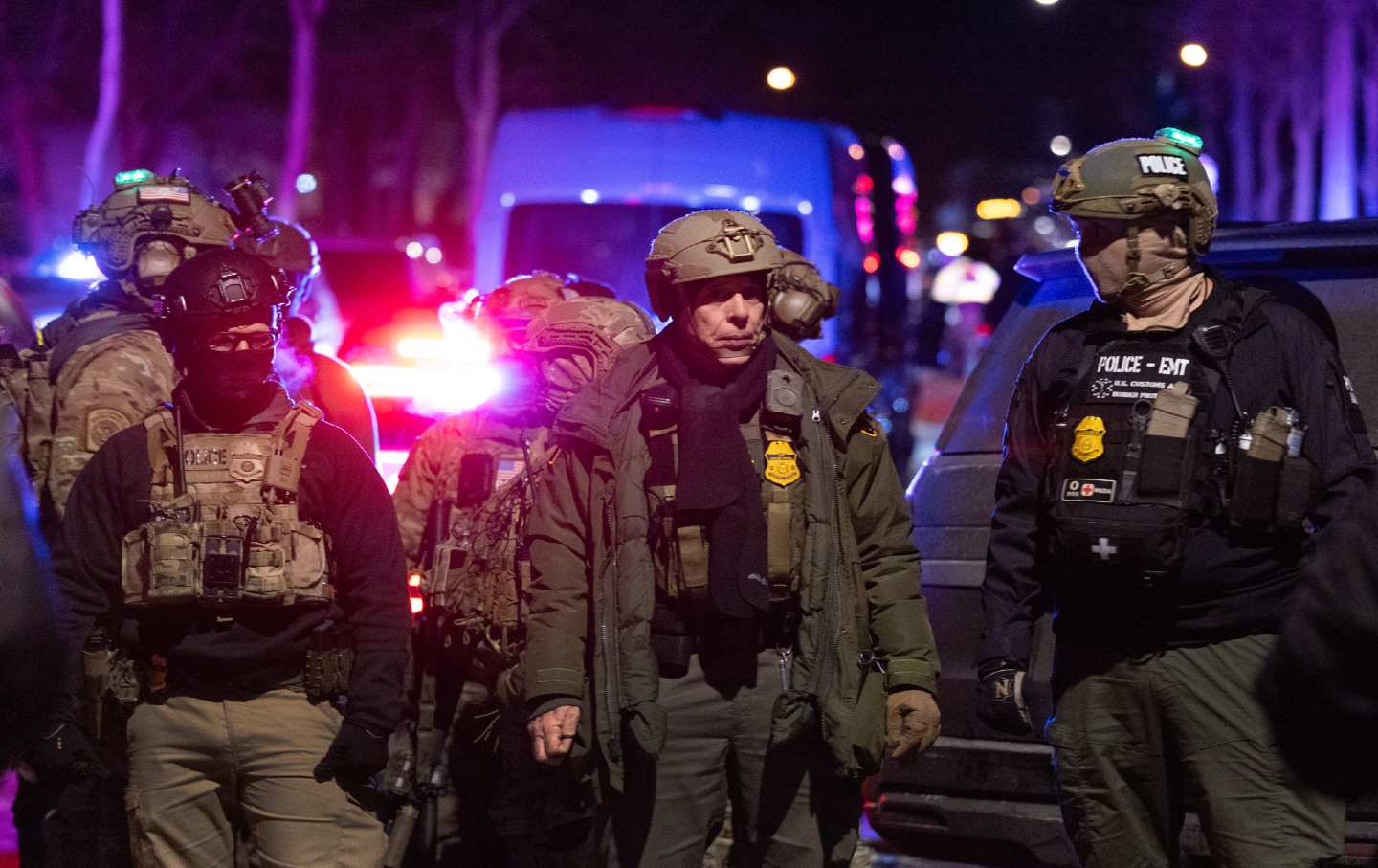
The Disturbing History of ICE’s “Death Cards” The Disturbing History of ICE’s “Death Cards”
The Vietnam-era practice is yet another example of ICE agents thrilling to the brutality they have been encouraged to cultivate.

The Red State–Blue State Healthcare Divide Is Dangerous for Everyone The Red State–Blue State Healthcare Divide Is Dangerous for Everyone
Whether or not you have access to independent, scientifically sound public health guidance may depend on how your state voted for governor.

